
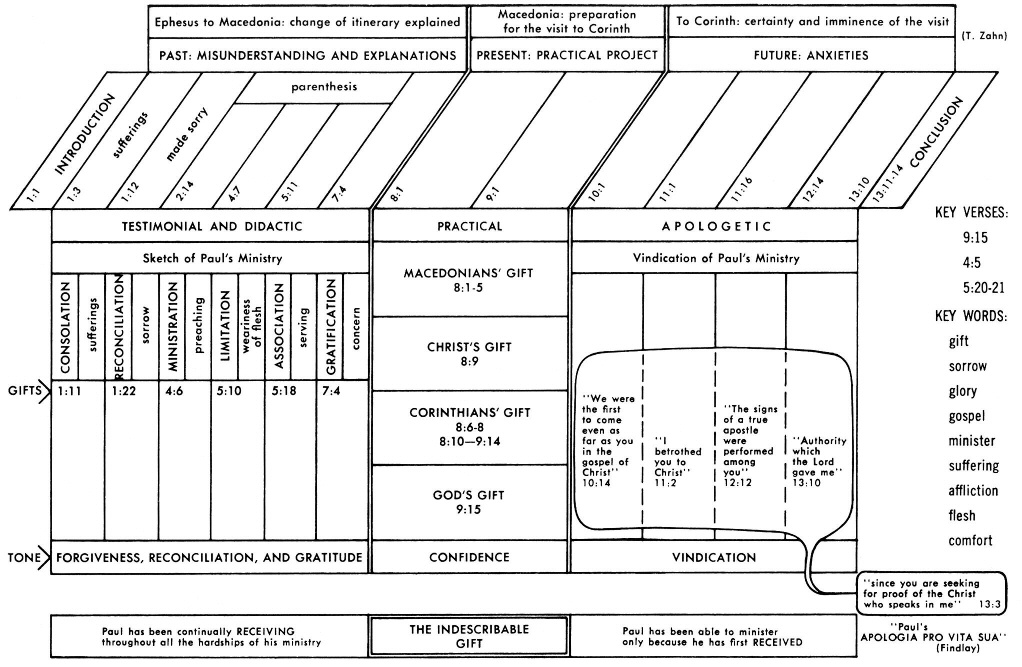
2 CORINTHIANS - PAUL'S MINISTRY IN THE LIGHT OF THE INDESCRIBABLE GIFT
Click chart to enlarge
Charts from Jensen's Survey of the NT - used by permission
Another Chart from Charles Swindoll
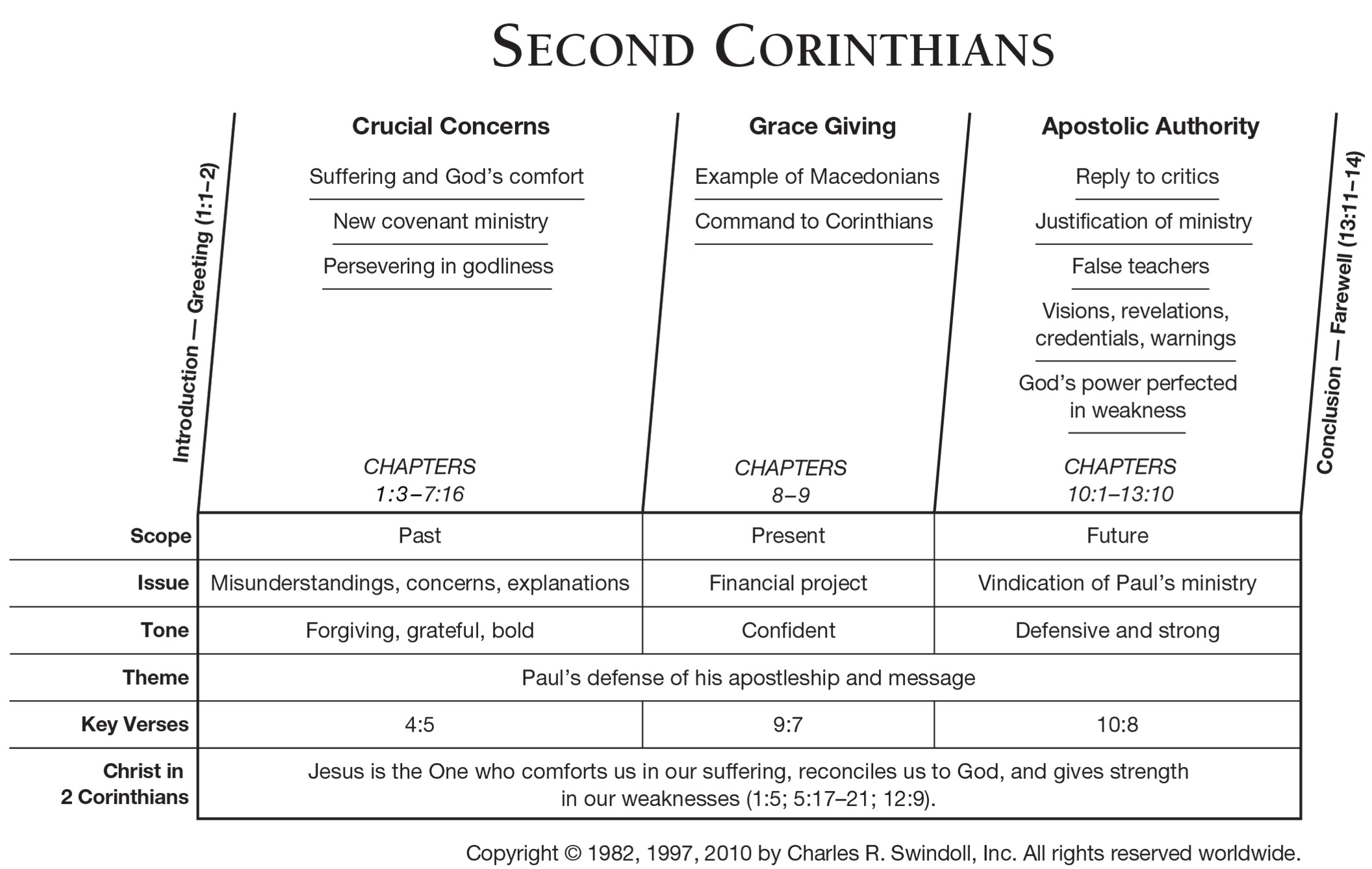
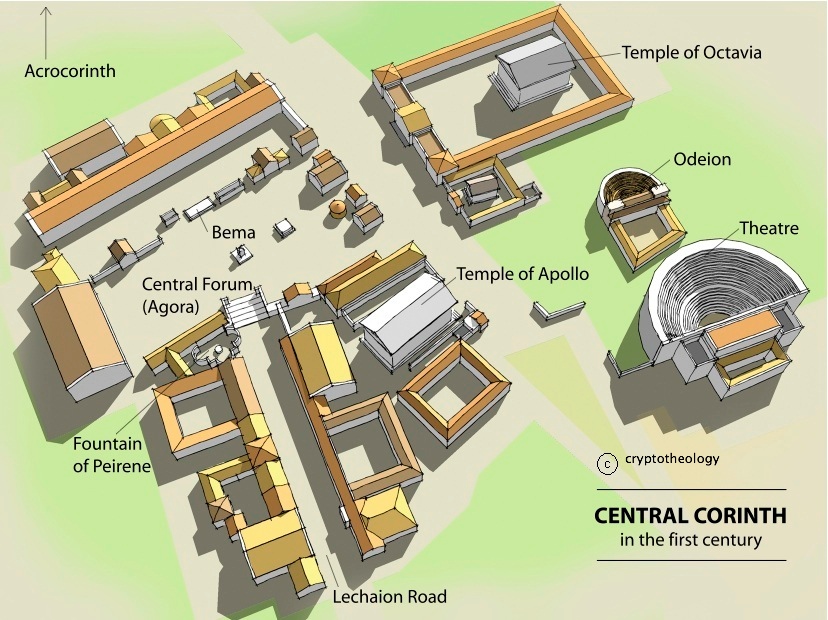
Click to Enlarge
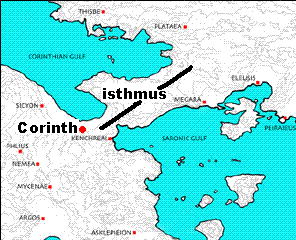
Click to enlarge
Overview of
|
||
| 2Co 1:1-7:16 Character of Paul |
2Co 8:1-9:15 Collection for the Saints |
2Co 10:1-12:21 Credentials of Paul |
| Testimonial & Didactic | Practical | Apologetic |
| Past: Misunderstanding & Explanation |
Present: Practical Project |
Future: Anxieties |
| Apostle's Conciliation, Ministry & Exhortations | Apostle's Solicitation for Judean Saints | Apostle's Vindication of Himself |
| Forgiveness, Reconciliation Gratitude |
Confidence | Vindication |
|
Ephesus to Macedonia: |
Macedonia: Preparation for Visit to Corinth |
To Corinth: |
|
2Co 1:1-7:16 |
2Co 8:1-9:15 |
2Co 10:1-12:21 |
|
2Corinthians written ~ 56-57AD - see Chronological Table of Paul's Life and Ministry |
||
|
Adapted & modified from Jensen's Survey of the New Testament (Highly Recommended Resource) & Wilkinson's Talk Thru the Bible |
||
2 Corinthians 5:4 For indeed while we are in this tent, we groan, being burdened, because we do not want to be unclothed but to be clothed, so that what is mortal will be swallowed up by life. (NASB: Lockman)
Greek: kai gar oi ontes (PAPMPN) en to skenei stenazomen (1PPAI) baroumenoi, (PPPMPN) eph' o ou thelomen (1PPAI) ekdusasthai (AMN) all' ependusasthai, (AMN) hina katapothe (3SAPS) to thneton upo tes zoes.
Amplified: For while we are still in this tent, we groan under the burden and sigh deeply (weighed down, depressed, oppressed)—not that we want to put off the body (the clothing of the spirit), but rather that we would be further clothed, so that what is mortal (our dying body) may be swallowed up by life [after the resurrection]. (Lockman)
Barclay: but rather that we desire to put on our heavenly body over it, so that that which is subject to death may be swallowed up by life. (Westminster Press)
ESV: For while we are still in this tent, we groan, being burdened—not that we would be unclothed, but that we would be further clothed, so that what is mortal may be swallowed up by life. (ESV)
HCSB: Indeed, we who are in this tent groan, burdened as we are, because we do not want to be unclothed but clothed, so that mortality may be swallowed up by life. (Holman Christian Standard Bible)
KJV: For we that are in this tabernacle do groan, being burdened: not for that we would be unclothed, but clothed upon, that mortality might be swallowed up of life.
NEB: We groan indeed, we who are enclosed within this earthly frame; we are oppressed because we do not want to have the old body stripped off. (New English Bible - Oxford Press)
NET: For we groan while we are in this tent, since we are weighed down, because we do not want to be unclothed, but clothed, so that what is mortal may be swallowed up by life. (NET Bible)
MH: For it is a fact that as those who still live in this present temporary dwelling, we sigh under a burden of oppression because, so far from wishing to be divested of all embodiment, we desire to put on the overgarment of the heavenly body, so that our present body which is subject to death may be completely swallowed up by immortality. (Murray Harris' expanded paraphrase of 2Corinthians).
NLT: While we live in these earthly bodies, we groan and sigh, but it’s not that we want to die and get rid of these bodies that clothe us. Rather, we want to put on our new bodies so that these dying bodies will be swallowed up by life. (NLT - Tyndale House)
Phillips: So long as we are clothed in this temporary dwelling we have a painful longing, not because we want just to get rid of these "clothes" but because we want to know the full cover of the permanent house that will be ours. We want our transitory life to be absorbed into the life that is eternal. (Phillips: Touchstone)
Weymouth: Yes, we who are in this tent certainly do sigh under our burdens, for we do not wish to lay aside that with which we are now clothed, but to put on more, so that our mortality may be absorbed in Life.
Wuest: For indeed, we being in this tent, are groaning, being weighed down, because we do not desire to be unclothed [divested of our mortal body] but clothed upon [invested with our heavenly body], in order that that which is mortal may be swallowed up by the life. (Eerdmans Publishing)
Young's Literal: for we also who are in the tabernacle do groan, being burdened, seeing we wish not to unclothe ourselves, but to clothe ourselves, that the mortal may be swallowed up of the life.
- we that: 2Pe 1:13
- Groan: 2Co 5:2
- but: 2Co 5:3
- mortal: Isa 25:8 1Co 15:53,54
- 2 Corinthians 5 Resources - Multiple Sermons and Commentaries
- See also "shorter version" of commentary on 2 Corinthians 5:4
A SECTION FILLED WITH
ESCHATOLOGICAL TENSION
G M Burge sums up this section writing that "Paul candidly describes the eschatological tension Christians face as they examine their own mortality (“this earthly tent that will be destroyed”) while looking forward to their redemption (the building from God, not made with hands, eternal in the heavens). Here the issue is reassurance in light of death, judgment and eternal life (2Co 5:1-10). Believers groan and have anxiety as they look forward longingly. But God gives the Spirit as the arrabōn, the guarantee of their future destiny, namely, that their mortality will be swallowed up in life (Dictionary of Paul and His Letters)
As an aside, if you have not read the entire chapter, 2 Corinthians 5, let me suggest you stop reading these notes and take some time to leisurely, actively (not passively) read through the chapter using a more literal translation such as NAS, ESV, NKJV. As you stroll through the chapter, be careful to observe for the key words Paul uses, stopping long enough to question each key word with one of the 5W/H questions and using the results of your observations to summarize Paul's major subject or subjects. Don't let yourself get bogged down on details or difficult to understand verses. Then read the chapter a second time with the goal being to give the chapter a title that uses some of the major subject words in the title. Don't try to be too cute or too alliterative, but give the chapter a title which would be distinctive enough for that chapter that when you heard it, you would know exactly where to turn in 2Corinthians. Then read chapter 5 a third time with the purpose of trying to identify the points where Paul changes subjects and use these change points to come up with an outline of the chapter. Now you are ready to read the commentary notes with a Berean-like mindset (Acts 17:11-+). Click observation if you are interested in more hints on how to study a chapter or book of the Bible inductively.
If you have taken time to compose your own outline of 2Corinthians 5, you might want to compare your results with those of A C Gaebelein's Outline on 2Corinthians 5. And remember that there is no "inspired" outline, so do not be discouraged if your outline does not match someone else's outline. And also remember that as you practice this simple exercise each time your read a chapter, you will find that your skills of observation will begin to improve dramatically.
2Co 5:1-8 The Earthly and Heavenly House
2Co 5:9-12 The Judgment Seat of Christ
2Co 5:13-16 The Constraint of Love
2Co 5:17-21 The Ministry of Reconciliation
The following outline is modified from Hannah's Bible Outlines on of this section of 2 Corinthians…
I) The sacrifice for the ministry (2Co 4:7-12)
II) The prospect of the ministry (2Co 4:13-5:10)
A) Present distress (2Co 4:13-15)
B) Future reward (2Co 4:16-5:10)
1) Present encouragement (2Co 4:16-18)
2) Future life (2Co 5:1-8)
3) Future reward (2Co 5:9-10)
III) The program of the ministry (2Co 5:11-6:10)
A) The motivation (2Co 5:11-16)
1) The fear of the Lord (2Co 5:11-13)
2) The love of Christ (2Co 5:14-16)
B) The message (2Co 5:17-21)
As we stated in the comments on 2Cor 5:1 (see notes), 2 Corinthians 5 (especially the first 8 verses) has a "bewildering profusion of interpretations" and yet we know that there is only one correct interpretation.
This is a poor chapter break and thus it behooves us to keep the context in mind -- Paul progresses from speaking of our physical body as the our outer man to describing it as an earthly tent… our house… and contrasts it with our future resurrection body, a house not made with hands…
2Cor 4:16+ Therefore we do not lose heart, but though our outer man is decaying, yet our inner man is being renewed day by day. 17 For (explaining why we do not lose heart) momentary, light affliction is producing for us an eternal weight of glory far beyond all comparison, 18 while we look not at the things which are seen, but at the things which are not seen; for the things which are seen are temporal, but the things which are not seen are eternal (in context [see below] referring especially to our future, eternal resurrection bodies where our eternal weight of glory will be manifested).
2Cor 5:1 For (see Dr. Johnson's explanation below) we know that if the earthly tent which is our house is torn down, we have a building from God, a house not made with hands, eternal in the heavens. 2 For indeed in this house we groan, longing to be clothed with our dwelling from heaven, 3 inasmuch as we, having put it on, will not be found naked.
S Lewis Johnson asks the question of 2Cor 5:1 - Paul, why did you say for? (at the beginning of 2Cor 5:1-+) Well, his answer, I think would be something like this. I've been talking to you about afflictions (2Co 4:17-+). I've been telling it you how they lead to the eternal weight of glory. The dissolution of the body, the dismantling of this tent does not bring annihilation, it brings translation to glory. And that's why I look at the things that are not seen, not the things that are seen (2Co 4:18), for we know that if that if the earthly tent, which is our house, is torn down we have a building from God. (The "for" explains) why the apostle can experience those things that he is experiencing, why he can look to the things that are invisible rather than the things that are visible, and pass through all of these experiences with confidence and assurance, because even if I lose my life in the midst of them, I know I have a building from God, a house not made with hands, eternal in the heavens. So that little word for gives a clue as to what Paul is really concerned about. (Clothed, Unclothed and Clothed Upon - 2 Corinthians 5:1-5)
As an aside when you encounter the "little word for" in a passage, especially at the beginning of a verse where it is usually a term of explanation, always pause and interrogate it with the 5W/H questions. As you practice this discipline of a "questioning mindset" you will find that
(1) You will be forced to slow down. Remember, the Bible is not designed for speed reading. Far too often I fear one's "Thru the Bible in a Year" reading program becomes a speed reading contest to make sure we do not fall too far behind. Beloved, this Book is a love letter and should be lovingly lingered over. In fact, tarrying over one verse can be of far greater value to our spiritual lives, than rushing through one chapter in order to achieve a goal, rather than to meet with our God. And one can even fall into the trap of subtle legalism of "having" to read your 4 chapters each day. In a sad sense, love for God's law becomes legalism for God's law. So to paraphrase a popular commercial from past years, try the pause that refreshes!
(2) You will find that you are more actively engaging the text, the Holy Word, and giving yourself more time to interact with your Teacher, the Holy Spirit (1Jn 2:28). Speed reading promotes passive reading. Slowing down promotes active reading.
(3) You will be far more likely to remember what you have just read (cp Memorizing His Word).
(4) You will find yourself beginning to practice the blessed spiritual discipline of meditation. (another discussion on meditation). Considering the spiritual dividends of meditation in Joshua 1:8 (+) and Psalm 1 (read Ps 1:1-+, Ps 1:2-+, Ps 1:3-+), as my old medical school professor used to say at 6AM rounds every morning - "You can't not know" (to which I add)… how to meditate on the Scriptures!
Although 2Cor 5:4 is on a separate page of these study notes, it should be interpreted in the context of the preceding verses, 2Co 5:2-+ and 2Co 5:3-+. In 2Co 5:2-4 Paul expresses his preference for the resurrection body ("clothed with our dwelling from heaven"). In 2Cor 5:2 he uses the metaphor of a house and in verse 4 the metaphor of a tent. In verse 2 and verse 4 he is groaning because of his present body (the burdens of life, the limitations of the this body, the superiority of the body to come)
David Lowery summarizes the interpretative approaches to 2Cor 5:1-4…
A number of commentators and theologians have seen in these verses reference to an “intermediate state,” a period between death and resurrection. This view takes one of two forms:
(a) Dead (though conscious) believers are without a body while awaiting their resurrection bodies, or
(b) dead (though conscious) believers receive an “intermediate body” that somehow differs from their forthcoming resurrected bodies. (According to either of these intermediate-state views, Paul was suggesting that he hoped to live till the return of Christ so that he would not experience an “intermediate state.”)
These views, however, seem unwarranted. Paul had only two conditions in view since 2Cor 4:16, the temporal and the eternal. The introduction of a third is therefore unlikely. It seems clear from 2Co 5:4 that being in this tent (cf. 2Pe 1:13-+), and unclothed describe mortality while being clothed and possessing a heavenly dwelling depict immortality, without specifying any intervening stages. (Walvoord, J. F., Zuck, R. B., et al: The Bible Knowledge Commentary. 1985. Victor)
For indeed - Paul is emphasizing the point of the believer's groaning (just noted in 2Co 5:2+), a fact also mentioned in Romans…
And not only this, but also we ourselves, having the first fruits (this means there is more to come!) of the Spirit, even we ourselves groan (stenazo = present tense) within ourselves, waiting eagerly (apekdechomai = present tense which pictures the believer in a continual state of eager anticipation and expectation to see our Bridegroom! Practically, such an attitude will serve to motivate us to resist temptations and commission of sin. If we are expecting Him any moment, we will seek to be ready - 1Jn 2:28) for our adoption as sons, the redemption of our body. (Ro 8:23-+).
While we are in this tent - While we are still alive in these physical bodies and in this present world.
Tent (4636) (skenos from skene ["from root ska = to cover" - A T Robertson] = tent, booth, cloth hut, habitation, tabernacle Mt 17:4 Mk 9:5) refers to a temporary residence (tabernacle, tent, booth) but is used figuratively (metaphorically) by Paul here and in the only other use (2Co 5:1-+) to refer to the human body as the habitation of the spirit (some lexicons say "dwelling place of the soul"). As Thayer says skenos pictures the body as a "tent taken down at death." (Ed: And I would add "either at death or the rapture", whichever comes first! Maranatha [Our Lord come!]). Mounce refers to skenos as our "corporeal tabernacle"!
Skenos is used figuratively by Paul to refer to the human body as the habitation of the soul (the "tabernacle of the soul" - As an aside, beloved, recall that in the OT the "tabernacle" was where people met with God (Ex 25:22)! Is that true of your "tabernacle"? More to the point, have you met with Him yet today? This week? Remember you are under grace not law - let that love of God [which has been poured out in your heart by the Spirit -Ro 5:5-+, 1Jn 4:19] motivate your meeting with Him.).
Peter uses a similar word skenoma to describe his body writing…
And I consider it right, as long as I am in this earthly dwelling (skenoma), to stir you up by way of reminder, knowing that the laying aside (Used of laying off old clothes, as the runners who participated in the Olympic Games) of my earthly dwelling (skenoma) is imminent (tachinos = near at hand, impending, used only here and 2Pe 2:1-+ = swift), as also our Lord Jesus Christ has made clear to me (When? Some 40 years prior Jesus had prophesied the "taking down" of Peter's dwelling - Jn 21:18,19). (2Pe 1:13, 14-+)
Comment: Dwelling is skenoma from skenoo = to pitch a tent, this verb derived from the root word skenos = tent. Peter's "dwelling" was actually a frail "tent" (skenoma) erected just for a night. And so Peter, like Paul here in 2Co 5:4, alludes to death as laying aside of one’s temporary, frail tent of our mortal bodies. "Peter feels the nearness of death and the urgency upon him." (A T Robertson)
Longman sums up the imagery of tent in regard to the body noting "In the OT a comparison is also drawn between the human body and a tent. The body’s well-being is like a secure tent (Ps 16:9), and its vulnerability through illness, age or death is like a tent under siege or a tent whose cords are pulled up (Job 19:12; 4:21; Is 38:12). In the NT the impermanence of the body is compared to a tent that “I will soon put away” (2Pet 1:13, 14-+). This happens most fully and eloquently in the writings of Paul, himself a tentmaker, who emphasizes the burden and longing of our earthly existence for heavenly permanence: “we know that if the earthly tent we live in is destroyed, we have a building from God, an eternal house in heaven” (2Co 5:1-+; also 2Co 5:2-5). Our future form will be eternal, not something that can be easily destroyed like a vulnerable man-made tent but rather firm and sure, built by God himself. (It should be noted that nowhere here is the notion of an immortal soul in a temporary body.) (Dictionary of Biblical Imagery)
We groan - Groan is in present tense describing continuous action. Groaning alludes to a condition which is unsatisfying and sorrowful (certainly compared with our future hope of glory!). Thus the groaning serves in a sense as a cry for deliverance from our physical bodies. The pain and sorrow believers feel now is because of the fact that we still live in mortal bodies indwelt by the flesh (the old sin nature inherited from Adam - Ro 5:12-+) which causes us to daily stumble and grieve the Holy Spirit which in turn grieves us.
Murray Harris comments that "The passage does not define the precise nature of the “sighing” or “groaning,” but the immediate context and Paul’s thought elsewhere (Ro 8:19-23+; Php 3:20, 21+) suggest it was his sense of frustration with the limitations and disabilities of mortal existence, knowing as he did that he was destined to possess a spiritual body perfectly adapted to the ecology of heaven. Paul sought liberation only from the imperfection of present embodiment, from “bondage to decay,” not from any and every form of corporeality. After all, it is to Paul that Christian theology owes the doctrine of the “spiritual body” (1Co 15:35-49). (Expositor's Bible Commentary)
Groan (complain, sigh) (4727)(stenazo from stenos = narrow or contracted as when one is squeezed or pressed by circumstances) literally describes an internal squeezing and thus denotes a feeling of inner sorrow. Stenazo means to express grief by inarticulate or semi-articulate sounds. A groan is an audible expression of anguish due to physical, emotional, or spiritual pain. Stenazo refers to the utterances of a person who is caught in a situation (usually dreadful) with no immediate prospect of deliverance.
We get a picture of the meaning of stenazo with Luke's use of the noun form (stenagmos - used in Romans 8:26-+ of Spirit's prayers expressed to God inarticulately) to describe the enslavement of Israel in Egypt…
(God declares) I HAVE CERTAINLY SEEN THE OPPRESSION OF MY PEOPLE IN EGYPT, AND HAVE HEARD THEIR GROANS (stenazo), AND I HAVE COME DOWN TO DELIVER THEM; COME NOW, AND I WILL SEND YOU TO EGYPT.' (Acts 7:34+ cp Ex 2:24, 25+)
Spurgeon gives a lengthy exposition of our present groaning (this is a long note but definitely worth reading slowly, as you take time to ponder the picture that Spurgeon is painting as he contrasts your present with your future)…
This earnest desire, of which the apostle has been speaking in the preceding verses, is made up of two things —
a painful groaning and sense of being burdened while we are in this present life, and a supreme longing after our promised portion in the world to come.
Dissatisfaction with the very idea of finding a continuing city here, amounting even to groaning, is the condition of the Christians mind. “We look not at the things which are seen,” (2Co 4:18-+) they are not worth a glance; they are temporal, and therefore quite unfit to be the joy of an immortal spirit.
The Christian is the most contented man in the world,
but he is the least contented with the world.
He is like a traveler in an inn, perfectly satisfied with the inn and its accommodation, considering it as an inn, but putting quite out of all consideration the idea of making it his home. He baits by the way, and is thankful, but his desires lead him ever onward towards that better country where the many mansions are prepared. The believer is like a man in a sailing vessel, well content with the good ship for what it is, and hopeful that it may bear him safely across the sea, willing to put up with all its inconveniences without complaint; but if you ask him whether he would choose to live on board in that narrow cabin, he will tell you that he longs for the time when the harbour shall be in view, and the green fields, and the happy homesteads of his native land. We, my brethren, thank God for all the appointments of providence; whether our portion be large or scant we are content because God has appointed it: yet our portion is not here, nor would we have it here if we might!
“We’ve no abiding city here,
Sad truth were this to be our home.”
No thought would be more dreadful to us than the idea of having our portion in this life, in this dark world which refused the love of Jesus, and cast Him out of its vineyard. We have desires which the whole world could not fulfill, we have insatiable yearnings which a thousand empires could not satisfy. The Creator has made us to pant and long after Himself, and all the creatures put together could not delight our souls without His presence.
“Hopeless of joy in aught below,
We only long to soar,
The fullness of His love to feel,
And lose His smile no more.”
In addition to this dissatisfaction, there reigns within the regenerate heart a supreme longing after the heavenly state. When believers are in their right minds, their aspirations after heaven are so forcible that they contemn death itself. When faith is weak, then the pains and the groans of dying make a black cloud of forebodings which darken the spirit, and we shrink from the thought of departing; but when we know that our Redeemer liveth, and look forward to the resurrection and to the glory to be revealed, we cry-
“Oh, if my Lord would come and meet,
My soul should stretch her wings in haste,
Fly fearless through death’s iron gate,
Nor fear the terrors as she passed.”
Whatever the separation of the soul from the body may involve of pain or mystery, the believer feels that he could dare it all, to enter at once into the unfading joys of the glory-land. Sometimes the heir of heaven grows impatient of his bondage, and like a captive who, looking out of the narrow window of his prison, beholds the green fields of the unfettered earth, and marks the flashing waves of the ocean, ever free, and bears the songs of the uncaged tenants of the air, weeps as he views his narrow cell, and hears the clanking of his chains. There are times when the most patient of the Lord’s banished ones feel the home sickness strong upon them. Like those beasts which we have sometimes seen in our menageries, which pace to and fro in their dens, and chafe themselves against the bars-unresting, unhappy, bursting out every now and then into fierce roarings, as though they yearned for the forest or the jungle; even so we also chafe and fret in this our prison-house, longing to be free. As by the waters of Babylon the sons of Zion sat them down and wept, even so do we. Dwelling in Kedar’s tents and sojourning with Mesech, we long for the wings of a dove that we might fly away and be at rest.
“O my sweet home, Jerusalem,
Would God I were in thee!
Would God my woes were at an end,
Thy joys that I might see.”
Having thus seen that the groaning wrought in us by God is made up of dissatisfaction with this world and anxious desire for the world to come, we may profitably consider it yet a little further.
What is it that makes the Christian long for heaven? What is that within him which makes him restless till he reach the better land?
It is, first, a desire for the unseen. The carnal mind is satisfied with what the eyes can see, the hands can handle, and the taste enjoy, but the Christian has a spirit within him which has passions and appetites which the senses cannot gratify. This spirit has been created, developed, enlightened, and instructed by the Holy Ghost, and it lives in a world of unseen realities, of which unregenerate men have no knowledge. While in this sinful world and earthly body, the spirit feels like a citizen exiled from his native land; it stands upon the outmost borders of its own region, and longs to penetrate into the center of spiritual things. Hampered with this body of clay, the spirit, which is akin to angels, cries after liberty; it longs to see the Great Father of Spirits, to commune with the bands of the pure spirits forever surrounding the throne of God, both angels and glorified men; it longs, in fact, to dwell in its true element. A spiritual creature, begotten from above, can never rest till it is present with the Lord. Oh! to see the things which we have heard of in metaphor and simile, to enjoy them really with our spirits, the harps, the crowns, the palms — what must it be to possess such joys? The streets of transparent gold, the river of the water of life, the glassy sea, the throne of the Great King — what must all these be? Until these joys and glories be all our own our souls will ever cry and sigh.
Moreover, the Christian spirit pants after holiness. He who is born again of incorruptible seed, finds his worst trouble to be sin. While he was in his natural state be loved sin, and sought pleasure in it, but now being born of God and made like to God, he hates sin, the mention of it vexes his ears, the sight of it in others causes him deep sorrow, but the presence of it in his own heart is his daily plague and burden. If he could be clean rid of sin this mortal body might not be to him a load, but because the tendencies of the animal passions are always towards evil, he longeth to be rid of this vile body, that he may be clothed upon with his house which is from heaven, from which all these passions will be expelled. Oh, to be without the tendency to sin, without the possibility to sin! What bliss the prospect affords! My brethren, if we could be placed in the meanest and most destitute condition, and yet could be perfect, we would prefer it to being sinful, even though we should reign in the palaces of kings. Our spirit, therefore, crieth after the immortal state, because sin will be for ever banished from it.
In the Christian’s spirit there is also a sighing after rest. “There remaineth a rest for the people of God,” as though God had put in us the longing for what he has prepared; we labor daily to enter into that rest. Brethren, we long for rest, but we cannot find it here. “This is not our rest.” We cannot find rest even within ourselves. Wars and fightings are continuous within the regenerate spirit; the flesh lusteth against the spirit, and the spirit warreth against flesh. As long as we are here it must be so.
We are in the camp of war,
not in the chamber of ease.
The trumpet must sound, and the clash of arms must be heard, and we must go to our watch-tower, and continue there both night and day, for we are militant as yet, and not triumphant. Our soul pines to be at rest. When shall the rowers of our spirit indulge themselves to the full without the fear of falling into sin? When shall my memory recollect nothing but what will glorify God? When shall my judgment always rightly balance all events? When shall my desires be after nothing but my Lord? When shall my affections cling to nought but Him? O when shall I possess the rest of the sinless, the rest of the satiated, the rest of the secure, the rest of the victorious? This longing for rest helps to inflame the Christian’s desires for the house not made with hands.
This divinely-wrought desire is made up of another element, namely, a thirst for communion with God. Here, at the nearest, our state is described as being “absent from the Lord.” We do enjoy fellowship with God, for “Truly our fellowship is with the Father and with his Son Jesus Christ,” but it is remote and dark. “We see through a glass darkly,” and not as yet face to face. We have the smell of His garments from afar, and they are perfumed with myrrh, and aloes, and cassia, but as yet the King is in His ivory palaces, and the gate of pearl is between us and Him. O that we could come at Him! O that He would even now embrace us, and kiss us with the kisses of His mouth. The more the heart loves Christ, the more it longs for the greatest possible nearness to Him. Separation is very painful to a bride whose heart is burning for the bridegroom’s presence; and such are we, longing to hear the most sweet voice of our Spouse and to see the countenance which is as Lebanon, excellent as the cedars. For a saved soul to long to be where its Savior is, is no unnatural desire! To be with Him is far better than earth’s best, and it would be strange if we did not long for it. God, then, hath wrought in us this in all its forms, He has made us to dread the thought of having our portion in this life, He has created in us a supreme longing for our heavenly home, has taught us to value unseen and eternal things, to pant after holiness, to sigh after sinless rest, and to yearn after closer fellowship with God in Christ Jesus.
My brethren, if you have felt a desire such as I have described, give the glory of it to God; bless and love the Holy Spirit Who hath wrought this selfsame thing in you, and ask Him to make the desires yet more vehement, for they are to His glory.
Bear with a word in praise of this God-wrought groaning. This desire after the world to come is above ordinary nature. All flesh is grass, and the grass loves to strike its root deep into the earth; it has no tendrils with which to clasp the stars. Man by nature would be content to abide on earth forever. If you long for a holy and spiritual state, your desire is not of nature’s creation. God has wrought it in you. Yea, I will venture to say that the desire for heaven is contrary to nature; for as there is an inertia in matter which makes it indisposed to move, so is there in human nature an indisposition to leave the present for the future. Like the limpet, we stick to the rock on which we crawl. We cling to earth like the ivy to the wall. We are afraid to set sail upon that unknown sea of eternity, and therefore shiver on the shore. We dread to leave “the warm precincts of this house of clay,” and hovel as this body is, we count it dear. It is the Lord who forbids our lying among the pots, and gives us the wings of a dove to mount aloft. As soon would a clod seek the sun as a soul seek its God, if a miracle of grace were not wrought upon it.
While they are contrary to the old nature, such aspirations prove the existence of the new nature. You may be quite sure that you have the nature of God in you if you are pining after God; and if your longings are of a spiritual kind, depend upon it you are a spiritual man. It is not in the animal to sigh after mental enjoyments, neither is it in the mere carnal man to sigh after heavenly things.
What your desires are,
that your soul is.
If you are really insatiably hungering after holiness and after God, there is within you that which is like to God, that which is essentially holy, there is indeed a work of the Holy Ghost within your hearts. I shall detain you awhile to notice the means by which the Holy Spirit quickens these desires within our spirits.
HUNGERING AFTER HOLINESS
AND AFTER GOD
This desire after a portion in the unseen world is first infused in us by regeneration. Regeneration begets in us a spiritual nature, and the spiritual nature brings with it its own longings and desires; these longings and desires are after perfection and God. Imagine an angel imprisoned in a stable: it is perfectly certain that it would be discontented with the place where the horned oxen lay. If it felt that the divine will commanded it to tarry there for awhile, I doubt not that the bright visitant would contentedly put up with the confinement; but if it had liberty to leave the society of beasts, how gladly would the bright spirit ascend to its native place. Yes, heaven is the place for angels, the true abode of holy spirits and we, too, since our spiritual nature is born from above, long to be there, nor shall we be content until we are.
These desires are further assisted by instruction. The more the Holy Ghost teaches as of the world to come the more we long for it. If a child had lived in a mine it might be contented with the glimmer of candle light; but if it should hear of the sun and the green fields, and the stars, you may depend upon it the child would not be happy until it could ascend the shaft and behold for itself the brightness of which it had heard and as the Holy Ghost reveals to us the world to come we feel longings within us, mysterious but mighty, and we sigh and cry to be away where Jesus is.
These desires are farther increased by sanctified afflictions. Thorns in our nest make us take to our wings; the embittering of this cup makes us earnestly desire to drink of the new wine of the kingdom. We are very much like our poor, who would stay at home in England and put up with their lot, hard though it be; but when at last there comes a worse distress than usual, then straightway they talk of emigrating to those fair and boundless fields across the Atlantic, where a kindred nation will welcome them with joy. So here we are in our poverty, and we make the best of it we can; but a sharp distress wounds our spirit, and then we say we will away to Canaan, to the land that floweth with milk and honey, for there we shall suffer no distress, neither shall our spirits hunger any more.
Heavenly desires are still farther inflamed by communion with Christ. The sweets as well as the bitters may be made to increase our longings after the world to come. When a man has once known what fellowship with Jesus is then he pines to enjoy it forever; like the Gauls on this side the Alps who, when they had once drank the Italian wines, said one to another, “It must be a fair land where they grow such wine as this, come, brethren, let us draw our swords and cross the Alps and take the vineyards for ourselves.” Thus does the love of Jesus set us longing to be with him.
“Since I have tasted of the grapes,
I oft times long to go
Where my dear Lord the vineyard keeps,
And all the clusters grow.”
Communion with Christ sharpens the edge of our desire for heaven. And so, to close this vein of thought, does elevation of soul. The more we are sanctified and lifted above the grossness of earthliness into conformity with Jesus, the more we long for the world to come. A peasant at the plough is quite content to mix with his fellow laborers, but suppose he forms a passion for the study of the stars, feels a poet’s frenzy, or develops mathematical powers, or learns the science of flowers, or in any way discovers the treasure hidden in the field of learning, he will be sure to be uneasy in ignorance, and will pine for books and education. He dreams of schools, and colleges, and libraries. His fellow ploughmen laugh at him, and count him but a fool. If they have enough to eat and drink and clothe themselves, they are content therein, but he has wants for which the village has neither sympathy nor supply. His elevation of mind has brought with it groanings, to which, has he grovelled like his fellows, he would have been a stranger. So is it with the regenerated man, in proportion as he is elevated by the Holy Spirit by growth in grace. The higher he rises the more he longs to rise. To him that hath it is given, and he desireth to have in abundance; with a sacred covetousness he panteth after yet higher degrees of grace, and after glory itself. Thus have I opened up to you the desire which the Holy Spirit works in us. “He that hath wrought us for the selfsame thing is God.” (2Co 5:5KJV) (2Corinthians 5:5 The Glorious Hereafter and Ourselves)
Ron Mattoon writes that…
The promise of a heavenly body caused Paul and other believers to groan for it. What an appropriate description… "groan." Doctors today make their living listening to groaning tents. A dermatologist tries to keep the canvass of our tent in good shape. The family doctor spends his life patching up and stitching up this tent of ours. The orthopedic doctor tries to keep our tent legs from pulling loose. Someone once asked John Quincy Adams how he was personally doing. Adams replied,
"I am very well, thank you. However, the house in which John Adams lives, is growing old. The thatch is wearing thin, and it trembles in every gale. I think John Quincy Adams will have to soon move out, but he himself is very well, sir."
We groan, especially as we get older. Why do we groan? We groan today, as they did back then, because we feel the pains associated with mortality, namely our physical limitations, sickness, heartaches, and the increasing disabilities that accompany advancing age. We groan also because of the stress, mess, tests, unrest, and distress of this life. How many times in frustration or great stress have we said or felt,
"Lord, just go ahead and take me home! Lord, please come today and get me out of here!"
The Christian does not groan in his or her present body because he or she wants to get rid of it. We really are not going around hoping, begging, or longing to die today! We groan because we long to receive the immortal heavenly bodies that God has promised us. God's promises of something better make us dissatisfied with what we have now. We are yearning and pining for what we don't have right now, but what we will have someday. Paul said he "earnestly desired" his glorified body (2Co 5:2-+). He longed or pined for it. Having put on our heavenly bodies, we will not be naked. In other words, we will not be spirits without bodies. In this body that we have, we groan because we are burdened, weighed down or pressed by the pressures of this life. We groan, not because we want to die and get rid of these bodies that clothe us now. We groan because we want to put on our new glorified body so that our earthly decaying body will be swallowed up by life eternal in Heaven. Not only the promise of a glorified body, but pining for it and the blessings of Heaven will help us to keep one eye on eternity. (Treasures from 2 Corinthians, Volume 1).
Matthew Henry comments that we groan signifies…
(1) A groaning of sorrow under a heavy load; so believers groan under the burden of life: In this we groan earnestly, 2Co 5:2. We that are in this tabernacle groan, being burdened, 2Cor 5:4. The body of flesh is a heavy burden, the calamities of life are a heavy load. But believers groan because burdened with a body of sin, and the many corruptions that are still remaining and raging in them. This makes them complain, O wretched man that I am! Ro 7:24.
(2.) There is a groaning of desire after the happiness of another life; and thus believers groan: Earnestly desiring to be clothed upon with our house which is from heaven (2Co 5:2), to obtain a blessed immortality, that mortality might be swallowed up of life (2Co 5:4), that being found clothed, we may not be naked (2Co 5:3), that, if it were the will of God, we might not sleep, but be changed; for it is not desirable in itself to be unclothed. Death considered merely as a separation of soul and body is not to be desired, but rather dreaded; but, considered as a passage to glory, the believer is willing rather to die than live, to be absent from the body, that he may be present with the Lord (2Co 5:1), to leave this body that he may go to Christ, and to put off these rags of mortality that he may put on the robes of glory.
being burdened, because we do not want to be unclothed but to be clothed, so that what is mortal will be swallowed up by life
Because we do not want to be unclothed - A T Robertson rephrases it as "“For that we do not wish to put off the clothing, but to put it on”… Paul does not wish to be a mere disembodied spirit without his spiritual garment.
Being burdened (916) (bareo from baros = weight, heaviness, figuratively a burden as in Gal 6:2) means to lay on a heavy load; to encumber with weight, to weigh down, to burden. Figuratively, to oppress with any thing grievous; as, to burden a nation with taxes. The effect of drowsiness = "Heavy eyes" (Mt 26:43, Mk 14:40) "Overcome (heavy) with sleep" (Lk 9:32).
Bareo - 6x in the NT: Mt 26:43 Mk 14:40 Lk 9:32 Lk 21:34 2Co1:8 2Co 5:4 1Ti 5:16. NAS = burdened(3), heavy(1), overcome(1), weighted down(1).
The only Septuagint (LXX) use of bareo is Ex 7:14 describing Pharaoh's heart as "stubborn" (English translation of Septuagint = "made hard")
Here in 2Co 5:4 bareo describes the present state of the regenerate soul confined in “the earthly house of this tabernacle."
Paul used bareo figuratively to describe afflictions earlier in this letter " For we do not want you to be unaware, brethren, of our affliction which came to us in Asia, that we were burdened excessively, beyond our strength, so that we despaired even of life. (2Cor 1:8cp 2Co 11:16-33).
Giving instructions to Timothy Paul writes " If any woman who is a believer has dependent widows, let her assist them, and let not the church be burdened, so that it may assist those who are widows indeed." Vincent comments: Holtzmann quotes an inscription in the chapel of the Villa Albani at Rome: “To the good Regina her daughter has erected this memorial: to the good Regina her widowed mother, who was a widow for sixty years and never burdened the church after she was the wife of one husband. She lived 80 years, 5 months, and 26 days.” - Word Studies in the New Testament
Jesus warns "Be on guard, (prosecho in the present imperative = calls for continual attention = Be ready for His return at all times! Are you ready? If not, why not? See Imminency or another discussion on imminency. Cp parallel warning in Lk 21:36 = both involve remaining spiritually alert, prepared and faithful!) so that your hearts will not be weighted down with dissipation and drunkenness and the worries of life, and that day (The Day of Christ's Return - cp Lk 21:27-+ - cp Second Coming) will not come on you suddenly like a trap." (Lk 21:34).It is important to note that whenever Jesus discusses His Second Coming, He invariably enjoins watchfulness (cf. Lk 12:37-40+; Mt 25:13; Mk 13:33, 34, 35, 36, 37).
In English the verb to burden means to cause worry, hardship or grief to someone. The present tense pictures this as a continuous burden.
Want (2309)(thelo) refers to a desire that comes from one’s emotions. It involves an active decision of one's will, and thus implies volition and purpose. The verb is present tense (continuous) and active voice (volitional choice).
As an aside Jerry Bridges reminds us that it is "the will that ultimately makes each individual choice of whether we will sin or obey. It is the will that chooses to yield to temptation or to say "No". Our wills, then, ultimately determine our moral destiny, whether we will be holy or unholy in our character and conduct. (Ed: Compare Jesus' words on will - Lk 22:42, Jn 4:34, 17:4, Jn 5:30, Jn 6:38, cp Jn 8:29, Heb 10:7, 8, 9, 10 - may God's Spirit enable us to fix our eyes on Jesus' pattern of a life that pleases the Father.)
To be unclothed (1562)(ekduo from ek = out + dúo = cause to sink, go or come) means literally to go or come out of, to put off and especially to put off clothing and thus to unclothe. To remove clothing, strip off garments (of Jesus' before His crucifixion - Mt 27:28, 31, Mk 15:20), undress oneself (in middle voice).
In 2Co 5:4 Paul uses ekduo figuratively to described the laying aside of a body. In other words Paul is saying we do not want to be in a disembodied state after death, but instead desire to possess our resurrection body which God will give us (As alluded to in 2Co 5:5 God "prepared us for this very purpose").
Ekduo - 6x in 6v in NAS - Mt 27:28, 31; Mk 15:20; Lk 10:30; 2Co 5:3 4. NAS = stripped(2), took… off(2), unclothed(1).
Luke 10:30 Jesus replied and said, "A man was going down from Jerusalem to Jericho, and fell among robbers, and they stripped him and beat him, and went away leaving him half dead.
Ekduo - 21x in the non-apocryphal Septuagint - Ge 37:23; Lev 6:11; 16:23; Nu 20:26, 28; 1 Sam 19:24; 31:9; 1Chr 10:9; Esther 5:1; Job 11:15; 19:9; 30:13; Song 5:3; Isa 32:11; 52:2; Lam 4:3; Ezek 16:39; 23:26; 26:16; 44:19; Hos 2:3 A majority of the uses in the Septuagint refer to stripping off clothes.
Leviticus 6:11 'Then he shall take off his garments and put on other garments, and carry the ashes outside the camp to a clean place.
Job 19:9 "He has stripped my honor from me And removed the crown from my head.
Matthew Henry: "He has stripped me of my glory, my wealth, honor, power, and all the opportunity I had of doing good. My children were my glory, but I have lost them; and whatever was a crown to my head he has taken it from me, and has laid all my honor in the dust." See the vanity of worldly glory: it is what we may be soon stripped of; and, whatever strips us, we must see and own God's hand in it and comply with his design.
But (alla) is a strong adversative (contrast) - not unclothed but clothed. The first edition of the New Living Translation paraphrases the passage "We want to slip into our new bodies so that these dying bodies will be swallowed up by everlasting life."
Amplified Version = For while we are still in this tent, we groan under the burden and sigh deeply (weighed down, depressed, oppressed)—not that we want to put off the body (the clothing of the spirit), but rather that we would be further clothed, so that what is mortal (our dying body) may be swallowed up by life [after the resurrection]. (Lockman)
Keep in mind that when you are "stuck" on the meaning of a particular verse, first pray and examine the context, but if you are still "stuck", consider looking at another Bible translation (see chart comparing Bible Versions). The two I have found most helpful are the Amplified (which is more literal to the original language) and the New Living Translation (NLT), which is a paraphrase but one which tends to be a relatively accurate interpretation of the original Greek text. The discerning Berean (Acts 17:11-+) should be cautious with some of the "loose" paraphrases such as The Message (a version from which I do not often quote), which in my humble opinion can stray quite far away from the meaning intended by the original Greek text and from God's intended meaning! And remember if you are "off" on the interpretation, you are at risk of inappropriate application which can have significant spiritual consequences.
Harry Ironside associates the phrase we do not want to be unclothed with the Second Coming of Christ noting first that "we are not earnestly desiring to die, for that would not be a natural thing for any Christian. The Christian should not earnestly desire to die, and yet should be prepared for it, but he should also be prepared to live for the glory of the Lord Jesus Christ. Paul says, "For me to live is Christ, and to die is gain" (Php 1:21-+). And then he says that he would rather live to be a help and blessing to other people. And so we hope "not for that we would be unclothed," but we do long to be "clothed upon." That is, we would like to live to the second coming of our Lord Jesus to get our resurrection body in that wonderful hour of His triumph, "that mortality might be swallowed up of life." And whether we live or die this is the final goal.
John MacArthur discusses the Greco-Roman dualistic philosophy (matter is evil and spirit is good - see MacArthur's sermon for more discussion of "dualism") that was prevalent in Paul's day and writes that…
even after addressing it (dualism) in that letter (First Corinthians), it is still a problem. It was still a present issue so here he points out,
"We are waiting to put on our resurrection body not to be found naked."
He points to the truth that when his earthly tent is dismantled and he dies, God's plan is not for him to exist as some disembodied spirit, floating around in infinity somewhere as the Greek pagans taught. Their dualism, their hatred of the physical, their miscomprehension of creation, their seeing matter as evil led to the idea that death released the immortal soul into the nebulous freedom of the spiritual world. And they would be freed from the bondage of their body to float throughout eternity freely.
For example, a Roman thinker said the body is a tomb, we need to escape from it. Platonus could say that he was ashamed that he had a body. Another writer, Epictetus, said of himself, "Thou art a poor soul burdened with a corpse." No less than Seneca wrote, "I am a higher being and born for higher things than to be the slave of my body which I look upon as only a shackle put upon my freedom and so detestable a habitation dwells the free soul."
Paul wasn't looking for the release from his body, he was looking for the next body, one that was perfect in the perfections of immortality. Paul isn't looking for nirvana, some kind of unconscious extinction. He's not looking for freedom as a disembodied spirit. He's not waiting for the day when he's going to get absorbed into the infinite. He wants a body. He is a person. He was designed by God and promised by God he would have a body and he wants a body in which he can be like Jesus Christ. Jesus had a resurrection body and he wants one because he wants to be like Christ and he wants to serve God and glorify God and honor God and praise God through the means of that glorified body…
Paul just throws it in to make it clear, we long to be clothed with our dwelling from heaven inasmuch as we having put it on shall not be found naked. We're not looking to be floating spirits. The ancient philosophers may have longed for the nakedness of the soul, but Paul didn't. The ancients may have felt that the soul needed to be stripped of the body to enter its highest bliss, but Paul didn't. The highest expression that we will ever know in the glory of God's eternal heaven will be when we receive our bodies, our new resurrection bodies. And body-lessness to Paul and to any thinking Christian is a repulsive thought. We are to be a person, not a floating spirit lost in infinity.
In fact, Paul was so passionate about this, follow this, that he didn't even want to experience the period of time in which he would have to wait for his body. And I find that fascinating. He so longed to be like Christ, he so longed to have the perfect vehicle for expression of praise and service to God in eternity that he didn't even like the idea of having to wait around to get his body.
You say, "Well now wait a minute, did he have to wait around?" Yes, that's, you see, why I told you if he had his choice he would prefer to be raptured, right? Remember we went into that last week. If he had his choice he'd like to be raptured because at the Rapture there's a transformation of the body, right? And he would rather, just like you would, live until Jesus comes for His own. He comes and changes us and we don't experience death, we just get our new body right like that, in a twinkling of an eye (1Co 15:52).
On the other hand, if he were to die, he would have to wait till the Rapture to get his body because the bodies aren't raised until the Rapture…
Well He hasn't come yet. So the saints that have died, their spirits are in heaven, but they haven't received their resurrection bodies yet. Their spirits are there. You say, "Well what are they like?" I don't know, their spirits are there but they don't have a form. Their presence is there without that resurrection body. You say, "Do they have their earthly body?" No, you can check anybody's grave, the earthly body is there, whatever is left of it. They don't have that. They're in a spirit form. And Hebrews 12:23 says, "They are the spirits of just men made perfect." Their spirits have been made perfect, they're perfectly holy and righteous and virtuous, they just have not yet received their resurrection bodies. That awaits the Rapture of Jesus Christ.
So there is a waiting period for those who have died and who will die before the Rapture. If you live till the Rapture, you won't have that. If you die before the Lord Jesus comes, there will be a period of waiting. Though the sting of sin is removed, there is still a period of waiting.
You say, "Will we have the sense of "Boy, this is taking a long time?" Paul's saying to himself, "I've been counting the days and do you realize I've been here for two thousand years? Is it like that?" No, it's not like that because you can't read time into eternity and a day with the Lord is as a thousand years and a thousand years is like a day (2Pe 3:8, cp Ps 90:4). And when you get into that dimension you're not talking about time as we know time, but you are talking about the realization that something has not yet occurred…
But he said, "Look, we want to… we want to be clothed with our dwelling from heaven, we want to put it on so we're not found naked." He wanted that glorified body which would bring him to the perfection that was like his Lord, his risen Lord. He didn't want the period of nakedness if he could avoid it. Though death and being with Christ even in that condition was better than life here, he was groaning for the perfection that his glorified body would bring. (Facing Death Confidently, Part 2)
Clothed (1902) (ependuomai from epí = upon or intensifier of + enduo = to clothe, English - endue, literally to enter into, as clothes) is a stronger form of enduo and means to put on in addition, to put on one's self as putting on a garment over existing clothing. "To be fully clothed" (UBS). Here Paul is using the verb figuratively in reference to being clothed with our resurrection body.
Barnett remarks that “The ‘clothed upon’ and ‘swallowed up by life’ imagery (2Co 5:2 3 4), when read alongside 1Co 15:53 54, leaves little doubt that this ‘house’ (in 2Co 5:1) is the individual’s resurrection body.”
Vincent notes that ependuomai is used "Only here and 2Co 5:4. Compare ependutes fisher’s coat, John 21:7. Literally = to put on over. The metaphor changes from building to clothing, a natural transformation in the mind of Paul, to whom the hair-cloth woven for tents would suggest a vesture. (2 Corinthians 5 Word Studies in the New Testament)
S Lewis Johnson comments that Paul "doesn't want to be naked. Jews have a horror of that, and that -- in that sense, the apostle's thought should be understood. the question with Paul is on the one hand dying and living in a disembodied state for a time until the coming of Christ. 1 Corinthians 15 makes it very plain that the resurrection takes place when our Lord comes. So the apostle, on one hand, has the option -- or shall I put it this way -- the alternative. The alternative is dying and living in the disembodied state until the coming of our Lord or surviving until the coming of our Lord, the parousia. And the apostle has simply expressed his viewpoint that he wants to survive to the parousia if that should be within the will of God in order that what is mortal may be swallowed up by life. That's his hope, mortal swallowed up by life. The change. No fear nor unmanly monkish wish to die characterizes the apostle, but he looks forward to the future in that sense. (Clothed, Unclothed and Clothed Upon - 2 Corinthians 5:1-5)
James Denney says "Nothing could be less like the apostle than a monkish, unmanly wish to die. He exalted in his calling. It was a joy to him above all joys to speak to men of the love of God in Jesus Christ, but nothing on the other hand could be less like him than to lose sight of the future in the present and to forget, among the service of men, the glory which is to be revealed. He stood between two worlds. He felt the whole attraction of both. In the earnest of the Spirit (Ep 1:13, Ep 1:14KJV+), he knew he had an inheritance there as well as here. It is his consciousness of the dimension of life that makes him so immensely interesting."
ILLUSTRATION - A little girl was taking an evening walk with her father. Wonderingly, she looked up at the stars and exclaimed: "Oh, Daddy, if the wrong side of heaven is so beautiful, what must the right side be!"
SO THAT WHAT IS MORTAL WILL BE SWALLOWED UP BY LIFE: hina katapothe (3SAPS) to thneton upo tes zoes.:
- we that: 2Pe 1:13
- Groan: 2Co 5:2
- but: 2Co 5:3
- mortal: Isa 25:8 1Co 15:53,54
- 2 Corinthians 5 Resources - Multiple Sermons and Commentaries
- See also "shorter version" of commentary on 2 Corinthians 5:4
So that (hina) explains the purpose for what Paul has just stated. Be alert to these terms of conclusion taking a moment to stop (the Bible was never meant to be a speed reading exercise) and ask the 5W/H questions.
Plummer comments "Only what is mortal perishes; the personality, consisting of soul and body, survives."
R B Hughes writes that "Paul foresaw the great event when, either by resurrection from the dead or by living transformation, “we shall all be changed” (1Co 15:51). Mortality must put on immortality, and “death will be swallowed up in victory” (1Co 15:54, quoting Isa. 25:8). Paul echoed these words almost verbatim in 2Co 5:4: “in order that what is mortal may be swallowed up by life.” The present state of Paul and the church was that which is mortal. To be swallowed up by life is to put on the dwelling from heaven. Paul pictured the end of the age, when God will come for His own. (Second Corinthians)
Mortal (2349) (thnetos from thnesko = to die) means that which is subject to death, destined to die (the destiny of everyone because of Adam's sin - Ro 5:12-+). It is interesting to note that in the ancient Greco-Roman "the basic difference between humans and deities relates to the mortality of the former and the immortality of the latter" (BDAG), except that their "gods" were really no gods at all, demonstrating the utter foolishness of rejecting the clear natural revelation of the Creator (cp Ro 1:22, 23-+).
Thnetos - 6x in NT - Ro 6:12 Ro 8:11 1Co 15:53, 54 2Co 4:11 2Co 5:4
Swallowed up (2666)(katapino from katá = down + pínō = to drink) means literally to drink down, and so to swallow and to swallow up completely. Katapinō is a strengthening of the verb pinō (3956), “to drink,” and means “to drink down” or “ingest.” Classical Greek uses katapinō in the general sense of “to gulp down” or “to swallow.” The use of the word may or may not have a negative or destructive connotation, depending on the context. Katapinō is used to translate the Hebrew bāla‛ and has the meaning of “to swallow up” or “to destroy.” Usually man is the object of this action because of his wickedness or disobedience (Ex 15:12; Nu 16:30; Jonah 2:1).
The New Testament adopts the figurative use of katapinō much like the Septuagint. It pictures the overwhelming of one thing by another: man by evil (1 Peter 5:8), man by hopeless remorse (2 Corinthians 2:7), or that which is hostile to God by God’s personal intervention of judgment and salvation (Hebrews 11:29; Revelation 12:16). Paul used katapinō to describe the victory over man’s ultimate enemy, death, which has been wrought by Christ’s death and resurrection (1 Corinthians 15:54).
Figuratively katapino means to cause the complete and usually sudden destruction of someone or something, in 2Co 5:4 referring to our physical, mortal bodies (which are decaying anyway! 2Co 4:16) which are to be "devoured." Normally one might expect Paul to say swallowed up by death, which in a sense is true for unbelievers, but for believers Paul can say our mortal existence will be swallowed up by life, because as Paul explains in his first epistle "this perishable must put on the imperishable, and this mortal must put on immortality. But when this perishable will have put on the imperishable, and this mortal will have put on immortality, then will come about the saying that is written, "DEATH IS SWALLOWED UP (katapino) in victory." (1Co 15:54+) Katapino- 7x times in NAS -Mt. 23:24; 1Co. 15:54; 2Co. 2:7; 2Co 5:4; Heb 11:29; 1Pe 5:8; Rev 12:16.
John MacArthur comments that "It is the crushing burden of sin and affliction believers experience in their physical bodies that makes them yearn for their spiritual bodies. Repeating his disdain for soul nakedness, Paul emphasized again that he did not want to be unclothed as a disembodied spirit, but to be clothed with his glorified body. Then, what is mortal will be swallowed up by the fullness and perfections of eternal life, and believers will be like their risen Lord. Like John, they “know that when He appears, [they] will be like Him, because [they] will see Him just as He is” (1Jn 3:2-+). (2Corinthians)
Radmacher (et al) helps us understand the meaning of the phrase clothed with life writing that "The believer’s future experience is called life, meaning the full experience of eternal life in Christ. The life experience of the future is being determined by how we invest this life today (2Co 4:17-+). (Nelson's New Illustrated Bible Commentary)
Life (2222)(zoe) can refer to (1) physical life (cp Ro 8:38-+, 1Co 3:22, Php 1:20-+, Jas 4:14, etc) but more often refers to (2) to supernatural life in contrast to a life subject to eternal death (Jn 3:36). This quality of life speaks of fullness of life which alone belongs to God the Giver of life and is available to His children, those who have been born again (Jn 3:3, Ro 6:4-+, Ep 4:18-+). In context zoe alludes to eternal life (Mk 10:30, Titus 1:2-+).
Richards writes that. "Zoe in classical Greek refers to natural life--the principle that enables living things to move and to grow. In the NT, zoe focuses on the theological meaning rather than on the biological. From the perspective of the NT, in every respect life is the counterpart of death. Each book of the NT speaks of zoe. In each, the principle of life lifts our vision beyond our earthly existence to reveal a unique quality of life that spans time and eternity and that has its roots in God. It is the biblical use and meaning of zoe that most concerns us as we examine what the NT says about life. (Richards, L O: Expository Dictionary of Bible Words: Regency)
Wuest (in comments on 2Pe 1:3-+) writes that zoe "speaks of life in the sense of one who is possessed of vitality and animation. It is used of the absolute fulness of life, both essential and ethical, which belongs to God. It is used to designate the life which God gives to the believing sinner, a vital, animating, spiritual, ethical dynamic which transforms his inner being and as a result, his behavior.
(Comments on 1Jn 1:2 by Wuest) Thayer indicates (zoe is) “the absolute fulness of life, both essential and ethical, which belongs to God.” Thus, this life that God is, is not to be defined as merely animation, but as definitely ethical in its content. God is not the mere reason for the universe, as the Greeks thought, but a Person with the characteristics and qualities of a divine Person.
The ethical and spiritual qualities of this life which God is, are communicated to the sinner when the latter places his faith in the Lord Jesus as Saviour, and this becomes the new, animating, energizing, motivating principle which transforms the experience of that individual, and the saint thus lives a Christian life. (Recommendation: You might want to re-read this statement, slowly, meditatively and with a heart overflowing with incredible gratitude! I fear that I do not even begin to grasp the significance of the zoe with which God has gifted us as His children by grace through faith! If I did I think it would be a strong motivating, strengthening force in those moments where my flesh begins to lure me to sin against so great a salvation gift and Giver!)
The message of John is that since the believer is a partaker of this life, it is an absolute necessity that he show the ethical and spiritual qualities that are part of the essential nature of God, in his own life. If these are entirely absent, John says, that person is devoid of the life of God, and is unsaved. The ethical and spiritual qualities of this life were exhibited to the human race in the earthly life of the Lord Jesus. His life thus becomes the pattern of what our lives should be in holiness, self-sacrifice, humility, and love. (Wuest Word Studies - Eerdman Publishing Company Volume 1, Volume 2, Volume 3 - used by permission)
Spurgeon in his book "Power in the Blood" discusses several points about what the saints are currently lacking…
The first is that these bodies of ours are not delivered. Beloved, as soon as a man believes in Christ, he is no longer under the curse of the law. (See Galatians 3:13.) As to his spirit, Sin has no more dominion over him, and the Law has no further claims against him. His soul is translated from death to life. But, the body, this poor flesh and blood, does it not remain as before? Not in one sense, for the members of our bodies, which were instruments of unrighteousness, become by sanctification the instruments of righteousness to the glory of God. (See Ro 6:13-+) The body that was once a workshop for Satan becomes a temple for the Holy Spirit, wherein He dwells (1Co 6:19-+).
However, we are all perfectly aware that the grace of God makes no change in the body in other respects. It is just as subject to sickness as before; pain throbs quite as sharply in the heart of the saint as in the heart of the sinner; and he who lives near to God is no more likely to enjoy bodily health than he who lives at a distance from Him. The greatest piety cannot preserve a man from growing old; although in grace he may be like a young cedar, fresh and green, yet the body will have its gray hairs, and the strong man will be brought to totter on the cane. The body is still subject to the evils that Paul mentioned when he said that it is subject to corruption, dishonor, and weakness, and is still a natural body. (See 1Co 15:42, 43, 44.)
These are not little things, for the body has a depressing effect on the soul. A man may be full of faith and joy spiritually, but I would challenge him to feel the same way under the ill effects of some diseases. The soul is like an eagle, and the body is like a chain that prevents its mounting. Moreover, the appetites of the body have a natural affinity to that which is sinful. The natural desires of the human frame are not in themselves sinful, but through the degeneracy of our nature, they very readily lead us into sin. Through the corruption that is in us, even the natural desires of the body become a very great source of temptation. The body is redeemed with the precious blood of Christ; it is redeemed by price; but it has not as yet been redeemed by power. It still lingers in the realm of bondage and is not brought into “the glorious liberty of the children of God” (Ro 8:21-+).
Now, this is the cause of our groaning and mourning, for the soul is so married to the body that when it is itself delivered from condemnation, it sighs to think that its poor friend, the body, is still under the yoke. Suppose that you were a free man who had married a slave. You could not feel perfectly content; but the more you enjoyed the sweets of freedom yourself, the more you would mourn that she was still in slavery. So is it with the spirit: it is free from corruption and death, but the poor body is still under the bondage of corruption, and therefore the soul groans until the body itself is set free.
Will it ever be set free? Oh, my beloved, do not ask that question. This is the Christian’s brightest hope. Many believers make a mistake when they long to die and go to heaven. That may be desirable, but it is not the ultimate satisfaction for the saints. The saints in heaven are perfectly free from sin, and, so far as they are capable of it, they are perfectly happy; but a disembodied spirit can never be perfect until it is reunited to its body. God made man not pure spirit, but body and spirit, and the spirit alone will never be content until it sees its physical body raised to its own condition of holiness and glory. Do not think that our longings here below are not shared by the saints in heaven. They do not groan because of any pain, but they long with greater intensity than you and I for “the adoption, to wit, the redemption of our body” (Ro 8:23-+).
People have said there is no faith in heaven and no hope; they do not know what they say. In heaven faith and hope have their fullest strength and their brightest sphere, for glorified saints believe in God’s promise and hope for the resurrection of the body. The apostle tells us that “they without us should not be made perfect” (Heb 11:40-+); that is, until our bodies are raised, theirs cannot be raised; until we get our adoption day, neither can they get theirs. “The Spirit and the bride say, Come” (Rev 22:17-+). Not only the bride on earth, but also the bride in heaven says, “Come,” telling the happy day to hurry, the day when “the trumpet shall sound, and the dead shall be raised incorruptible, and we shall be changed” (1Co 15:52). For it is true, beloved, the bodies that have decayed will rise again; the fabric that has been destroyed by the worm will suddenly form a nobler being; and you and I, though the worm may devour our bodies, will in our flesh behold our God (Job 19:26).
These eyes shall see him in that day,
The God that died for me;
And all my rising bones shall say,
“Lord, who is like to thee?”
Thus, we desire that our entire manhood, in its trinity of spirit, soul, and body, may be set free from the last vestige of the Fall. We long to put off corruption, weakness, and dishonor, and to wrap ourselves in incorruption, in immortality, in glory, in the spiritual body that the Lord Jesus Christ will bestow on all His people. (See 1Co 15:42, 43, 44.) You can understand in this sense why we groan, for if this body, though redeemed, is really still a captive, and if it is to be completely free and rise to amazing glory one day, those who believe in this precious doctrine may very well groan after it as they wait for it.
2 Corinthians 5:5 Now He who prepared us for this very purpose is God, who gave to us the Spirit as a pledge. (NASB: Lockman)
Greek: o de katergasamenos (AMPMSN) hemas eis auto touto theos, o dous (AAPMSN) emin ton arrabona tou pneumatos.
Amplified: Now He Who has fashioned us [preparing and making us fit] for this very thing is God, Who also has given us the [Holy] Spirit as a guarantee [of the fulfillment of His promise]. (Lockman)
Barclay: He who has designed us for this very thing is God, who has given us the Spirit as a first installment of the life to come. (Westminster Press)
ESV: He who has prepared us for this very thing is God, who has given us the Spirit as a guarantee. (ESV)
HCSB: And the One who prepared us for this very thing is God, who gave us the Spirit as a down payment. (Holman Christian Standard Bible - Study notes available online free)
KJV: Now he that hath wrought us for the selfsame thing is God, who also hath given unto us the earnest of the Spirit.
NEB: Rather our desire is to have the new body put on over it, so that our mortal part may be absorbed into life immortal. God himself has shaped us for this very end, and as a pledge of it he has given us the Spirit. (New English Bible - Oxford Press)
NET: Now the one who prepared us for this very purpose is God, who gave us the Spirit as a down payment. (NET Bible)
MH: Now the one who has prepared us for this very experience of putting on immortality is none other than God himself, and his preparation was his giving us the Spirit as a pledge of this transformation. (Murray Harris' expanded paraphrase).
NLT: God himself has prepared us for this, and as a guarantee he has given us his Holy Spirit.(NLT - Tyndale House)
Phillips: Now the power that has planned this experience for us is God, and he has given us his Spirit as a guarantee of its truth. (Phillips: Touchstone)
Weymouth: And He who formed us with this very end in view is God, who has given us His Spirit as a pledge and foretaste of that bliss.
Wuest: Now, He who by His working in us made us fit for this very thing [the change from mortality to life] is God, He who gave us the Spirit as a token payment in kind, guaranteeing to us the rest of our salvation. (Eerdmans Publishing)
Young's Literal: And He who did work us to this self-same thing is God, who also did give to us the earnest of the Spirit;
NOW HE WHO PREPARED US FOR THIS VERY PURPOSE IS GOD, WHO GAVE TO US THE SPIRIT AS A PLEDGE: o de katergasamenos (AMPMSN) hemas eis auto touto theos, o dous (AAPMSN) emin ton arrabona tou pneumatos:
- prepared: 2Co 4:17 Isa 29:23 60:21 61:3 Eph 2:10
- pledge: 2Co 1:22 Nu 13:23 24 25 26 27 Ro 8:23 Eph 1:13,14 4:30 1Jn 3:24
- 2 Corinthians 5 Resources - Multiple Sermons and Commentaries
- See also "shorter version" of commentary on 2 Corinthians 5:5
David Guzik illustrates Paul's point…A man in the middle of many painful trials took a walk in his neighborhood, and saw a construction crew at work on a big church. He stood and watched a stone craftsman work a long time on a block, but could not see where the block would fit, because the church appeared to be finished. He watched the man work on the block carefully and methodically, slowly shaping it into a precise pattern. Finally, he asked, “why are you spending so much time chipping and shaping that block?” The craftsman pointed up to the top of the nearly completed steeple, and said “I’m shaping it down here so it will fit in up there.” The man in the middle of the trials instantly knew that was God’s message to him: he was being prepared down here, so he would fit in up in heaven.
Spurgeon introduces this great text with the following comments…
IT is a very comforting thing to be able to see the work of God in our own hearts. We can clearly enough perceive the effects of the fall, the workings of our inward corruption are always sufficiently perceptible. We have not to search long for the foul handiwork of Satan within us, for his temptations vex us day by day, and too often wound us to our hurt. The evil influences of the world are also exceedingly apparent to the eye of self-examination. It is, therefore, consoling to the highest degree when, amidst all these marrings of the vessel by the hand of evil, we can see growing traces of the Great Artist’s hand still fashioning the clay upon the wheel, and undoing the mischief of his enemies. It is a sweet thing to be able to say with the apostle that God has wrought us to the grandest of all designs. When the Creator of the world puts his all-wise hand to the work of our new creation, we are favored in the highest degree, and ought to be filled with gratitude.
It appears from the text that the apostle found the indications of the divine work in a groan. Observe, “We that are in this tabernacle do groan, being burdened.” In that groan of his burdened soul he saw the working of the eternal God, and he exclaimed, “He that hath wrought us for the selfsame thing is God.” Believers may trace the finger of God in their holy joys, when the soul, like the lark, mounts up towards heaven and carols her song of gratitude as she mounts; yet, just as surely is the Holy Spirit present in their sorrows for sin, their inward conflicts, their hungerings and thirstings after righteousness, their deep-fetched sighs, and their groanings which cannot be uttered. My brethren, so long as it is the work of God it is comparatively a small matter to us whether our hearts’ utterance be song or sigh; let us be assured that it is wrought by the Spirit, and either the one or the other is a token for good. If it is but proven that “the Lord is there,” we hear a voice which saith, “It is I, be not afraid.”
Our text brings before us a great work of God with a distinct object-our being “clothed upon with our house which is from heaven;” and looking at the words minutely, we see that the one design is accomplished by three great processes. The Lord has wrought in us desires after the heavenly glory. “He that hath wrought us to the selfsame thing is God.” The apostle had twice over spoken of groaning after the heavenly house, and we understand him here to affirm that this groaning was wrought in him by God. Secondly, the Lord has wrought in us a fullness for the eternal world, for so the text may be understood. “He that has fitted us for” the heavenly inheritance of which the Spirit is the earnest. Then thirdly, God has given to believers, in addition to desires after and fitness for, an earnest of the glory to be revealed, which earnest is the Holy Ghost. Let us speak of these three things as the Holy Ghost may instruct us…
(Spurgeon goes on to describe how saints are prepared by God for heaven)
PREPARATION FOR
HEAVEN
Calvin’s interpretation of the text is, “He that hath fitted us for the selfsame thing is God.” Ah! how true is this. There is no fitness whatever in man by nature for communion with his God; it must be a divine work within him.
The Father works in us fitness for heaven by separating us in the everlasting decree to be his own. Heaven is the place of God’s own abode; we must be God’s own people to be fit to be there. He fits us by adopting us into his family, by justifying us through the righteousness of Jesus Christ, by preserving us by his power.
The Son of God has an equal share in the working of this fitness; he fits us by blotting out our iniquities, and by transferring to us his righteousness, by taking us into marriage union with himself.
The Holy Spirit also, forever to be blessed, hath His share in this work. It is He who first infuses the new nature, He who gives us spiritual food for the new nature, giving us to feed upon the flesh and blood of Christ; He who instructs and develops that new nature, and through the blood of Jesus makes the man meet to be a partaker of the inheritance of the saints in light.
Glory be unto the Father, and to the Son, and to the Holy Ghost,
Who thus in blessed union hath wrought us for the selfsame thing.
Now, let me describe with great brevity the work of the Holy Spirit in preparing us for glory. As we have already hinted — and we must necessarily traverse much the same ground —
Fitness for heaven, as wrought in us by the Spirit, consists, first, in the possession of a spiritual nature. Heaven is pre-eminently a spiritual region, and those who have no nature begotten from above would not by any possibility be able to enjoy the bliss of heaven. They would be quite out of their element. It could not be a heaven to them. A bee in a garden in the midst of the flowers is at home, and gathers honey from all their cups and bells; but open the gate and admit a swine, and it sees no beauty in lilies and roses, and gillyflowers; and therefore it proceeds to root, and tear, and spoil in all directions. Such would an unregenerate man be in heaven. While holy saints shall find bliss in everything in the paradise of God, an ungodly sinner would be at war with everything in that holy region.
Fitness, for heaven lies much in a holy nature. Now, a love of heaven is as contrary to fallen humanity as light to darkness. Do you not feel it so? Left to yourselves, O saints of God, do you not know that you would go back to Egypt? Do you not feel that the old nature lusts after evil? Well, then, as you cannot possibly inherit heaven unless you delight in holiness, you owe this fitness for the perfect state to the Holy Spirit. Fitness for heaven lies in a capacity to delight in God. I have always loved that first question and answer in the Assembly’s Catechism,
“What is the chief end of man?
The chief end of man is to glorify God
and to enjoy him for ever.”
Not to enjoy yourself forever, not even to enjoy the harps of gold and the angelic society, and the feasts of the beatified, but to enjoy God forever. Now, if a man has as yet no delight in God, and takes no solace in thoughts of Him, he has no fitness for heaven, and cannot get there; but if you delight in God, it is God that hath “wrought you to this selfsame thing.”
Fitness for heaven will lie very much in love to the saints. Those who do not love the people of God on earth, would find their company very irksome forever. Here the unrighteous can manage to endure the company of the godly, because it can be diluted with an admixture of graceless men, but up there the people shall be all righteous, and their conversation shall be all of Christ and of things divine; such society and such converse would be weariness itself to godless hearts. My hearer, if you delight in the company of the saints, and if the more spiritual their conversation the more you enjoy it, then you have been wrought to this selfsame thing by the work of the Holy Ghost in your soul, and you may bless the Lord for it.
Joy in service is another sweet preparation for heaven. Heaven is sinless service. They serve God day and night in His temple, service without weariness, service without imperfection, service without cessation. Now do you delight to serve God? If so, you have a fitness for heaven evidently; but as you once abhorred that service, and were the bondslave of the Prince of Darkness, if you now long and wish to glorify your God, you have been wrought thereto by the Holy Spirit’s power.
Conformity to Christ Jesus, again, is another preparation for heaven. Much of heaven consists in being like Christ. It is the very object of divine grace that we should be conformed to His image, that He should be the firstborn among many brethren. Now, if you are growing by His grace somewhat like Christ, if you desire to be like Him, imitating His tender, loving, brave, prayerful, obedient, self-sacrificing spirit, you have some fitness for the skies; but that fitness was not there by nature; you were once as unlike Christ as possible. God hath wrought all this in you.
I am afraid that I go from one point to another rather too rapidly, but the gist of it all is this.
Heaven is the world of spirits, the land of holiness, the house of God, and if we have any capacity for the enjoyment of heaven, it has been wrought in us by God.
The unfitness of unrenewed souls for heaven, may be illustrated by the incapacity of certain uneducated and coarse-minded persons for elevated thoughts and intellectual pursuits. When a little child, I lived some years in my grandfather’s house. In his garden there was a fine old hedge of yew of considerable length, which was clipped and trimmed till it made quite a wall of verdure. Behind it was a wide grass walk, which looked upon the fields, the grass was kept mown, so as to make pleasant walking. Here, ever since the old Puritanic chapel was built, godly divines had walked and prayed and meditated. My grandfather was wont to use it as his study. Up and down it he would walk when preparing his sermons, and always on Sabbath-days when it was fair, he had half an hour there before preaching. To me it seemed to be a perfect paradise, and being forbidden to stay there when grandfather was meditating, I viewed it with no small degree of awe. I love to think of the green and quiet walk at this moment; but I was once shocked and even horrified by hearing a farming man remark concerning this sanctum sanctorum,
“It’ ud grow a many ’taturs if it wor ploughed up.” !!!
What cared he for holy memories? What were meditation and contemplation to him? Is it not the chief end of man to grow potatoes and eat them? Such, on a larger scale, would be an unconverted man’s estimate of joys so elevated and refined as those of heaven. Alphonse Karr tells a story of a servant-man who asked his master to be allowed to leave his cottage and sleep over the stable. What was the matter with his cottage? “Why, sir, the nightingales all around the cottage make such a ’jug, jug, jug’ at night, that I cannot bear them.” A man with a musical ear would be charmed with the nightingales’ song, but here was a man without a musical soul who found the sweetest notes a nuisance.
This is a feeble image of the incapacity of unregenerate man for the enjoyments of the world to come, and as he is incapable of enjoying them, so is he incapable of longing for them. But if you and I have grown out of all taste for the things of sin and time, and are sighing for holy, godly joys, we have therein an evidence that God has wrought in us by His grace, and will continue to do so till we are made perfect and immortal. (2Corinthians 5:5 The Glorious Hereafter and Ourselves)
He Who prepared us for this very purpose - What purpose? "mortal… swallowed up by life" = The reception of our glorified resurrection bodies which will endure throughout eternity. With this statement Paul emphasizes that this crowning result of provision of resurrection clothing is all from God.
John MacArthur comments that "What is yet future for believers was prepared by God in the past and unfolds according to His plan and will. In eternity past, God sovereignly chose believers for salvation; in time, he redeemed them; in the future, He will give them their glorified, resurrection bodies. The phrase for this very purpose emphatically states that believers obtain their glorified bodies in fulfillment of God’s sovereign plan from all eternity, bound up in His elective decree (Ed: cp similar promise in Ro 8:28, 29, 30-+).
Prepared (2716) (katergazomai from katá = intensifies meaning of verb + ergazomai = labor, work or engage in an activity involving considerable expenditure of effort) means that God worked this out fully and thoroughly, accomplishing His end for His children who have been redeemed by the blood of the Lamb. The idea of this verb means to finish or carry something to its conclusion, in this case our salvation which reaches its fulfillment in glorification ("future tense salvation").
Marvin Vincent comments on Paul's use of katergazomai in this verse writing that "The compound is significant, indicating an accomplished fact. Through the various operations of His Spirit and the processes of His discipline, God has worked us out (Stanley, worked up) for this change. The process includes the dissolution of what is mortal no less than the renewal. The one is a step to the other.
As Paul wrote in his letter to the Philippians…
He who began a good work (one time justification) in you will perfect (epiteleo) it (ongoing sanctification) until the day of Christ Jesus (Our one time glorification at the Second Coming - the day we receive the "final payment" of our redemption, a redemption which has been guaranteed by the pledge or down payment of the indwelling Holy Spirit!) (Php 1:6-+)
Every believer can now wear the following button…
PBPGIFWMY
Please Be Patient. God Isn’t Finished With Me Yet. Often when we look in the mirror and deep into our own soul, we do not like what we see, but it's then that we need to recall this great truth that God is not finished with us yet and that He has prepared us for a high and holy purpose. To be certain we are God's works in progress but our attitude should never be "Let go and let God". Paul presents the balancing truth regarding our present stage of progressive sanctification, charging every saint to "work out (katergazomai in present imperative = calls for continual "work" - albeit work enabled by Php 2:13) (Man's Responsibility), for it is God Who is at work (present tense = continually) in you, both to will and to work for His good pleasure (God's Sovereignty)." (Php 2:12-+, Php 2:13-+)
KJV Bible Commentary comments that "The good work has its initiation in regeneration (past) [Past tense salvation = Justification -- See related resource = 3 tenses of salvation]; has its continuation in sanctification (present) [Present tense salvation = Sanctification]; and will have its consummation in glorification (future) [Future tense salvation = Glorification]. In the past there was God’s unchangeable purpose; in the present there is God’s unlimited power and in the future there is God’s unbreakable promise. (Ed: Hallelujah!) This is God’s guarantee for the final preservation and perseverance of the saints. Salvation is all of God. (cp Ro 11:36) (KJV Bible Commentary)
OUR FIRST INSTALLMENT
OF FUTURE GLORY
God Who gave to the Spirit - The Holy Spirit was promised by God the Father, sent by God His Son (Lk 24:49) and became a reality at Pentecost (Acts 2:1, 2, 3, 4) so that the disciples then (and now) might experience supernatural power for the work of God (Acts 1:8) (Who are you relying on for your work in ministry? Self or Spirit?)
Matthew Poole points out that God has "given us his Spirit to dwell and to work in us, and to assure us of what we speak of, viz. the house in the heavens, the building of God, that is not made with hands. The Spirit of grace given to the people of God, working and dwelling in them, is a certain pledge of that glory and life eternal, which he hath prepared for them.
Now if the guiding presence of God, through the Holy Spirit, is merely an earnest payment, the fulfillment must be glorious beyond comprehension. This “selfsame thing,” as our test calls it, is a wonderful “house which is from heaven,” the spiritual body we shall receive when we go to be with the Lord (2Corinthians 5:1, 2).
Pledge (728)(arrabon) is the payment of part of a purchase price in advance and in ancient Greece was a commercial technical term, representing an advance transaction that guarantees the validity of a contract. The modern term is "earnest money" or "down payment" which is a deposit that guarantees the full amount will be paid. One form of arrabon was used for an engagement ring! God's bestowal of His Spirit is the God's irrevocable pledge to complete His purpose.
Arrabon is used figuratively by Paul to describe the Holy Spirit Who is God's "earnest money" given to assure that His redemptive process (glorified incorruptible bodies) will be fulfilled…
2Corinthians 1:22 (God) Who also sealed (sphragizo = imprint in was serving as mark of ownership, authenticity and protected - Are you wrestling with the doctrine of eternal security? Then meditate on the immutable truth in this verse!) us and gave us the Spirit in our hearts (cp Ro 5:5-+) as a pledge (arrabon).
The Moody Handbook of Theology - The Holy Spirit as a pledge is a symbol of the believer’s security in Christ.
John MacArthur - God’s gift of the Spirit to us is His verification to us that our salvation will be completed in glorification. It is His promise to give us all the future blessings of that salvation. (The Silent Shepherd)
Charles Stanley - The Holy Spirit is a pledge of God’s intentions. He is not finished with us yet. But the presence of the Spirit demonstrates God’s commitment to complete what He has started. If salvation is not permanent, God is simply playing games by sending the Spirit into our hearts. It would be like a man’s giving a woman an engagement ring when he knows he has no intention of marrying her. (Eternal Security : Can You Be Sure?)
Ephesians 1:13-+ In Him, you also, after listening to the message of truth, the gospel of your salvation—having also believed, you were sealed (sphragizo) in Him with the Holy Spirit of promise, 14 Who is given as a pledge (arrabon) of our inheritance, with a view to the redemption of God’s own possession, to the praise of His glory.
Wayne Detzler comments on sealed (sphragizo ) explaining that it was "largely a commercial or business term, referring to sealing a building shut. In order to guarantee property against theft, a seal was placed on it. Or sometimes it took the form of a mark or a brand, as on livestock. When a merchant bought a sack of grain, a seal would be placed on the sack until the full payment was made. This was a guarantee of coming payment. Later the seal became a mark of royalty. Any communiqué from the crown was sealed by the king. After dabbing hot wax on the document, the king would seal it by pressing his ring into the wax. Before long, the engraved ring was called "a seal." In the religious sphere, a sacrificial lamb which was found to be suitable was also sealed, marked as suitable. In the Septuagint Greek Old Testament, a seal was a signet ring. This ring was used to indicate a sale (Jer. 32:10). Royalty also used the seal to authenticate its orders (Esther 3:10; 8:8). Though the precise word for "sealing" is not used, Isaiah 44:5 speaks of people who had "for Jehovah" tattooed on their hands as a mark of religious sacrifice (Detzler, W: New Testament Words in Today's Language)
Paul writes in Romans "And not only this, but also we ourselves, having the first fruits of the Spirit, even we ourselves groan within ourselves, waiting eagerly for our adoption as sons, the redemption of our body. (Romans 8:23-+)
Comment: While indeed Christ has redeemed us by His precious blood, our redemption is not yet fully consummated. The first fruits of the Spirit are analogous to the pledge of the Spirit and signify that there is more to come. Just as the first handful of ripened grain is a pledge of the entire harvest to follow, so the Holy Spirit is our guarantee that the full inheritance will be ours. The "redemption of our body" represents the final divine "installment" in our redemption at which time believers will be changed in a moment and receive their glorified bodies.
The Nelson study Bible: The firstfruits of a harvest was a foretaste of the harvest to come. So the Spirit, or His work, is God’s assurance of the greater blessings to come.
Spirit Filled Life Study Bible - Just as the firstfruits of a harvest are a pledge of the full crop to come, the Holy Spirit is the pledge of our full adoption as God’s children, when our bodies are redeemed. The metaphor also suggests that the Holy Spirit is the foretaste of the life to come (see Eph. 1:14). We groan because although our souls are saved, our bodies are still subject to pain and sin. However, we look forward with hope (Ro 8:24) to our resurrection bodies, which will be free from physical frailty and indwelling sin (see 1Co 15:50-54) (Ed: Free from presence of sin and even the pleasure of sin. Hallelujah! Maranatha!).
W E Vine - The Holy Spirit, indwelling the believer, is the firstfruits of the full harvest of the Cross. In His whole person He is given to each believer at the new birth. The phrase “the firstfruits of the Spirit” does not mean that believers possess a part of the Holy Spirit now and will possess Him entirely hereafter. He Himself is the earnest of the liberty of the glory hereafter to be enjoyed both by the children of God and by creation. So Christ is spoken of in His resurrection in relation to all who have fallen asleep in Him (1Co 15:20, 23). So, again, believers now are spoken of in relationship to the whole of the redeemed in Jas 1:18-+…
Net Notes - In the “already - not yet” scheme of the NT the possession of the Spirit now by believers (“already”) can be viewed as a guarantee that God will give them the balance of the promised blessings in the future (“not yet”).
G C Berkouwer - The unfulfilled condition—the “not yet”—can also be approached on the basis of what is written about the gift of the Spirit. The believers received the Spirit as “firstfruits” (Ro 8:23). This gift is at once a possession, a rich, blessed, and unquestionable reality, and an initial endowment. As an initial gift, it stands in direct line with the expectation. Furthermore, the Spirit is called the “guarantee” (2Co 1:22; 5:5—arrabon), a word that clearly conveys the eschatological nature of both “already” and “not yet.” There is no cause for skepticism about the reality of this gift. The very awareness of its reality is “the guarantee of … full future possession of salvation.” The Holy Spirit is the guarantee of our inheritance (Ep 1:14). God has prepared us for the transition from the mortal to the immortal through His gift of the Spirit as pledge. Thus, “already” and “not yet” are not contrasted in an irreconcilable antithesis. Through what has been given, the believer obtains a perspective on a new fulness, namely, the reality of the inheritance. The designation “first fruits” indicates the beginning-character of the gift of the Spirit; the designation “pledge” indicates the veracity of the promise and validity of the expectation. Both designations firmly establish the correlation between present and future. (Studies in Dogmatics: The Return of Christ)
Barclay explains that the Greek word arrabon "was a regular feature of the Greek business world. It was a part of the purchase price of anything, paid in advance as a guarantee that the rest would in due time be paid. There are many Greek commercial documents still extant in which the word occurs. A woman sells a cow and receives so many drachmae as arrabon. Some dancing girls are engaged for a public entertainment and are paid so much in advance. What Paul is saying in (Ep 1:14) is that the experience of the Holy Spirit which we have in this world is a foretaste of the blessedness of heaven; and it is the guarantee that some day we will enter into full possession of the blessedness of God. An arrabon was the first installment of a payment, paid as a guarantee that the rest was sure to follow. It is a common word in Greek legal documents. A woman selling a cow receives 1,000 drachmae as arrabon that the rest of the purchase price will be paid. Some dancing girls being engaged for a village festival receive so much as arrabon, which will be included in the final payment, but which is a present guarantee that the contract will be honored and the full money paid. A certain man writes to his master that he has paid Lampon, the mouse-catcher, an arrabon of 8 drachmae so that he will start work and catch the mice while they are still with young. It was the first installment and the guarantee that the rest would be paid. Everyone knew this word. It is the same idea as is in the Scots word arles which was a token payment made when a man was employed or a house bought, and a guarantee that the full contract would be honored. When Paul speaks of the Holy Spirit as an arrabon given us by God, he means that the kind of life we live by the help of the Holy Spirit is the first installment of the life of heaven and the guarantee that the fullness of that life will some day open upon us. The gift of the Holy Spirit is God’s token and pledge of still greater things to come. (Daily Study Bible Series)
Utley - This concept of a pledge had an OT precedent: (1) a promise to pay a debt (cf. Gen. 38:17, 18, 20; Deut. 24:10–13); (2) a promise of providing sustenance (cf. 1 Sam. 17:18); and (3) a personal promise (cf. 2 Kgs. 18:23; Isa. 36:8).
Wuest adds that God's pledge (arrabon) "The bestowal of the Holy Spirit is God’s part payment in the salvation He gives the believing sinner, that part payment guaranteeing the full delivery of all parts of the salvation given. Salvation is in three parts; justification, the removal of the guilt and penalty of sin and the bestowal of a positive righteousness, Jesus Christ, is given at the moment the sinner puts his faith in the Lord Jesus as Saviour; sanctification, a progressive work of the Spirit in the life of the believer, is a present possession in which He eliminates sin from the experience of the believer and produces His own fruit; glorification, the act of God transforming the present bodies of believers into perfect, sinless, deathless bodies. The believer has the first two now. The Holy Spirit, indwelling the believer, is God’s earnest money, guaranteeing to him the future glorification of his body. (Wuest Word Studies - Eerdman Publishing Company Volume 1, Volume 2, Volume 3 - used by permission)
Charles R Swindoll asks…
How then does the Holy Spirit compare to the arrabōn?
First, God is the giver of the pledge (2Cor. 1:22).
Second, it is a gift (2Co 1:22). We believing sinners do not receive the Holy Spirit by our efforts.
Third, God gives the Spirit as a guarantee only to “us,” namely, believers (2Co 1:22). The unsaved do not possess the Spirit (Ro. 8:9).
Fourth, the Holy Spirit is Himself the guarantee, the pledge, the earnest, the deposit (2Co 1:22).
Fifth, God has placed the guarantee of the Spirit in our hearts (2Co 1:22). This act is the fulfillment of the promises made by God in the New Covenant (Ezek 36:26, 27).
Sixth, the presence of the Holy Spirit in our lives is the divine guarantee that we will have immortal, incorruptible bodies in eternity, totally free from the effects of sin (2Co 5:5).
Seventh, the Holy Spirit is the guarantee of our spiritual inheritance (Ep 1:14). Although the believer has already been blessed with bountiful spiritual gifts, he does not yet have the experience of the full enjoyment of all that Christ has graciously provided. The presence and witness of the Holy Spirit is God’s pledge to us that we will one day have all that belongs to us because we are in Christ.
Eighth, the Holy Spirit will remain as the guarantee until the return of Christ and the rapture of the church, namely, the “redemption of the purchased possession” (Ep 1:14). The Greek word peripoiēseōs (“purchased possession”) is a noun based on the verb peripoieō (“to purchase”). Paul used this term to describe Christ’s purchase of the church of God with His blood (Acts 20:28).
Ninth, our understanding of the blessed truth that the Holy Spirit is God’s guarantee to us should cause us to praise the glory of His grace (Ep 1:14). God is truth; therefore He would never lie about the secure position of our personal salvation. (Understanding Christian Theology)
Charles Spurgeon - EARNEST OF THE SPIRIT—the Pledge of Heaven - IN the early times when land was sold, the owner cut a turf from the greensward and cast it into the cap of the purchaser as a token that it was his; or he tore off the branch of a tree and put it into the new owner’s hand to show that he was entitled to all the products of the soil; and when the purchaser of a house received seizin (the law accounts as something to be possessed) or possession, the key of the door, or a bundle of thatch plucked from the roof, signified that the building was yielded up to him. The God of all grace has given to his people all the perfections of heaven to be their heritage for ever, and the earnest of his Spirit is to them the blessed token that all things are theirs. The Spirit’s work of comfort and sanctification is a part of heaven’s covenant blessings, a turf from the soil of Canaan, a twig from the tree of life, the key to mansions in the skies. Possessing the earnest of the Spirit we have received seizin of heaven. (Feathers for arrows)
Richard Baxter writes of the pledge of the Spirit in chapter 30 entitled "Directions for the Sick" - ‘That sickness and death may be comfortable to you, as your passage to eternity, take notice of the seal and earnest of God even the spirit of grace which he hath put into your hearts.’ That which emboldened Paul and such others to groan after immortality; and to “be most willing to be absent from the body and present with the Lord,” was because God himself “had wrought or made them for it, and given them the earnest or pledge of his Spirit.” (2Co 5:4, 5:8) For this is God’s mark upon his chosen and justified ones by which they are “sealed up to the day of their redemption.” “In whom also after ye believed, ye were sealed with that holy Spirit of promise.” (Ep 4:30, Ep 1:13) “God hath anointed us, and sealed us, and given the pledge or earnest of his Spirit into our hearts.” (2Co 1:21, 22) “This is the pledge or earnest of our inheritance.” (Ep 1:14) And what a comfort should it be to us, when we look towards heaven to find such a pledge of God within us? If you say, I fear I have not this earnest of the Spirit: whence then did your desires of holiness arise? what weaned you from the world, and made you place your hopes and happiness above? whence came your enmity to sin, and opposition to it, and your earnest desires after the glory of God, the prosperity of the Gospel, and the good of souls? The very love of holiness and holy persons, and your desires to know God and perfectly love him, do shew that heavenly nature or spirit within you, which is your surest evidence for eternal life: for that spirit was sent from heaven, to draw up your hearts, and fit you for it: and God doth not give you such natures, and desires, and preparations in vain. This also is called “The witness of the Spirit with (or to) our spirit, that we are the children of God; and if children then heirs; heirs of God, and joint heirs with Christ.” It witnesseth our adoption, by evidencing it; as a seal or pledge doth witness our title to that which is so confirmed to us. The nature of every thing is suited to its use and end; God would not have given us a heavenly nature or desire, if he had not intended us for heaven. (The Practical Works of the Rev. Richard Baxter: Volume IV Pages 427, 428)
THE EARNEST
OF GLORY
C H Spurgeon explains the meaning of the earnest of glory…
The text informs us that in addition to working in us desires and fitness for glory, the Lord has graciously given to us an Earnest Of Glory.
An earnest, as you all know, is unlike a pledge, in some respects. A pledge has to be returned when the matter which it ensures is obtained: but an earnest is a part of the thing itself. A man has so much wage to take on Saturday night, he receives a part of it in the middle of the week, it is an earnest of the full payment — a part of the payment itself. So the Holy Spirit is a part of heaven itself.
The work of the Holy Spirit in the soul
is the bud of heaven.
Grace is not a thing which will be taken away from us when we enter glory, but which will develop into glory. Grace will not be withdrawn as though it had answered its purpose, but will be matured into glory.
What is meant by the Holy Spirit being given to us as an earnest?
I believe it signifies, first, that the very dwelling of the Holy Ghost within our soul is the earnest of heaven. My brethren, if God himself condescends to make these bodies His temples, is not this akin to heaven’s honors? Only put away sin, and the indwelling of the Holy Ghost would make even this earthly state to be heavenly to us. O my brethren, ye little know what a weight of glory is contained in the indwelling of the Holy Spirit. If you did but know it and believe in it always, the sorrows of this life would become trivial, and as for the frowns of men you would deride them. God dwelleth in you. You walk among the sons of men unknown and despised, yet as angels see you, you are the objects of their wonder. Rejoice that in this, then, you have an earnest of heaven.
But everything the Holy Spirit works in us is an earnest of heaven.
When the Holy Ghost brings to us the joys of hope, this is an earnest.
While singing some glowing hymn touching the New Jerusalem, our spirit shakes off all her doubts and fears, and anticipates her everlasting heritage.
When we enjoy the full assurance of faith, and read our title clear to mansions in the skies, when faith, looking simply to the finished work of Christ, knows whom she has believed, and is persuaded that He is able to keep that which she has committed to Him, this is an earnest of heaven.
Is not heaven security, confidence, peace? The security, confidence, peace which spring from faith in Jesus Christ, are part and parcel of the heaven of the blessed.
Heaven is the place of victory, and, my dear friends, when we are victorious over sin, when the Holy Spirit enables us to overcome some propensity, to get down our anger, to crush our pride, to mortify the flesh with its affections and lusts, then in that conscious victory over sin, we enjoy an earnest of the triumph of heaven.
And once more, when the Holy Spirit gives us to enjoy fellowship with Jesus Christ, and with one another, when in the breaking of bread we feel the union which exists between Christ and His members, we have a foretaste of the fellowship of heaven.
Do not say then, that you know nothing of what heaven is. “Eye hath not seen, nor ear heard, neither have entered into the heart of man, the things which God hath prepared for them that love him,” but “he hath revealed them unto us by his Spirit.” Spiritual natures do know what heaven is, in the sense of knowing from the drop what the river must be like, of understanding from the beam what the sun must be. Its fullness you cannot measure, its depth you cannot fathom, its unutterable bliss you cannot tell; but still you know of what character the glory will be, you know that pure are the joys of the blessed, and all their dwellings peace, you know that fellowship with Christ and with holy spirits makes up much of heaven, and you know this because the earnest of the Spirit is a part and parcel of the thing itself.
I conclude with a practical remark or two. If these things be so, what emotions are most fitting for us?
Answer: first, O believers in Jesus, be thankful, overflow with thankfulness. Remember these things are not your own productions, no flowers of your own garden, but they have been planted in your soul by another hand, and watered by a superior power. Give all the glory to his holy name, for to Him all the glory belongs. Not a good desire in you was self-originated, no part of your fitness for paradise was self-formed. Grace hath done it, grace hath done it all. Adore and bless the Holy Spirit who hath wrought all your works in you, for you are “His workmanship, created in Christ Jesus unto good works, which God hath before ordained that we should walk in them.” Be ye thankful. As the birds created to sing, pour out their song; as the flowers, the handiwork of God, load the air with their perfume; so sing you, and let your lives be all fragrant with gratitude to him who has wrought you to the selfsame thing.
Another emotion we ought all to feel who have this wrought in us is that of reverence. When a scholar knows that all he has learned has been taught him by his master, he looks up from his master’s feet into his master’s face with respectful reverence and esteem. O reverence the Holy Ghost. Let us in our public ministry and in our private meditations always stand in awe of Him. I am afraid we too much forget Him, let us reverence Him especially by obedience to His faintest monitions.
As the leaves of the aspen tremble to the faintest breath of the wind, so may we tremble to the faintest breath of God’s Holy Spirit.
Let us prize the Word because He wrote it; let us love the ordinances because He puts life and power into them. Let us love His indwelling, and never grieve Him lest He hide His face from us. “He that hath wrought us to the selfsame thing is God.” Vex not his Spirit, but anxiously ask that He would continue His work, and complete it in righteousness.
Lastly, our heart ought to feel great confidence this morning. If the good thing had been wrought by ourselves, we might be sure that it would fail before long. Nothing of mortal man was ever perfect. But if He that hath begun the good work be God, there is no fear that He will forsake or leave His work undone. They shall never say of Him, “He began to build and was not able to finish.” No war of His was ever undertaken and then given up because He had not counted the cost. God has begun, God will complete. His promise is “Yea and amen,” and never was forfeited yet. Therefore let us be well assured, and let our hearts be glad.
Dear hearers, the unhappy thing about this is that there are so many who have no desires for the blessed hereafter, no fitness for it, no earnest of it. Ah, then, the prophecies that are within you, what do they foretell? No yearning for heaven, does not that foretell that there is no heaven for you? No fitness for the presence of God; what does that say? Why, that in the presence of God you shall not rest. Earnest of the Spirit! Why, you almost laugh at the idea. Ah, then, no earnest is a proof that there is no reward for you.
But what then? Will you be annihilated? Will you pass out of this existence and cease to be? Dark as were that prospect, ay, dark as midnight, yet were it brighter than the fate which the word of God allots you. There will be darkness, but you shall live in it; there will be death, but in it you must ceaselessly exist; for if the righteous be promised “life eternal,” it is also written, “these shall go away into everlasting punishment.” God save you from such woe by leading you to trust the Savior. Then you will confess with us, “He that hath wrought us for the selfsame thing is God,” and unto God be the glory. Amen. (2Corinthians 5:5 The Glorious Hereafter and Ourselves)
Guaranteed Future - One day my friend Arthur Lewis, an expert in biblical Greek, was walking along the streets of Athens. Accompanying him was a professor who teaches Greek. They stopped occasionally to read the signs in shop windows. As they gazed into a jewelry store, they saw a sign with the word arrabon on it. When they entered and talked to the proprietor, he told them that in modern Greek the word arrabon means "an engagement ring." The Greek professor thought for a moment, then commented, "How interesting! In the New Testament that's the term for 'a guarantee, a down payment.'" In Ephesians 1:13, 14, we are told that the Holy Spirit is given to believers as an arrabon, a down payment, a guarantee of heaven. The blessing of the Spirit's presence in our hearts is a foretaste of the greater blessings we will enjoy when as the bride of Christ we are eternally united with our Bridegroom, the Lord Jesus. Now the Spirit lives in us to give us guidance and power to live for God (Jn 16:13; Gal. 5:22, 23-+). But someday we'll have even more: We will live in the very presence of God. With joyful anticipation we await that day--for our future is guaranteed! --V C Grounds (Our Daily Bread, Copyright RBC Ministries, Grand Rapids, MI. Reprinted by permission. All rights reserved)
God's guidance and help that we need day to day
Is given to all who believe;
The Spirit has sealed us--He's God's guarantee
That heaven we'll one day receive.
--J D BrannonThe greatest joy on earth is the sure hope of heaven.
F B Meyer writes of the Spirit IS THE SEAL AND EARNEST OF OUR INHERITANCE…
Upon the yielded soul the blessed Spirit descends, bearing with Him the likeness of Jesus, which He imprints and fixes, as a stamp will leave its die upon the softened wax. Only melted gold is minted; only moistened clay is molded; only softened wax receives the die; only broken and contrite hearts can take and keep the impress of heaven. If that is thy condition, wait beneath the pressure of the Holy Spirit; He shall leave the image of Jesus upon thee, and change thee into his likeness, from glory to glory.
This gracious operation is God's seal of authentication. It is as though by an act that could not be mistaken, He said: This soul is mine--redeemed and appropriated for my own possession; and it shall be mine in the day when I make up my jewels. We place our seal on that which is unmistakably our own, and deem to be of value; so the likeness of Jesus wrought on us by the Spirit is the sign that God counts us his, and reckons us to be his peculiar treasure.
It is also the earnest of our inheritance. The love, and joy, and peace, which are wrought in us by the Blessed Spirit, are fragrant with the scent and beautiful with the hues of Paradise. They are the grapes of Eshcol; the peaches and pomegranates of the Homeland; the first notes of angelic symphonies; the first flowers of the everlasting spring; the herald rays of a morning that shall rise to the meridian glory of a nightless day. We know that there is a land of pure delight, because we have tasted its fruits; just as Columbus knew that he was drawing near land, when the land-birds alighted on his ship, and the drift of the waves told of human habitations.
Nay, more: we know, as we experience the gracious work of the Holy Spirit, the quality, though not the infinite measure, of the blessedness of heaven. The Spirit's work is not only the pledge; it is the specimen of our inheritance.
INTEREST IN ADVANCE - The Holy Spirit, who indwells every believer, gives us a foretaste of the coming glory of heaven. He is therefore called the “earnest” or pledge of the inheritance we shall receive by God’s grace in eternity (Eph. 1:13,14). In biblical times, the word “earnest” was a trade term for the initial payment on a debt. It was made as a promise that full payment would be forthcoming. In principle, then, when an earnest was given, the final installment was guaranteed. Likewise, the joy we experience now through God’s Spirit is just a kind of first installment of the rich blessings that His children will receive in eternity.
A wealthy man called his faithful assistant into his office one day and said, “I’ve put your name in my will, and someday you’ll receive $10,000. Since it may be a while before you get that legacy, I want to make you happy now by paying you the interest on that amount each year. Here is a check for $600 as a starter.” The surprised clerk was doubly grateful. The prospect of the inheritance was certainly good news, but the money he received in advance gave him complete assurance that someday the entire $10,000 would be his. (Our Daily Bread, Copyright RBC Ministries, Grand Rapids, MI. Reprinted by permission. All rights reserved)
A MASTERPIECE IN THE TWINKLING OF AN EYE - Several centuries ago, a Japanese emperor commissioned an artist to paint a bird. A number of months passed, then several years, and still the artist did not deliver the painting. Finally the emperor became so exasperated that he went to the artist's home to demand an explanation. Instead of making excuses, the artist placed a blank canvas on the easel. In less than an hour, he completed a painting that was to become a masterpiece. When the emperor asked the reason for the delay, the artist showed him armloads of drawings of feathers, wings, heads, and feet. Then he explained that he couldn't complete the painting until he had done exhaustive research and study.
In a sense, Christians are similar to that piece of art. We are "sealed with the Holy Spirit of promise" (Ep 1:13), and predestined by God "to be conformed to the image of His Son" (Ro 8:29). But the process takes time. The "artist" is the Holy Spirit—sent by the Lord Jesus at Pentecost to indwell believers. Slowly but surely He leads us to spiritual growth and maturity. Our transformation requires years of patience and will not be finished until we enter the presence of our King.
The day is coming when all Christians will be like Christ. But now we are growing and preparing. As we follow the Spirit's guidance through one experience after another, we become more and more like the masterpiece we will be someday in Glory (Ed: In the twinkling of an eye - 1Co 15:52). —D C Egner (Our Daily Bread, Copyright RBC Ministries, Grand Rapids, MI. Reprinted by permission. All rights reserved)
GOD'S PURPOSE FINISHED - Every workman takes pride in a project completed and well-done. I thought of this recently when I visited the site of a new house my friend was building. The foundation had been laid, the walls erected, and the wiring and plumbing installed, but the structure still wasn't a house. It needed the finishers. Without the woodworkers, the cabinetmakers, the carpet layers, and the painters, the building was incomplete.
We as Christians need a "finisher" too. The sanctifying work of the Holy Spirit in our lives, which began at conversion, must continue until the One who began the transformation finishes it. And that can happen only by trusting and obeying Jesus, "the author and finisher of our faith," (Heb 12:2) the One to Whom we are being conformed.
God is not the architect of incompleteness. The Bible says, "He who has begun a good work in you will complete it until the day of Jesus Christ" (Phil 1:6). Our part is to stay in fellowship with Him. He'll do the rest. —P R Van Gorder (Our Daily Bread, Copyright RBC Ministries, Grand Rapids, MI. Reprinted by permission. All rights reserved)
Keep in step with God.
He has planned every step of the way.