"For I am not ashamed of the gospel,
for it is the power of God for salvation
to everyone who believes,
to the Jew first and also to the Greek"
Romans 1:16 (note)

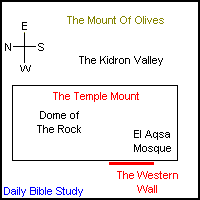
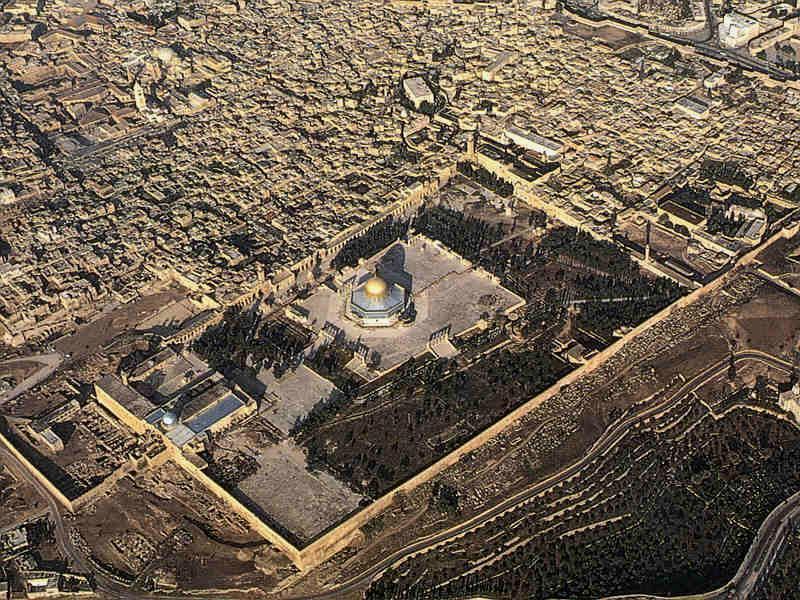
click above image to enlarge
The Temple Mount site is synonymous with Mt Moriah (‘the place where Yhwh sees’) where Abraham offered Isaac his "only son" whom he loved (Ge 22:2).
"Abraham called the name of that place The LORD Will Provide-Jehovah Jireh- as it is said to this day, "In the mount of the LORD it will be provided" (Ge 22:14).
Later this was the site of the threshing floor of Ornan (Araunah) which David purchased for Solomon's temple (1Ch 21:18, 19, 20, 21, 22, 23, 2, 25, 26, 2Sa 24:24, 25, 2Ch 3:1]
Nearby is Golgotha (Jn 19:17) also called Calvary (in same range as Moriah but slightly NW) on which God the Father offered up His only Son, the Son Whom He loved (Jn 3:16, 3:35)
Do you believe that Yeshua is the prophesied Messiah? (see Messianic Prophecy )
He Himself solemnly warned that…
"You will die in your sins for unless you believe that I am ["He" added by translators], you will die in your sins" (Jn 8:24) (Related topic: Jehovah - "I Am")
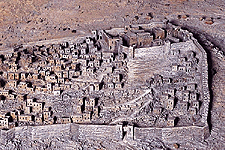
The Old City of David
Scripture records that
"David and all Israel went to Jerusalem (ie, Jebus); and the Jebusites, the inhabitants of the land, were there. The inhabitants of Jebus said to David, "You shall not enter here." Nevertheless David captured the stronghold of Zion i.e., the CITY OF DAVID…
Then David dwelt in the stronghold; therefore it was called the CITY OF DAVID and he built the city all around from the Millo even to the surrounding area; and Joab repaired the rest of the city and David became greater and greater for the LORD of hosts was with him" (1Chr 11:4, 5, 11:7, 8, 9)
The Western Wall in Jerusalem
Click for live cam of the Western Wall. Pray the psalm below…
Pray for the peace of Jerusalem: May they prosper who love you. May peace be within your walls and prosperity within your palaces." Psalms 122:6
Preceptaustin will no longer refer to this wall as the "Wailing Wall" in respect for Jewish sensitivity regarding that term. The JPS Dictionary of Jewish Words…
Wailing Wall n. English An old-fashioned name for the Western Wall, the remaining outside retaining wall of the mount of the Temple in Jerusalem. This name is rarely used by Jews because of its negative connotations. The name comes from the “wailing” noise made when Jews chanted their prayers at the Wall. (Jewish Publication Society)
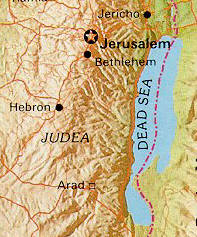
"For out of Jerusalem shall go forth a remnant, and out of Mount Zion survivors. The zeal of the LORD of Hosts shall perform this." (Isaiah 37:42)
- Click 765 uses of "Jerusalem" in NASB.
- Click for Torrey's Topic on "Jerusalem".
- Click ISBE articles on "Jerusalem"
- Play the beautiful song - Yerushalayim
Click on the "Lamb"
Slay the Passover lamb and you shall take a bunch of hyssop and dip it in the blood which is in the basin and apply some of the blood that is in the basin to the lintel and the two doorposts and none of you shall go outside the door of his house until morning for Jehovah will pass through to smite the Egyptians and when He sees the blood on the lintel and on the two doorposts Jehovah will pass over the door and will not allow the destroyer to come in to your houses to smite you… Messiah our Passover has been sacrificed (Ex 12:22, 23 and 1Co 5:7, cf Da 9:24, 25, 26, 27-see notes)
Related Resources:
- Redemption by the Lamb of God
- Watch the Lamb - powerful song
- See Messianic Prophecy - Old Testament Prophecies fulfilled in the New Testament

CLICK FOR BREAKING NEWS
Related Resources: Israel of God - Is God "Finished" with Israel in His prophetic plan?
In 1847 the following article was published in Bibliotheca Sacra
The future condition of the Jews is a subject which has received from various sources no small attention. The subject is worthy of attention. It is worthy of attention for its own sake. Every branch of truth and every department of the divine operations has in it something to repay investigation. The connection of this subject with other themes imparts to it a still higher interest. The right understanding of it will lead to some views of essential importance in regard to the general character of the religion of the Bible, besides which some lessons of practical duty will grow out of it. The Jews have been a people greatly distinguished… In the investigation of this subject it is not a mere superficial view of it with which we should be satisfied. It is a subject which enters deeply into the economy of the gospel and involves principles of the very highest moment in the interpretation of the Bible.
THE ISRAEL OF GOD
Has God Replaced Israel with the Church?
Is the Church now "the Israel of God"?
In his last words to the Galatian believers Paul asked that "peace and mercy be upon them, and upon the Israel of God." (Galatians 6:16) A not uncommon misinterpretation (in my opinion) is to use this verse as justification for the hypothesis that since the majority of Jews rejected the Messiah and His gospel, God has instituted a new program in which the New Testament Church, the body of Christ, has replaced Israel and inherited the promises He originally intended to bestow on Israel. This genre of of teaching is often referred to as "replacement theology". In context Paul is not using "the Israel of God" as a synonym for the church as is sadly taught even in evangelical works (eg, "The Disciple Study Bible" comments that now "The church is the true Israel.")
John MacArthur comments that…
The Israel of God refers to Jewish believers in Jesus Christ, to those who are spiritual as well as physical descendants of Abraham (Gal 3:7) and are heirs of promise rather than of law (Gal 3:18). They are the real Jews, the true Israel of faith, like those referred to in Romans 2:28, 29 (see notes) and Romans 9:6, 7 (notes). (MacArthur, J. Galatians. Chicago: Moody Press)
The highly respected conservative, evangelical Bible Knowledge Commentary agrees with Dr MacArthur's interpretation of (Galatians 6:16) writing that
The NIV errs in translating it "even to the Israel of God" rather than “and upon the Israel of God” as in the NASB (Ed: And ESV, NET, KJV). While some believe that “Israel of God” is the church, the evidence does not support such a conclusion. First, the repetition of the preposition (“upon” or “to”) indicates two groups are in view. Second, all the 65 other occurrences of the term “Israel” in the New Testament refer to Jews. It would thus be strange for Paul to use “Israel” here to mean Gentile Christians. Third, Paul elsewhere referred to two kinds of Israelites—believing Jews and unbelieving Jews (cf. Romans 9:6-note). Lest it be thought that Paul is anti-Semitic, he demonstrated by means of this benediction his deep love and concern for true Israel, that is, Jews who had come to Christ. (Walvoord, J. F., Zuck, R. B., et al: The Bible Knowledge Commentary. 1985. Victor) (Bolding added)
David Levy notes that…
Some scholars believe that Paul’s reference to “the Israel of God” (Gal 6:16) applies to all true believers-Jews and Gentiles-who make up the church. This cannot be the correct interpretation for a number of reasons. First, the phrase “and upon the Israel of God” is an afterthought to the general benediction and shows Paul’s desire for Jewish people who embrace the Gospel of Christ to receive God’s peace and mercy, referring to the true remnant within Israel (cp. Ro. 9:6, 27; 11:5). In this passage Paul recognized the true Jewish believers within the church. Second, the word and can be translated even (NIV), identifying “the Israel of God” as Jewish believers within the church. Third, the other 65 uses of the term Israel in the New Testament refer to the Jewish people. It would be strange for Paul to refer to Gentile Christians as “Israel.” Fourth, Paul elsewhere referred to two kinds of Israelites-believers and unbelievers (Ro 9:6). It is clear that the phrase “the Israel of God” refers only to Jewish believers within the church. (from Israel My Glory).
William MacDonald writes that…
Many have taken this (the phrase "the Israel of God") to mean the church. However, the Israel of God refers to those Jews by natural birth who accept the Lord Jesus as Messiah. There was neither peace nor mercy for those who walked under the law, but both are the portion of those in the new creation. (MacDonald, W & Farstad, A. Believer's Bible Commentary: Thomas Nelson) (Bolding added)
The King James Version Study Bible adds that…
The verse’s final and seems to distinguish between Gentile Christians (as many as walk) and Jewish Christians (the Israel of God). (Dobson, E G, Charles Feinberg, E Hindson, Woodrow Kroll, H L. Wilmington: KJV Bible Commentary: Nelson)
Cleon Rogers comments on the Israel of God…
The phrase is not to be taken as an explanation of the preceding but as a separate entity or group. His thoughts turn to his own brethren after the flesh and he pauses to specify those who were once Israelites according to the flesh but now are the Israel of God (Ellicott). (New Linguistic & Exegetical Key to the Greek New Testament)
The Wycliffe Bible Commentary comments that while the "Israel of God" could possibly refer…
to the whole church, in view of the and (kai) the more probable reference is to Christian Jews, such as Paul himself. These are the real Israel, as opposed to those who merely bear the name (cf. Romans 2:29-note). (Pfeiffer, C F: Wycliffe Bible Commentary. 1981. Moody)
Ridderbos…
Somewhat surprising is the addition: and upon the Israel of God. In view of what has gone before (cf. Gal 3:29, 4:28, 29) we can hardly doubt that this Israel of God does not refer to the empirical, national Israel as an equally authorized partner alongside of the believers in Christ (“they who walk by this rule”). As elsewhere (cf. Rom. 9:7), so here, Israel designates the new Israel. (Ridderbos, Herman N., The Epistle of Paul to the Churches of Galatia: The New International Commentary on the Old and New Testament. 1953)
The Holman Christian Standard Study Bible…
The Israel of God may mean: (1) the Gentile church, which through faith has inherited the promise God gave to Abraham (Gal 3:29) or (2) more likely, the "remnant" of believing Israel "chosen by grace" (Ro 11:5-note), as opposed to the "false brothers" among the Jews (Gal 2:4), who were seeking to be justified by "the works of the law" (Gal 2:16).
Johann Bengel writing in the mid-1700's (he is clearly not a dispensationalist!) comments that "and upon the Israel of God" is used by Paul…
In antithesis to the circumcision [the Jews] (Ed: Bengel is referring to the immediate context, Gal 6:15, in which Paul describes two distinct groups, circumcision and uncircumcision.). The Israel of God are believers of the circumcision or Jewish nation [Phil 3:3]. (Gnomon of the New Testament).
John Eadie who is not a dispensationalist and whose scholarship on the NT Pauline epistles (on which he has written commentaries) is considered by most to be beyond reproach, has the following somewhat technical note on the phrase "and on the Israel of God" aptly noting that…
The meaning turns on the sense assigned to kai. If it be only copulative “and,” then the Israel of God is an additional body… and would mean Jewish believers. But if kai be explicative, signifying “to wit,” (Ed: Cp NIV "even") then the Israel of God is the same body with the "those" (hosos), and is the whole believing community, comprising alike Jews and Gentiles… Can kai be really explicative? (Ed: It is interesting that this very word kai is used twice in this one verse, the first time at the beginning of the Greek sentence where it is translated "and" without any hesitation even by those who then chose to translate it as an explicative rather than a copulative in the second use). Ellicott says that Meyer's examples do not seem conclusive (1Cor 3:5, 8:12, 15:38), nor do they (Ed: In other words, Eadie an esteemed Greek scholar agrees with Ellicott who is also a well known Greek scholar). Still it is to be found in this sense, which Winer (§ 53, 3) calls epexegetical, introducing the same thing under another aspect. But there is no case so peculiarly distinctive in sense as this would be. And, (1) In the quotations commonly adduced to prove this position, that Israel means believers, Gentiles as well as Jews, as Ro 2:28, 29, 9:6-8, Gal 4:28, 31, it is Jews by blood who are spoken of or referred to in connection with the appellation (Ed: In other words in the passages Eadie lists, the context clearly is referring to ethnic Israel or physical Jews). (2) The simple copulative meaning (of kai) is not to be departed from, save on very strong grounds; and there is no ground for such a departure here, so that the Israel of God are a party included in, and yet distinct from, the those (hosos). and on the Israel of God The apostle is not in the habit of calling the church made up of Jews and Gentiles—Israel. Israel is used eleven times in Romans, but in all the instances it refers to Israel proper; and… in every other portion of the New Testament. In the Apocalypse (Revelation), the 144,000 sealed of Israel stand in contrast to “the great multitude which no man can number,” taken out of the Gentile or non-Israelitish races. Rev. 7:9. The “Israelite indeed” is also one by blood. John 1:47; comp. 1Cor 10:18. The hosos may not be Gentile believers as such, and opposed to Jewish believers, but the entire number who walk according to this rule; while Paul finds among them a certain class to whom his heart turns with instinctive fondness—“the Israel of God.”… It may be said indeed, on the one hand, that the apostle has been proving that the Jew, as a Jew, has no privilege above the Gentiles, that both Jew and Gentile are on a level, so that both believing Jews and Gentiles may therefore be called Israel. It may be replied, however, that the apostle never in any place so uses the name, never gives the grand old theocratic name to any but the chosen people. (4) To the apostle there were two Israels—“they are not all Israel which are of Israel,”—and he says here, not Israel according to the flesh (physical lineage), but “the Israel of God,” or the true believing Israel; his own brethren by a double tie—by blood, and especially by grace. Was it unnatural for the apostle to do this, especially after rebuking false Israel—the wretched Judaizers—who certainly were not the Israel of God?
Charles J Ellicott (1863) explains that…
It is doubtful whether kai is explicative… or simply copulative… it is doubtful whether kai is ever used by St Paul in so marked an explicative force as must here be assigned… and as it seems still more doubtful whether Christians generally could be called ‘the Israel of God’… the simple copulative meaning seems most probable. St Paul includes all in his blessing, of whatever stock and kindred and then, with his thoughts turning (as they ever did) to his own brethren after the flesh (Ro 9:3), he pauses to specify those who were once Israelites according to the flesh (1Cor. 10:18), but now are the Israel of God, true spiritual children of Abraham. (St. Paul's Epistle to the Galatians : with a critical and grammatical commentary, and a revised translation)
Andy Woods lists ten facts favoring the interpretation of kai in Galatians 6:16 as a copulative and thus the Israel of God as born again Jews in the the Church…
1 Continuative kai (Ed: Use as a copulative, a simple connective joining together words or phrases) is the most common New Testament form
2 Appositional kai is the rarest New Testament form
3 Point easier made by eliminating kai
4 “Israel” always means national, ethnic Israel elsewhere in the New Testament (Fruchtenbaum, Israelogy, pg. 684-90)
5 Israel not equated with church by the fathers until A.D. 160
6 Why introduce sweeping point in conclusion rather than doctrinal section?
7 Twofold repetition of “upon” (epi)
8 Paul elsewhere designates two groups (Gal 6:15+; Gal 2:7-8+)
9 Paul elsewhere singles out ethnic, believing Jews (Ro 2:28-29; Ro 4:11-12; Ro 9:6; Ro 11:1, 5; 1Cor 10:18)
10 Paul is not anti-Semitic-Burton pg. 358 (E. D. Burton, The Epistle to the Galatians - ICC; Edinburgh, 1921)
Other older commentators (non-dispensational) such as Matthew Poole (1624–1679) have not seen the "church" in the phrase "the Israel of God", Poole commenting…
Upon the Israel of God, upon the true Israelites, whom he calls the Israel of God hereby intimating and confirming the truth of what he had said, Romans 2:28, 29 (notes), and what our Saviour had said of Nathanael, John 1:47+, calling him “an Israelite indeed,” because in him was “no guile;” and establishing a distinction between such as were so really (Ed: Jews who placed their faith in Messiah - see Nathanael's open declaration in Jn 1:49+ and Jesus' "interpretation" in Jn 1:50+), and those who were only Israelites in name (Ed: non-believing Jews), because descended from Jacob, to whom God gave the name of Israel. Hereby also checking the vanity of the Jews, who gloried in the name of Israelites, and thought there could no water come out of the fountains of Israel which God would cast away. The apostle doth not promise, or prophesy, mercy and peace to all Israelites, but only to the Israel of God; that is, to believers, that received and embraced Jesus Christ offered in the gospel." (Matthew Poole's Commentary on the New Testament) (Bolding added)
And of course the best "Commentator" on Scripture is always God Himself.
In Romans Paul teaches us that… "all Israel will be saved" (Ro 11:26+). Who is Israel here? Clearly in context Paul is referring to ethnic Israel, those who are the physical seed of Abraham. Indeed, Israel is used 77 times in the NT and all refer to ethnic Israel (the only disputed use is Gal 6:16!) In the present passage Paul is referring to the remnant of Jews who will be saved when "the Deliverer will return from Zion" and "will remove ungodliness from Jacob" at which time they enter into the New Covenant. As William Newell comments in his excellent exposition on Romans "This is the real Israel of God of whom it is written, "All Israel shall be saved.""
Jeremiah records Jehovah's promise of the New Covenant given initially not to the Church but to ethnic Israel, a promise that will be consummated at the end of this age when "all Israel will be saved"…
Behold, days are coming," declares the LORD, "when I will make a new covenant with the house of Israel and with the house of Judah, not like the covenant which I made with their fathers in the day I took them by the hand to bring them out of the land of Egypt, My covenant which they broke, although I was a husband to them," declares the LORD. But this is the covenant which I will make with the house of Israel after those days," declares the LORD, "I will put My law within them, and on their heart I will write it; and I will be their God, and they shall be My people. And they shall not teach again, each man his neighbor and each man his brother, saying, 'Know the LORD,' for they shall all know Me, from the least of them to the greatest of them," declares the LORD, "for I will forgive their iniquity, and their sin I will remember no more. Thus says the LORD, Who gives the sun for light by day, and the fixed order of the moon and the stars for light by night, Who stirs up the sea so that its waves roar; the LORD of Hosts is His name:
"If this fixed order departs from before Me," declares the LORD, "Then (When?) the offspring (Hebrew = zera = seed used in Isa 6:13+) of Israel also shall cease from being a nation before Me forever." Thus says the LORD, "If the heavens above can be measured, and the foundations of the earth searched out below, then I will also cast off all the offspring of Israel for all that they have done," declares the LORD." (Jeremiah 31:31, 32, 33, 34, 35, 36, 37+) (Bolding added)
Comment: And need one mention the miracle of the nation of Israel reborn in one day in May, 1948 against all human odds! How anyone can teach God is finished with Israel in the face of such a clear miracle of divine providence is beyond comprehension! Such would simply have to "ignore the facts!"
Beloved, Jehovah could not have been much clearer! God is not finished with the nation of Israel or the ethnic Jews! So continue to
"Pray for the peace of Jerusalem"!
Psalm 122:6+
| THE THREE DIVINE DAYS | Of The Lord, Of Christ, Of God |
| THE END TIME JUDGMENTS | Of Christ, Of the Sheep and Goats, Of Israel, Of the Great White Throne |
| EZEKIEL TIMELINE- | Ezekiel's prophecy in context of Israel's history |
| GLORY OF THE LORD | Depicts the departure of God's glory and His return to the Temple |
| GOD'S PLAN FOR THE AGES | God's Eye Overview from the first Adam to the second Adam |
| GOD'S PLAN FOR JERUSALEM | Timeline chart of the "five" prophetic peaks of Jerusalem |
| DANIEL'S SEVENTIETH WEEK | Detailed Scripturally reference timeline chart on Daniel 9:27 |
| REVELATION CHARTED OUT | Allows quick comparison of events and timing in Revelation 4-22 |
- Daniel 9:24-27: Introductory Comments
- Brief "Prophecy Primer" why interpret Daniel 9:24-27 and other prophecy literally?
- Why Daniel 9:24-27 Is One of Most Significant Passages in Scripture
- Daniel Commentaries grouped by interpretative approach to Daniel 9:24-27
- Anecdotal Stories and Daniel 9:24-27
- Evidence Supporting Unit of Time in Daniel 9:24-27 as Years
- Daniel Commentaries from a literal, usually futuristic perspective
- Daniel 9:24-27: Part 1: Notes on Daniel 9:24-25
- Daniel 9:24-27: Part 2: Notes on Daniel 9:26-27
- Summary Chart of Daniel's Seventieth Week
- Daniel's Seventieth Week Charted in parallel with Daniel's other prophecies
- Lectures by Kay Arthur on Daniel 9:24-27: Lec14, Lec15, Lec16
- Lecture 9: (Daniel 7) LIONS, LEOPARDS, AND BEARS
- Lecture 10: (Daniel 7) A WOMAN, A CHILD AND A BEAST With 10 HORNS
- Lecture 11: (Daniel 7) ANY CONNECTION BETWEEN EUROPEAN COMMON MARKET and LITTLE HORN?
- LECTURE 12: (Daniel 7) WHAT LEADS UP TO LORD'S RETURN?
- Lecture 13: (Daniel 8) The Four‑Horned Goat and the Surety of God's Indignation
- LECTURE 14: (Daniel 9) PRAY FAST… IT'S CODE BLUE FOR OUR WORLD
- LECTURE 15: (Daniel 9) WILL GOD WEEP BECAUSE YOU DID NOT RECOGNIZE THE TIMES
- LECTURE 16: (Daniel 9) UNDERSTANDING THE 70TH WEEK OF DANIEL
- LECTURE 17: (Daniel 10) OUR FUTURE IS IN THE WRITING OF TRUTH
- LECTURE 18: (Daniel 11) THE KING OF DANIEL’S 70TH WEEK
- LECTURE 19: (Daniel 12) WHEN IS JESUS COMING? WATCH ISRAEL
Revelation Part 3
- Lecture 00 Knowing Revelation Takes Away the Fear
- Lecture 01 Knowing Who God Is and Living Accordingly
- Lecture 02 Who Do You Bow Down To?
- Lecture 03 When Will the Mystery of God be Finished?
- Lecture 04 Date Setting and The Return of Christ
- Lecture 05 Matthew 24 and the Coming of the Son of Man
- Lecture 06 When Does the Tribulation Begin?
- Lecture 07 Why Is It So Important to Understand the Jew?
- Lecture 08 Is God Finished With the Jews?
- Lecture 09 This Land is Your Land… Forever!
- Lecture 10 What Happened to the Old Testament Promises Regarding Israel?
- Lecture 11 A Prophecy Regarding Israel: The Beginning of the End
Revelation Part 4
- Lecture 00 Where are the leaders? The Strong and Courageous? Those valiant for God's absolutes?
- Lecture 01 The Lord Jesus Christ is Returning: You Can Count on It!
- Lecture 02 Are the Events of Revelation Past? Happening Now? Or Yet Future?
- Lecture 03 It's the Last Hour! Don't be Misled by the Devil's Antichrists
- Lecture 04 What Will it be Like When the ''Real'' Antichrist Comes?
- Lecture 05 When Will the Antichrist rear his Destructive head?
- Lecture 06 The Devil's Beauty and Beast
- Lecture 07 Who is the Great harlot Babylon?
- Lecture 08 The Day of the Lord is Coming
- Lecture 09 Where Will the Church be When the Day of the Lord Comes?
- Lecture 10 What and When is Armageddon?
- Lecture 11 When Jesus Returns to the Earth Where Will the Church Be?
- Lecture 12 Where is the Church in the Book of the Revelation?
- Lecture 13 Where is the Church in the 1000 Year Reign?
Related Resources:
- INTRODUCTION TO INDUCTIVE BIBLE STUDY
- OBSERVATION
- INTERPRETATION
- APPLICATION
- PERFORM A GREEK WORD STUDY - using Web tools
- GREEK QUICK REFERENCE GUIDE - Greek verb tense, voice, mood
- BASICS OF BIBLE INTERPRETATION - Greek Hebrew Figures of speech
- BIBLE VERSIONS How Literal is your translation?
- INTERPRETATION OF GOD'S WORD: Supernaturalistic, Naturalistic, Existentialistic, Dogmatic
Jos. 10:1; Jos. 10:3; Jos. 10:5; Jos. 10:23; Jos. 12:10; Jos. 15:8; Jos. 15:63; Jos. 18:28; Jdg. 1:7; Jdg. 1:8; Jdg. 1:21; Jdg. 19:10; 1 Sam. 17:54; 2 Sam. 5:5; 2 Sam. 5:6; 2 Sam. 5:13; 2 Sam. 5:14; 2 Sam. 8:7; 2 Sam. 9:13; 2 Sam. 10:14; 2 Sam. 11:1; 2 Sam. 11:12; 2 Sam. 12:31; 2 Sam. 14:23; 2 Sam. 14:28; 2 Sam. 15:8; 2 Sam. 15:11; 2 Sam. 15:14; 2 Sam. 15:29; 2 Sam. 15:37; 2 Sam. 16:3; 2 Sam. 16:15; 2 Sam. 17:20; 2 Sam. 19:19; 2 Sam. 19:25; 2 Sam. 19:33; 2 Sam. 19:34; 2 Sam. 20:2; 2 Sam. 20:3; 2 Sam. 20:7; 2 Sam. 20:22; 2 Sam. 24:8; 2 Sam. 24:16; 1 Ki. 2:11; 1 Ki. 2:36; 1 Ki. 2:38; 1 Ki. 2:41; 1 Ki. 3:1; 1 Ki. 3:15; 1 Ki. 8:1; 1 Ki. 9:15; 1 Ki. 9:19; 1 Ki. 10:2; 1 Ki. 10:26; 1 Ki. 10:27; 1 Ki. 11:7; 1 Ki. 11:13; 1 Ki. 11:29; 1 Ki. 11:32; 1 Ki. 11:36; 1 Ki. 11:42; 1 Ki. 12:18; 1 Ki. 12:21; 1 Ki. 12:27; 1 Ki. 12:28; 1 Ki. 14:21; 1 Ki. 14:25; 1 Ki. 15:2; 1 Ki. 15:4; 1 Ki. 15:10; 1 Ki. 22:42; 2 Ki. 8:17; 2 Ki. 8:26; 2 Ki. 9:28; 2 Ki. 12:1; 2 Ki. 12:17; 2 Ki. 12:18; 2 Ki. 14:2; 2 Ki. 14:13; 2 Ki. 14:19; 2 Ki. 14:20; 2 Ki. 15:2; 2 Ki. 15:33; 2 Ki. 16:2; 2 Ki. 16:5; 2 Ki. 18:2; 2 Ki. 18:17; 2 Ki. 18:22; 2 Ki. 18:35; 2 Ki. 19:10; 2 Ki. 19:21; 2 Ki. 19:31; 2 Ki. 21:1; 2 Ki. 21:4; 2 Ki. 21:7; 2 Ki. 21:12; 2 Ki. 21:13; 2 Ki. 21:16; 2 Ki. 21:19; 2 Ki. 22:1; 2 Ki. 22:14; 2 Ki. 23:1; 2 Ki. 23:2; 2 Ki. 23:4; 2 Ki. 23:5; 2 Ki. 23:6; 2 Ki. 23:9; 2 Ki. 23:13; 2 Ki. 23:20; 2 Ki. 23:23; 2 Ki. 23:24; 2 Ki. 23:27; 2 Ki. 23:30; 2 Ki. 23:31; 2 Ki. 23:33; 2 Ki. 23:36; 2 Ki. 24:4; 2 Ki. 24:8; 2 Ki. 24:10; 2 Ki. 24:14; 2 Ki. 24:15; 2 Ki. 24:18; 2 Ki. 24:20; 2 Ki. 25:1; 2 Ki. 25:8; 2 Ki. 25:9; 2 Ki. 25:10; 1 Chr. 3:4; 1 Chr. 3:5; 1 Chr. 6:10; 1 Chr. 6:15; 1 Chr. 6:32; 1 Chr. 8:28; 1 Chr. 8:32; 1 Chr. 9:3; 1 Chr. 9:34; 1 Chr. 9:38; 1 Chr. 11:4; 1 Chr. 14:3; 1 Chr. 14:4; 1 Chr. 15:3; 1 Chr. 18:7; 1 Chr. 19:15; 1 Chr. 20:1; 1 Chr. 20:3; 1 Chr. 21:4; 1 Chr. 21:15; 1 Chr. 21:16; 1 Chr. 23:25; 1 Chr. 28:1; 1 Chr. 29:27; 2 Chr. 1:4; 2 Chr. 1:13; 2 Chr. 1:14; 2 Chr. 1:15; 2 Chr. 2:7; 2 Chr. 2:16; 2 Chr. 3:1; 2 Chr. 5:2; 2 Chr. 6:6; 2 Chr. 8:6; 2 Chr. 9:1; 2 Chr. 9:25; 2 Chr. 9:27; 2 Chr. 9:30; 2 Chr. 10:18; 2 Chr. 11:1; 2 Chr. 11:5; 2 Chr. 11:14; 2 Chr. 11:16; 2 Chr. 12:2; 2 Chr. 12:4; 2 Chr. 12:5; 2 Chr. 12:7; 2 Chr. 12:9; 2 Chr. 12:13; 2 Chr. 13:2; 2 Chr. 14:15; 2 Chr. 15:10; 2 Chr. 17:13; 2 Chr. 19:1; 2 Chr. 19:4; 2 Chr. 19:8; 2 Chr. 20:5; 2 Chr. 20:15; 2 Chr. 20:17; 2 Chr. 20:18; 2 Chr. 20:20; 2 Chr. 20:27; 2 Chr. 20:28; 2 Chr. 20:31; 2 Chr. 21:5; 2 Chr. 21:11; 2 Chr. 21:13; 2 Chr. 21:20; 2 Chr. 22:1; 2 Chr. 22:2; 2 Chr. 23:2; 2 Chr. 24:1; 2 Chr. 24:6; 2 Chr. 24:9; 2 Chr. 24:18; 2 Chr. 24:23; 2 Chr. 25:1; 2 Chr. 25:23; 2 Chr. 25:27; 2 Chr. 26:3; 2 Chr. 26:9; 2 Chr. 26:15; 2 Chr. 27:1; 2 Chr. 27:8; 2 Chr. 28:1; 2 Chr. 28:10; 2 Chr. 28:24; 2 Chr. 28:27; 2 Chr. 29:1; 2 Chr. 29:8; 2 Chr. 30:1; 2 Chr. 30:2; 2 Chr. 30:3; 2 Chr. 30:5; 2 Chr. 30:11; 2 Chr. 30:13; 2 Chr. 30:14; 2 Chr. 30:21; 2 Chr. 30:26; 2 Chr. 31:4; 2 Chr. 32:2; 2 Chr. 32:9; 2 Chr. 32:10; 2 Chr. 32:12; 2 Chr. 32:18; 2 Chr. 32:19; 2 Chr. 32:22; 2 Chr. 32:23; 2 Chr. 32:25; 2 Chr. 32:26; 2 Chr. 32:33; 2 Chr. 33:1; 2 Chr. 33:4; 2 Chr. 33:7; 2 Chr. 33:9; 2 Chr. 33:13; 2 Chr. 33:15; 2 Chr. 33:21; 2 Chr. 34:1; 2 Chr. 34:3; 2 Chr. 34:5; 2 Chr. 34:7; 2 Chr. 34:9; 2 Chr. 34:22; 2 Chr. 34:29; 2 Chr. 34:30; 2 Chr. 34:32; 2 Chr. 35:1; 2 Chr. 35:18; 2 Chr. 35:24; 2 Chr. 36:1; 2 Chr. 36:2; 2 Chr. 36:3; 2 Chr. 36:4; 2 Chr. 36:5; 2 Chr. 36:9; 2 Chr. 36:10; 2 Chr. 36:11; 2 Chr. 36:14; 2 Chr. 36:19; 2 Chr. 36:23; Ezr. 1:2; Ezr. 1:3; Ezr. 1:4; Ezr. 1:5; Ezr. 1:7; Ezr. 1:11; Ezr. 2:1; Ezr. 2:68; Ezr. 3:1; Ezr. 3:8; Ezr. 4:6; Ezr. 4:8; Ezr. 4:12; Ezr. 4:20; Ezr. 4:23; Ezr. 4:24; Ezr. 5:1; Ezr. 5:2; Ezr. 5:14; Ezr. 5:15; Ezr. 5:16; Ezr. 5:17; Ezr. 6:3; Ezr. 6:5; Ezr. 6:9; Ezr. 6:12; Ezr. 6:18; Ezr. 7:7; Ezr. 7:8; Ezr. 7:9; Ezr. 7:13; Ezr. 7:14; Ezr. 7:15; Ezr. 7:16; Ezr. 7:17; Ezr. 7:19; Ezr. 7:27; Ezr. 8:29; Ezr. 8:30; Ezr. 8:31; Ezr. 8:32; Ezr. 9:9; Ezr. 10:7; Ezr. 10:9; Neh. 1:2; Neh. 1:3; Neh. 2:11; Neh. 2:12; Neh. 2:13; Neh. 2:17; Neh. 2:20; Neh. 3:8; Neh. 3:9; Neh. 3:12; Neh. 4:7; Neh. 4:8; Neh. 4:22; Neh. 6:7; Neh. 7:2; Neh. 7:3; Neh. 7:6; Neh. 8:15; Neh. 11:1; Neh. 11:2; Neh. 11:3; Neh. 11:4; Neh. 11:6; Neh. 11:22; Neh. 12:27; Neh. 12:28; Neh. 12:29; Neh. 12:43; Neh. 13:6; Neh. 13:7; Neh. 13:15; Neh. 13:16; Neh. 13:19; Neh. 13:20; Est. 2:6; Ps. 51:18; Ps. 68:29; Ps. 79:1; Ps. 79:3; Ps. 102:21; Ps. 116:19; Ps. 122:2; Ps. 122:3; Ps. 122:6; Ps. 125:2; Ps. 128:5; Ps. 135:21; Ps. 137:5; Ps. 137:6; Ps. 137:7; Ps. 147:2; Ps. 147:12; Eccl. 1:1; Eccl. 1:12; Eccl. 1:16; Eccl. 2:7; Eccl. 2:9; Cant. 1:5; Cant. 2:7; Cant. 3:5; Cant. 3:10; Cant. 5:8; Cant. 5:16; Cant. 6:4; Cant. 8:4; Isa. 1:1; Isa. 2:1; Isa. 2:3; Isa. 3:1; Isa. 3:8; Isa. 4:3; Isa. 4:4; Isa. 5:3; Isa. 5:14; Isa. 7:1; Isa. 8:14; Isa. 10:10; Isa. 10:11; Isa. 10:12; Isa. 10:32; Isa. 22:10; Isa. 22:21; Isa. 24:23; Isa. 27:13; Isa. 28:14; Isa. 30:19; Isa. 31:5; Isa. 31:9; Isa. 33:20; Isa. 36:2; Isa. 36:7; Isa. 36:20; Isa. 37:10; Isa. 37:22; Isa. 37:32; Isa. 40:2; Isa. 40:9; Isa. 41:27; Isa. 44:26; Isa. 44:28; Isa. 51:17; Isa. 52:1; Isa. 52:2; Isa. 52:9; Isa. 62:1; Isa. 62:6; Isa. 62:7; Isa. 64:10; Isa. 65:18; Isa. 65:19; Isa. 66:10; Isa. 66:13; Isa. 66:20; Jer. 1:3; Jer. 1:15; Jer. 2:2; Jer. 3:17; Jer. 4:3; Jer. 4:4; Jer. 4:5; Jer. 4:10; Jer. 4:11; Jer. 4:14; Jer. 4:16; Jer. 5:1; Jer. 6:1; Jer. 6:6; Jer. 6:8; Jer. 7:17; Jer. 7:34; Jer. 8:1; Jer. 8:5; Jer. 9:11; Jer. 11:2; Jer. 11:6; Jer. 11:9; Jer. 11:12; Jer. 11:13; Jer. 13:9; Jer. 13:13; Jer. 13:27; Jer. 14:2; Jer. 14:16; Jer. 15:4; Jer. 15:5; Jer. 17:19; Jer. 17:20; Jer. 17:21; Jer. 17:25; Jer. 17:26; Jer. 17:27; Jer. 18:11; Jer. 19:3; Jer. 19:7; Jer. 19:13; Jer. 22:19; Jer. 23:14; Jer. 23:15; Jer. 24:1; Jer. 24:8; Jer. 25:2; Jer. 25:18; Jer. 26:18; Jer. 27:3; Jer. 27:18; Jer. 27:20; Jer. 27:21; Jer. 29:1; Jer. 29:2; Jer. 29:4; Jer. 29:20; Jer. 29:25; Jer. 32:2; Jer. 32:32; Jer. 32:44; Jer. 33:10; Jer. 33:13; Jer. 33:16; Jer. 34:1; Jer. 34:6; Jer. 34:7; Jer. 34:8; Jer. 34:19; Jer. 35:11; Jer. 35:13; Jer. 35:17; Jer. 36:9; Jer. 36:31; Jer. 37:5; Jer. 37:11; Jer. 37:12; Jer. 38:28; Jer. 39:1; Jer. 39:8; Jer. 40:1; Jer. 42:18; Jer. 44:2; Jer. 44:6; Jer. 44:9; Jer. 44:13; Jer. 44:17; Jer. 44:21; Jer. 51:35; Jer. 51:50; Jer. 52:1; Jer. 52:3; Jer. 52:4; Jer. 52:12; Jer. 52:13; Jer. 52:14; Jer. 52:29; Lam. 1:7; Lam. 1:8; Lam. 1:17; Lam. 2:10; Lam. 2:13; Lam. 2:15; Lam. 4:12; Ezek. 4:1; Ezek. 4:7; Ezek. 4:16; Ezek. 5:5; Ezek. 8:3; Ezek. 9:4; Ezek. 9:8; Ezek. 11:15; Ezek. 12:10; Ezek. 12:19; Ezek. 13:16; Ezek. 14:21; Ezek. 14:22; Ezek. 15:6; Ezek. 16:2; Ezek. 16:3; Ezek. 17:12; Ezek. 21:2; Ezek. 21:20; Ezek. 21:22; Ezek. 22:19; Ezek. 23:4; Ezek. 24:2; Ezek. 26:2; Ezek. 33:21; Ezek. 36:38; Dan. 1:1; Dan. 5:2; Dan. 5:3; Dan. 6:10; Dan. 9:2; Dan. 9:7; Dan. 9:12; Dan. 9:16; Dan. 9:25; Joel 2:32; Joel 3:1; Joel 3:6; Joel 3:16; Joel 3:17; Joel 3:20; Amos 1:2; Amos 2:5; Obad. 1:11; Obad. 1:20; Mic. 1:1; Mic. 1:5; Mic. 1:9; Mic. 1:12; Mic. 3:10; Mic. 3:12; Mic. 4:2; Mic. 4:8; Zeph. 1:4; Zeph. 1:12; Zeph. 3:14; Zeph. 3:16; Zech. 1:12; Zech. 1:14; Zech. 1:16; Zech. 1:17; Zech. 1:19; Zech. 2:2; Zech. 2:4; Zech. 2:12; Zech. 3:2; Zech. 7:7; Zech. 8:3; Zech. 8:4; Zech. 8:8; Zech. 8:15; Zech. 8:22; Zech. 9:9; Zech. 9:10; Zech. 12:2; Zech. 12:3; Zech. 12:5; Zech. 12:6; Zech. 12:7; Zech. 12:8; Zech. 12:9; Zech. 12:10; Zech. 12:11; Zech. 13:1; Zech. 14:2; Zech. 14:4; Zech. 14:8; Zech. 14:10; Zech. 14:11; Zech. 14:12; Zech. 14:14; Zech. 14:16; Zech. 14:17; Zech. 14:21; Mal. 2:11; Mal. 3:4; Matt. 2:1; Matt. 2:3; Matt. 3:5; Matt. 4:25; Matt. 5:35; Matt. 15:1; Matt. 16:21; Matt. 20:17; Matt. 20:18; Matt. 21:1; Matt. 21:10; Matt. 23:37; Mk. 1:5; Mk. 3:8; Mk. 3:22; Mk. 7:1; Mk. 10:32; Mk. 10:33; Mk. 11:1; Mk. 11:11; Mk. 11:15; Mk. 11:27; Mk. 15:41; Lk. 2:22; Lk. 2:25; Lk. 2:38; Lk. 2:41; Lk. 2:43; Lk. 2:45; Lk. 4:9; Lk. 5:17; Lk. 6:17; Lk. 9:31; Lk. 9:51; Lk. 9:53; Lk. 10:30; Lk. 13:4; Lk. 13:22; Lk. 13:33; Lk. 13:34; Lk. 17:11; Lk. 18:31; Lk. 19:11; Lk. 19:28; Lk. 19:41; Lk. 21:20; Lk. 21:24; Lk. 23:7; Lk. 23:28; Lk. 24:13; Lk. 24:18; Lk. 24:33; Lk. 24:47; Lk. 24:52; Jn. 1:19; Jn. 2:13; Jn. 2:23; Jn. 4:20; Jn. 4:21; Jn. 4:45; Jn. 5:1; Jn. 5:2; Jn. 7:25; Jn. 10:22; Jn. 11:18; Jn. 11:55; Jn. 12:12; Acts 1:4; Acts 1:8; Acts 1:12; Acts 1:19; Acts 2:5; Acts 2:14; Acts 4:5; Acts 4:16; Acts 5:16; Acts 5:28; Acts 6:7; Acts 8:1; Acts 8:14; Acts 8:25; Acts 8:26; Acts 8:27; Acts 9:2; Acts 9:13; Acts 9:21; Acts 9:26; Acts 9:28; Acts 10:39; Acts 11:2; Acts 11:22; Acts 11:27; Acts 12:25; Acts 13:13; Acts 13:27; Acts 13:31; Acts 15:2; Acts 15:4; Acts 16:4; Acts 19:21; Acts 20:16; Acts 20:22; Acts 21:4; Acts 21:11; Acts 21:12; Acts 21:13; Acts 21:15; Acts 21:17; Acts 21:31; Acts 22:5; Acts 22:17; Acts 22:18; Acts 23:11; Acts 24:11; Acts 25:1; Acts 25:3; Acts 25:7; Acts 25:9; Acts 25:15; Acts 25:20; Acts 25:24; Acts 26:4; Acts 26:10; Acts 26:20; Acts 28:17; Rom. 15:19; Rom. 15:25; Rom. 15:26; Rom. 15:31; 1 Co. 16:3; Gal. 1:17; Gal. 1:18; Gal. 2:1; Gal. 4:25; Gal. 4:26; Heb. 12:22; Rev. 3:12; Rev. 21:2; Rev. 21:10