| THE NEW COVENANT: ONENESS WITH JESUS CHRIST (see additonal notes on Oneness) |
|||||||||||
| CO-MINGLING OF BLOOD |
SHARING OF A COMMON LIFE |
||||||||||
|
What does the co-mingling of blood signify in many ancient (and modern) cultures? (Click Note) Two men have become… Now their...
There is no better illustration of this intimate relationship then the marriage covenant where two become one flesh (Ge 2:24) Now there is… Death to self-life in those areas of mutual concern
What does blood equate with in Scripture ( Lev 17:11)? "life of the flesh is in the blood" Blood ~ Life Illustration: Life saving blood transfusions Blood > Giving & Receiving of life How was the co-mingling of blood carried out? Cut = on arm or wrist with blood intermingled Clasp= striking of hands together (see below) Cup = drinking literally or symbolically each other's blood ("I am drinking you") (see notes) "STRIKING HANDS" Is this custom of cutting and co-mingling of blood in one's hand or wrist present in the OT? The exact custom is not present (however see next column re slave's ear pierced with an awl) but what is present are several examples of a symbolic clasping or giving of the hands that in the context indicate a solemn agreement has been reached between the parties clasping hands. What is Job boldly requesting of God in (Job 17:3KJV) and what is the meaning? He is asking God to be the pledge ("pay his bail") for his innocence Why does Job say God Job's question "Who will be my guarantor ("strike hands with me")?" implies no man is willing or able (certainly not his 3 counselors!) The only One who can fulfill this obligation (by striking hands) is God Himself. In Summary: Job appeals to God his Judge to be God his Pledge
What did participants occasionally do when they made cuts in their flesh to help them remember their blood and lives were now "co-mingled"? They would intentionally produce a scar Scar = permanent reminder Let's see what Scripture says about "covenant cuts" and "covenant marks" What was God's assurance to Zion (representative of the Israelite people) in Isaiah 49:15,16 when they complained that Jehovah had forsaken and forgotten them (Isaiah 49:14)? 1) Can a mother forget nursing child? Even if that occurred God would not forget Zion 2) God had inscribed (engraved) Zion on the palm of His hand (Click for more notes on scars)
Who does the picture of "inscribed on His palm" remind you of when compared with Ps 22:16-note? They pierced my hands and my feet What (Whom) does Ps 22:16 refer to? Messiah's Crucifixion Piercing of hands and feet is an accurate description of crucifixion (see Acts 2:23)
Was a "covenant mark" made on the body of Jesus, the Messenger of the Covenant? What do we learn from (John 20:24, 25, 26, 27)? Thomas, would not believe Christ was risen unless he saw "in His hands the imprint of the nails" Jesus appeared telling Thomas "see My hands … and be… believing."
What did Zechariah prophesy that relates to the Jesus' "covenant marks" (Zech 12:10)? When Christ returns the Jews They will see His marks of covenant and He will fulfill His covenant vows beginning with those given to Abraham. Explanatory Note: Jesus' covenant marks will still be visible when He returns at the end of Daniel's 70th Week (cp Daniel 9:27; Rev 19:11) and triumphs over the Antichrist. At this time the King of kings will set up His 1000 year earthly kingdom at which time all of the promises of the Abrahamic Covenant will be literally fulfilled to Israel (including "the land"). All of Israel that enters the Millennium Kingdom (the so-called "Messianic Age") will be believing Jews (see Zech 13:8, 13:9, Ro 11:25, 26, 27, Ro 11:28, 29). John quotes (Zech 12:10) in (Jn 19:37) and also alludes to Zechariah's prophecy once again in (Re 1:7) writing
A "COVENANT" MARK TO AVOID! The Bible describes one "mark" that you do not want to possess, for ultimately it will prevent those who receive it from entering the New Covenant. That "mark" of course is the "mark of the Beast" (see Rev 13:16). In a sense those who receive that mark will be solemnly and irrevocably bound ("one") with the Beast, the Anti-Christ and will suffer the same fate - eternal destruction in the Lake Of Fire. (Re 19:20, Re 20:10, Re 20:15) How precious is the truth that Christ now bear the marks (scars) of covenant, so that all who by grace believe in His atoning sacrifice and victorious resurrection will enter the New Covenant in His blood and thereby escape forever from the wrath of God to come (1Th 1:10). (See also study of Eternal Punishment) Contrast the mark on the foreheads of those who belong to God - Rev 7:3, Rev 14:1 |
What does John say about Jesus in (Re 5:6) that parallels the truth we have seen above regarding Jesus' covenant marks? Lamb as if slain Note: "Slain" = verb sphazo which is perfect tense which speaks of permanence! Indeed… eternal permanence! Hallelujah! Sphazo also used of the Lamb of God in Re 5:9, Re 5:12 Re 13:8. See related topic - Redemption by the Lamb of God Jesus has forever inscribed us on the palm of His hands! (cf Isaiah 49:16) See study Inscribed on His Hands Come Now Is the Time to Worship My name from the palms of His hands As we are under the covenant of grace, we are secured against departing from the living God by the sure declaration of the covenant. C. H. Spurgeon Faith always sees the bow of covenant promise whenever sense sees the cloud of affliction.
As Jesus' covenant partner do we bear any covenant marks? (Click Dr Barber's explanation of "mark") In NT times what classes of society wore brand marks? Slaves, soldiers, servants of temples How would these truths apply to us today? Are those in covenant with Jesus in any way described as slaves, soldiers or temple servants? As Bondservants Our "mark" is to no longer strive to please men but Christ for we are His bondservants Beloved is your "mark" that you are striving to be a "people pleaser" or a "Jesus pleaser"? As Soldiers (2Ti 2:3,4) We are called to choose to suffer hardship as good soldiers of Christ Jesus, not entangling ourselves in the affairs of everyday life, our goal being to please the one who enlisted us See also:
As Servants of His temple We recognize that because of the New Covenant, our body is a temple of the Holy Spirit Who is in us and that we are not our own but that we have been bought with a price of His precious blood and now have as our goal to glorify God in our body by fleeing immorality
How did Paul describe his covenant marks in (Gal 6:17)? He bore on his body the brand-marks (stigma) of Jesus. Paul's "marks" showed "Whose" he was. Do your brand-marks (figuratively speaking) show "Whose" you are? We love to talk about "who" we are in Christ" (and rightly so!) but we also need to live with the awareness of "Whose" we are! (cp Titus 2:14, 1Pe 2:9, 1Co 7:23)
What does (Ex 21:5, 6 cf Dt 15:12, 13, 14, 15, 16, 17) teach about brand marks in the Old Testament? In Ex 21:1, 2, 3, 4 God specifies the ordinances dealing with Hebrew slaves (usually a result of selling oneself into slavery to pay a debt, Lev 25:39) indicating that every 7th year they were to be set free. But if the… "But if the slave plainly says, 'I love my master, my wife and my children; I will not go out as a free man,' then his master shall bring him to God (Ed note: as if God is a Witness of this "covenant"), then he shall bring him to the door or the doorpost. And his master shall pierce his ear with an awl; (Ed note: a cut in the skin) and he shall serve him permanently." (Ex 21:5, 6) This "love slave" bore the mark of his covenant agreement to voluntarily identify with his master's house forever (See Spurgeon's sermon The Ear Bored with an Awl). Beloved, is this literal mark not a picture of the heart attitude every blood bought believer should have as bondservants of our loving Master the Lord Jesus Christ, Who Himself took "the form of a bondservant" and out of love humbled "Himself by becoming obedient to the point of death, even death on a cross" (Php 2:5, 6, 7, 8, 9, 10-notes), allowing Himself to be pierced with nails that we might be permanently bound to Him in the New Covenant! Oh Beautiful One! I like Larry Richards' comment on the slave's pierced ear… In a real sense, we Christians are to be a people of pierced ears. Our commitment to Jesus is not made simply that we might enjoy the benefits of salvation. Our commitment acknowledges Christ as Lord. It is because Jesus is Lord that our spiritual ears are to be always open to him. Our obedience is to be the lifelong mark (Ed note: our "covenant mark") of our choice of Jesus as Savior and Lord. (Expository Dictionary) What was the symbolism when covenant partners cut their flesh and co-mingled their blood? Oneness Jesus’ piercing was the covenant mark in His flesh which made it possible for us to become one with Him and to receive His life. No power of hell, no scheme of men What do we learn about about our oneness with Jesus from John 17:21-23? Jesus prayed that we might all be One… that we might be in Jesus and His Father… that we would be One with each other… perfected in Unity… that the world may believe and know the Father sent Jesus and loved us even as He loved His Son. What do we learn about about our oneness with Jesus from Col 1:27-note? What do we learn about about our oneness with Jesus from Eph 5:30, Ep 5:31, Ep 5:32, 33? Members of His body Christ + church = One The amazing truth of the union of Christ and His church is tied to the historical reality of the "bone of my bones and flesh of my flesh" union of Adam and Eve (Ge 2:23). Just as Adam gave himself for Eve, so that she could be given life from his opened side, so "Christ also loved the church, and gave Himself for it" (Eph 5:25), His precious blood flowing from His pierced side cleansing us from all sin The covenant relationship between believing husbands and wives also illustrates the oneness between Christ, the Bridegroom, and the Church, His bride. How do these truths about cutting of flesh & co-mingling of blood relate to exchange of robes? The idea of "putting on" Christ also speaks of Oneness with Christ What is in the blood? Life is in the blood and we now have real life, even abundant life, through the shed blood of Jesus Christ. What might the truth about oneness of covenant do for those wrestling with eternal security? Because we have become one with Christ we share in His blood so there is no possibility based on this picture that there could be a severing of the relationship. We now and forever will share His life. |
SHARING There is no better illustration of this sharing of a common life then the marriage covenant where "a man shall leave his father and his mother, and shall cleave (dabaq [note] related to word in modern Hebrew meaning "glue"! Dabaq includes idea of active, dynamic contact & positive aspects such as loyalty & fidelity which calls us as husbands to cleave, cling, stick to, stick with, follow closely, catch, keep close to our wives.) to his wife" (Ge 2:24). What the husband owns now belongs to the wife and vice versa (debts and all!) What is the implication of sharing a common life in terms of responsibility? Both are responsible to share blessings with one another as well as to meet the other's needs (not "greeds"!) (Click) What did Paul explain in (2Cor 8:9) that can help us understand how and why blessings are to be shared? Jesus became poor What do we learn about sharing a common life from (Ro 8:15, 16, 17-notes)? Having entered into the New Covenant we are… Adopted by God What is one "badge" that identifies us as in God's family? We Suffer with Christ What is the end of suffering? We will be glorified with Christ What does Paul teach about sharing a common life with God in Php 4:18, Php 4:19? God will supply all our needs (As we like the church at Philippi give to others God will be sure to meet our needs) What responsibility do believers have in sharing this common life with our brethren as exemplified by the early church? (Acts 2:44,45) Believers in Acts would sell what they had to meet another’s needs. Not a common pooling of resources but a sharing to meet needs. How effective was the sharing of possessions in the new church (Acts 4:33, 34, 35)? There was not a needy person among them How should believers share their common life according to the example of the churches in Macedonia (2Cor 8:1-4, 13,14)? Give according to ability and beyond Don't give so much that you suffer Your abundance now meets their need and later they might meet yours - in this way everyone's needs are met What is the application to the body of Christ and specifically as it relates to the government supplying the needs? A New Covenant believer should not have to go outside the body of Christ (covenant partners) to have their needs met. In covenant we are to share our blessings just as Jesus did by becoming poor that we might become rich.
See Related Resources
Here is an article by Andy Naselli which is a relatively balanced and fair critique of the Keswick Movement. Here is a shorter discussion - . What is the Keswick movement, and is it biblical? | GotQuestions.org. So with those caveats here ar the articles by Ruth Paxson - be a Berean Acts 17:11! H |
|||||||||
| EXCHANGE OF NAMES |
SHARING OF A MEAL |
MEANING OF FRIEND |
A SIGN: A MEMORIAL |
||||
|
Illustrated in the Marriage Covenant where the wife traditionally takes the name of her husband What did the name change represent in the context of our study on the co-mingling of lives? Participation in another person What name change occurred in Genesis 17? (Ge17:5,15)
How might one explain God's giving His name to Abraham and Sarah? His name is YHWH (The letter ‘’h’’ in Abraham is difficult to say but even the letter conveys the idea of breath because one has to exhale to properly enunciate this letter.) What Name change did Jesus take on in order to show His identification with men (cf John 6:53)? Jesus called Himself the name What new name are believers known by in Acts? (Acts 11:26) "the disciples were first called Christians in Antioch"
What do we learn about the overcomer's (believers) new name in (Rev 2:17) Jesus promise to overcomers… To him who overcomes I will give him a white stone, and a new name written on the stone which no one knows but he who receives it
F B Meyer writes… In olden days, names were given not for euphony, or by caprice, but for character. A man's character Now, when Jacob came into the attitude of blessing--an attitude which has two parts: viz., absolute abandonment of self, and a trust which clings to Christ--then immediately the Angel said, "What is thy name?" And he said, "Jacob. By nature I am a supplanter, a rogue, and a cheat." Never shrink from declaring your true character: "My name is Sinner." "And he said, thy name shall be no more Jacob; but Israel: a prince with God." The changed name indicated a changed character. Jacob was swallowed up of light. He was clothed upon with the name and nature of a prince. There is only one way to princeliness--it is the thorn-set path of self-surrender and of faith. Why should you not now yield yourself entirely to God, and give Him your whole being? It is only a reasonable service: and out of it will spring a tenacity of faith; and power for service; and a royalty of character--enough to make you willing to bear the limp, which proves that your own strength has passed away for ever. (Israel, a prince with God the story of Jacob) A New Name! Ge 32:28 Re 3:12 Through the, name stands for nature. In those wise old days, names were not given because of their euphonious sound, but as revealing some characteristic trait. Shepherds are said to name their sheep by their defects; in some cases Old Testament names seem to have been given on the same principle. It was so with Jacob. When the Angel said: "What is thy name?" he answered, "Jacob," supplanter: Never shrink, in your dealings with God, to call yourself by your own specific title, whether it be the least of all saints, the chief of sinners, or the dissembler and cheat! The first condition of losing our old nature is to confess to its possession; the next is to yield to God. Be conquered by God, yield to Him, submit to His Will, especially in that one point where His Spirit presses thee hard. Life is full of the approaches of the wrestling Angel, only we rebut instead of allowing ourselves to be vanquished by Him. Each time we allow God to have His way in some new point of our character, we acquire the new. name. In other words, a new phase of character is developed, a new touch of the Divine love passes into our being, and we are transformed more perfectly into His likeness, whose Name comprehends all names. Jacob becomes Israel; Simon becomes Peter the Rock-man; Saul becomes Paul the Apostle. When God calls us by a new name, He communicates to us a new Name for Himself. In other words, He gives us a deeper revelation of Himself. He reveals attributes which before had been concealed. The Apostle in the Apocalypse tells us that every time we overcome, God gives to us a white stone, in which His new name is written, in evident reference to the pure diamond of the Urim and Thummim, by which He spoke to Israel, and on which Jehovah was engraved (Ex28:29,30; Re 2:17). Each victor over sin has his own stone of Urim, knows God's will at first hand, and has revelations of God's character, which only he knows to whom they are made (Mt11:25). PRAYER - Give unto us, O God, the white stone with the new Name written on it, that he only knows who receives it. Manifest Thyself to us as Thou dost not to the world. AMEN. (F B Meyer. Our Daily Walk) |
Illustrated in the marriage covenant in which the two newlyweds feed each other wedding cake in celebration of their new relationship. One wonders how many truly understand that in so doing they are conveying a beautiful picture of their new supernatural oneness (Ge 2:23, 24)? What did we learn about the covenant meal? Usually but not always after the name was changed there would be a covenant meal What would they do during the covenant meal? They would feed each other What would they say as they fed each other? You are eating me What would they do after they fed each other? What would they drink from? Drank from the same cup What would they recite? You are drinking me What did some of the partner's actually drink in these covenant ceremonies? One another’s blood What did they do with the blood sometimes rather than drink it? Sprinkled blood on parties making the covenant They ate bread symbolic of the body Where do we see covenant meals in Genesis? Isaac and Abimelech (Ge 26:30,31) Jacob and Laban (Ge 31:54) When did a covenant meal occur in (Ex 24:11)? After the Mosaic Covenant given Moses and the elders after children of Israel agreed to the covenant terms at Mt. Sinai What did Jesus teach in (Jn 6:53, 54) that parallels the truths brought out by sharing covenant meals? Jesus said "Truly, truly.. unless you eat the flesh of the Son of Man and drink His blood, you have no life in yourselves" Then He added… "He who eats My flesh and drinks My blood has eternal life and I will raise him up on the last day." What did Jesus say about the relationship of eating and drinking Him and life? Life belongs to the one who eats His body and drinks His blood Why did some of the disciples find this to be a "difficult statement" (Jn 6:60) and many chose no longer to walk with Him (Jn 6:66)? Not because they did not understand, but much more likely because they did understand! Jesus was speaking in covenant terms with which the ancient world was very familiar. They would understand the meaning of a covenant meal from the OT passages. They understood that the eating of the other’s flesh symbolically indicated you were taking on their identity of the other party. Why did they walk away from? They walked because Jesus was calling them to covenant commitment They were unwilling to die in order to live… they were not willing to give up their life in exchange for His life (cp Mk 8:35, see study on A Walk Into Death) What did Jesus say to His disciples in (Mt 26:26, 27, 28, 29) as they celebrated the Passover together? Take eat this is My body Drink… My blood of the covenant This helps understand what Jesus was calling for in John 6 - He was calling them to enter covenant with Him.
Notice that in Mt 26:29 Jesus says He would "not drink of this fruit of the vine from now on until that day when I drink it new with you in My Father's kingdom." When would that occur? This seems to be a reference to the coming "marriage supper of the Lamb", (Re 19:7, Re 19:8, Re 19:9) And when we compare Lk 12:37, it appears that at that time the Master "will gird Himself to serve and have them recline at the table, and will come up and wait on them." Now, it this is the case, imagine yourself reclining at the table when your Lord, the Lamb "as if slain" (Rev 5:6) comes to hand you the bread. What will you see as He places the loaf before you? Will not we see the precious marks of covenant, the scars in His hands that give clear testimony of His never ending love and devotion. When I ponder this thought, it is simply too grand and too deep and makes me want to worship. May it have the same effect on you beloved Bride of Christ, our faithful Bridegroom. (Play "I Can Only Imagine" by MercyMe) |
In the marriage covenant the ideal situation is that each partner now has "a friend who sticks closer than a brother" Aristotle wrote that a friend was "One soul in two bodies" Dt 13:6 has the phrase… "your friend who is as your own soul" (LXX = "friend who is equal to your own soul") What is a term by which covenant partners are sometimes known? Friend is a term not used lightly in the Scriptures and several are related to covenant. What is the relationship between the Lord and those who fear Him and what will He do for them? (Ps 25:14-Note)? Friends (intimacy) Will share secrets of His covenant New Living Translation: "Friendship (Secret ("Secret, Intimacy" = click study of Hebrew word sod) with the LORD is reserved for those who fear him. With them he shares the secrets of His covenant." Who was called the friend of God in the OT? (2Chr 20:7) The friend of God forever Jacob is called descendant of Abraham My friend (Is 41:8) What does (Ex 33:11) say about the relationship between Moses and God? (cf Ps 103:7) The LORD used to speak to Moses face to face, just as a man speaks to his friend. Pr 27:6 (Spurgeon sermon) Faithful are the wounds of a friend, but deceitful are the kisses of an enemy. What did God do in Ge 18:17 that reflected His covenant friendship with Abraham? Informed Abraham beforehand When did John 15 take place? After new covenant meal was instituted by Jesus What are friends willing to do for their friends as evidence of their unconditional love (John 15:13)? Lay down their lives! How did Jesus define one who is His friend (Jn 15:14)? One who does what Jesus commands (cp Jn 14:15, 21, 23, 15:10, 1Jn 5:3, 2Jn 1:6)
What was Jesus' promise to His friends? (John 15:15) No longer called slaves but friends Jesus made known to His friends all things He heard from His Father What was the supreme act of a covenant friend? (John 15:13) Lay down his life for his friend. Jesus is preparing to lay down His life for those with whom He is in covenant Jesus called the disciples friends (cp Lk 12:4, Mt 12:50) How can we show our friendship to Jesus our Covenant Partner? (Mk 8:34, 35, 36, 37, 1Jn 2:15, 16, 17)
What does James teach about friendship with God? James 4:4 - see notes We cannot be a friend of the world and a friend of God! (See word study on kosmos = world) Husbands… Wives… Remember that… because you are in covenant (see discussion) you are "positionally" friends. In fact, you should be "best friends". But you may not be "experientially" friends, for the years have a way of "dampening" the flames of that "first love". May God use this truth of the oneness of covenant (as manifest in true friendship) to restore the first love flame. By His Spirit and transforming grace may God may you in your experience to be true friends who "love at all times" (Pr 17:17, Spurgeon's sermon - Pr 17:17 The Unrivalled Friend), yea, even friends "who stick closer than a brother" (Pr 18:24, cp Pr 27:9, 10) in Christ. Amen |
Memorial (note) = that which preserves memory; any thing that serves to keep in memory (See here also) Illustration of witnesses in the marriage covenant and the rings on the fingers as reminders of their marriage covenant. (See rings & covenant) What was the purpose of a sign in covenant? A witness to the covenant A memorial to the covenant A reminder of the covenant (note) What was the sign between Abraham and Abimelech? (Ge 21:28, 29, 30, 33) What would have been the effect every time Abimelech saw the 7 ewe lambs? Would be reminded of covenant What was the sign of the covenant between Jacob and Laban? (Ge 31:46, 47, 48) Heap of stones What was the purpose? Reminder that they were not to cross over and do the other one harm. What (and why) did they name the place the covenant was enacted? (Ge 31:49, 50) Mizpah = Watchtower May the Lord watch that you keep this covenant and not cause harm What was Gods' instruction in (Ex 13:9, 16)? Sign on hand What was Gods' purpose of phylacteries? Memorial of Lord's deliverance from Egypt What was Gods' instruction in (Deut 6:8, 7, 9)? God's Commandments were to be as…
Written on their doorposts (As with phylacteries the figurative instruction regarding "doorposts" has been taken literally in the modern day Jewish practice of placing a Mezuzah [Hebrew word for "doorposts"] on the doorway) Click for detailed discussion of phylacteries How was this sign perverted by the time of the NT (Mt 23:5)? Phylacteries broadened To be noticed by men Jesus did not condemn the practice but the… Perversion What did the sign become to the Jews? Sign became an end in itself Reminder became a ritual What sign do Christians have to remind us of covenant? (1Cor 11:24,25) Lord’s Supper = memorial What are we to remember as we celebrate the Lord's Supper? Remember… We now wear His garment We now defend His name We are not to love the world What danger are we Christians prone to fall into regarding the sign of the Lord's Supper? To celebrate it by rote or as a ritual rather as a reminder, especially a reminder of what it cost Christ to cut covenant and what our responsibility is to live in oneness with our Covenant Partner! How does the Lord's command quoted by Paul in (1Cor 11:24,25) explain His statements in (Jn 6:53, 54)? In John 6 Jesus was foretelling of the New Covenant which believers celebrate when they "eat His flesh" and "drink His blood" symbolically in the Lord's Supper REVIEW What do all the covenant ceremonies have in common? Have you entered into covenant with Him? Do you share His life? Do you share oneness with Him? |
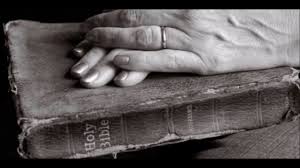
Twila Paris wrote a beautiful song Bonded Together which speaks of the oneness and insolubility of our holy covenant with God by the blood of Christ. It also speaks to the holy covenant of marriage when the two souls become one flesh (Ge 2:24). They cannot be "un-fleshed!" If you are contemplating divorce, I plead with you to re-consider and lay it before the Lord of all the earth. I almost divorced my wife even though we were both believers, but God supernaturally stepped in an saved our marriage. Nothing is too difficult for the Lord, beloved! (See Covenant: As It Relates to Marriage). Listen and give Him praise for being the immutable, faithful covenant keeping God forever and ever. Amen.
Like tightly woven garment, like a metal alloy,
We are put together in the strongest way.
With a common bond to join us that they cannot destroy
We are held together in the longest way.
And we could not be pulled apart
Without it tearing out a heart.
Bonded together,
You are my Father forever.
You will never leave me,
We are bonded together.
There is never space between us for a separation.
We are put together in the tightest way.
And a holy fusion causes this amalgamation.
We are held together in the brightest way.
We could not be pulled apart
Without it tearing out a heart.
Bonded together,
I am your servant forever.
I will never leave you,
We are bonded together.
You cling to me. I cling to you.
You cling to me. I am clinging too.
I am clinging too.
Bonded together,
You are my Father forever.
You will never leave me,
We are bonded together.
I am your servant forever.
I will never leave you,
We are bonded together.
Bonded together.
Bonded together.
Bonded together.