|
COVENANT: |
|||||||||||||||
| Abraham | Moses | Jonathan | David | Saul | |||||||||||
|
What sign did God give Abraham in (Ge 17:11)? (Remember - the unconditional covenant [Ge 15:17, 18+] preceded the sign) What was the sign meant to be? A reminder of covenant - A reflection of Abram's faith (he obeyed [note] Ge 17:23, 24) (NOTE - "The Abrahamic covenant, although conveying unconditional promises to Abraham, also included obligations by which individual descendants would express their faith and enjoy the blessings. Circumcision was (meant to be) an act of obedience and faith." --Believer's Study Bible
|
|||||||||||||||
|
Now let's review some background Scriptures to establish the context and help appreciate the significance of Abraham's response |
What had God promised 75yo Abram in (Ge 12:2)?
Great Nation
What had God promised Abraham in (Ge 15:4)?
Heir from his body
Why was it necessary for God to clarify this?
Abe had sought an heir thru his servant
How did God make the promise more specific to the 99yo Abraham (Ge 17:19, 21)?
Prophetic Promise - Even gave the Name "Isaac" and specified the birth date as "next year"
God specified that the covenant would be established through Isaac
What did God reiterate in (Ge 21:12)?
Through Isaac his descendants would be named
What was Abraham's dilemma when God tested him (Ge 22:1-2)?
If he sacrificed his only son (whom he loved) how would the promise (of through Isaac his descendants would be named) be fulfilled ?
What truth did Abraham know and believe according to (Heb 11:17, 18, 19 - see notes)?
Abraham believed in God's ability to resurrect from the dead
By faith when he was tested, Abraham considered God is able (dunamai = possesses inherent ability) to raise men from the dead and so he received Isaac back as a type
Principle:
Faith obeys - obedience does not save but does show one's faith is genuine.
He trusted that His Covenant Partner (Ge 15:17, 18) was able to keep His promise that a great nation (Ge 12:2) would come from him and that the covenant would pass through Isaac (Ge 17:19, 21, 21:12) (Maclaren's sermon on Ge 22 - Faith Tested & Crowned) (or here)
How does Abraham's declaration to the young men with him (Ge 22:5) demonstrate the reality of his faith? His assurance that Both would return!
What was Isaac's question and Abraham's answer regarding the burnt offering (Ge 22:8, 9)?
Isaac "Where is the Lamb?"
Abe "God would provide the lamb"
NT = Behold the Lamb Jn 1:29
Rev = Worthy is the Lamb Re 5:12-note
What did the Angel of the LORD do when Abraham was about to sacrifice Isaac (Ge 22:11, 12, 13)?
Jehovah stopped him
Jehovah told Abraham that He knew that he feared Him
Jehovah provided a ram
Fascinating! If indeed the "Angel" is a Christophany, the "Lamb" provided the ram!
What did Abraham name the place (Ge 22:14)?
The Lord will provide
What do we learn about covenant from Abraham's willingness to sacrifice Isaac?
Covenant is withholding nothing from our Covenant Partner, even that which we hold to be most dear
What do we learn about God from this episode in Abraham's life?
God is faithful to His covenant promises
God keeps covenant
What was God foretelling in Abraham's offering of Isaac?
This event foreshadowed God's love for us when He offered up His only begotten Son, the Son He loved. (Jn 3:16, 1Jn 4:9, 10)
God withheld nothing from us His New Covenant partners and willingly sacrificed His only Son as our substitute that we might be resurrected to walk in newness of life (see Ro 6:4-note, Col 2:12-note, Col 3:1-note, Ep 2:6,7-note)
"Greater love has no one than this, that one lay down his life for his friends." (Jn 15:13)
Love lays down its life for the sake of the covenant partner
Do I obey without reservation when God tests me?
Do I hesitate, negotiate, argue or resist and in so doing avoid obeying immediately?
How would you answer God's question...
"Do you love Me more than _____?"
Stated another way... What is your "Isaac"?
Can you honestly say...
"Whatever you want God"?
Are you afraid of what He might do?
Remember He is the Covenant keeping God
What event in Moses life did God use to show that covenant is withholding nothing from God? What did God seek to do to Moses in (Ex 4:24, 25, 26+)?
God sought kill Moses
Zipporah circumcised child to avert Moses' death
Moses had failed to circumcise son and "broken covenant" and God sought to cut him off! (Ge 17:14)
| Explanatory Note: Prior to this event God had appeared to Moses at the burning bush (Ex 3:2, 3+) and placed a call on his life to deliver the children of Israel from the Egyptians. (Ex 3:4, 5, 6, 7, 8, 9, 10+) Moses is on his way to Egypt to deliver the children of Israel but irony of ironies needs to be "delivered" himself! What's the lesson? "Burning bush" experiences don't give us the right to be disobedient. Every servant of God is expendable! |
What is God's attitude toward covenant and obedience related to covenant?
"Deadly" Serious
(Pun intended)
Covenant calls for immediate, whole hearted obedience and faithfulness
What exchange occurred in (1 Sa 18:4+) when Jonathan cut covenant with David?
Robe = exchange of identity, putting on the other person
Weapon = the responsibility of the covenant partner to protect the other
Belts = exchange of strength
Let's review how this covenant agreement was tested in First Samuel 18 and how Jonathan showed that covenant is withholding nothing from one's covenant partner...
How did King Saul begin to treat David in 1Sa 18 ? How many ways did he try to kill David?
Saul became angry at David because the people praised him for his victories (1 Sa 18:8, 9+)
From then on Saul sought to kill David
(1) Evil spirit from God came on Saul and he tried to spear David twice (1 Sa 18:11+)
(2) Saul sent him into battle in order to prove himself a valiant man and worthy of his daughter Merab, reasoning the Philistines would kill him (1 Sa 18:17+)
(3) Saul offered his daughter Michal to David for the "dowry" price of 100 Philistine foreskins which would increase his chance of being killed (1Sa 18:25, 26, 27+)
What became obvious to Saul? (1Sa 18:28, 29+)
Lord was with David
Saul became even more afraid and
Became his enemy continually
Now let's observe how 3 covenant partners intervened to protect David's life in 1 Samuel 19
How did Jonathan's covenant with David get tested and how did he respond? (1Sa 19:1, 2+)
Saul told him to kill David
Jonathan warned David to hide - A friend in need is a friend indeed! (see note on friend)
How else did Jonathan intercede for his covenant partner? (1Sa 19:4, 5+)
Jonathan interceded for David reminding Saul of David's deliverance
Saul relented (cf Jer 17:9) but because of David's success jealousy recurred & Saul tried to spear David again but he escaped (1Sa 19:6, 7, 8, 9, 10+)
| Explanatory Note: This is the beginning of David's life as a fugitive which will last for about the next 10 years! In (Ps 18:1, 2, 3, 4, 5, 6ff-note) David recalls the Lord's many deliverances during these difficult years |
What do we learn about covenant from Jonathan's actions?
Covenant is withholding nothing = superior to family ties
| Explanatory Note: Conflict of loyalties in one's family is one of the most painful and difficult tests a believer can face, but cutting covenant call's for unreserved, wholehearted devotion to one's covenant partner (cf, Jesus' call for 100% loyalty to Him in Mt 10:34, 35, 36, 37 38, 39+) |
How did David's marriage covenant partner protect him? (1Sa 19:11, 12, 13, 14, 15, 16+) (See covenant of marriage)
Michal warned that Saul's men were coming to kill him and he was able to escape
How did God, David's Covenant Partner, protect him in (1Sa 19:20,21, 23+)?
Saul sent men 3x to kill David but Samuel was prophesying and the Spirit of God came on them & they prophesied as did Saul when he went (1Sa 19:21, 22, 23)
The Spirit of God protected David
| Explanatory Note: God's means of protection was not to send an army but to send the Holy Spirit Who turned warriors into worshipers! Remember that the weapons we fight with are not the weapons the world uses. (2Co 10:3, 4, 5+) Observe also that one can have a remarkable spiritual experience like Saul and yet have no change in character! In fact such experiences are not even evidence a person is saved! (Mt 7:21, 22, 23+) |
Why did God protect David?
They were in covenant... Samuel had anointed David at God's request. (1Sa 16:7, 11, 12, 13+) God's purpose would not thwarted
What hint is there that Jonathan knows that David will be king? (1Sa 20:13, 14+) (cf 1Sa 23:17, 18+)
May the LORD be with you as He has been with my father
What was Jonathan's rightful inheritance and what does this teach about covenant?
Heir to the throne
Covenant is superior to personal ambition
How did Jonathan and David extend the covenant (1Sa 20:15, 16, 17+)
Cut another covenant
This covenant is distinct from that of 1Sa 18:3+ for this one includes their "house" (descendants)
(1Sa 20:15, 16+)
Covenant affected their descendants forever
(cf 1 Sa 20:42+)
Lovingkindness or loyal, steadfast love is a covenant term (used twice context of covenant - 1Sa 20:14, 15+ cp 2Sa 9:1+)
| Explanatory Note: Observe that Jonathan was even willing to die in David's place. Saul even though eating a holy feast (!) reviled his own son and tried to spear him in (1Sa 20:33+) |
What does Jonathan teach us about covenant commitment?
Covenant is withholding nothing
It is superior to all relationships (Because of covenant, Jonathan's loyalty was to David not his father Saul)
It is superior to one's personal ambitions (he knew David was to be king)
What event occurred at Engedi (1Sa 24:3, 4, 5, 6) that shows us David trusted his covenant keeping God?
Saul entered the cave where David was hiding where David's men urge him to kill Saul (Note that God allowed this and it was a "test" of David's heart.)
Why would David not touch the Lord's anointed?
David trusted his Covenant Defender (see study) to fulfill the promise (Click note)
What did Saul ask of David when he realized the Lord would make David king? (1Sa 24:21)
Asks David to swear by the LORD that he would not cut off his descendants after me or destroy his line of descendants to which David agrees
What event occurred at the wilderness of Ziph (1Sa 26:7, 8, 9, 10, 11, 12)?
David goes into Saul's camp and again refuses to kill the Lord's anointed. He knows that God will take care of him. The Lord had caused Saul and men to sleep again protecting David.
| Explanatory Note: David had won many battles with men but his greatest victories occurred in the cave and in the camp (of Saul) when he restrained any desire to take his own revenge. (cp Ro 12:17-note, Ro 12:19, 20, 21-note) David provides an excellent example for all godly leaders (enabled by God's grace and Spirit) to imitate (cp Pr 16:32) |
Are you in a "wilderness", being tested? Will you accept God's timing, purposes & ways? What do you need to remember?
God is your Covenant Partner and is faithful to keep His covenant promises
How did David respond when the Amalekite brought message of Saul and Jonathan’s death and said he killed Saul? (2Sa 1:11,12, 13, 14, 15, 16)
Tore clothes, wept & killed the Amalekite (Amalekites -See exposition of Ex 17:8-16)
What happened to Saul's monarchy? (2Sa 2:8, 9, 10)
It was divided between
(1) David king of Judah
(2) Ishbosheth Saul's son king of Israel
What was the condition of the divided kingdom? (2Sa 3:1)
War between house of David and Saul
David grew stronger
What happened when Ishbosheth was killed and his head was brought to David? (2Sa 4:8, 12)
David had them killed because they killed Saul’s son
What had David promised Saul (1Sa 24:21)?
Would not cut off Saul’s descendants
What had Jonathan and David covenanted in (1Sa 20:15, 16, 17)
Covenant would include house forever
How does David seek to honor his covenant with Jonathan (2Sa 9:1,2,3+)?
He sought for anyone from house of Saul to show the kindness of God to in view of their covenant
What does David discover (2Sa 9:3+)?
Jonathan's son
Mephibosheth
(“shameful thing”)
Both feet crippled
How did he become crippled?(2Sa 4:4+)?
His nurse was fleeing after Saul’s death & he feel
| Note: Mephibosheth was 5yo when Jonathan died in battle. David ruled 7.5 years at Hebron before becoming king of Israel (2Sa 5:5+) which would make Mephibosheth almost 13yo at the time David was recognized as king by all the tribes. In 2Samuel 9 he would be at least 18yo for he now had a son of his own (2Sa 9:12+). The fact that certainly more than 10 years had passed and David still remembered his covenant with Jonathan reminds us that it had been stipulated as lasting "forever"! Beloved, are you fearful God will forget you, His covenant partner? Fear not, if David a man, remembers his covenant, how much more certain is the Lord God's memory regarding His covenant promises to you for in Christ Jesus they are all Yea and Amen! (Recall God's covenant "reminder" - Isa 49:16, Jn 19:34, 20:27, Rev 5:6+)
Note that David's motivation was not the sad plight of a crippled man (he was unaware of this fact) but his desire to honor his covenant with Jonathan. In man's eyes David would not need to honor his covenant with a dead man. After all David is the reigning king. Why then does he do it? He is a man after God's own (covenant) heart! (Acts 13:22+) He knows that covenant is withholding nothing from him to whom it is due by solemn oath. Just as David remembered Mephibosheth who called himself a "dead dog" (Hebraism ~ filthy garbage & ironically title David had once abased himself with before Saul! 1Sa 24:14) for the sake of Jonathan, the Lord God will remember us, not because we "dead dogs" and deserve anything from God but for the sake of the blood of the eternal covenant cut in the flesh of His Son Jesus Christ (He 13:20-note) |
How did David fulfill His covenant promise? (2Sa 9:5, 6, 7, 8, 9, 10, 11, 12, 13-note)?
2Sa 9:5 Brought him from Lo-Debar (no pasture)
2Sa 9:7 Told him do not fear - he would show kindness
| Explanatory Note: Mephibosheth had reason to fear for in the Near East when a new regime came to power, they would seek to purge all remnants of the previous regime to solidify their position - solidification by liquidation. |
2Sa 9:7,9+ Restore Saul's land to him
2Sa 9:10 Provided servants
2Sa 9:7, 10, 11, 13 -
Ate at King's table regularly
David desired to show kindness for sake of Jonathan
How did David keep covenant in ( 2Sa 21:1ff)
When Gibeonites ask for 7 of Saul's sons as the price for Saul breaking covenant, David spared Mephibosheth (2Sa 21:7)
| Explanatory Note: David's kindness for Jonathan's sake apparently was passed on to Mephibosheth's son Mica who is mentioned in the genealogy in (1Chr 8:34, 35) |
Think about it...:
Inheritance gone, living in Lo-Debar (no pasture), brother assassinated,
constant fear that David would discover and kill him, lame in both feet!
David sought him out, knowing that his covenant with Jonathan meant withholding nothing, in this case the loving kindness of God to one crippled by a fall!
Do you think Mephibosheth understood grace?
Does the story sound familiar?
Do you know anyone who was crippled by a "fall"? (Ro 5:12-note) Do you know anyone Who sought out those who were no better than a "dead dog" because of an unconditional covenant that began with Abraham? (cp Jn 3:16, Lk 19:10) Do you know anyone who has been shown loving kindness so that he now can sit at the banqueting table forever with the King of kings? (cp Rev 19:7, 8, 9)
God withheld nothing in cutting covenant with fallen mankind.
Hallelujah!
Amazing grace!
That saved a "dead dog" like me!
What was Saul's disobedience? (1Sa 13:8, 9)
Did not wait for Samuel
Did not destroy Agag, Amalekites (who God had commanded to be utterly blotted out 1Sa 16:14+) and also took spoil (1Sa 15:9, 10, 11+)
How would you characterize Saul's heart?
Not wholehearted
Not faithful = not obedient
What is God's response to Saul's disobedience? (1Sa 15:27,28+)
Lord tore kingdom from Saul and gave it to David (see below)
What does he instruct Samuel to do (1Sa 16:13)
Anoint David king in Saul’s place
(see column labeled "David" for events in this intervening time)
How does Saul die? (1Sa 31:4+) (Note: In this same battle 3 of his 4 sons had been killed by the Philistines whose archers had also badly wounded Saul)
He fell on his sword
| Explanatory Note: How tragic that three of Saul's four sons would die with him on the same battlefield. How often the sins of one bring pain and even death to others. The sins of Saul cost him his life and the lives of his sons, including the noble Jonathan. God is no respecter of persons as Moses discovered in (Ex 4:24, 25, 26) |
What is the message of Saul's life?
To obey is better than sacrifice,
to heed than the fat of rams
1Sa 15:22,23+
SUPPLEMENTARY NOTES
COVENANT: WITHHOLDING NOTHING FROM GOD
From this tabular summary of the lives of Abraham, Moses, Jonathan, David and Saul we can see that covenant is withholding nothing from God. We begin to understand that whatever God wants in our life as believers who have entered into the New Covenant in Jesus' blood. The LORD has every right to anything we possess because we are in a solemn covenant with Him. From the lives of these men one can see that covenant demands faithfulness whatever the cost. Finally, in studying these OT lives one can understand that no other relationship, no other responsibility, no other goal and absolutely nothing is more important than our covenant relationship with God.
ABRAHAM
Circumcision: Why the foreskin? The covenant cut is made close to the source of paternity by which the seed or descendants will come who will be included in that covenant..
Trumbull explains that...
The blood-covenant of friendship shall be consummated by your giving to me of your personal blood at the very source of paternity — "under your girdle"; thereby pledging yourself to me, and pledging, also, to me, those who shall come after you in the line of natural descent. When a Jewish child is circumcised, it is commonly said of him, that he is caused "to enter into the covenant of Abraham"; and, his god-father, or sponsor, is called Baal-bereeth, "Master of the covenant " (Trumbull, H C: The Blood Covenant. Impact Books)
Abraham proved that his faith was real by his obedience, circumcising himself and all male members immediately.
Beloved, the first time God prompts your heart and you refuse to obey, your revived life begins to dry up. To delay is to disobey. To maintain the fire of revival in your heart, you must be committed to absolute obedience. The closer you are to God, the faster you will obey. Is God prompting your heart to some step of obedience that you are putting off? Are you wholehearted toward God in all things? Have you truly sold all for the pearl of great price? Is your attitude toward God whatever He wants, He can have?
Genesis 22
Keep the context in mind. Abraham had walked with God for probably 40 years or more....
Age 75 (Genesis 12:4) (Sarai = 65).God told him He would make Abe a father of many nations. Age 86 (Ge 16:16) Abe went into Hagar producing Ishmael
Age 86 (Genesis 16:16) Abraham went into Hagar producing Ishmael, the product of the flesh not of the promise--and the flesh can never please God!
Age 99yo (Ge17:1, 17) In Ge 12:3 God preached the gospel to Abraham (Ga3:8), and not only would the Jews find salvation but so would the Gentiles. The seed that God promised was in fact Jesus Christ, (Ga 3:16) Here in Genesis 17 God appears to Abraham whose body was as good as dead and He tells him that He is his El Shaddai and ''I will establish My covenant. I am your all sufficient One. Quit seeking other ways. Rest in Me. Trust Me.'' Where can we run when we need help? We should run to the rock that is higher than us and find our strength in El Shaddai.
Genesis 21:34 says that "Abraham sojourned in the land of the Philistines for many days". How long Scripture does not say, but long enough for Isaac to grow into a lad who could carry the wood for sacrifice on his back, so surely in the range of 15 years old or older, which would make Abraham somewhere around 115 year old or older.
The point is that at the time of God's supreme test in Genesis 22, Abraham had walked with Jehovah for at least 40 years.
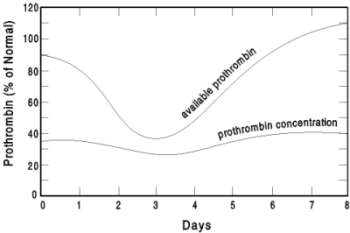
Why carry out circumcision on 8 Days? As a physician this Biblical fact fascinates me for it beautifully illustrates the incredible accuracy of God's Word (see quote on inerrancy), even its perfect scientific accuracy, truths which clearly underscore the supernatural inspiration of God's Word by the Creator of all "coagulation factors"! How awesome is our God! Indeed there is "no other" (Isa 46:9, 5, 45:21, 22, cp He 11:3-note). In short, the Vitamin K dependent coagulation factor prothrombin is considerably below 100% in the first days of life and circumcision of the foreskin in ancient times ran the risk of significant, even life threatening hemorrhage in a newborn who was circumcised before 8 days of life, at which time the prothrombin levels are actually above 100%. God's Word is sure (Ps 19:7-note) and you can stake your physical life on that (in this case the physical life of the neonate), but more importantly you can stake your eternal life on God's sure Word of prophecy (2Pe 1:19-note, cp Acts 16:31) (See more in depth discussion on the Biblical Accuracy and Circumcision on the 8th Day).
By this word we mean that the Scriptures possess the quality of freedom from error. They are exempt from the liability to mistake, incapable of error. In all their teachings they are in perfect accord with the truth. (E. J. Young)
Concerning the definition of inerrancy, Dr Charles Ryrie adds that...
Definitions of inerrancy are not plentiful! Errantists equate inerrancy with infallibility and then limit its scope to matters of faith and practice or to revelational matters or to the message of salvation. An example of this: “The Bible is infallible, as I define that term, but not inerrant. That is, there are historical and scientific errors in the Bible, but I have found none on matters of faith and practice” (Stephen T. Davis, The Debate about the Bible Philadelphia: Westminster Press, 1977, p. 115). (See well done article by Hampton Keathley - The Bible - The Inerrant Word of God)
Related Resources:
Click hymn - The Lord Will Provide
Jehovah Jireh - God our Provider - study of this Name of God on this website
Jehovah Jireh - sermon by Alexander Maclaren "the prince of expository preachers"
Jehovah Jireh - article from the International Standard Encyclopedia of the Bible
Jehovah Jireh - sermon by C H Spurgeon
MOSES
In Exodus 4:24-26 God sought to kill Moses his appointed leader for failure to circumcise his son. What is the message for those in New Covenant? We need to be circumspect and ask: "Am I wholehearted in my commitment to my covenant partner?"; "Is there any known command of Scripture I am willfully disobeying?" "Am I procrastinating in some area of my life, thinking God doesn't really take my delayed or partial obedience (both equating with disobedience) seriously?" Maybe you've had a "burning bush experience" like Moses but you've let the flames of your first love be quenched by disobedience in some area of your life. Are you willing to confess it honestly? Jesus warned the once "on fire" church at Ephesus...
'Remember therefore from where you have fallen, and repent and do the deeds you did at first; or else I am coming to you, and will remove your lampstand out of its place-- unless you repent.' (Revelation 2:5-note)
DAVID
G Campbell Morgan has some wise words on David's "chance" to take Saul's life in 1 Samuel 24 writing...
In this chapter we have the account of how circumstances suddenly put Saul in the power of David. It would have been perfectly easy for him to take the life of his enemy, and so put an end to the bitter experiences through which that enemy was compelling him to pass. From the standpoint of worldly wisdom. he missed his opportunity, and so prolonged his own suffering. From the standpoint of the true wisdom, that which results from faith in God, he acted rightly. To have slain Saul would have been to have taken things into his own hands, and to do that Its always to bring disaster. It is ever better to wait for God than to 'attempt to hurry His purposes by actions dictated only by the appearance of fortuitous circumstances. It is perhaps one of the hardest lessons for the human heart to learn, and yet more harm than we think is done in the enterprises of the Divine Kingdom by the zeal which is without knowledge. The hour comes when we have such a chance of getting level with our foes, of wiping out old scores, of ending our suffering by some swift act in the dark. Let us be very much afraid of such hours. They almost always conceal perils far greater than those from which they seem to afford opportunity of escape. It is ever better to wait for God. He sees all. We see but a part. We are always safer waiting for Him. (Morgan, G. C. Life Applications from Every Chapter of the Bible) (Bolding added)
Other resources on Mephibosheth:
- Mephibosheth and Me by David Reid
- His Kindness to Mephibosheth (2 Samuel 9) by A W Pink
- His Kindness to Mephibosheth (Continued) (2 Samuel 9) by A W Pink
- Mephibosheth by Alexander Maclaren
2Samuel 4:4 Now Jonathan, Saul's son, had a son crippled in his feet. He was five years old when the report of Saul and Jonathan came from Jezreel, and his nurse took him up and fled. And it happened that in her hurry to flee, he fell and became lame. And his name was Mephibosheth.
Context: This scene takes place probably some 15-20 years later, as implied by the fact that Mephibosheth now has a son, Mica 2Sa 9:12. Time is no factor to David who allowed the solemn, binding nature of the covenant he had cut with Jonathan [see esp 1Sa 20:15, 16,17] to control and direct his behavior! And it was not "legalism" which constrained him but love, covenant love "for Jonathan's sake" cp 1Sa 20:17)
2Sa 9:1 Then David said, "Is there yet anyone left of the house of Saul, that I may show him kindness (see word study on hesed) (NJB = "faithful love") for Jonathan's sake? (it is interesting that numerous commentaries question David's motives for his actions in this chapter - saying he wants to "keep an eye" on Mephibosheth, etc. It seems they are almost oblivious to the obvious repetition of the word kindness which is clearly David's motivation as a response to his commitment to covenant and his loyalty to his beloved Jonathan). Ralph Davis comments
So clearly in context kindness derives from their covenant relationship. Note that David's solemn oath (1Sa 20:15, 16, 17, 42 - note I do not agree with ESV translation of 1Sa 20:16ESV as it does not fit the context and gives an entirely different meaning to the passage), given to Jonathan in a solemn covenant ceremony, under a solemn curse, constrained him to act with devoted love years later and David says nothing about this covenant being cut many years earlier. He says nothing about the socio-political conditions being different now that he is King. And he says nothing about the covenant being only a formality. In fact, he demonstrates the power which a solemn covenant exercises -his promise made in the past directs his fidelity in the present. Does David's commitment to fulfill his promises not press upon all of us the urgency of keeping the new covenant with our Lord God?...What the world does not see is that love that truly loves is willing to bind itself, is willing to promise, willingly and gladly obligates itself so that the other may stand securely in that love. (Ralph Davis, D. Focus on the Bible: 2 Samuel)
Ralph Davis gives the following illustration of the power of covenant...
The works of B. B. Warfield, the esteemed biblical theologian of old Princeton Seminary, are still known and read in the evangelical church today. What is not so well–known is the tale of his marriage. Warfield was pursuing studies in Leipzig, Germany, in 1876–77. This time also doubled as honeymoon with his wife Annie. They were on a walking tour in the Harz Mountains when they were caught in a terrific thunderstorm. The experience was such a shock to Annie that she never fully recovered, becoming more or less an invalid for life. Warfield only left her for his seminary duties, but never for more than two hours at a time. His world was almost entirely limited to Princeton and to the care of his wife. For thirty–nine years. One of his students noted that when he saw the Warfields out walking together ‘the gentleness of his manner was striking proof of the loving care with which he surrounded her.’ For thirty–nine years. That is the power covenant exercises.
2 Now there was a servant of the house of Saul whose name was Ziba, and they called him to David; and the king said to him, "Are you Ziba?" And he said, "I am your servant."
3 And the king said, "Is there not yet anyone of the house of Saul to whom I may show the kindness of God?" And Ziba said to the king, "There is still a son of Jonathan who is crippled in both feet."
4 So (Note that there is no hesitation in David's response and he did not say "Is there anyone else? We can't have a crippled man in the royal court!") the king said to him, "Where is he?" And Ziba said to the king, "Behold, he is in the house of Machir the son of Ammiel in Lo-Debar (Literally "No Pasture" "the barren land” or "no word" - nothing)."
5 Then King David sent and brought him from the house of Machir the son of Ammiel, from Lo-Debar.
6 And Mephibosheth, the son of Jonathan the son of Saul (fourth time Saul is mentioned), came to David and fell on his face and prostrated (bowing down throwing kisses toward the one in authority) himself.
And David said, "Mephibosheth." (Notice the King calls him by his personal name, not son of Jonathan, not my servant, etc)
And he said, "Here is your servant (note that Mephibosheth calls himself "servant" no less than 4x)!"
7 And David said to him, "Do not fear, (Protection Promised - When a king came to power in the Near East, the first thing he would do is exterminate all opposition and all of the previous regime. It is worth noting the parallel with another King named Jesus Whose most frequent command in the gospels was "Fear not"! Mt 10:26, 28,31, 14:27, 17:7, 28:10 Mk 5:36, 6:50, Lk 5:10, 8:50, 12:4, 7, 32, Jn 6:20) for I will surely (Don't miss this strategically placed Hebrew adverb "kiy" which means = indeed, truly = a marker of emphasis and strengthening a statement!) show kindness to you for the sake of your father Jonathan (David's commitment to covenant - 1Sa 20:15, 16,17), and will restore to you all the land of your grandfather Saul; and you shall eat at my table regularly."
8 Again he prostrated (bowing down throwing kisses toward the one in authority. Compare David's action before Saul after the "cave encounter" 1Sa 24:8) himself and said, "What is your servant, that you should regard a dead dog (Hebraism for garbage, term of contempt) like me?" (What picture of humility wrought by grace and bringing even more grace, Jas 4:6).
9 Then the king called Saul's servant Ziba, and said to him, "All that belonged to Saul and to all his house I have given to your master's grandson. 10 And you and your sons and your servants shall cultivate the land for him, and you shall bring in the produce so that your master's grandson may have food; nevertheless Mephibosheth your master's grandson shall eat at my table regularly." Now Ziba had fifteen sons and twenty servants.
11 Then Ziba said to the king, "According to all that my lord the king commands his servant so your servant will do." So Mephibosheth ate at David's table as one of the king's sons. (Don't miss this - David honors a member of the enemy regime as one of his own sons! Is this not undeserved mercy and amazing grace! The NT parallel is believers are now "all sons of God through faith in Christ Jesus" Gal 3:26 and as such are "fellow heirs with Christ" - Ro 8:17-note)
12 And Mephibosheth had a young son whose name was Mica. And all who lived in the house of Ziba were servants to Mephibosheth.
13 So Mephibosheth lived in Jerusalem (from Lo-Debar, "no pasture" to the King's city, "city of peace" all on the basis of the "kindness of God" that flowed through a man after God's own heart!), for he ate at the king's table regularly (Come and Dine - a permanent place at the king’s table) Now he was lame in both feet (God does not want us to forget the point of His lovingkindnesses abundantly bestowed in spite of our lameness) (Compare the place of the lame in the messianic kingdom [Isa 35:5, 6; Jer 31:7, 8, 9; Mic 4:6, 7]. Notice what Jesus already does for them when he inaugurates that era [Mt 11:2, 3, 4, 5, 6]).
David is surely a beautiful picture of the Greater David, the Lord Jesus Christ who beckons all those crippled by the fall [which is all of us - Ro 5:12-note] to Come just as you are - play this beautiful song)
Mephibosheth
Slandered by Ziba
2Samuel 16:1 (Context: David has fled Jerusalem as Absalom had come to usurp the monarchy) Now when David had passed a little beyond the summit, behold, Ziba the servant of Mephibosheth met him with a couple of saddled donkeys, and on them were two hundred loaves of bread, a hundred clusters of raisins, a hundred summer fruits, and a jug of wine. 2 And the king said to Ziba, "Why do you have these?" And Ziba said, "The donkeys are for the king's household to ride, and the bread and summer fruit for the young men to eat, and the wine, for whoever is faint in the wilderness to drink." 3 Then the king said, "And where is your master's son (i.e., Mephibosheth)?" And Ziba said to the king, "Behold, he is staying in Jerusalem, for he said, 'Today the house of Israel will restore the kingdom of my father (Saul) to me.'" 4 So the king said to Ziba, "Behold, all that belongs to Mephibosheth is yours." And Ziba said, "I prostrate myself; let me find favor in your sight, O my lord, the king!" (David's decision seems to be from anger not wisdom for we later find out that Ziba was lying and that Mephibosheth remained loyal to David).
A W Pink comments that this sequel is: both pathetic and blessed...for it provides a lovely completeness to all which has been before us. First, in 2Sa 16:1–4 we learn that when David fled from Absalom, Ziba, the servant of Mephibosheth, met the king with a liberal provision of food for his men. When David inquired where Mephibosheth was, Ziba answered him, “Behold, he abideth at Jerusalem: for he said, Today shall the house of Israel restore me the kingdom of my father.” This is one of many warnings given to the saints in Scripture that they must be prepared for calumny (a misrepresentation intended to blacken another’s reputation) and unkind treatment: often—as was the case here—by those from whom it should be the least expected.
2Samuel 19:24 (Context: Absalom's rebellion is over and David returns to Jerusalem) Then Mephibosheth the son of Saul came down to meet the king; and he had neither cared for his feet, nor trimmed his mustache, nor washed his clothes, from the day the king departed until the day he came home in peace. 25 And it was when he came from Jerusalem to meet the king, that the king said to him, "Why did you not go with me, Mephibosheth?" 26 So he answered, "O my lord, the king, my servant (Ziba) deceived me; for your servant said, 'I will saddle a donkey for myself that I may ride on it and go with the king,' because your servant is lame. 27 "Moreover, he has slandered your servant to my lord the king; but my lord the king is like the angel of God, therefore do what is good in your sight. 28 "For all my father's household was nothing but dead men before my lord the king; yet you set your servant among those who ate at your own table. What right do I have yet that I should complain anymore to the king?" 29 So the king said to him, "Why do you still speak of your affairs? I have decided, 'You and Ziba shall divide the land.'" 30 And Mephibosheth said to the king, "Let him even take it all, since my lord the king has come safely to his own house."
A W Pink comments on this segment in Mephibosheth's life: Second, after Absalom’s death, there went forth a company to do honor to the returned king. Among them was Mephibosheth, of whom it is said, that he “had neither dressed his feet, nor trimmed his beard, nor washed his clothes, from the day the king departed until the day he came again in peace” (2Sa 19:24). What a lovely picture does that present to us of a loyal soul, whose heart had remained true to the (temporarily) rejected king! How clearly Mephibosheth’s condition evidenced where his affections had been during David’s absence! David now repeated the tale which Ziba had told him, and is informed it was utterly false. Mephibosheth then cast himself on the spiritual discernment and sovereign pleasure of his royal master (2Sa 19:27, 28). The king then put his heart to the test, suggesting that the land be divided between Mephibosheth and his servant—the same in principle as Solomon’s proposal that the living child be divided between the two women who claimed it as hers. Had Mephibosheth been the false-hearted wretch which Ziba has painted him, he had acquiesced promptly to David’s suggestion, glad to escape so easily: “a wise settlement” he would have exclaimed. Instead, he nobly replied, “Yea, let him take all, forasmuch as my lord the king is come again in peace unto his own house” (2Sa 19:30). How that gave the lie to Ziba’s accusation: how it demonstrated he was clear of any carnal covetousness. It was not land which he wanted: now that his beloved master had returned, he was quite satisfied. O how this should speak to and search us: are our affections set upon the Person of the absent King? Is it His presence that we long for above everything else?
2Samuel 21:1 (Context: see discussion below regarding these events) Now there was a famine in the days of David for three years, year after year; and David sought the presence of the LORD. And the LORD said, "It is for Saul and his bloody house, because he put the Gibeonites to death."
2 So the king called the Gibeonites and spoke to them (now the Gibeonites were not of the sons of Israel but of the remnant of the Amorites, and the sons of Israel made a covenant with them, but Saul had sought to kill them in his zeal for the sons of Israel and Judah).
3 Thus David said to the Gibeonites, "What should I do for you? And how can I make atonement that you may bless the inheritance of the LORD?"
4 Then the Gibeonites said to him, "We have no concern of silver or gold with Saul or his house, nor is it for us to put any man to death in Israel." And he said, "I will do for you whatever you say."
5 So they said to the king, "The man who consumed us, and who planned to exterminate us from remaining within any border of Israel,
6 let seven men from his sons be given to us, and we will hang them before the LORD in Gibeah of Saul, the chosen of the LORD." And the king said, "I will give them."
7 But the king spared Mephibosheth, the son of Jonathan the son of Saul, because of the oath of the LORD which was between them, between David and Saul's son Jonathan.
8 So the king took the two sons of Rizpah the daughter of Aiah, Armoni and Mephibosheth (a different person) whom she had born to Saul, and the five sons of Merab the daughter of Saul, whom she had born to Adriel the son of Barzillai the Meholathite.
9 Then he gave them into the hands of the Gibeonites, and they hanged them in the mountain before the LORD, so that the seven of them fell together; and they were put to death in the first days of harvest at the beginning of barley harvest.
10 And Rizpah the daughter of Aiah took sackcloth and spread it for herself on the rock, from the beginning of harvest until it rained on them from the sky; and she allowed neither the birds of the sky to rest on them by day nor the beasts of the field by night.
11 When it was told David what Rizpah the daughter of Aiah, the concubine of Saul, had done,
12 then David went and took the bones of Saul and the bones of Jonathan his son from the men of Jabesh-gilead, who had stolen them from the open square of Bethshan, where the Philistines had hanged them on the day the Philistines struck down Saul in Gilboa.
13 And he brought up the bones of Saul and the bones of Jonathan his son from there, and they gathered the bones of those who had been hanged.
14 And they buried the bones of Saul and Jonathan his son in the country of Benjamin in Zela, in the grave of Kish his father; thus they did all that the king commanded, and after that God was moved by entreaty for the land.
J Vernon McGee draws some excellent spiritual applications from 2 Samuel 9 writing...
What David did for Mephibosheth was wonderful, but there are some other impressive lessons with great spiritual truths which I don’t want you to miss.
1. A child of God recognizes that he is also a cripple in God’s sight.
We are told in Ro 3:15, 16: “Their feet are swift to shed blood: Destruction and misery are in their ways.” That is the report from God’s clinic on the human race. Our feet lead us astray. “All we like sheep have gone astray; we have turned every one to his own way; and the Lord hath laid on him the iniquity of us all” (Isa 53:6). Then the writer of the Book of Proverbs says, “There is a way that seems right unto a man, but its end is the way of death” (Pr 16:25). Our feet get us into trouble. The way that the soul and the feet are so closely connected in Scripture is quite interesting. I do not mean to make a bad pun; I am not talking about the sole of the foot.
Remembering that David for the rest of his life had a crippled boy who ate at his table, listen to the words of Psalm 56:13, “For thou hast delivered my soul from death: wilt not thou deliver my feet from failing, that I may walk before God in the light of the living?” Psalm 73:2 says, “But as for me, my feet were almost gone; my steps had well nigh slipped” David knew what it was to have lame feet! In Psalm 116:8 he says, “For thou hast delivered my soul from death, mine eyes from tears, and my feet from falling.” My friend, all of us are actually cripples before God.
Modern philosophy and humanism present another picture of man. I once heard a liberal say that Christ came to reveal the splendors of the human soul! God says, “The heart is deceitful above all things, and desperately wicked: who can know it?” (Jer 17:9). Out of the heart proceed evil thoughts, and it is a mess of bad things. You cannot expect any good from human nature. Paul could say, “For I know that in me (that is, in my flesh,) dwelleth no good thing: for to will is present with me; but how to perform that which is good I find not” (Ro. 7:18). Paul had no confidence in the flesh. The Law is condemnation. John 14:6 says, “Jesus saith unto him, I am the way, the truth, and the life: no man cometh unto the Father, but by me.” When we come that way, He will receive us.
2. David extended kindness to Mephibosheth for the sake of Jonathan.
This is another facet of this amazing incident. You see, David did not know the boy. He did what he did for the sake of Jonathan whom he loved. When David looked upon this boy, he did not see a cripple; he saw Jonathan. He had made a covenant with Jonathan. The kindness, mercy, and grace extended to a helpless person were for the sake of another.
We have seen how much Jonathan meant to David. When the news of his death reached him, he said: “How are the mighty fallen in the midst of the battle! O Jonathan, thou wast slain in thine high places. I am distressed for thee, my brother Jonathan: very pleasant hast thou been unto me: thy love to me was wonderful, passing the love of women” (2Sa 1:25,26). Now God has saved you and me because of Another—the Lord Jesus Christ. When we accept Jesus Christ as Savior, Ephesians 1:6 tells us that we are “accepted in the beloved.” When God sees you and me in Christ, He accepts us and saves us.
3. David said nothing about the lame feet of Mephibosheth.
There is no record that David ever mentioned it or made an allusion to it. He never said to him, “It is too bad that you are crippled.” He treated him like a prince. He sat at the king’s table, and his feet were covered with a linen cloth. My friend, God forgets our sin because it is blotted out by the blood of the Lord Jesus Christ. That is the only way God can forgive our sins. The writer of Hebrews put it this way: “And their sins and iniquities will I remember no more” (Heb 10:17).
4. Mephibosheth said nothing about his lame feet.
What do you think David and Mephibosheth talked about when they sat at the table? They talked about another person. Do you know who it was? It was Jonathan. David loved Jonathan. Mephibosheth loved Jonathan—he was his father. Jonathan was the subject of conversation.
What should you and I talk about? Some Christians take a keen delight in talking about the old days when they lived in sin. It is too bad that when we get together we don’t talk about Another. The Lord Jesus Christ should be the main subject of our conversation.
5. Others said nothing about Mephibosheth’s lame feet.
There was a large company that ate at the king’s table. One day they saw David bringing this crippled boy to the table. The gossips did not say, “Did you hear how it happened?” Instead they listened to the king. They heard David praise Mephibosheth, They had no time to indulge in cheap talk. Their hearts went out in love to this boy. You see, love “beareth all things, believeth all things, hopeth all things, endureth all things.” Love “never fails” (1Cor 13:7,8).
As far as I can tell, David was never able to make this boy walk. If you see that you cannot walk well-pleasing to God, turn to the Lord Jesus Christ. Christ said to the man with palsy, whose friends had let him down through the roof, “… Son, be of good cheer; thy sins be forgiven thee…. Arise, and walk” (Mt 9:2, 3, 4, 5). The apostle Paul urges: “I therefore, the prisoner of the Lord, beseech you that ye walk worthy of the vocation wherewith ye are called, With all lowliness and meekness, with longsuffering, forbearing one another in love” (Eph. 4:1, 2). If you are failing in your walk, turn to Christ for help.
Christ is sending out an invitation today into the highways and byways and out into the streets of your town. He is saying, “Come to my table of salvation just as you are, crippled, and I will feed you.” He says, “Come unto me, all ye that labour and are heavy laden, and I will give you rest” (Mt. 11:28). He also says, “… If any man thirst, let him come unto me, and drink” (Jn 7:37). What a wonderful picture of God’s love is presented in this chapter! (McGee, J. V. Thru the Bible commentary. Based on the Thru the Bible radio program. Vol. 2, Page 208. Nashville: Thomas Nelson)
James Smith - THE LAME PRINCE. Bible "Fear Nots, No. 4.
"And David said unto him, Fear not, for I will surely show thee kindness for Jonathan thy father's sake" (2 Sam. 9:7).
How welcome this royal "Fear not" must have been to the trembling and fearful prince, Mephibosheth! How unexpected it was! What a surprise it was to him, being altogether different to what he really expected.
The King's "Fear not" would fall on his ears as a peal of silvery bells. But who was this Prince Mephibosheth? He was Jonathan's son, the last survivor of the royal house of Saul. When news of the death of King Saul and his sons on the fatal battlefield of Gilboa reached the royal palace, the nurse, snatching up in her arms this infant son of Jonathan, fled with him to Lo-debar. In the hurry she let him fall, when his feet were permanently injured. Sixteen years had passed when, upon David inquiring, "Is there any that is left of the house of Saul that I may show him kindness for Jonathan's sake?" and hearing of the survival of this lame prince, sent and had him brought into his royal presence. Tremblingly must Mephibosheth have made that journey; and, at last, ushered into the king's presence, must have expected his death. When lo! nothing but grace was meted out to him.
It is a lovely picture of salvation. Convicted of sin, and aware of your lost and ruined condition, do you feel you dare not entertain any hope of securing His grace and favour? Then listen and take to heart this story.
Horton - This is a wonderful picture of salvation! A sinner, convicted of sin, dare not entertain the hope of securing favor. So says the devil. But God says, "Come unto me" (Matthew 11:28).
I. He was the King's Enemy, owing to his relation to Saul, though, thank God, the king was not an enemy of the poor trembling prince.
We are by nature at enmity with God (Ro 8:7), though God is not at enmity with us, and is ever beseeching us to be reconciled to Him. (2 Cor 5:20, Isa 1:18, 2 Cor 5:18)
II. He was Lame Through a Fall.
And so is it with us. (Ro 5:12) What moral and spiritual weakness and sickness and infirmities are ours by the Fall.
III. He was in a Far Country, away from the king.
Far, far away from Jerusalem, the place of blessing, of peace and worship, at Lo-debar, "the place of no bread." We, too, are by nature in the far country, away, far away, from God.
IV. He was Sought Out by the King.
No, it was not a matter of Mephibosheth seeking the king, but the king seeking him. Wherein do you think our Christian faith differs from all other faiths that have ever been or are? In this, and this alone, all other faiths represent man, in the first instance, seeking God (which is not true, for man, left to himself, does not want God), but the Christian faith represents God as seeking man, which alone is true to fact. Man is indifferent to God; but God is not indifferent to him.
V. He was Received In his Deformity, just as he was, without any attempt to improve himself. (cf Ro 5:6 "we were still helpless") Ah, that we must remember:
"Just as I am without one plea,
But that Thy blood was shed for me,
And that Thou bid'st mo come to Thee:
O Lamb of God, I come."VI. He was Received for Another's Sake, for the sake of Jonathan.
And we are received for Another's sake, for the sake of the Lord Jesus Christ. "Accepted in the Beloved." (Eph 1:6KJV)
VII. He Learned to Estimate Himself Aright, but only after he came to David
When Mephibosheth said, "What is thy servant, that thou shouldest look upon such a dead dog as I am?" he may have simply indulged in an Eastern's habit of self-depreciation in the presence of his superior. Yet it may have been a genuine and sincere expression of his deepest feelings. But, pray note, he only expressed this view after he came to David. It is only after we come to the Lord Jesus that we take low and truer views of ourselves, and get to see sin in the light of Heaven.
Horton - It was an Eastern custom of self-depreciation, abasement, in the presence of a superior. Yet it may have been a sincere feeling, a genuine expression of Mephibosheth's humble place before a king. It is only after we come to Christ that we take a low position—that we see sin in the light of heaven (James 4:10). Daniel, John, and other outstanding saints fell down before God.
VIII. He Got in David More than he had Lost. What he had lost he regained, plus David's friendship and fellowship.
We gain more in Christ than we lost in Adam. (1 Corinthians 15:45-49).
IX. He Dwelt with the King in the royal palace, and upon royal fare: "For he did eat continually at the king's table."
Oh, what blessed news! And we, too, may leave the pit and the dunghill and dwell in the holiest of all by the Blood of Jesus.
Poor conscience-stricken sinner, fearful of just and deserved judgment, listen to our blessed Lord's "Fear not, for I will surely show thee kindness for Jesus' sake." Dare, therefore, to entertain hope of finding mercy, and cling to the Rock of Ages.
G Campbell Morgan commenting on 2 Samuel 9:1 writes that...
There is an exquisite tenderness about the story of this chapter. David's love for Jonathan was still fresh. One can easily imagine how, in the days of his growing prosperity, the king would often think of the old strenuous times, and of his friend's loyalty to him under circumstances so full of stress and peril. For David, the house of Saul, which had caused him so much suffering, was redeemed by his love for Jonathan; and therefore he instituted inquiry as to whether there were any left of that house, to whom he might show kindness for the sake of his friend. This inquiry resulted in the finding of Mephibosheth, whose lameness was tragic and pathetic, in that it had been caused by a fall on the awful day of Jezreel, when his father and grandfather had fallen together (2Sa 4:4). To him the king restored the lands of Saul, and he set him as an honored guest at his own table. David's own account of this was that he desired to "show the kindness of God unto him." This declaration recalls the words of the covenant made between him and Jonathan long before, in which his friend had charged him to show him "the loving kindness of Jehovah," and also that he should show this same kindness to his house forever. In this action David is seen as the man after God's own heart (Acts 13:22), keeping covenant and heaping benefits upon those who might be accounted enemies. The common attitude of human nature would not prompt such action. It was indeed the kindness or hesed of God. (Morgan, G. C. Life Applications from Every Chapter of the Bible). (Bolding added)
Spurgeon has a devotional from Morning and Evening on Mephibosheth...
“So Mephibosheth dwelt in Jerusalem: for he did eat continually at the king’s table; and was lame on both his feet.” — 2 Samuel 9:13
Mephibosheth was no great ornament to a royal table, yet he had a continual place at David’s board, because the king could see in his face the features of the beloved Jonathan. Like Mephibosheth, we may cry unto the King of Glory,
“What is thy servant, that thou shouldst
look upon such a dead dog as I am?”
but still the Lord indulges us with most familiar intercourse with Himself, because He sees in our countenances the remembrance of His dearly-beloved Jesus.
The Lord’s people are dear for another’s sake. Such is the love which the Father bears to His only begotten, that for His sake He raises His lowly brethren from poverty and banishment, to courtly companionship, noble rank, and royal provision. Their deformity shall not rob them of their privileges. Lameness is no bar to sonship; the cripple is as much the heir as if he could run like Asahel.
Our right does not limp,
though our might may.
A king’s table is a noble hiding-place for lame legs, and at the gospel feast we learn to glory in infirmities, because the power of Christ rests upon us. Yet grievous disability may mar the persons of the best-loved saints. Here is one feasted by David, and yet so lame in both his feet that he could not go up with the king when he fled from the city, and was therefore maligned and injured by his servant Ziba (compare the falsehood of Ziba in 2Sa 16:1, 2, 3, 4 with the truth of Mephibosheth in 2Sa 19:24, 25, 26, 27, 28). Saints whose faith is weak, and whose knowledge is slender, are great losers; they are exposed to many enemies, and cannot follow the king whithersoever he goes. This disease frequently arises from falls. Bad nursing in their spiritual infancy often causes converts to fall into a despondency from which they never recover, and sin in other cases brings broken bones.
Lord, help the lame to leap like an hart,
and satisfy all thy people with the bread of thy table!
In another devotional Spurgeon writes...
“What is thy servant, that thou should look upon such a dead dog as I am?” — 2Sa 9:8
If Mephibosheth was thus humbled by David’s kindness, what shall we be in the presence of our gracious Lord?
The more grace we have, the less we shall think of ourselves,
for grace, like light, reveals our impurity.
Eminent saints have scarcely known to what to compare themselves, their sense of unworthiness has been so clear and keen.
“I am,” says holy Rutherford, “a dry and withered branch, a piece of dead carcass, dry bones, and not able to step over a straw.”
In another place he writes, “Except as to open outbreakings, I want nothing of what Judas and Cain had.”
The meanest objects in nature appear to the humbled mind to have a preference above itself, because they have never contracted sin: a dog may be greedy, fierce, or filthy, but it has no conscience to violate, no Holy Spirit to resist. A dog may be a worthless animal, and yet by a little kindness it is soon won to love its master, and is faithful unto death; but we forget the goodness of the Lord, and follow not at his call. The term “dead dog” is the most expressive of all terms of contempt, but it is none too strong to express the self- abhorrence of instructed believers. They do not affect mock modesty, they mean what they say, they have weighed themselves in the balances of the sanctuary, and found out the vanity of their nature.
At best, we are but clay, animated dust, mere walking hillocks; but viewed as sinners, we are monsters indeed. Let it be published in heaven as a wonder, that the Lord Jesus should set His heart’s love upon such as we are. Dust and ashes though we be, we must and will “magnify the exceeding greatness of his grace.” Could not his heart find rest in heaven? Must he needs come to these tents of Kedar for a spouse, and choose a bride upon whom the sun had looked? O heavens and earth, break forth into a song, and give all glory to our sweet Lord Jesus. (Morning and evening: Daily readings May 27 PM)
Chuck Swindoll has the following illustration of God's grace taken from the life of Mephibosheth writing that...
the bible is a photo album filled with pictures of God’s grace. One striking image is found in the pages of 2 Samuel. The setting is the palace of King David. Gold and bronze fixtures gleam from the walls. Lofty, wooden ceilings crown each spacious room. In the banquet room, David and his children gather for an evening meal. Absalom, tanned and handsome, is there, as is David’s beautiful daughter Tamar. The call to dinner is given, and the king scans the room to see if all are present. One figure, though, is absent.
Clump, scraaape, clump, scraaape.
The sound coming down the hall echoes into the chamber.
Clump, scraaape, clump, scraaape.
Finally, the person appears at the door and slowly shuffles to his seat. It is the lame Mephibosheth seated in grace at David’s table. And the tablecloth covers his feet. Now the feast can begin. (Swindoll, C. R.: The Tale of the Tardy Oxcart and 1501 Other Stories. Nashville: Word Publishers)
In a devotional from Our Daily Bread entitled "Handicap" we read the following story...
A British factory worker and his wife were excited when, after many years of marriage, they discovered they were going to have their first child. According to author Jill Briscoe, who told this true story, the man eagerly relayed the good news to his fellow workers. He told them God had answered his prayers. But they made fun of him for asking God for a child. When the baby was born, he was diagnosed as having Downs Syndrome. As the father made his way to work for the first time after the birth, he wondered how to face his co-workers. “God, please give me wisdom,” he prayed. Just as he feared, some said mockingly, “So, God gave you this child!” The new father stood for a long time, silently asking God for help. At last he said, “I’m glad the Lord gave this child to me and not to you.”As this man accepted his disabled son as God’s gift to him, so David was pleased to show kindness to Saul’s son who was “lame in his feet” (2 Sa 9:3). Some may have rejected Mephibosheth because he was lame, but David’s action showed that he valued him greatly
Grace in a "Barren Place" (Lo-Debar)
I was that Mephibosheth
Crippled by my twisted pride and
hiding from you in a barren place
where You could not find me
where You would not give me what I deserved.
But somehow You found me and
I don’t understand why but You
give me what I do not deserve.
You not only spared my desolate life but
You made it bountiful
And here at Your table
I will thank You, my King.
—Julie Martin
F B Meyer in "Our Daily Homily" comments on "Thou shalt eat bread at my table continually" (2 Samuel 9:8)..
Four times in this chapter we are told of the lame man eating bread at the royal table. But what are these facts recorded and repeated for, save to accentuate the infinite blessings which come to us through the Divine love? Mephibosheth had done nothing to merit the royal favor (Grace indeed!). Not a word is said of his being well-favored and attractive. So far from that, he was lame on both his feet, and probably a sickly invalid. In his own judgment he was worthless as a dead dog. His state was impoverished; no deed of prowess could win David’s notice; he was almost entirely at the mercy of his servant, Ziba.
In these respects there are many analogies to our own condition in the sight of God. We are lame indeed; and, so far as we are concerned, it is quite impossible that we should ever win the Divine regard, or sit at His table among His sons. But between David and Jonathan a covenant had been struck, which had provided for the children of the ill-fated Jonathan (1Sa 20:14, 15, 16). It was because of this sacred obligation that Mephibosheth fared as he did.
Look away, child of God, to the covenant struck between God and thy representative, the Son of His love. It is idle of thee to seek to propitiate the Divine favor, or earn a seat at His table; but if thou art willing to identify thyself with thy Lord, and to shelter thyself in Him by the living union of faith (2Co 5:7); if thou canst base thy plea on the Blood of the everlasting covenant (He 13:20)— then the provisions of that covenant between Father and Son shall be extended to thee: and because of God’s love to Jesus thou shalt sit at the Divine table, and be regarded as one of the heirs of the great King.
Kay Arthur writes that
Mephibosheth prostrates himself and says,
"What is your servant, that you should regard a dead dog like me?" (2 Samuel 9:8)
A "dead dog" was a Hebrew expression for an embarrassing piece of garbage. That's how Mephibosheth saw himself. Compassion and lovingkindness were flowing from the throne, but Mephibosheth couldn't take it in. Why? Because, beloved, like so many of us, he did not have the facts straight. Mephibosheth knew only what he had been told by people who perpetuated Saul's point of view. Mephibosheth had lived in utter ignorance of the covenant his father, Jonathan, had cut for him - a covenant made for just such an occasion as this.
And what about you, precious one? Are you crippled because you've been living in fear of God, ignorant of the covenant cut for you? Have you been dwelling in the barrenness and the poverty of Lo-Debar rather than in the riches of the inheritance that belongs to those of covenant? Have you feared that, if you ever came and bowed before God and gave Him your life, He would do something terrible to you, He would exact some horrible price-giving you cancer, or killing your loved ones, leaving you single, and alone, or sending you off to some hostile foreign land? Have you believed you can only be safe by fighting for the throne, shaping your own destiny, taking care of yourself rather than trusting the God you have heard about?
May I ask you this: How well do you know the One who sits upon the throne? Are you fully aware that He administers justice for all His people? Or are you the hopeless victim of rumors about God? Do you feel that God would never find you acceptable and fit to enter His city because you are lame? Do you sometimes feel that He (and everyone else) must view you as worthless? Quit trembling, beloved. You have heard lies. Such reasoning knows nothing of the covenant cut for you from eternity. There is hope for you. There is a future because of covenant.
And yet here was Mephibosheth his own choosing an enemy of David's, a man lame in both feet, crippled because of fleeing from David, worthless and embarrassing in his own eyes yet bidden by the king to come and dine! Why? It wasn't because of Mephibosheth. It was because of Jonathan...
"Do not fear, for I will surely show kindness (hesed a covenant word) to you for the sake of your father Jonathan (for the sake of covenant)." (2Sa 9:7)
You can feast at Jesus' table anytime. He who fed the multitudes, turned the water into wine, to the hungry calls even now, "Come and dine!" Oh, beloved, are you taking hold of all that is yours in your covenant with Him? (Our Covenant God by Kay Arthur)
How secure was Mephibosheth? How secure is your salvation?
The serious and secure nature of covenant is highlighted by the saga of the Gibeonites, so first we will look at that background. (See study on Covenant: Solemn and Binding) Joshua had entered Canaan which by virtue of God's promise in the Abrahamic Covenant that this was to be Israel's permanent possession. Joshua strategizes to defeat the enemies occupying the land with a three‑pronged attack. The people in Canaan were trembling because they had heard about the defeat of Jericho by Joshua's army (really by Joshua's God). The iniquity of the Amorites is full and the children of Israel are going in to take the land. It is right that they do so because God is judging the land of Canaan for their sins (cf Ge 15:16). After the Israelites go into the land, one group of people, the Gibeonites, become very afraid. The Gibeonites knew remnants of covenant but they did not know the Covenant Keeping God. Even though they were pagans, they knew that covenant was a solemn, binding agreement. They knew that if they duped the leaders of Israel into cutting a covenant that Israel would be bound to protect them as their covenant partner and would would not be able to destroy them as God had decreed, and this is exactly what transpired in (Josh 9:3-27)
Joshua fulfilled his promise to be the covenant defender of Gibeon when the Gibeonites were attacked by Adoni-zedek the Amorite king of Jerusalem and the men of Gibeon appealed to the solemn covenant with Israel. Joshua 10 records that Joshua remained true to his covenant vow, defended the Gibeonites and experienced a supernatural victory (brought about by Jehovah, Israel's Covenant Defender!), relieving the besieged city, pursuing the attackers down the ascent of Beth-horon and winning decisively.
Now we move to an event that occurred some 400-500 years after Joshua had cut covenant with the Gibeonites. In 2Sa 21:1,2,3,4,5,-6 God used a famine in Israel to bring Saul's disobedience (putting Gibeonites to death thus breaking the covenant that Joshua had cut with them) to the attention of David.
Saul's sin was "personal" but it was not "private" in the sense that the consequences had broad ranging effects. This principle applies to our personal sins.
Saul must have known that Joshua had promised the Gibeonites immunity from the extermination decreed for the other inhabitants of Canaan but in his unbiblical "zeal" he broke the covenant and killed Gibeonites. David asked the Gibeonites what they would accept as settlement for Saul's breaking of the covenant peace agreement. He was hoping to pay them off in money. But the Gibeonites replied "We have no concern of silver or gold with Saul or his house, nor is it for us to put any man to death in Israel." And he said, "I will do for you whatever you say." So they said to the king, "The man who consumed us, and who planned to exterminate us from remaining within any border of Israel, let seven men from his sons be given to us, and we will hang them before the LORD in Gibeah of Saul, the chosen of the LORD." And the king said, "I will give them." In summary, when David tried to make matters right with them, they stood on their covenant rights, claiming life for life, which is in keeping with the solemn nature of covenant when it is broken by one of the parties. The Gibeonites would accept no "blood money" but instead demanded blood from the family of the slayer of their people. And so seven men of Saul’s descendants were given over to the Gibeonites, who hung them “before Jehovah”—as a kind of sacrifice—in Gibeah, Saul’s own town! God is serious about keeping covenant! Observe the following account which reveals the awesome security of covenant as well as its binding commitment.
5 So (the Gibeonites) said to the king, "The man who consumed us, and who planned to exterminate us from remaining within any border of Israel, 6 let seven men from his sons be given to us, and we will hang them before the LORD in Gibeah of Saul, the chosen of the LORD." And the king said, "I will give them." 7 But the king spared Mephibosheth, the son of Jonathan the son of Saul, because of the oath of the LORD which was between them, between David and Saul's son Jonathan. 8 So the king took the two sons of Rizpah the daughter of Aiah, Armoni and Mephibosheth (another "Mephibosheth" not protected by covenant!) whom she had born to Saul, and the five sons of Merab the daughter of Saul, whom she had born to Adriel the son of Barzillai the Meholathite. 9 Then he gave them into the hands of the Gibeonites, and they hanged them in the mountain before the LORD, so that the seven of them fell together; and they were put to death in the first days of harvest at the beginning of barley harvest....14b after that God was moved by entreaty for the land (God answered prayer in behalf of the land and apparently ended the famine in Israel) (2 Samuel 21:5-9, 14)
King David spared Mephibosheth, the son of Jonathan, the son of Saul, because of the oath of the LORD which was between David and Saul's son Jonathan. And once the seven men were put to death, the Covenant Keeping God withdrew the famine! Through all of this, Mephibosheth was kept secure because a covenant had been cut on his behalf. An oath had been sworn.
Dear fearful one, unsure of your eternal security, afraid you can lose your salvation, do you not see the parallel between this covenant between Jonathan and David and that which was cut on Calvary, between Jesus and those who place their faith in Him? And even as other "Mephibosheths" not covered by the blood of the covenant, will be condemned to an eternal death and separation from God, you, dear one, because of "blood of the eternal covenant" will never be condemned (Romans 8:1. 38, 39). Your name is inscribed on the palm of His hands and cannot be removed. Forever! Dear "Mephibosheth", rest in your covenant security!
In 2 Samuel 9, four separate times the idea of Mephibosheth eating at the King's table is presented. This is surely a picture of fellowship or communion David desired to demonstrate. Believers who have been saved by grace likewise have been saved for a life of fellowship with the Father by the same grace. Note also in 2 Samuel 9:3 David desires to show "the kindness (hesed) of God". By using this phrase David acknowledges that his acts of kindness are rooted in God's own covenant lovingkindness (hesed) for God Alone is the source of all goodness and kindness. As God's grace flows through the yielded saint, that saint is motivated and empowered to be gracious to others. This divine source however does not minimize our human responsibility for acts of lovingkindness.
John MacArthur commenting on Mephibosheth writes that...
Perhaps the most touching adoption mentioned in the Old Testament was that of Mephibosheth, the crippled son of Jonathan and the sole remaining descendant of Saul. When King David learned about Mephibosheth, he gave him all the land that had belonged to his grandfather Saul and honored this son of his dearest friend, Jonathan, by having him dine regularly at the king’s table in the palace at Jerusalem (see 2 Sa 9:1, 2, 3, 4, 5, 6, 7, 8, 9, 10, 11, 12, 13). Pharaoh’s daughter adopted Moses out of pity and sympathy. And although Mordecai dearly loved Esther, his adoption of her was also prompted by family duty. But David’s adoption of Mephibosheth was motivated purely by gracious love. In many ways, David’s adoption of Mephibosheth pictures God’s adoption of believers. David took the initiative in seeking out Mephibosheth and bringing him to the palace. And although Mephibosheth was the son of David’s closest friend, he was also the grandson and sole heir of Saul, who had sought repeatedly to kill David. Being crippled in both feet, Mephibosheth was helpless to render David any significant service; he could only accept his sovereign’s bounty. The very name Mephibosheth means “a shameful thing,” and he had lived for a number of years in Lo-Debar, which means “the barren land” (lit., “no pasture”). David brought this outcast to dine at his table as his own son and graciously granted him a magnificent inheritance to which he was no longer legally entitled.
That is a beautiful picture of the spiritual adoption whereby God graciously and lovingly seeks out unworthy men and women on His own initiative and makes them His children, solely on the basis of their trust in His true Son, Jesus Christ. Because of their adoption, believers will share the full inheritance of the Son. To all Christians God declares, “ ‘I will welcome you, and I will be a father to you, and you shall be sons and daughters to Me,’ says the Lord Almighty” (2 Cor. 6:17,18). Paul gives us the unspeakably marvelous assurance that God has “predestined us to adoption as sons through Jesus Christ to Himself, according to the kind intention of His will” (Eph 1:5).(MacArthur, J. Romans. Chicago: Moody Press) (Bolding added)
William MacDonald adds that...
The parallels to salvation are obvious. Like Mephibosheth, we were helpless (unable to come to God); our condition was hopeless (being part of a fallen race). But by grace we became objects of divine favor. We have been elevated to a place in the family of God and made joint-heirs with Christ. (MacDonald, W., & Farstad, A. Believer's Bible Commentary: Old and New Testaments. Nashville: Thomas Nelson)
ABRAHAM'S LIFE
• Obeyed immediately when God spoke
• In Genesis 12:1 he obeyed when God told him to leave his home country
• Performed circumcision immediately
• Offered the promised son Isaac without grumbling, arguing or hesitating
• Trusted God to raise Isaac from dead if necessary.
• God is faithful to His covenant promises - He supplied the sacrificial ram
JONATHAN'S LIFE
• Held relationship with David above that with his father
• He valued the covenant above all else
• Covenant was superior to his own personal ambition
• He protected David at the risk of his own personal desires
DAVID'S LIFE
• Honored the covenant that God had made with Saul
• Said he would not harm Saul because he was God’s anointed
• Kills the Amalekite because he said he killed Saul
• Killed those who killed Ishbosheth=promise not to cut off Saul’s descendants
• Honors covenant with Jonathan by befriending Mephibosheth
GOD’S FAITHFULNESS TO COVENANT
• Provided a ram for Abraham
• Protected David
• Fulfilled His covenant promise to David
• Faithful in removing Saul for breaking covenant
Personal Application
From the lives of Abraham, Moses, Jonathan, David and Saul we can see that covenant is withholding nothing from God and that God Himself is faithful in keeping covenant.
- Am I giving myself totally to my Covenant Partner?
- Am I obeying God immediately with a whole heart?
- Am I withholding something from God?
- Have I sold out all for the pearl of great price?
- Is my attitude "Whatever God wants of me He can have?"
- Do I take God at His word? Do I commit my all w/o reservation?
- Or do I hesitate, negotiate, argue or deal with God in order to avoid obeying?
- Does my life show God that I fear Him like Abraham?
- Do I try to protect or defend myself or do I trust God?
- Do I accept His timing, His purposes, His ways?
- Am I jealous or tormented? If so Why? 1Sa 16:14
- Do I offer God obedience or a bribe? Saul
- Do I confess my sin wholeheartedly or do I make excuses? Saul
- What is in your hand?
- What is the dearest thing in life to you?
- How are you going to hold it?
- Are you going to say, "God I really do love you, but don't ask me for this."?
- God says, "Do you love Me more than ___________?"
- How will you answer God?
God is a God of love, a Covenant keeping God. He loves you with an everlasting love. He knows the plans that he has for you, plans for your welfare and not for your calamity, plans that promise you a future and a hope. But, He loves us so much that He will not let us hold on to anything that is not held in an open hand.
In covenant your relationship with your Covenant Partner the Lord Jesus Christ must supersede every other relationship on the face of this earth - every other possession. No exceptions!
Sometimes in our life God sends a test and says, "Take the thing you love and unclench your fingers and trust Me."
Abraham trusted God and God let him have Isaac back. However, God doesn't always let you keep what you want. If He does, it is because He knows it is best for you. If He doesn't it is because He knows that is better for you and for Him and for His kingdom.
So beloved, ask yourself...
What am I holding tightly in my hand, unwilling to unclench my grip upon it?
God wants you to be faithful to covenant. He is faithful. He demonstrated His faithfulness. Will you be faithful to covenant no matter the cost? Beloved, you don't have to be afraid of God for He desires your highest good.
When Isaac was taken off the alter, God provided a ram for the sacrifice. This is a picture of God taking His Son and sacrificing Him in your place so that He can cut a covenant with you.
Let me ask one more time...
- Who or what is your Isaac?
- Will you put it (or him or her) on the alter?
- Will you give it (or him or her) to God wholeheartedly without any "exception clauses"?
Beloved, you will never regret a decision to obey the clear call and command of the Almighty.
The Scripture (in my opinion) is not absolutely clear on why , but here are some other alternatives and you can see there is some difference of opinion.
Kay Arthur's interpretation - Where was the circumcision to be performed? (Ge 17:11) Flesh of foreskin because it was closest to paternity via which covenant is passed on. (Ed comment - the problem with this statement is that the Abrahamic Covenant was not "automatically" passed on the the offspring. The Abrahamic Covenant, while unconditional, was entered by faith as in Ge 15:6).
John MacArthur on Ge 17:9-11 - Circumcision (cutting away the male foreskin) was not entirely new in this period of history, but the special religious and theocratic significance then applied to it was entirely new, thus identifying the circumcised as belonging to the physical and ethnical lineage of Abraham (cf. Ac 7:8; Ro 4:11). Without divine revelation, the rite would not have had this distinctive significance, thus it remained a theocratic distinctive of Israel (cf. v. 13). There was a health benefit, since disease could be kept in the folds of the foreskin, so that removing it prevented that. Historically, Jewish women have had the lowest rate of cervical cancer. But the symbolism had to do with the need to cut away sin and be cleansed. It was the male organ which most clearly demonstrated the depth of depravity because it carried the seed that produced depraved sinners. Thus, circumcision symbolized the need for a profoundly deep cleansing to reverse the effects of depravity. The MacArthur Study Bible.
ESV Study Bible - Circumcision, which involves cutting off the foreskin of the penis, creates a mark that would not normally be visible to others. The nature of the sign suggests that it was intended to focus attention on the importance of Abraham’s offspring, the royal line through which blessing would come.
Holman Study Note - God now placed one final covenant-related demand on Abraham and his offspring: circumcision. This surgical removal of the foreskin of the penis was typically done with a razor-sharp flint knife (Jos 5:2-3). On newborns it was performed when the boy was eight days old; no form of female circumcision was authorized. This surrender of the first portion of the bodily instrument used to fulfill God's first command to humanity ("Be fruitful and multiply," Gen 1:28) symbolized the individual's willingness to submit all of himself to God and to all of His covenant commands.
James Dixon - The significance of circumcision is a matter of much discussion, but the context lends itself to some clear themes. First, though there is evidence that circumcision was common with several nations, the practice was not found among the Canaanites, the dwellers of the land. The practice was to be another of God's mandates for separating the nation he would build from the present occupants of the land God has destined for the 'great nation.' They are to engage in this very painful action as a demonstration of their extreme sensitivity to the leadership of God. As the foreskin is separated from their flesh, so they shall be a separate people unto God. - Expository Thoughts on Genesis.
Henry Morris - The emphasis of the covenant, of course, was on the promised seed, and on the abundance of progeny which would accrue to Abraham. The male sexual organ is the remarkable, divinely created vehicle for the transmission of this seed from one generation to another. The circumcision ("cutting round") of this channel would thus picture its complete enclosure within God's protective and productive will. - The Genesis Record.
Cornerstone Biblical Commentary - Another confirming sign was circumcision. This one was not a personal promise to Abraham but a sign for all households in the covenant. Circumcision was practiced in ancient Egypt, usually as a rite of passage. But here it carried a new meaning: It would remind Abraham and his descendants of the promises of the everlasting covenant, that God would make them into a great nation (17:13; cf. 17:7, 19). By this rite, God was also impressing upon them the importance of purity and their dependence on God for the production of all life. By this sign, Israel would recognize and remember that native impurity must be laid aside, that human nature alone is unable to produce the promised seed, and that intermarriage with people who were not in the covenant, not circumcised, was a violation of the covenant.
Warren Wiersbe - The sign, In Genesis 17:4, God said, "As for Me"; but in verse 9, He said, "As for you" (nkjv, nasb, niv). Abraham's part in the covenant was to obey God and mark each male in his house with the sign of the covenant. Circumcision was not a new rite, for other nations practiced it in Abraham's time; but God now gave it new importance and special meaning. For the descendants of Abraham, circumcision was not an option; it was an obligation. It is important to note that circumcision was not a "sacrament." The performing of it did not convey spiritual blessing to the recipient. An eight-day-old baby boy (Lev. 12:3) would not even understand what was going on; and when he got older, the ritual would have to be explained to him. It was the obedience of the parents that was important; for if they did not obey God in this matter, their son would be cut off from his people (Gen. 17:14). The covenant people must bear the mark of the covenant. Since God's covenant involved Abraham's "seed," it was fitting that the mark of the covenant be on the male organ of generation. Since all people are conceived in sin (Ps. 51:5), this special mark would remind them that they were accepted by God because of His gracious covenant. It was God who chose the Jews, not the Jews who chose God (Deut. 7:1-11); and He chose them to be a holy people. Immorality was rampant among the Canaanite peoples, and was even a part of their religion; but the people of Israel were "marked" to be separate from the evil around them. Unfortunately, the Jewish people eventually made this ritual a means of salvation. Circumcision was a guarantee that you were accepted by God. (Some people today place the same false confidence in baptism, Communion, and other religious rites that can be very meaningful if rightly used.) They did not realize that circumcision stood for something much deeper: the person's relationship to God. God wants us to "circumcise our hearts" and be totally devoted to Him in love and obedience (Deut. 10:16; 30:6; Jer. 4:4; Rom. 2:28-29). Romans 4:9-12 makes it clear that the physical operation had nothing to do with Abraham's eternal salvation. Abraham had believed God and received God's righteousness before he ever was circumcised (Gen. 15:6). Circumcision was not the means of his salvation but the mark of his separation as a man in covenant relationship with God. The legalistic element in the early church tried to make circumcision and obedience to the Law a requirement for salvation for the Gentiles, but this heresy was refuted (Acts 15:1-35). In his Galatian Epistle, Paul argues convincingly for salvation by grace alone. (The Bible Exposition Commentary – Pentateuch)
The Defender's Study Bible. - As the rainbow encircling the whole earth was a token of God's covenant with all men (Genesis 9:17), so circumcision, encircling the channel by which the human seed is preserved and transmitted, especially the promised Seed in the line of Abraham, is the token of God's covenant with His chosen nation. It was not a sign to be seen of all men, as was the rainbow, but a sign to be seen only by a man's parents and his wife, reminding them of their faith commitment to the God of Abraham, and His promise to them.
David Guzik - You shall be circumcised in the flesh of your foreskins: The sign was circumcision, the cutting away of the male foreskin. God chose this sign for many important reasons. i. Circumcision was not unknown in the world at that time. It was a ritual practice among various peoples. ii. There were undoubtedly hygienic reasons, especially making sense in the ancient world. “There is some medical evidence that this practice has indeed contributed to the long-lasting vigor of the Jewish race.” (Morris) McMillen, in None of These Diseases, noted studies in 1949 and 1954 showing an incredibly low rate of cervical cancer for Jewish women, because they mostly have husbands who are circumcised. iii. But more importantly, circumcision is a cutting away of the flesh and an appropriate sign of the covenant for those who should put no trust in the flesh. iv. Also, because circumcision deals with the organ of procreation, it was a reminder of the special seed of Abraham, which would ultimately bring the Messiah.
Steven Cole on circumcision of the foreskin - When God instituted the sign of circumcision with Abraham, he was living in the land of Canaan. The people of that land were morally corrupt. Sodom and Gomorrah were at the zenith of their immoral ways. Every variety of sexual sin was rampant. But God wanted His covenant people to be morally pure and holy--set apart unto Him. And so He directed Abraham to remove the foreskin of every male as the sign of His covenant with them. I’ve never heard a preacher speak about it, but have you ever wondered why God chose the male foreskin as the place where the sign of the covenant should be enacted? Why not have them wear pierced earrings or get a tatoo on their right arm? The reason is that God wanted His people to be morally pure. If a Jewish man was going to get involved in sexual immorality, it would involve the use of his male organ which was different from the pagan’s. The Jew thus had a practical and graphic reminder in the most obvious place that he was to be sexually pure because he was in a covenant relationship with the Holy God. And if he ever got so far as to be unclothed in the presence of a pagan prostitute or homosexual, the pagan would notice the difference and the Jew would find himself in a most awkward witnessing situation!