Hebrews 8:1
Hebrews 8:2
Hebrews 8:3
Hebrews 8:4
Hebrews 8:5
Hebrews 8:6
Hebrews 8:7
Hebrews 8:8
Hebrews 8:9
Hebrews 8:10
Hebrews 8:11
Hebrews 8:12
Hebrews 8:13
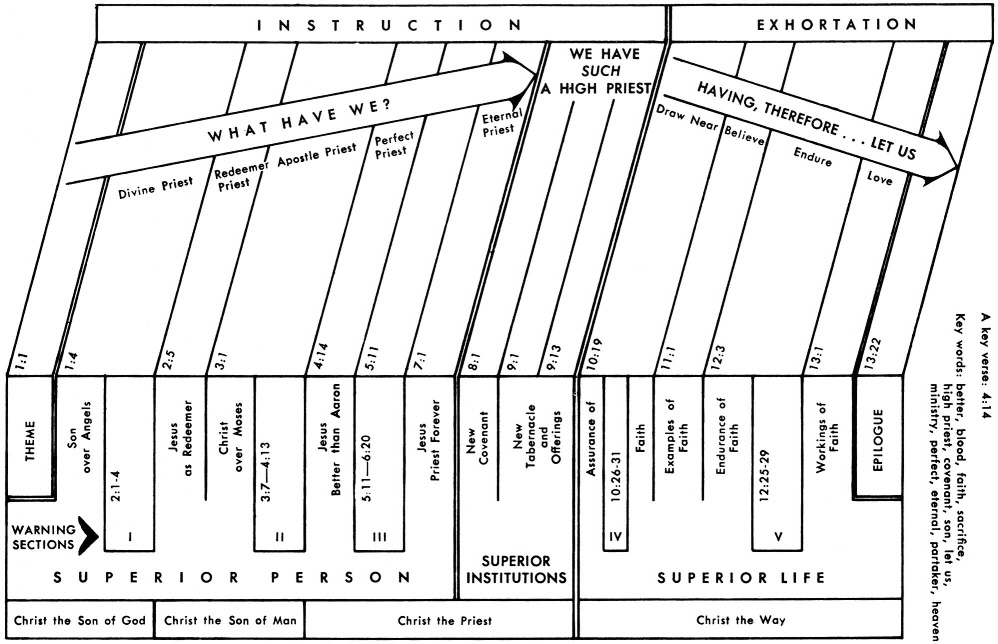
CONSIDER JESUS OUR GREAT HIGH PRIEST
Click chart to enlarge
Charts from Jensen's Survey of the NT - used by permission
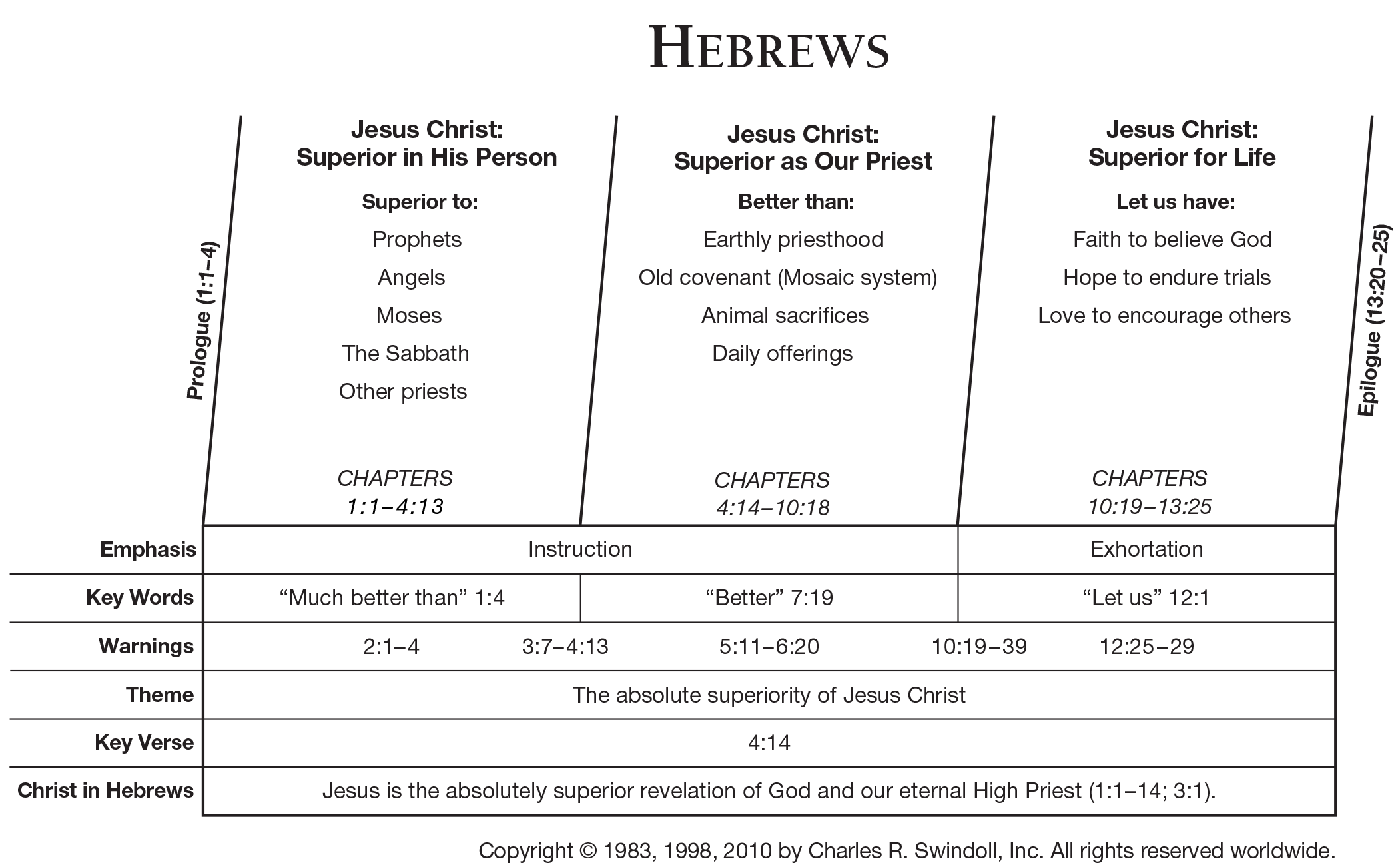
Swindoll's Chart, Interesting Pictorial Chart of Hebrews, Another Chart
|
The Epistle |
||||
| INSTRUCTION Hebrews 1-10:18 |
EXHORTATION Hebrews 10:19-13:25 |
|||
| Superior Person of Christ Hebrews 1:1-4:13 |
Superior Priest in Christ Hebrews 4:14-10:18 |
Superior Life In Christ Hebrews 10:19-13:25 |
||
| BETTER THAN PERSON Hebrews 1:1-4:13 |
BETTER PRIESTHOOD Heb 4:14-7:28 |
BETTER COVENANT Heb 8:1-13 |
BETTER SACRIFICE Heb 9:1-10:18 |
BETTER LIFE |
| MAJESTY OF CHRIST |
MINISTRY OF CHRIST |
MINISTERS FOR CHRIST |
||
|
DOCTRINE |
DUTY |
|||
|
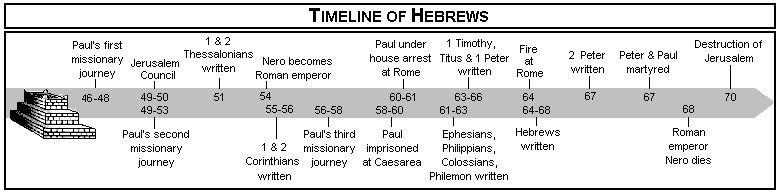
DATE WRITTEN: |
||||

See ESV Study Bible "Introduction to Hebrews"
(See also MacArthur's Introduction to Hebrews)
Borrow Ryrie Study Bible
Hebrews 8:1 Now the main point in what has been said is this: we have such a high priest, who has taken His seat at the right hand of the throne of the Majesty in the heavens (NASB: Lockman)
Greek: Kephalaion de epi tois legomenois, (PPPNPD) toiouton echomen (1PPAI) archierea, os ekathisen (3SAAI) en dexia tou thronou tes megalosunes en tois ouranois,
BGT Κεφάλαιον δὲ ἐπὶ τοῖς λεγομένοις, τοιοῦτον ἔχομεν ἀρχιερέα, ὃς ἐκάθισεν ἐν δεξιᾷ τοῦ θρόνου τῆς μεγαλωσύνης ἐν τοῖς οὐρανοῖς,
Amplified: NOW THE main point of what we have to say is this: We have such a High Priest, One Who is seated at the right hand of the majestic [God] in heaven, (Amplified Bible - Lockman)
KJV Now of the things which we have spoken this is the sum: We have such an high priest, who is set on the right hand of the throne of the Majesty in the heavens;
NKJ Now this is the main point of the things we are saying: We have such a High Priest, who is seated at the right hand of the throne of the Majesty in the heavens,
NET Now the main point of what we are saying is this: We have such a high priest, one who sat down at the right hand of the throne of the Majesty in heaven,
CSB Now the main point of what is being said is this: We have this kind of high priest, who sat down at the right hand of the throne of the Majesty in the heavens,
ESV Now the point in what we are saying is this: we have such a high priest, one who is seated at the right hand of the throne of the Majesty in heaven,
NIV The point of what we are saying is this: We do have such a high priest, who sat down at the right hand of the throne of the Majesty in heaven,
NLT: Here is the main point: Our High Priest sat down in the place of highest honor in heaven, at God's right hand. (NLT - Tyndale House)
Wuest: Now, in the consideration of the things which are being spoken, this is the chief point: such a High Priest we possess, who took His seat on the right hand of the throne of the Majesty in the heavens, (Eerdmans)
Young's Literal: And the sum concerning the things spoken of is: we have such a chief priest, who did sit down at the right hand of the throne of the greatness in the heavens,
Paraphrase The central truth we’ve been building toward is this: our High Priest is none other than Jesus, now seated in authority beside God in heaven.
Paraphrase Here is the essence of everything so far: we have a High Priest perfectly suited to us, who, having completed His work on earth, now sits in the place of highest honor at the right hand of God’s throne in heaven.
Paraphrase The heart of this teaching is that we have a High Priest — not still standing to offer repeated sacrifices, but seated in victory at the right hand of God, forever interceding for us.
Paraphrase The main point is clear: all these arguments about Christ’s superiority lead to this truth — our High Priest is enthroned in heaven at God’s right hand, the ultimate position of power and honor.
- We have - Hebrews 7:26-28+
- High priest - Heb 2:17
- Who has taken His seat - Hebrews 1:3+, Heb 1:13+; Heb 10:12+; Heb 12:2+; Eph 6:20+; Col 3:1+; Rev 3:21+
- Right hand Ps 110:1. Heb 1:3, 12:2. Acts 7:55-56.
- The throne. Ps 45:6. He 4:16
- The majesty - 1 Chr 29:11; Job 37:22; Ps 21:5; Ps 45:3,4; Ps 104:1; Ps 145:12; Isaiah 24:14; Micah 5:4
- In the heavens - Heb 4:14. Heb 7:26. Ep 1:20.
- Hebrews 8:1-13 A Better Priest for a Better Covenant - Steven Cole
- Hebrews 8:1-13 Hebrews and the New Covenant - S Lewis Johnson
- Hebrews 8:1-13 The New Covenant, Part 1 - John MacArthur
- Hebrews 8 Resources - Multiple Sermons and Commentaries
Related Passages:
Hebrews 2:17+ Therefore, He had to be made like His brethren in all things, so that He might become a merciful and faithful high priest in things pertaining to God, to make propitiation for the sins of the people.
Hebrews 7:26-28+ For it was fitting for us to have such a high priest, holy, innocent, undefiled, separated from sinners and exalted above the heavens; 27 Who does not need daily, like those high priests, to offer up sacrifices, first for His own sins and then for the sins of the people, because this He did once for all when He offered up Himself. 28 For the Law appoints men as high priests who are weak, but the word of the oath, which came after the Law, appoints a Son, made perfect forever.
Hebrews 1:3+ And He is the radiance of His glory and the exact representation of His nature, and upholds all things by the word of His power. When He had made purification of sins, He sat down at the right hand of the Majesty on high,
Hebrews 12:2+ fixing our eyes on Jesus, the author and perfecter of faith, who for the joy set before Him endured the cross, despising the shame, and has sat down at the right hand of the throne of God.
Hebrews 4:16+ Therefore let us draw near with confidence to the throne of grace, so that we may receive mercy and find grace to help in time of need.
1 Chronicles 29:11 “Yours, O LORD, is the greatness and the power and the glory and the victory and the majesty, indeed everything that is in the heavens and the earth; Yours is the dominion, O LORD, and You exalt Yourself as head over all.
THE CROWN OF THE ARGUMENT:
OUR HEAVENLY HIGH PRIEST
In Hebrews 7 the author emphasized the priesthood and the logic for a new priesthood. In Hebrews 8 he will explain the reasoning for a new covenant, which he had alluded to in Hebrews 7:22+ referring to it as a better covenant.
After carefully contrasting the weaknesses of the Levitical priesthood with the perfection and permanence of Christ’s priesthood in chapter 7, the writer now pauses to summarize the MAIN POINT. Everything so far has been building to this: believers have a High Priest Who is not bound to earthly rituals, but who is enthroned at God’s right hand in heaven. This verse marks a turning point in the argument, from proving Christ’s superior qualifications (Hebrews 5–7) to describing His superior ministry in the heavenly sanctuary (Hebrews 8–10). It lifts our eyes from earth to heaven, from shadow to substance, from repeated sacrifices to the once-for-all work of the enthroned Son.
And so in Hebrews 7:1 through Hebrews 10:18, the writer has a number of contrasts between the old and the new covenant -- 13 out of 17 uses of the Greek word for covenant (diatheke), occur in this span of Hebrews, so it is clearly a key word in this section. As you study Hebrews 8, keep the context in mind, remembering that the readers of this epistle were primarily Hebrews who professed Christ but who under threat of persecution were being tempted to abandon the truth about the Messiah and return to the bondage of Judaism. It is difficult for most of us in modern America to comprehend the mindset of these Jews whose forefathers had practiced Judaism for over 1000 years. They had been taught the Hebrew Scriptures through which God had revealed Himself and they were "comfortable" with their religious practices. Would we too not be tempted to slide back into our "comfort zone" of the old paths which were tried and true, especially if we were being threatened with persecution by our peers? The writer's solution to this spiritual challenge is to present the supremacy of the Lord Jesus Christ, Who was in every way better - better than angels, better than Moses, a better priest than Aaron, and the Inaugurator, Guarantor (see Hebrews 7:22+) and Mediator of a better covenant, these latter two concepts being the primary focus of Hebrews 8.
In Hebrews 8:1-6a the writer explains that Jesus is the better priest Who ministers in the true tabernacle. Note that although the specific phrase "better priest" does not occur in the NAS, this is clearly the writer's intent.
Then in Hebrews 8:6b-13, the writer presents Jesus as the Mediator of a better covenant, one which had been predicted in the writings of their own prophets, over 400 years earlier.
Now the main point (kephalaion) in what has been said (present tense - I am saying) is this: we have (present tense) such a high priest (archiereus) -- The main point does not mean "sum" as some versions render it (one of the meanings of kephalaion) but in context is more accurately rendered as the main point, the chief point, the most important point. I like Coverdale's rendering as "the pith" (pith = the essential or important part or point), which Knox amplifies as "the very pith". The Dutch Common Language translation has "the kernel". The author is not "summarizing" what he is saying but is telling us the chief point, the most significant point up to this time -- we have such a HIGH PRIEST Who has sat down and Who is minister in the superior, heavenly sanctuary. Note that has been said is more accurately rendered "is saying" because it is not past tense but present tense, signifying an ongoing exhortation. We have in the present tense signifying we continually have such a High Priest! Now and forever.
🙏 THOUGHT - Do we live with the confident realization that He is presently functioning in this capacity on our behalf?
Who has taken His seat (kathizo - aorist tense = past completed act) at the right hand (dexios) of the throne (thronos) of the Majesty (megalosune) in the heavens (ouranos) -- Has taken His seat in the aorist tense speaks of a past completed action by Christ, pointing to His finished work (regarding His sacrifice, but not His intercession) as our great High Priest. The work of the Aaronic high priest was never finished and he did not sit when he entered the holy place or the holy of holies because there was no chair! Of course, the real reason he did not sit is because his work was never done. In fact the writer of Hebrews emphasizes this in Hebrews 10 writing that "every priest stands daily ministering (present tense = continually) and offering (present tense = continually) time after time the same sacrifices. (Heb 10:11+)
At the right hand (dexios) of a king was considered the highest place of honor in the kingdom, as seen in Solomon's day "So Bathsheba went to King Solomon to speak to him for Adonijah. And the king arose to meet her, bowed before her, and sat on his throne; then he had a throne set for the king's mother, and she sat on his right." (1Ki 2:19+). The Majesty (megalosune) is used as a Name of God (see also study of Names of God) in only one other NT passage "He sat down at the right hand of the Majesty on high." (Heb 1:3+ - note most modern versions capitalize "Majesty" and it is preceded by the definite article tes so that it effectively functions as a Name of God, not just an attribute). In the heavens - This location serves to magnify Christ's priesthood. He amplifies this later writing that "Christ did not enter a holy place made with hands, a mere copy of the true one, but into heaven itself, now to appear in the presence of God for (huper = on our behalf) us." (Heb 9:24+) There is no higher, holier place He could have gone, again marking His superiority in comparison to the Aaronic priesthood.
W E Vine writes that "the writer is doing more than summing up what he has stated about Christ (a.v., “sum”). He is not merely gathering up all the glories of Christ as a High Priest. What is meant is that the “chief point” is that Christ is “a minister of the sanctuary and the true tabernacle.” Of this he is about to speak more particularly." ( Collected writings of W. E. Vine.)
Leon Morris "The author leads on from his treatment of the priesthood after the order of Melchizedek to emphasize the point that Christ's ministry far surpasses that of the Levitical priests. The readers of the epistle would be familiar with this priesthood, and the writer wants it to be clear that Jesus has a ministry far excelling it. (See The Expositor's Bible Commentary - Abridged Edition: ... - Page 1304)
The writer of Hebrews had just explained that "it was fitting that we should have such a High Priest, holy, innocent, undefiled, separated from sinners and exalted above the heavens; Who does not need daily, like those high priests, to offer up sacrifices, first for His own sins, and then for the sins of the people, because this He did once for all when He offered up Himself. For the Law appoints men as high priests who are weak, but the word of the oath, which came after the Law, appoints a Son, made perfect forever." (Heb 7:26-28+
Vine adds that we have "one Who embodies in Himself all the glories of deity and all the perfections of humanity, One Who is almighty in power and infinitely tender in sympathy. He not only knows our every need and feels with us in our sufferings, but has power to succor and sustain us, comforting us in our afflictions and carrying us right through them. As the antitype of Aaron He has been perfected through sufferings; as the antitype of Melchizedek He is enthroned in His rightful position of exaltation, a royal Priest, whose priesthood is both perfect and unchangeable, Who is able to save to the uttermost and is entirely suited to us. (Collected writings of W. E. Vine)
C H Spurgeon - We have all the privileges of the once-favored race. Are they the seed of Abraham? So are we, for He was the Father of the faithful, and we, having believed, have become His spiritual children. Had they an altar? We have an altar whereof they have no right to eat who serve the tabernacle. Had they any high priest? We have a high priest—we have one who has entered into the heavenly. Had they a sacrifice and paschal supper? We have Christ Jesus, who, by His one offering, has forever put away our sin, and who is today the spiritual meat on which we feed. All that they had we have, only we have it in a fuller and clearer sense.
Christ may have taken His seat (kathizo - aorist tense = past completed act) but He is far from inactive! In Hebrews 7, the writer records "Hence, also, He is able to save forever those who draw near to God through Him, since He always lives to make intercession (entugchano in the present tense = our Lord's continual activity -- and most of us would readily acknowledge how difficult is the work of prayer!) for (huper = on their behalf) them. (Heb 7:25+)
John MacArthur- He has taken His seat. He has accomplished all that can be accomplished, all that needs to be done. Yet, people are still trying to add to the simple, pure grace of God and salvation by faith, though it is absurd to think that the work of Christ needs anything added to it. The saving effort of our Lord cannot have anything added to it, because it is absolutely perfect. This truth should have been the most joyous news possible to Jews. Imagine, a final sacrifice, a finished work, so that the high priest could sit down—and at God's right hand!...He sits there making intercession (Heb. 7:25)—writing acquittals, as it were—for His own. (See Hebrews Commentary - Page 207)
R C H Lenski says it well, "No Jewish high priest ever sat when he was executing his office. He was not a king who may sit in state, and his office permitted no sitting. Our exalted High Priest is both King and Priest and thus sits at the right of the throne of Majesty "as ministrant of the Holy Place and of the true Tabernacle." (BORROW Hebrews Commentary page 250)
S Lewis Johnson on taken His seat - to summarize it, it’s something like this. The chief point (kephalaion) is we have a priest, who has sat down, and not only that, but who also is a minister of the heavenly sanctuary. So we have a seated priest; not a constantly occupied priest, carrying out his work as if it’s never finished. He will lay great stress on that in Hebrews 9. But we have a seated priest; that is, his sacrifice is over. The propitiation has been accomplished (Heb 2:17). The satisfaction to the holiness and righteousness of God has been rendered and, on the basis of the value of that sacrifice, he is ministering in the true sanctuary. So the chief point concerns not simply that he has sat down, but he has sat down and he is ministering in the sanctuary (Heb 8:2). Now, he’s just been talking about him as a high priest, so it is not surprising to say that he’s there and he’s ministering. So the chief point, then, is a seated priest, within the veil remember, there were two veils that kept the people out, one that kept Aaron out, except on the one day of the year. But now, this priest is within the holiest of all and he’s ministering for us. And he is the one who is seated at the right hand of the throne of Majesty in the heavens.
Simon Kistemaker adds that "The verb to sit down (kathizo) is significant. “Sitting was often a mark of honour or authority in the ancient world: a king sat to receive his subjects, a court to give judgment, and a teacher to teach.” The Book of Revelation in particular describes God, who sits on the throne (Rev 4:2, 10; 5:1, 7, 13; 6:16; 7:10, 15; 19:4; 21:5), and Jesus, who shares that throne (Rev 1:4–5; 3:21; 7:15–17; 12:5). The throne of God and the sanctuary (the true tabernacle) bring king and high priest together into one place. This is not at all surprising if we think of the tabernacle in the desert, where God placed his throne in the Most Holy Place (Lev. 16:2). God took up residence behind the veil in the Tent of Meeting. (BORROW Hebrews Commentary page 216)
🙏 THOUGHT ON THE THRONE - What is amazing is that not only is Jesus seated on the throne but so too are believers. In Eph 2:6+ Paul explains God "raised us up with Him, and seated us (proleptic/prophetic aorist) with Him in the heavenly places in Christ Jesus." In Revelation 3:21+ we read "He who overcomes (ALL BELIEVERS - 1Jn 5:4-5+), I will grant to him to sit down with Me on My throne, as I also overcame and sat down with My Father on His throne." And so we live in the tension of "Already–Not Yet" which should be a constant reminder to us that "For our citizenship is in heaven, from which also we eagerly wait for a Savior, the Lord Jesus Christ." (Php 3:20) What we are looking for, should radically impact what (Who) we are living for!
In Romans Paul says that Christ Jesus Who died for us and was raised is now "at the right hand of God, (and)… also intercedes (entugchano in the present tense = our Lord's continual activity) for (huper) us. " (Ro 8:34+)
🙏 THOUGHT - Considering the fact that Jesus is now our example (1Pe 2:21+, 1Cor 11:1+, 1Jn 2:6+) and we are to follow in His steps, ponder for a moment the paradox of the exalted One interceding for His own. The natural tendency when we are exalted as men and women is to leave the the menial tasks to others. Jesus' example of prayer even though highly exalted above every name, should motivate us to follow in His steps, walking in His Spirit (Gal 5:16+), energized by His Spirit to pray without ceasing (1Th 5:17+) for those around us! (See also The Holy Spirit-Walking Like Jesus Walked!)
As an aside, recall that the resurrected, reigning Christ did stand once as recorded by Luke upon the stoning of Stephen "But being full of the Holy Spirit, he gazed intently into heaven and saw the glory of God, and Jesus standing at the right hand of God." (Acts 7:55+)
He is seated as our Redeemer,
but is standing as our Helper in time of need.
-- John MacArthurComment: Don't be confused by the truth that Stephen saw the glorified Man, Christ Jesus standing at the right hand of God. Jesus will possess the marks of covenant (cp Jn 20:27+, Rev 5:6+ = "as if slain" where slain is perfect tense = speaks of permanence) in His glorified Human body forever (Fully Man). But in the mystery of mysteries, Jesus is ever and always fully God. And so as the One Who is fully God, He is omnipresent. In addition while as a Man He is able to be literally seated at the right hand of the throne of His Father, as God, He is able to indwell the bodies of those who are His by grace through faith (Col 1:27+). And just as mysterious is the truth that God the Father (Jn 14:23+) and God the Spirit (1Cor 3:16+, 1Cor 6:19+) indwell the "temples" (bodies) of believers.
Comment: Don’t be confused by Stephen’s vision of the glorified Christ standing at the right hand of God (Acts 7:55–56+). Jesus will forever bear the covenant marks of His sacrifice as High Priest (cf. Jn 20:27+, Rev 5:6+, where “slain” is in the perfect tense, signifying permanence). In His glorified humanity, He remains fully Man, while in the mystery of the hypostatic union He is ever and always fully God. As the risen Son of Man, He is literally enthroned at the Father’s right hand; as the eternal Son of God, He is omnipresent, able to indwell the hearts of those who belong to Him by grace through faith (Col 1:27+). Even more wondrous, Scripture affirms that both the Father (Jn 14:23+) and the Spirit (1 Cor 3:16+; 1 Cor 6:19+) also make their dwelling within believers, making every redeemed life a temple of the living God. Truly, this is one of the profound mysteries of our faith—that the enthroned Christ who intercedes for us is also the indwelling Christ who strengthens us.
The greatness (and superiority) of the High Priest is manifested by the place where He ministers; viz (that is to say), His greatness is revealed in His sitting down at the right hand of the Majesty in the heavens. He is not continually carrying out His work as if it were never finished. The sacrifice has been rendered and is over. The propitiation has been accomplished. God's holiness and righteousness has been satisfied. On the basis of the value and efficacy of His sacrifice, Jesus has not only set down, but is now ministering in the sanctuary. In short the chief point is a seated High Priest within the veil (the inner room, the holy of holies, the place where God dwelt) and He is ministering for us.
Christ is a High Priest in every way superior to the priesthood of Aaron. Why would one want to return to the old system when there is such a superior High Priest permanently seated in such an exalted position?!
Jesus is now the Great High Priest and is seated in effect in the real "Holy of Holies," the Throne Room of God the Father, at His right hand. Under the Old Covenant, the High Priest was never able to sit in the Holy of holies because (1) there was no chair but (2) most importantly his work was never finished. Year after year he had to bring blood of animals into the Holy of Holies but these sacrifices never accomplished the desired goal of perfect redemption, full payment of the price for sins. During His time on earth Jesus explained to His disciples what was His real "food" declaring "My food is to do the will of Him who sent Me, and to accomplish (teleioo to take it to completion, to the intended goal) His (the Father's) work (THE WORK OF REDEMPTION)." (John 4:34+) In His high priestly prayer, just before He went to the Cross to carry out the priestly work of sacrifice, Jesus declared to His Father "I glorified Thee on the earth, having accomplished (teleioo) the work which Thou hast given Me to do. (John 17:4+) And then John records that on the Cross "Jesus, knowing that all things had already been accomplished, in order that the Scripture might be fulfilled, said, "I am thirsty." A jar full of sour wine was standing there; so they put a sponge full of the sour wine upon a branch of hyssop, and brought it up to His mouth. When Jesus therefore had received the sour wine, He said, "It is finished (tetelestai)! And He bowed His head, and gave up His spirit. (John 19:28, 29, 30+)
Comment: "It is finished" translates the single verb tetelestai which means in essence "Paid in full" (see in depth discussion of PAID IN FULL). The perfect tense speaks of the permanence of this payment. In ancient times when someone had a debt that was finally paid off, the lender would write "tetelestai (perfect tense of teleo) across the bill to certify that it was paid in full! When Jewish priests would examine an animal for its suitability to be sacrificed, they would use this same verb (teleo) if the found the animal to be faultless! We owed a debt we could never pay, but Jesus paid in full the debt He never owed! Amazing grace.
And so the continual work of the Aaronic priests (and high priests) was a mere shadow of the substance fulfilled in the finished work of Christ on the Cross. Christ's taking His seat is the indisputable evidence marking the fact that His work as Priest is finished. No more yearly "Day of Atonement." No more daily sacrifices. No need for more Passover lambs to be sacrificed (cp 1Co 5:7, Jn 1:29).
A T Robertson has a summary statement on Hebrews 8:1 - Here we have a summary of the five points of superiority of Jesus as high priest (Heb 8:1–6). He is himself a better priest than Aaron (τοιουτος [toioutos] in 8:1 such as shown in 4:16 to 7:28); he works in a better sanctuary (8:2, 5); he offers a better sacrifice (8:3f.); he is mediator of a better covenant (8:6); his work rests on better promises (8:6); hence he has obtained a better ministry as a whole (8:6). In this resumé (κεφελαιον [kephelaion]) the author gives the pith (κεφαλαιον [kephalaion]) of his argument, curiously enough with both senses of κεφαλαιον [kephalaion] (pith, summary) pertinent. He will discuss the four points remaining thus: (1) the better covenant, 8:7–13. (2) The better sanctuary, 9:1–12. (3) The better sacrifice, 9:13–10:18. (4) The better promises, 10:19–12:3. One point (the better high priest, like Melchizedek) has already been discussed (4:16–7:28). Sat down (ἐκαθισεν [ekathisen]). Repetition of 1:3 with του θρονου [tou thronou] (the throne) added. This phrase prepares the way for the next point.
Main point (2774) (kephalaion from kephale = a head, only other use Acts 22:28) describes the things belonging to the head and thus the main matter. The word in Latin is capitulum. Kephalaion was used of a sum total or a sum of money, but that is not the best understanding of the use in Hebrews 8:1. Here, it does not mean “sum total of money,” but rather the “chief point” or “crowning statement” of the argument. The writer is signaling a transition: “Here’s the heading, the key thesis of what I’ve been saying.” BDAG writes that it represents "a brief statement concerning some topic or subject." It means the chief point, as of a capstone or capital of a pillar -- the main thing. Here it describes the main point in the progression of the argument. The word can refer to the sum, as of numbers added up from below to the head of the column, where the result is set down as the summary or synopsis. However, the word could also mean the chief point, as of a capstone or capital of a pillar, and thus mean main thing, main point.
Mounce: “the chief point, principal thing, the sum; in financial terms, the principal, amount, capital.”
The writer has been building arguments in Hebrews 7 (about the superiority of Christ’s priesthood over the Levitical system). With kephalaion, he pauses and says, “Here is the main point, the heading under which everything else falls.” That main point: We have a High Priest seated at the right hand of God in heaven. It functions almost like a thesis sentence, summing up the preceding exposition and setting the stage for chapter 8 and following.
high priest (dictionary article) (749) (archiereus from archi- = denoting rank or degree + hiereus = priest) was the principal member among the chief priests. The irony is that the high priest Caiaphas was residing over the Sanhedrin during trial of Jesus, the trial which would lead to His death and pave the way for His eternal High Priesthood!
ARCHIEREUS IN HEBREWS - Heb. 2:17; Heb. 3:1; Heb. 4:14; Heb. 4:15; Heb. 5:1; Heb. 5:5; Heb. 5:10; Heb. 6:20; Heb. 7:26; Heb. 7:27; Heb. 7:28; Heb. 8:1; Heb. 8:3; Heb. 9:7; Heb. 9:11; Heb. 9:25; Heb. 13:11
Taken...seat (sat down) (2523) kathizo from kata = down + hizo = to sit) means to sit down, to tarry, to set in sense of to appoint, to settle (Ark in Ge 8:4). Of Christ seated (Eph 1:20, Mt 20:21, Mk 10:37, 40, Mk 16:19, Heb 1:3). Sit as a judge - appoint (1 Cor 6:4). Sit upon a throne (Mt 19:28; 25:31; Lu 22:30; Acts 2:30; 1Ki 2:12; 8:20). To sit upon the platform or tribunal of a judge (Jn 19:13; Acts 12:21; 25:6, 17). Sit "in the chair of Moses" (Mt 23:2). Of "tongues as of fire" that "rested" on each one (Acts 2:3). Mt 23:22 pictures God sitting upon a throne.
KATHIZO IN HEBREWS - Heb. 1:3; Heb. 8:1; Heb. 10:12; Heb. 12:2
Hebrews 1:3 He sat down at the right hand of the Majesty on high,
Hebrews 8:1 a high priest, who has taken His seat at the right hand
Hebrews 10:12 SAT DOWN AT THE RIGHT HAND OF GOD,
Hebrews 12:2 has sat down at the right hand of the throne of God.
Right hand (1188)(dexios) is the place of honor. Dexia is used in the gospels to describe Jesus seated at the right hand of power (Mt 26:64, Mark 14:62, Luke 22:69 - all uses of the phrase "right hand of" = Ps 77:10; 89:42; 109:31; 118:15, 6; 144:8, 11; Isa 63:12; Matt 26:64; Mark 14:62; 16:19; Luke 22:69; Acts 2:33; 7:55f; Ro 8:34; Gal 2:9; Col 3:1; Heb 1:3; 8:1; 10:12; 12:2; 1 Pet 3:22; Rev 5:1, 7). The right hand is not only the place of honor and majesty but is also the place of affection (eg, see Neh 2:6 where an earthly king delights to place his bride at his right hand).
DEXIOS IN HEBREWS - Heb. 1:3; Heb. 1:13; Heb. 8:1; Heb. 10:12; Heb. 12:2
Throne (2362) thronos is a raised chair with a footstool and by metonymy speaks of dominion, royalty, kingly power. He is in the place of sovereign power as the Father’s coequal. Thronos describes a seat of authority as with the throne of God (Heb. 4:16, "the throne of grace," Heb 8:1; Heb 12:2; Rev 1:4; Rev 3:21; Rev. 4:2; Rev. 5:1 Rev. 20:12; Lxx - Ps 47:8, Ps 103:19), the throne of Jesus Christ (Heb. 1:8; Rev. 3:21; Rev. 22:3; in the Millennium = Mt 19:28), by metonymy (or figuratively) used for angelic powers (Col. 1:16), of the apostles (Mt 19:28, Lk 22:30), elders in heaven (Rev 4:4), of the throne of David (Lk 1:32, Acts 2:30), of the throne of Satan (Rev 2:13), of the throne of the beast, the antichrist (Rev 13:2, Rev 16:10).
THRONOS IN HEBREWS - Heb. 1:8; Heb. 4:16; Heb. 8:1; Heb. 12:2;
See Throne of God
Gilbrant - Thronos originally denoted a chair with a footstool and later a chair with a high back and arms. Initially thronos held no special symbolic value; however, gradually it came to symbolize “authority.” In time it became the “seat of honor” reserved for the master of a household. As a special gesture of respect and honor, certain guests were invited to sit upon the thronos of a household.
Majesty (3172) (megalosune) speaks of a state of prominence, greatness or preeminence. In this context Majesty is the Name of God, as interpreted by the NAS and NIV which capitalize Majesty, one of John Calvin's favorite names for God. The definite article (The = tes) preceding Majesty further serves to underscore that this is not just any majesty or majesty in general, but "the specific Majesty", the Majestic One Himself, the great God omnipotent and sovereign over all things, all peoples and all times.
MEGALOSUNE - 3V - Heb. 1:3; Heb. 8:1; Jude 1:25
Heavens (3772) (ouranos) (etiology is not certain - possibilities include oros = a relatively high elevation or horos = boundary + ano = above thus "the boundary above") represents the dwelling place of God, the holy angels and the redeemed. It is interesting that one English word derived from ouranos is "uranium." In light of the fact that Revelation has 50 uses of "heaven" if you wanted to have a better sense of the meaning of ouranos, observing each of these uses for associations would be a profitable study. Strong's summary - (1) the vaulted expanse of the sky with all things visible in it 1a) the universe, the world 1b) the aerial heavens or sky, the region where the clouds and the tempests gather, and where thunder and lightning are produced 1c) the sidereal or starry heavens (2) the region above the sidereal heavens, the seat of order of things eternal and consummately perfect where God dwells and other heavenly beings.
OURANOS IN HEBREWS Heb. 1:10; Heb. 4:14; Heb. 7:26; Heb. 8:1; Heb. 9:23; Heb. 9:24; Heb. 11:12; Heb. 12:23; Heb. 12:25; Heb. 12:26
Hebrews 1:10 THE HEAVENS ARE THE WORKS OF YOUR HANDS;
Hebrews 4:14 great high priest who has passed through the heavens,
Hebrews 7:26 exalted above the heavens;
Hebrews 8:1 the throne of the Majesty in the heavens,
Hebrews 9:23 copies of the things in the heavens
Hebrews 9:24 into heaven itself
Hebrews 11:12 AS THE STARS OF HEAVEN IN NUMBER
Hebrews 12:23 the firstborn who are enrolled in heaven
Hebrews 12:25 Him who warns from heaven.
Hebrews 12:26 I WILL SHAKE NOT ONLY THE EARTH, BUT ALSO THE HEAVEN
S Lewis Johnson mentions an 8 year old boy who came up to him after hearing him preach on Christ seated at the right hand of the throne of majesty and asked "Dr Johnson, who's sitting on the left hand of the throne of God?"
Brooke Westcott introduces this section with a comment summarizes Christ as High Priest writing that…
By His offering of Himself He has made purification of sins (see Hebrews 1:3+); He has applied the virtue of His Blood, to speak in earthly language, to the scene of the worship of redeemed humanity (see Hebrews 9:23+); He has taken His seat upon the throne, entering in His humanity upon the full enjoyment of every privilege won by His perfect fulfilment of the will of God. Henceforth He applies for the benefit of men the fruits of the Atonement which He has completed.
This work is shown to us in the Epistle in three distinct forms, and we have no authority to go beyond its teaching.
i. Christ intercedes for men as their present representative before God: Hebrews 7:25, 7:27; 9:24. (See notes Hebrews 7:25, 7:27; 9:24)
ii. Christ brings the prayers and praises of His people to God, embodying their true spiritual desires, so that at each moment they become articulate through His Spirit and are brought through Him to the Throne: Hebrews 13:15- +.
iii. Christ secures access for His people in their present state to ‘the holy place,’ where He Himself is, in His Blood—the virtue of His earthly life lived and offered: Hebrews 4:16+; Hebrews 10:19; 20; 21; 22. - See notes 19; 20; 21; 22.
These three forms of Christ's work show under the conditions of human experience what He does for humanity eternally. Our fellowship with God will grow closer, more perfect, more conscious, but still our approach to God, our worship, our spiritual harmony, must always be ‘in Him’ in Whom we have been incorporated.
The modern concept of Christ pleading in heaven His Passion, ‘offering His blood,’ on behalf of men, has no foundation in the Epistle. His glorified humanity is the eternal pledge of the absolute efficacy of His accomplished work. He pleads, as older writers truly expressed the thought, by His Presence on the Father's Throne.
Meanwhile men on earth in union with Him enjoy continually through His Blood what was before the privilege of one man on one day in the year. So far the thought of the priestly work of the Ascended Christ is expressed under the images of the Levitical covenant, as He works for ‘the people’; but He has yet another work, as ‘priest after the order of Melchizedek,’ for humanity. He does not lay aside this wider relation in completely fulfilling the narrower. Rather it is through the fulfilment of His work for the Church—the firstfruits—that He moves towards the fulfilment of His work for the world. (B. F. Westcott: Hebrews 8 Commentary) (Bolding added)
| Old Testament | Reference | Note |
|---|---|---|
| Psalm 11:4 | “The LORD is in His holy temple; the LORD’s throne is in heaven.” | Affirms God’s throne as heavenly, a place of rule and judgment. |
| Psalm 47:8 | “God reigns over the nations, God sits on His holy throne.” | Universal sovereignty over all peoples. |
| Psalm 89:14 | “Righteousness and justice are the foundation of Your throne.” | God’s throne is marked by His holy character. |
| Psalm 93:2 | “Your throne is established from of old; You are from everlasting.” | Eternal nature of God’s throne. |
| Psalm 110:4 | The LORD says to my Lord: “Sit at My right hand..." | Most quoted verse in NT (23x direct or allusively) |
| Isaiah 6:1 | “I saw the Lord sitting on a throne, lofty and exalted.” | Vision of God’s majesty and holiness. (cf Jn 12:41) |
| Daniel 7:9–10 | “The Ancient of Days took His seat… His throne was ablaze with flames.” | Apocalyptic vision of judgment and everlasting dominion. |
| New Testament | Reference | Note |
|---|---|---|
| Matthew 25:31 | “When the Son of Man comes… He will sit on His glorious throne.” | Future judgment throne of Christ. |
| Acts 2:33–34 | “Exalted to the right hand of God…” | Jesus fulfills Psalm 110 as the enthroned Messiah. |
| Romans 8:34 | “Christ Jesus… is at the right hand of God, interceding for us.” | Emphasizes His priestly intercession. |
| Eph 1:20–21 | “Seated Him at His right hand… far above all rule.” | Christ’s supreme authority in heaven. |
| Colossians 3:1 | “Seek the things above, where Christ is, seated at the right hand of God.” | Believers’ focus tied to Christ’s exaltation. |
| Hebrews 1:3 | “He sat down at the right hand of the Majesty on high.” | Parallel to Heb 8:1; highlights His finished work. |
| Hebrews 12:2 | “Sat down at the right hand of the throne of God.” | Exalted after enduring the cross. |
| Rev 4:2–3 | “A throne was standing in heaven, and One sitting on the throne.” | Vision of heavenly worship centered on God’s throne. |
| Rev 22:1–3 | “The throne of God and of the Lamb will be in it.” | Final union of God’s throne with the Lamb in the New Jerusalem. |
Hebrews 8:2 a minister in the sanctuary and in the true tabernacle, which the Lord pitched, not man. (NASB: Lockman)
Greek: ton hagion leitourgos kai tes skenes tes alethines, en ephexen (3SAAI)o kurios, ouk anthropos.
Amplified: As officiating Priest, a Minister in the holy places and in the true tabernacle which is erected not by man but by the Lord. (Amplified Bible - Lockman)
BGT τῶν ἁγίων λειτουργὸς καὶ τῆς σκηνῆς τῆς ἀληθινῆς, ἣν ἔπηξεν ὁ κύριος, οὐκ ἄνθρωπος.
NLT: There he ministers in the sacred tent, the true place of worship that was built by the Lord and not by human hands. (NLT - Tyndale House)
Wuest: a ministering servant of the holy places, even those of the tent, the genuine one, which the Lord pitched, not man. (Eerdmans)
Young's Literal: of the holy places a servant, and of the true tabernacle, which the Lord did set up, and not man,
KJV A minister of the sanctuary, and of the true tabernacle, which the Lord pitched, and not man.
NKJ a Minister of the sanctuary and of the true tabernacle which the Lord erected, and not man.
NET a minister in the sanctuary and the true tabernacle that the Lord, not man, set up.
CSB a minister of the sanctuary and the true tabernacle that was set up by the Lord and not man.
ESV a minister in the holy places, in the true tent that the Lord set up, not man.
NIV and who serves in the sanctuary, the true tabernacle set up by the Lord, not by man.
Paraphrase Christ carries out His priestly service in the true holy place, the heavenly tabernacle, which was not raised up by human hands but was firmly set in place by the Lord Himself.
- Minister in the sanctuary Heb 9:8-12+; Heb 10:21+; Ex 28:1,35+; Luke 24:44+; Romans 15:8+
- True tabernacle Hebrews 9:11+; Hebrews 9:23,24+
- Which the Lord pitched, not man - Hebrews 11:10+; 2Cor 5:1; Col 2:11+
- Hebrews 8:1-13 A Better Priest for a Better Covenant - Steven Cole
- Hebrews 8:1-13 Hebrews and the New Covenant - S Lewis Johnson
- Hebrews 8:1-13 The New Covenant, Part 1 - John MacArthur
- Hebrews 8 Resources - Multiple Sermons and Commentaries
Related Passages:
Romans 15:8+ For I say that Christ has become a servant (diakonos) to the circumcision on behalf of the truth of God to confirm the promises given to the fathers,
Hebrews 10:21+ and since we have a great priest over the house of God,
Exodus 28:1; 35+ “Then bring near to yourself Aaron your brother, and his sons with him, from among the sons of Israel, to minister as priest to Me–Aaron, Nadab and Abihu, Eleazar and Ithamar, Aaron’s sons. (28:35) “It shall be on Aaron when he ministers; and its tinkling shall be heard when he enters and leaves the holy place before the LORD, so that he will not die.
Luke 24:44+ Now He said to them, “These are My words which I spoke to you while I was still with you, that all things which are written about Me in the Law of Moses and the Prophets and the Psalms must be fulfilled.”
Hebrews 11:10+ for he was looking for the city which has foundations, whose Architect and Builder is God.
John 5:39+ “You search the Scriptures because you think that in them you have eternal life; it is these that testify about Me;
John 5:46+ (JESUS IN THE OT - INCLUDING THE TABERNACLE) “For if you believed Moses, you would believe Me, for he wrote about Me.
Exodus 40:34+ Then the cloud (Shekinah glory cloud) covered the tent of meeting, and the glory of the LORD filled the tabernacle.
Exodus 40:38+ For throughout all their journeys, the cloud (Shekinah glory cloud) of the LORD was on the tabernacle by day, and there was fire in it by night, in the sight of all the house of Israel.
Through Christ we Can Continually Draw Near the Throne Room!
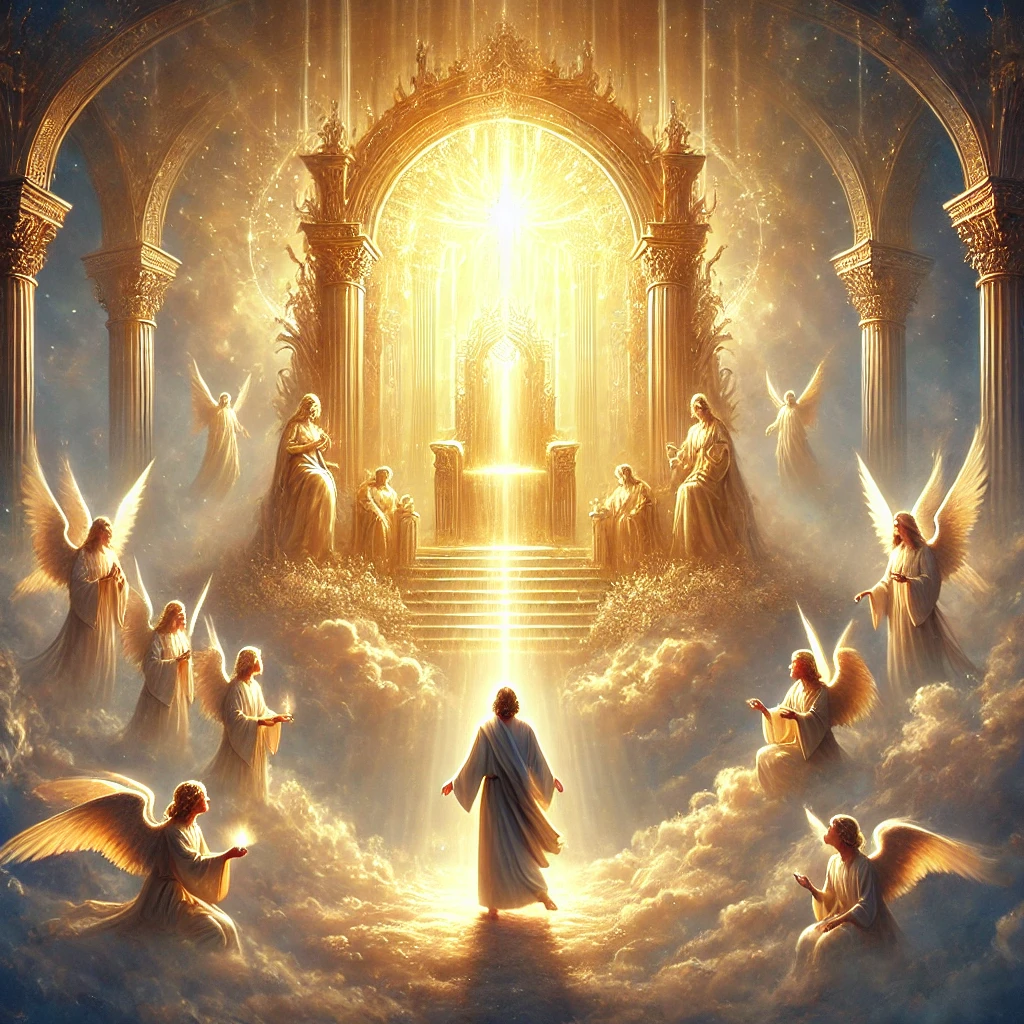
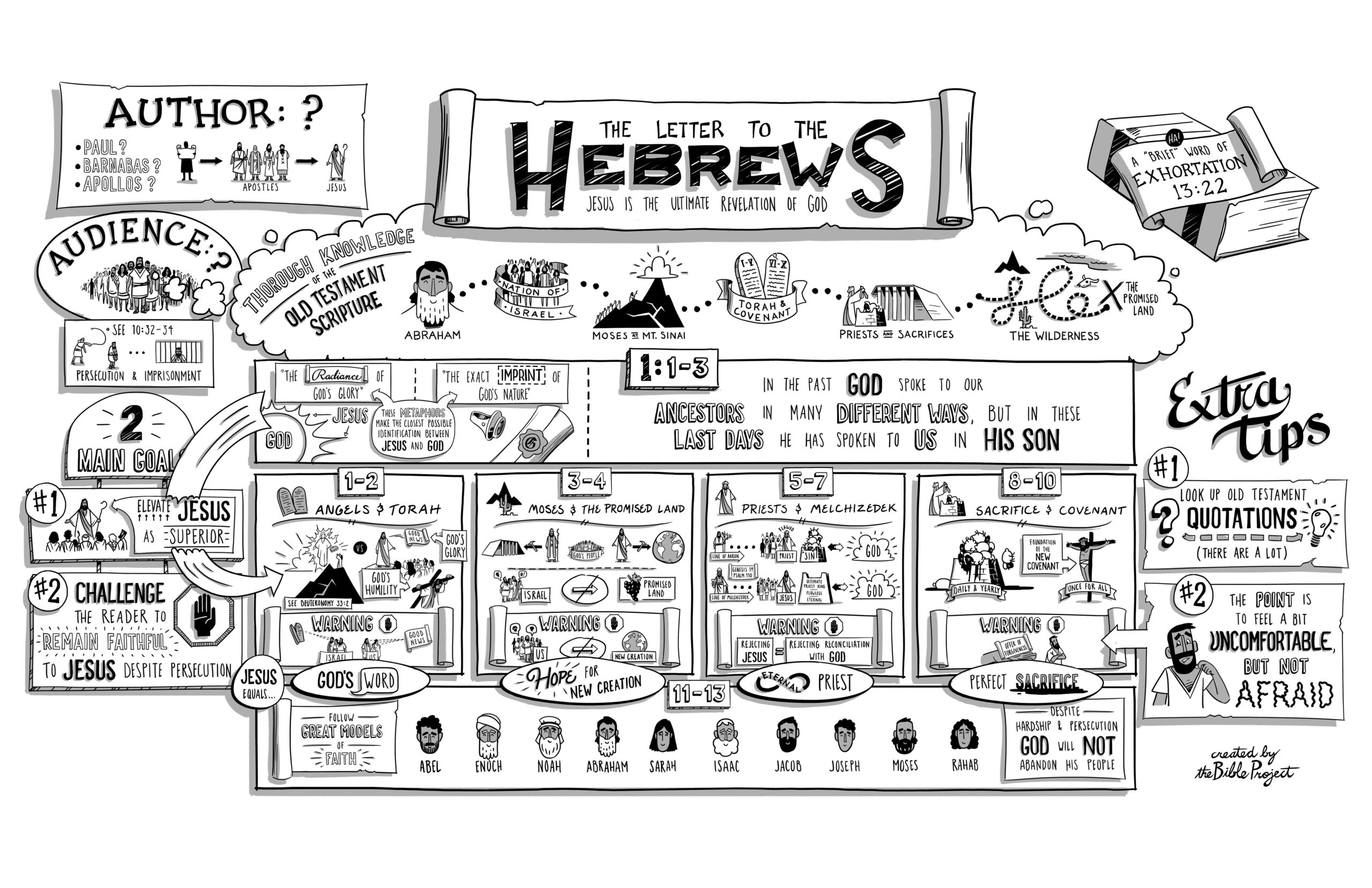
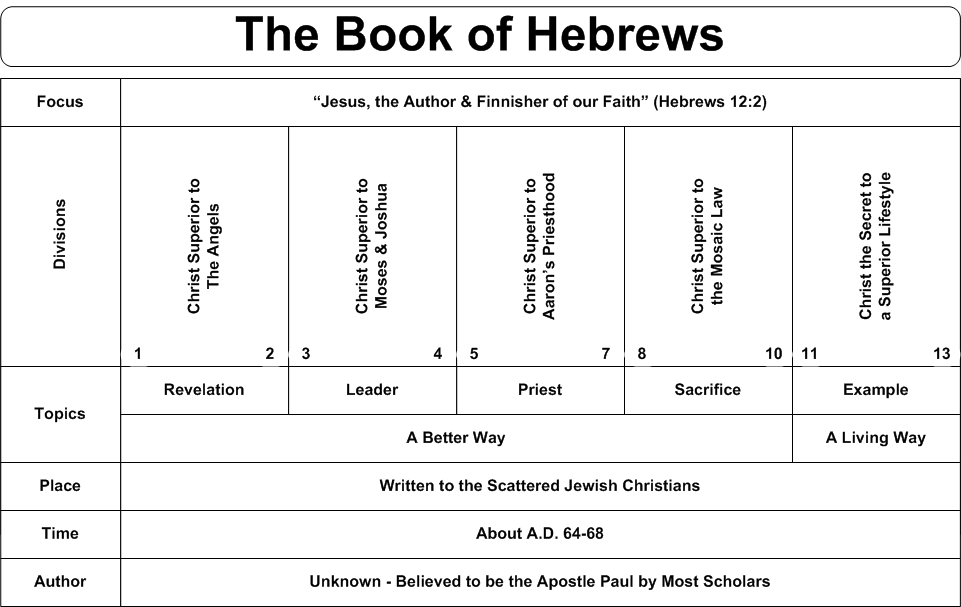
OUR GREAT HIGH PRIEST IN
THE HEAVENLY SANCTUARY
Having stated that “we have such a high priest” (Heb 8:1), the writer now underscores where and how Jesus serves. Unlike the Levitical priests who ministered in a tent pitched by human hands, Christ ministers in the true sanctuary. This heavenly tabernacle is not a copy or shadow but the very reality itself, established not by men but by God Himself. The writer thus elevates Christ’s priestly ministry above all earthly rituals, pointing his readers to the permanent and divine foundation of the new covenant.
A minister (leitourgos) in the sanctuary (hagios) and in the true (alethinos) tabernacle (skene) , which the Lord (kurios) pitched (pegnumi) , not (ou, ouk - absolutely not) man - A minister (leitourgos) speaks of Christ as a Servant, which is striking in view of the preceding reference speaking of His high place in heaven…but not too high to be a Servant! Amazing Grace indeed! Jesus although not a minister in the "shadow", as the perfect God Man served as the minister in the "substance", the true holy place. His ministry is better than the Aaronic priesthood. In this context, the reference appears to be to the "Holy of holies" within the true (alethinos) tabernacle (skene). Do not misunderstand. The writer is not saying the first tabernacle was "false" but only that it was only meant to be a temporary foreshadowing of permanent tabernacle. "The comparison is between the typical and temporary and the real and permanent." (MacArthur)
A minister (leitourgos) "is used of one who engages in any one of a variety of forms of public service....It speaks of Christ in his capacity as servant, which is striking, as it immediately follows the reference to his high place in heaven." (Leon Morris - see The Expositor's Bible Commentary - Page 1304)
Remember that this holy place in heaven is not only where Christ our High Priest now serves but where He seeks to bring us (although in one sense, mystical but true, we are in the Throne Room - see note below)! The writer had just stated that "(for the Law made nothing perfect), and on the other hand there is a bringing in of a better hope, through which we draw near to God." (Heb 7:19+) So the purpose of His ministry is that we be brought to God within the sanctuary.
It should not be the experience of believing Christians to enter heaven
for the first time at their death. It should be an experience,
our spiritual experience constantly.
As Dr Johnson observes that "It should not be the experience of believing Christians to enter heaven for the first time at their death. It should be an experience our spiritual experience constantly. We are to live in the sanctuary! By faith, of course. But our lives are to be lived in the light of what God seeks to do through the Lord Jesus Christ for us. Heaven should not be a totally strange place to us when we come in, in the physical sense." (Hebrews and the New Covenant)
The true (alethinos) tabernacle (skene) - The genuine tent in heaven. The earthly was only a copy and shadow ("a symbol for the present time") constructed from the pattern that Moses was shown on Mt. Sinai. The author’s point is that this sanctuary and tabernacle in heaven is the real thing. The earthly tabernacle was only a copy and shadow of heavenly things (Hebrews 8:5+).
Charles Swindoll - Just as a shadow is cast by something of real substance, so the rituals of the old covenant are representative of a greater reality that stands behind them. (See Insights on Hebrews - Page 124)
Simon Kistemaker adds that "The throne of God and the sanctuary (the true tabernacle) bring king and high priest together into one place. This is not at all surprising if we think of the tabernacle in the desert, where God placed his throne in the Most Holy Place (Lev. 16:2). God took up residence behind the veil in the Tent of Meeting....By his sacrificial death, Jesus finished his atoning work on earth. Upon his ascension, he entered the presence of God (the sanctuary) and sat down at God’s right hand. Says the writer of Hebrews, Jesus “serves in the sanctuary, the true tabernacle set up by the Lord, not by man.” (BORROW Hebrews Commentary page 216)
Although we cannot see this tabernacle now, it is more abiding and more real than that which the Jews could see. Note it is not that the Old Covenant tabernacle was false, but that it was temporary and prefigured the tabernacle in the wilderness. It is true in contrast to that which is symbolic.
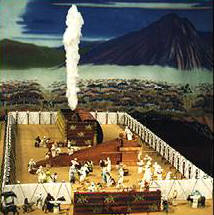
Shekinah Over
the Tabernacle
Now, in Christ Jesus....we find a sanctuary to reside in,
for we dwell in Him; we are one with Him.
C H Spurgeon - The sanctuary was a place in which only one person ever dwelt, and that was God Himself. The mysterious light that they called the Shekinah shone from between the wings of the cherubim; there were the pillar of cloud by day and the pillar of fire by night—the symbols of the divine presence. It was God’s house. No man lived with Him; no man could. The high priest went in but once a year, and out he went again to the solemn assembly. But now, in Christ Jesus, in Whom dwells all the fullness of the Godhead bodily (Col 2:9), we find a sanctuary to reside in, for we dwell in Him; we are one with Him. God was in Christ, reconciling the world to Himself, not imputing their trespasses unto them (2Co 5:19); and as God was in Christ, so is it written, “You in me, and I in you” (John 17:23+). Such is the union between Christ and His people. Every believer is in Christ, even as God is in Christ.When a Christian loses the realization of the presence of the Lord Jesus Christ, Who is the “minister of the sanctuary and of the true tabernacle that the Lord set up, not man,” then it is, above all other seasons, that he sighs and cries for a renewal of communion with Christ. We would envy any, however poor and insignificant they may be, who can maintain unbroken fellowship with their Lord.
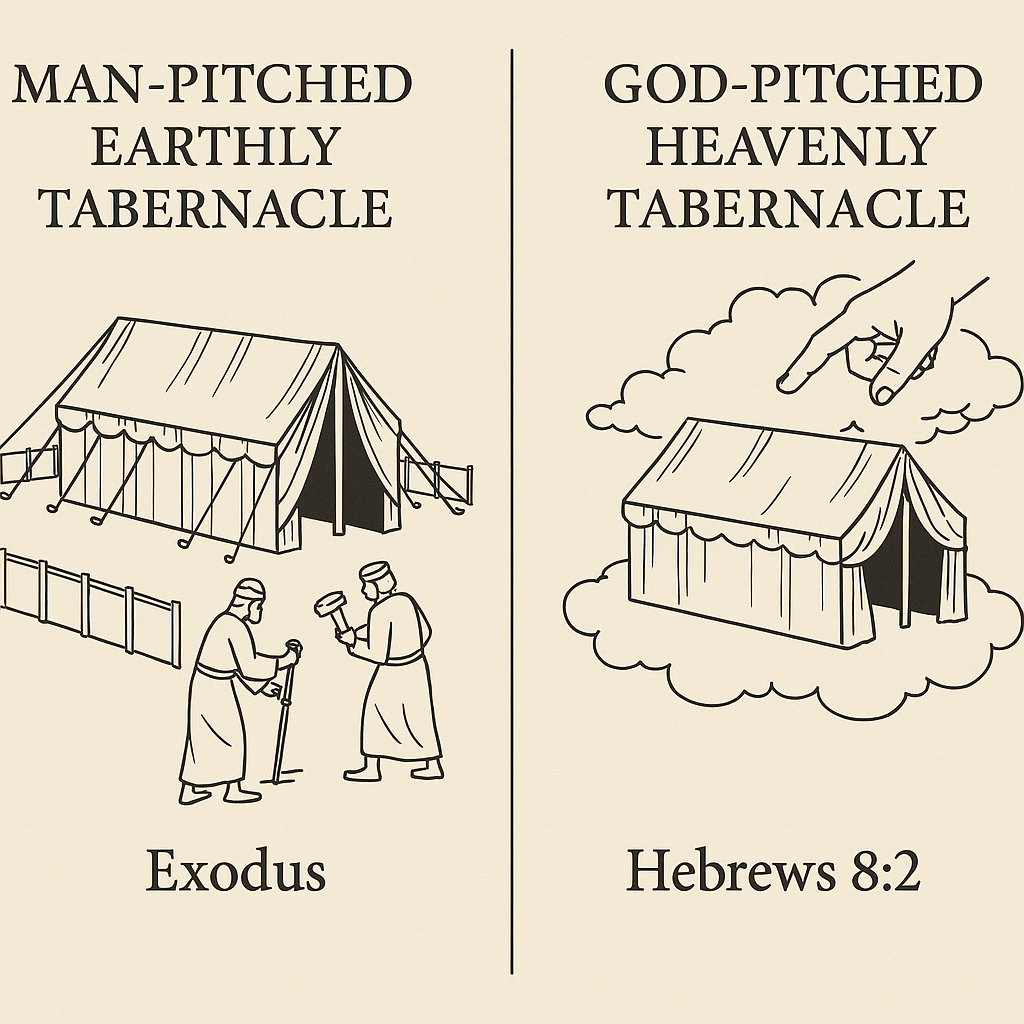
Which the Lord (kurios) pitched (pegnumi), not man - Pitched is aorist tense indicating the "pitching" by the Lord was a past completed action. The imagery of pitched evokes the driving of pegs into the ground to secure a tent (figuratively speaking) but here it is firmly, eternally set by the Lord Himself. Exodus describes the tabernacle (skēnē) carefully constructed by Moses and the Levites, following the pattern shown on Sinai (Ex 25:40+; Heb 8:5). But it was man-pitched — temporary, movable, shadow-like. The tabernacle pitched (pegnumi) by God is divine in origin, eternal in character, and heavenly in location.Just as God designed the pattern for Moses, He Himself is the builder of the greater reality. John gives us a preview in the Revelation 15:5+, Revelation 21:3 - see notes for Tony Garland's commentary. In Revelation 7:15+ John records that "He who sits on the throne will spread His tabernacle over them." Not (ou, ouk = absolutely not) man presents a strong contrast for no human priest, artisan, or Levite had a hand in constructing this heavenly sanctuary. It is entirely of divine origin.
John Owen has an interesting thought on true tabernacle - I think that the true tabernacle refers to the human nature of the Lord Christ. He is the only way to approach God in holy worship, as the tabernacle was of old. Christ himself called his own body his temple when referring to the temple of Jerusalem, which was put to the same use as the tabernacle (John 2:19-22+). The old tabernacle was a type. It was a token, pledge, and means for God's presence to be with his people here on earth, and for him to be near them. So he said he dwelt among them. This can only really and substantially happen through Christ. He alone, therefore, is this true tabernacle.
Dr Louis Talbot helps us understand why we can legitimately interpret the "types" or "symbols" in the Tabernacle as they relate to Christ explaining that "WHEN God told Moses to build the tabernacle in the wilderness, according to the pattern which He showed him in the mount, He said: “Speak unto the children of Israel . . . And let them make me a sanctuary; that I may dwell among them” (Exodus 25:2, 8).
When the inspired apostle explained the spiritual significance of this, God's dwelling place among His people, Israel, He said to the Hebrew Christians: “We have such an high priest, who is set on the right hand of the throne of the Majesty in the heavens; a minister of the sanctuary, and of the true tabernacle, which the Lord pitched, and not man” (Hebrews 8:1, 2).
These words from the New Testament not only give us the Holy Spirit's commentary on the meaning of the tabernacle in the wilderness; but they are the key that unlocks a vast treasure of spiritual truth regarding the “earthly sanctuary” which Moses built, in order that God might dwell among His people. If we would understand the New Testament teaching concerning this Jewish tabernacle, which was “a shadow of good things to come” (Hebrews 10:1), we should compare the Exodus record with the Epistle to the Hebrews, especially Hebrews eight and nine, which deal with the tabernacle in particular, though primarily with the ministry of Christ, our Great High Priest, in “the true tabernacle, which the Lord pitched, and not man.”...
In connection with the typical significance of the Jewish tabernacle, we have one of the many clear proofs that the Old Testament is the New Testament concealed; whereas the New Testament is the Old Testament revealed. Jehovah of the Old Testament is Jesus of the New. And the Triune God gave to Israel the tabernacle, the priesthood, and the offerings, in order that sinful man might recognize the promised Saviour, and understand the significance of His mission and death.
When our Lord was among men, He was repeatedly bidding those who heard His teaching to study the Old Testament Scriptures. To the unbelieving Jews He said, “Search the scriptures, for in them ye think ye have eternal life: and they are they which testify of me . . . Had ye believed Moses, ye would have believed me: for he wrote for me” (John 5:39, 46).
By “the scriptures” Christ meant the Old Testament; for the New Testament was not written until after He died, arose from the dead, and went back to heaven. And when He said, “Moses wrote of me,” He included Exodus; for Moses wrote the first five books of the Bible as he was inspired by the Holy Spirit.
To the two disciples on the way to Emmaus the risen Lord also said that the prophets had foretold “the sufferings of Christ, and the glory that should follow.” “And beginning at Moses and all the prophets, he expounded unto them in all the scriptures the things concerning himself” (Luke 24:27; cf. 24:26).
Again, to the ten disciples, still later in the same evening, He said, “These are the words which I spake unto you, while I was yet with you, that all things must be fulfilled, which were written in the law of Moses, and in the prophets, and in the psalms, concerning me” (Luke 24:44).
That the tabernacle was typical of Christ and His redemptive work on the cross is clear from many statements in the New Testament, some of which we shall consider in these studies. All the ministry of the priests in this “earthly sanctuary,” yea, even the sanctuary itself, served as a series of object lessons concerning salvation, sinful man's access to a holy God, and his worship of the Redeemer of sinners. It is as though God had painted a portrait of Christ some fifteen hundred years before He was to be born into the world as the Child of Bethlehem, in order that when He did tabernacle among men as the only begotten Son of God, all the world might recognize Him as the promised Saviour.
(ILLUSTRATION) Years ago, when I first left Australia to come to America, my mother gave me photographs of my aunts and uncles in England, whom I was to visit en route. I had never seen them; for I was born in Australia, and had never been to England to visit them. On board the boat I studied these photographs very carefully; I wanted to be sure to recognize my relatives at the pier. And sure enough, I did know them, because their likenesses were stamped upon my mind. Had the Jews of our Lord's day confined their studies to the Old Testament, free from the traditions of men, they would have recognized their Messiah in a moment. If all men of this Christian era would only study the New Testament in the light of the Old, they would look with wonder and awe upon the portrait of Christ in the Old Testament; for it is a true likeness of the suffering, risen, interceding, and reigning Lord Jesus. And such a picture we are to behold in the study of the Jewish tabernacle, which we begin today. There is no portion of the Scriptures that will better establish a young believer in the faith and show him his position in Christ than that of the Jewish tabernacle. Every part of this “sanctuary” has a finger pointing to Christ and a tongue to tell forth His glory.
(From “AN EARTHLY SANCTUARY” WITH A HEAVENLY MEANING from Christ in the Tabernacle)
Minister (3011) (leitourgos from léïtos = public, of the people [NIDNTT says it from "laos" = people] + érgon = work) is literally a worker of the people. Originally in Greek civic life, a leitourgos was a citizen who financed or carried out a public work for the community (such as festivals, dramas, or military service). It emphasized service for the benefit of others, not self-gain. Leitourgos referred especially to persons performing public duties, or works of public use, civic officials, or anyone performing a service for the community. Leitourgos was used in the Septuagint (LXX) of the (Levitical) priests of God (Ezra 7:24, Neh 10:40).
Jesus is presented as the true heavenly minister, in contrast to earthly priests who served in a shadow. His service is for the people’s good (as in civic origins) and for God’s glory (as in OT priesthood). Others who functioned as leitourgos = Paul: Priest-like missionary service (Rom 15:16). Believers: Serving one another in love (Phil 2:25). Leitourgos always keeps the dual axis of God-directed service and people-benefiting ministry, with Christ as the supreme example.
Civic duty: Wealthy citizens bore expenses for the state (e.g., funding a warship or sponsoring a play). Emphasis: A leitourgos was a servant of the community; his work was beneficial to others and costly to himself.Over time, the term expanded beyond the civic realm into religious service.
LEITOURGOS - 4V - Rom. 13:6; Rom. 15:16; Phil. 2:25; Heb. 1:7; Heb. 8:2
LEITOURGOS - SEPTUAGINT - 2 Sam. 13:18; 1 Ki. 10:5; 2 Ki. 4:43; 2 Ki. 6:15; 2 Chr. 9:4; Ezr. 7:24; Neh. 10:40; Ps. 102:21; Ps. 103:4; Isa. 61:6
Sanctuary (40)(hagios) conveys the idea of that which is set apart, separated, sanctified, consecrated, devoted to God. Whatever is set apart (sanctified) is so ordained for a special purpose, in context speaking of the holy place where God is.
HAGIOS KEYWORD IN HEBREWS:
Hebrews 2:4 Holy Spirit
Hebrews 3:1 holy (brethren)
Hebrews 3:7 Holy Spirit
Hebrews 6:4 Holy Spirit
Hebrews 6:10 saints
Hebrews 8:2 sanctuary (heavens)
Hebrews 9:1 sanctuary (earthly)
Hebrews 9:2 holy place
Hebrews 9:3 Holy of holies
Hebrews 9:8 Holy Spirit...holy place
Hebrews 9:12 holy place
Hebrews 9:24 holy place
Hebrews 9:25 holy place
Hebrews 10:15 Holy Spirit
Hebrews 10:19 holy place
Hebrews 13:11 holy place
Hebrews 13:24 saints
True (228) (alethinos from alethes = true, one who cannot lie from a = without + lêthô or lanthanô = to conceal = that which is out in the open) refers to words that conform to facts and thus are true, correct and dependable. Alethinos describes that which conforms to reality. It is that which has not only the name and resemblance, but the real nature corresponding to the name, in every respect corresponding to the idea signified by the name and thus real, true and genuine. It is the opposite of fictitious, counterfeit, imaginary, simulated or pretended. Alethinos speaks of that which measures up to or consists of all that would make that person or thing that which is expected of him or it.
ATLETHINOS - 26V - Lk. 16:11; Jn. 1:9; Jn. 4:23; Jn. 4:37; Jn. 6:32; Jn. 7:28; Jn. 8:16; Jn. 15:1; Jn. 17:3; Jn. 19:35; 1 Thess. 1:9; Heb. 8:2; Heb. 9:24 = "a mere copy of the true one"; Heb. 10:22 = "sincere heart"; 1 Jn. 2:8; 1 Jn. 5:20; Rev. 3:7; Rev. 3:14; Rev. 6:10; Rev. 15:3; Rev. 16:7; Rev. 19:2; Rev. 19:9; Rev. 19:11; Rev. 21:5; Rev. 22:6
Tabernacle (4633) (skene) is a tent, booth, hut, tabernacle, any covered or shaded place. The first use is of skene is in the transfiguration where Peter sought to build "three tabernacles here, one for (Jesus), and one for Moses, and one for Elijah.” (Mt 17:4).
SKENE - KEYWORD IN HEBREWS - 20V - dwellings(1), tabernacle(15), tabernacles(3), tents(1). Matt. 17:4; Mk. 9:5; Lk. 9:33; Lk. 16:9; Acts 7:43; Acts 7:44; Acts 15:16; Rev. 13:6; Rev. 15:5; Rev. 21:3 Heb. 8:2; Heb. 8:5; Heb. 9:2; Heb. 9:3; Heb. 9:6; Heb. 9:8; Heb. 9:11; Heb. 9:21; Heb. 11:9; Heb. 13:10;
Hebrews 8:2 in the true tabernacle
Hebrews 8:5 when he was about to erect the tabernacle;
Hebrews 9:2 For there was a tabernacle prepared
Hebrews 9:3 Behind the second veil there was a tabernacle
Hebrews 9:6 priests are continually entering the outer tabernacle
Hebrews 9:8 not yet been disclosed while the outer tabernacle is still standing
Hebrews 9:11 He entered through the greater and more perfect tabernacle
Hebrews 9:21 he sprinkled both the tabernacle
Hebrews 11:9 dwelling in tents with Isaac and Jacob
Hebrews 13:10 those who serve the tabernacle have no right to eatThe related verb skenoo is used to describe Jesus "tabernacling" with men - "And the Word (Jn 1:1-3) became flesh, and dwelt (skenoo) among us, and we beheld His glory, glory as of the only begotten from the Father, full of grace and truth." (Jn 1:14-+) Skene is used in the Septuagint (Lxx) to translate the Hebrew noun mishkan (word study) which was the dwelling place of God. The verb from which mishkan is derived is shakan which gives rise to the term Shekinah (wikipedia), not found in the Bible but introduced in the Talmudic literature to describe the cloud of glory over the Holy of holies in the Tabernacle (and later the Temple), which was the visual manifestation of the presence of Jehovah (See on site discussion of the Shekinah glory cloud)
BDAG summarized - 1. a place of shelter, freq. of temporary quarters in contrast to fixed abodes of solid construction, tent, hut (a.) generally lodging, dwelling, of the tents of nomads (Ge 4:20, 12:8; Heb 11:9) (b) of a movable cultic tent - Yahweh’s tabernacle (Ex 27:21, 29:4, Lev 1:1, Acts 7:44) or Moloch's tabernacle (Acts 7:43; cf Amos 5:26). 2. transcendent celestial tent, tent, dwelling metaph. ext. of 1. The earthly Tabernacle (Heb 9:11, 8:2, Rev 15:5) (BORROW A Greek-English lexicon of the New Testament, and other early Christian literature - BDAG)
Friberg summarizes skene - tent, booth; (1) generally, of transitory, movable lodging places for nomads, pilgrims, herdsmen, soldiers, constructed of various materials tent, lodging, dwelling (Heb 11.9); (2) as the portable divine sanctuary Tabernacle, Tent (Heb 8.5); (3) as referring to the temple in Jerusalem (Heb 13.10); (4) as referring to the outer and inner rooms of the Tabernacle, comprising the Holy Place and the Holy of Holies (Heb 9.2-8); (5) as a portable case for an idol shrine (Acts 7.43); (6) figuratively, of the heavenly dwelling place of God, sanctuary (Rev 13.6); (7) plural, as the eternal habitations of the righteous dwellings, homes (Lk 16.9); (8) figuratively, as a ruling dynasty or lineage ruling family, kingdom (Acts 15.16). (BORROW Analytical Lexicon of the Greek New Testament)
TDNT - Greek Usage. Of uncertain etymology, skene consistently means “tent,” although with such nuances as market booth, accommodation in a tent, portable shrine, stage of a theater (originally a framework of pillars with portable walls), cover of a wagon, and cabin on the deck of a ship. The idea of transitoriness is inherent in the term, although later it can have the more general sense of dwelling or lodging. The LXX. 1. Skene occurs some 435 times in the OT, mostly for Heb. ohel. About two-thirds of the references are to the tent of meeting. 2. The use of tents is common in Israel; cf. Abraham (Ge 12:8), Jethro (Ex. 18:7), Korah (Nu 16:26–27), and Achan (Josh 7:21 ff.). Nomads (Ge 4:20), herdsmen (Jdg. 6:5), and soldiers (2Ki 7:7–8) live in tents. At Tabernacles living in tents recalls the wilderness period (Lev 23:42–43). 3. The OT tells us little about the construction of tents. Cedar is mentioned in Song 1:5, and we read of pegs (Jdg. 4:21) and hangings (Isa 54:2). Pointed tents and matted structures both seem to be in vogue (cf. 2Sa 11:11). The structures used at Tabernacles are the latter, i.e., booths or huts of thickly intertwined leaves. 4. The tent of meeting is always called a tent in the OT (ohel or mishkan). Later it perhaps becomes a matted structure, but originally it is the place where one meets God rather than the place where he resides, and skene (or skenōma) is chosen as the rendering, not because it bears the general sense of dwelling, but because it represents the original sense of tent, and probably also because the three consonants skn also occur in Heb. mškn. Yet in time the tabernacle comes to be regarded as the place of God’s dwelling and this tends to give to skene more of the sense of a dwelling in this context. 5. A few poetic statements refer to God’s dwelling in heaven or on earth as in a skene (cf. Isa 40:22; Ps. 18:11; Job 36:29). In Ps 27:5 (skēne) the idea is that of protection. Ex 26:30 presupposes a heavenly prototype for the tabernacle, but this does not imply that in heaven God lives in a skene.
In Heb 8:2, skene refers to the (definite article signifies it's uniqueness) tabernacle but not the one made according to the Old Covenant, for that tabernacle was made largely of skins and was designed to be portable, emphasizing the essence of its impermanence. (See Tabernacle in the Wilderness) The tabernacle of the Old Covenant gave every impression of being a temporary structure, which it was. As an aside, it is fascinating to note that God inspired only two chapters to describe the creation, but took fifteen chapters to describe various aspects of the earthly Tabernacle (esp. Ex 25-40). Clearly, God was saying that the Tabernacle was an important picture, one which demanded the attention of the Jews and for that matter of all believers. And as many expositors have noted (see discussion of Typology), the Tabernacle of the Old Covenant was essentially a "giant portrait of Jesus Christ" (See related study on Covenant: Abrahamic versus Mosaic). Everywhere you look in the Tabernacle you can see the Messiah. And yet the Tabernacle on earth was but a dim picture of the true Tabernacle in heaven. (BORROW Kittel's Theological Dictionary of the New Testament : abridged in one volume)
Revelation 15:5+ After these things I looked, and the temple of the tabernacle of testimony in heaven was opened,
Tony Garland comments on the tabernacle of testimony - Tabernacle is skēnēs, which denotes God’s dwelling place. Of the testimony is tou martyriou, which can also be translated of the witness (Num. 18:2+). The term testimony or witness referred primarily to the tablets of the Ten Commandments which stood as a witness of the Mosaic Covenant and the entire body of Mosaic Law which Israel came under at Mount Sinai. “And you shall put into the ark the Testimony which I will give you” (Ex. 25:16+). This testimony set forth God’s law, especially as embodied by the Ten Commandments, and now stands as a witness against the immoral actions of the nations in their rejection of God. The “tabernacle of the Testimony” (Ex. 38:21+) was the meeting place, also called “the tabernacle of meeting” (Ex. 30:26+), where God would meet with the children of Israel. It contained “the ark of the Testimony” (Ex. 30:26+; Ex 21:7+) from which it derived the name tabernacle of the Testimony. The Levites were entrusted with the service of the tabernacle of the Testimony, to transport and attend to it (Nu 1:50+). God’s presence dwelt between the cherubim over the mercy seat of the ark within the tabernacle. The earthly tabernacle was patterned after the temple of the tabernacle of the testimony in heaven. See A Heavenly Pattern. See The Abiding Presence of God. See Tabernacle in the Wilderness. When the heavenly temple was last opened, the ark of His covenant (the “testimony”) was seen together with manifestations of judgment (Rev. 11:19+). The same idea is present here. Whatever is about to come forth from the temple is a manifestation of God’s judgment for those who fall short of the testimony (witness) of the law and who have not sought Christ for refuge from God’s wrath. The righteous requirement of the law judges those who are guilty and under judgment of God’s wrath (Rom. 2:12; 3:19-20). For “the law brings about wrath” (Rom. 4:15). Believers will not be subject to the written requirements which were taken away in Christ (Rom. 7:6; Col. 2:14). See commentary on Revelation 11:19.
Revelation 21:3+ And I heard a loud voice from the throne, saying, "Behold, the tabernacle of God is among men, and He will dwell (skenoo = tabernacle, as in John 1:14+ at His first advent) among them, and they shall be His people, and God Himself will be among them,
Garland - The tabernacle is the meeting place between sinful man and a holy God. Through His work on the cross, Jesus created the Temple of the Believer, the dwelling place of the Holy Spirit among believers in this age (1Cor. 6:19+; 2Cor. 6:16+; Eph. 2:19-22+). But the spiritual union of believers with Christ is not the ultimate communion which the voice now declares. “For now we see in a mirror dimly, but then face to face. Now I know in part, but then I shall know just as I also am known” (1Cor. 13:12+ cf. Rev. 22:4+).Such an unveiled view of God is impossible for mortal men. No living person has ever seen God in the fullness of His glory (John 1:18; Jn 6:46; 1Jn. 4:12); He is invisible (Col. 1:15; 1Ti. 1.17) and “dwells in unapproachable light” (1Ti. 6:16; cf. Ps. 104:2), exposure to which would mean instant death for any living person (Ex. 33:20). But in heaven, “the pure in heart … shall see God” (Mt. 5:8), since they will be perfectly holy.
Comment - Even the name Tabernacle denoted the purpose common to it (Ex 25:8+ “Let them construct a sanctuary for Me, that I may dwell among them.") and to every Temple subsequently -- that God would dwell with man. It was always a manifestation of grace, wherein a Holy God took the initiative to seek to have intimacy with sinful man. On earth this tabernacle (and in the Old Covenant) was but a faint shadow of communion with the Holy One, but this intimacy will be consummated in the communion we share in the true tabernacle in heaven.
Skene - over 370x in the Septuagint - Gen 4:20; 12:8; 13:3, 5; 18:1f, 6, 9f; 25:16; 26:25; 31:25; 33:17, 19; 35:16; Ex 18:7; 25:9; 26:1, 6f, 9, 12ff, 17f, 22f, 26f, 30, 35; 27:9, 21; 28:43; 29:4, 10f, 30, 32, 42, 44; 30:16, 18, 20f, 26, 36; 31:7; 33:7ff; 35:11, 21; 36:8, 34, 37; 38:8, 20f, 27, 30f; 39:33, 40; 40:2, 5f, 8f, 12, 17ff, 21f, 24, 26, 29f, 33ff, 38; Lev 1:1, 3, 5; 3:2, 8, 13; 4:4f, 7, 14, 16, 18; 6:16, 26, 30; 8:3f, 10, 31, 33, 35; 9:5, 23; 10:7, 9; 12:6; 14:11, 23; 15:14, 29, 31; 16:7, 16f, 20, 23, 33; 17:4ff, 9; 19:21; 23:34, 42f; 24:3; Num 1:1, 50f, 53; 2:2, 17; 3:7f, 10, 23, 25f, 29, 35f, 38; 4:3f, 15f, 23, 25f, 28, 30f, 33, 35, 37, 39, 41, 43, 47; 5:17; 6:10, 13, 18; 7:1, 3, 5, 89; 8:9, 15, 19, 22, 24, 26; 9:15, 17ff; 10:3, 11, 17, 21; 11:16, 24, 26; 12:4f, 10; 14:10; 16:9, 18f, 26f, 30, 42f, 50; 17:4, 7f, 13; 18:2ff, 6, 21ff, 31; 19:4, 13; 20:6; 24:5f; 25:6; 27:2; 31:30, 47, 54; Deut 1:27; 11:6; 16:13; 31:14f; Josh 7:21ff; 18:1; 19:51; 22:19, 29; 24:25; Judg 4:11, 17f, 20f; 5:24; 6:5; 7:8, 13; 8:11; 2 Sam 6:17; 7:2, 6; 11:11; 16:22; 22:12; 1 Kgs 1:39; 2:29f; 20:12; 2 Kgs 7:7f, 10; 1 Chr 5:10; 6:32, 48; 9:19, 21, 23; 15:1; 16:1, 39; 17:5; 21:29; 23:26, 32; 2 Chr 1:3ff, 13; 5:5; 8:13; 14:15; 24:6; 29:6; Ezra 3:4; 8:29; Neh 8:14ff; Job 5:24; 8:14; 18:15; 36:29; Ps 18:11; 27:5f; 29:1; 31:20; 42:4; 60:6; 78:60; 108:7; 118:15; Prov 14:11; Isa 1:8; 16:5; 22:16; 33:20; 38:12; 40:22; 54:2; Jer 4:20; 6:3; 10:20; 35:7, 10; 49:29; Lam 2:4; Dan 11:45; Hos 12:9; Amos 5:26; 9:11; Jonah 4:5; Hab 3:7;
Pitched (4078) (pegnumi) means to make firm or stable, to fix, to fasten, to erect. It means to fasten as the pegs of a tent, to pitch a tent. God's tabernacle in heaven is firmly pitched with permanent pegs, in contrast to the Old Covenant tabernacle which was "permanently" mobile.
Primary senses: To stick or plant firmly. To fasten, attach, or join together. To erect, set up (esp. something vertical like a tent pole or stake). To solidify, make rigid (as with liquids congealing or freezing) English words like peg and impale trace back to this same root family.
Classical Greek - Homer (Iliad, Odyssey): used for fixing a spear in the ground or erecting something. Medical writers: for bones being “set” or “fixed” into place. General usage: “to make firm,” “to plant,” or “to fasten.” Commonly used of driving stakes, pegs, or nails, hence the sense of securing something immovably.
Gilbrant - In classical Greek pēgnumi has a wide range of meanings. It basically means “to set or fix in place,” as in pitching a tent, but it can also refer to the fastening together of building materials. In addition it means to make stiff or solid as in curdling milk or freezing ice. Finally, pēgnumi can be used in the figurative sense emphasizing the finality of an act (Liddell-Scott). In the Septuagint pēgnumi primarily refers to pitching a tent. Beyond this, the meaning varies greatly. It may be translated as “to make stiff or solid, plant a tree, fasten hair, spread a blanket, freeze ice,” or “fasten together.” The Septuagint also contains the figurative usage (cf. Isaiah 42:5; Job 41:24 [LXX 41:15]; Lamentations 4:8). In the New Testament pēgnumi occurs once meaning “to pitch or set in place” a tent (Hebrews 8:2). The context emphasizes the finality of the act. Man set up the earthly tabernacle many times, but the Lord pitched the true tabernacle only once; it shall stand forever. The “true tabernacle” is Jesus, our High Priest who ministers in the heavenly dwelling place of God. (Complete Biblical Library)
PEGNUMI - ONCE IN NT Heb. 8:2
PEGNUMI - 26X IN SEPTUAGINT - Gen. 26:25; Gen. 31:25; Gen. 35:16; Exod. 15:8; Exod. 33:7; Exod. 38:8; Num. 24:6; Jos. 18:1; Jdg. 4:11; Jdg. 4:21; Jdg. 16:14; 2 Sam. 6:17; 2 Sam. 16:22; 2 Sam. 21:10; 1 Chr. 16:1; Ezr. 6:11; Job 6:16; Job 15:7; Job 38:6; Job 38:30; Job 41:24; Isa. 38:12; Isa. 42:5; Isa. 54:2; Jer. 6:3; Lam. 4:8;
Christ in the Tabernacle - Dr Louis Talbot former president of BIOLA
- 1. “AN EARTHLY SANCTUARY” WITH A HEAVENLY MEANING
- 2. THE HIGH PRIEST AND HIS SONS: CHRIST — OUR GREAT HIGH PRIEST AND HIS BELIEVER-PRIESTS
- 3. THE COURT AND THE GATE: CHRIST — THE WAY TO A HOLY GOD
- 4. “THE TENT OF THE CONGREGATION”: GOD'S DWELLING PLACE “IN THE MIDST” OF HIS PEOPLE
- 5. THE BRAZEN ALTAR: A SHADOW OF THE CROSS
- 6. THE OFFERINGS UPON THE BRAZEN ALTAR : CHRIST — OUR OFFERING ON CALVARY'S CROSS
- 7. THE LAVER OF BRASS: CHRIST — OUR CLEANSER
- 8. THE GOLDEN CANDLESTICK: CHRIST, “THE TRUE LIGHT,” AND HIS “CHILDREN OF LIGHT”
- 9. THE TABLE OF SHEWBREAD: CHRIST – “THE BREAD OF LIFE”
- 10. THE GOLDEN ALTAR OF INCENSE: CHRIST — OUR “ADVOCATE WITH THE FATHER”
- 11. THE ARK OF THE COVENANT AND THE MERCY SEAT: CHRIST — OUR GOD AT “THE THRONE OF GRACE”
- 12. THE DAY OF ATONEMENT: ANOTHER SHADOW OF THE CROSS AND OF CHRIST'S RETURN IN GLORY
- 13. THE SHEKINAH GLORY UPON THE FINISHED TABERNACLE

Hebrews 4:16 is the glorious invitation “let us draw near with confidence to the throne of grace, so that we may receive mercy and find grace to help in time of need.” We don’t draw near on our merit, but on the finished work of Christ (Heb 10:19–22). His precious blood gives us holy boldness to enter the holy place. Jesus as both our Great High Priest (Hebrews 4:14) and our Forerunner (Heb 6:19–20), now anchors us within the veil, within the Throne Room where He sits at the right hand of the Majesty in the heavens!
In Ephesians 2:18 Paul explains “Through Him (Christ) we both have our access in one Spirit to the Father.” The Spirit lifts our prayers and empowers our worship, bringing us into God’s presence even as we speak with Him in prayer! And so we draw near in these mortal bodies when we pray and worship Him. Prayer is the earthly act that ushers us into the heavenly court. In Rev 5:8 John describes our the prayers as incense before God's throne. And worship, whether private or corporate, is participation with heaven’s worship. Heb 12:22–24 says “you have come to Mount Zion… to the heavenly Jerusalem."
We can come into His presence with confidence because our High Priest lives forever (Heb 7:25) making our approach to our Father secure. Paul says we have obtained "our introduction (prosagoge) by faith (NOT SIGHT) into this grace in which we stand" (Ro 5:2+). The Psalmist invites us to "Come, let us worship and bow down, Let us kneel before the LORD our Maker. For He is our God, And we are the people of His pasture and the sheep of His hand." And so we enter into His presence not as casual visitors but as children of the Father. John reminds us our true identity (and with it the privilege to enter the Throne Room) writing "See how great a love the Father has bestowed on us, that we would be called children of God." (1Jn 3:1+) Peter tells us " Christ also died for sins once for all, the just for the unjust, so that He might bring us to God, having been put to death in the flesh, but made alive in the spirit." (1Pe 3:18+) The verb bring us is prosago which is composed of ago “to bring,” and pros “facing,” and so describes our Great High Priest bringing each of us as God's children into the presence of our Father!
And so we now live in the mysterious, glorious tension of "Already, but Not Yet. On one hand, even now, by faith not sight (2Co 5:7+), we stand before the throne (Ro 5:2+). The writer of Hebrews in Heb 12:22+ says “you have come to Mount Zion and to the city of the living God, the heavenly Jerusalem, and to myriads of angels,” where have come is in the perfect tense, signifying an accomplished reality (ALREADY) that will endure eternally! Yet we anxiously, eagerly, longingly await that day (NOT YET) when our faith becomes sight, and we enter bodily into God’s presence, John writing "Behold, the tabernacle of God is among men, and He will dwell among them, and they shall be His people, and God Himself will be among them, (Rev 21:3+) and we "will see His face." (Rev 22:4+)
May God by His Spirit enable all who are beloved and chosen by God (1Th 1:4+) to meditate on these incomprehensible truths, made possible by the finished work of our Great High Priest, Christ Jesus. Amen.
Lord, haste the day
when our faith shall be sight
And let us worship Him in Spirit and in truth with the words from It Is Well with My Soul by Horatio Spafford who cried “Lord, haste the day when my faith shall be sight" "For now we see in a mirror dimly, but then face to face; now I know in part, but then I will know fully just as I also have been fully known." (1Co 13:12+) And all God's children cry "Worthy is the Lamb that was slain to receive power and riches and wisdom and might and honor and glory and blessing." (Rev 5:12+)
Hebrews 8:3 For every high priest is appointed to offer both gifts and sacrifices; so it is necessary that this high priest also have something to offer. (NASB: Lockman)
Greek: pas gar archiereus eis to prospherein (PAN) dora te kai thusias kathistatai; (3SPPI) othen anagkaion echein (PAN) ti kai touton o prosenegke. (3SAAS)
BGT Πᾶς γὰρ ἀρχιερεὺς εἰς τὸ προσφέρειν δῶρά τε καὶ θυσίας καθίσταται· ὅθεν ἀναγκαῖον ἔχειν τι καὶ τοῦτον ὃ προσενέγκῃ.
Amplified: For every high priest is appointed to offer up gifts and sacrifices; so it is essential for this [High Priest] to have some offering to make also. (Amplified Bible - Lockman)
NLT: And since every high priest is required to offer gifts and sacrifices, our High Priest must make an offering, too. (NLT - Tyndale House)
Wuest: For every high priest is appointed to offer up both gifts and sacrifices. Wherefore it is necessary that this one also be having that which He might offer. (Eerdmans)
Young's Literal: for every chief priest to offer both gifts and sacrifices is appointed, whence it is necessary for this one to have also something that he may offer;
KJV For every high priest is ordained to offer gifts and sacrifices: wherefore it is of necessity that this man have somewhat also to offer.
NKJ For every high priest is appointed to offer both gifts and sacrifices. Therefore it is necessary that this One also have something to offer.
NET For every high priest is appointed to offer both gifts and sacrifices. So this one too had to have something to offer.
CSB For every high priest is appointed to offer gifts and sacrifices; therefore it was necessary for this priest also to have something to offer.
ESV For every high priest is appointed to offer gifts and sacrifices; thus it is necessary for this priest also to have something to offer.
NIV Every high priest is appointed to offer both gifts and sacrifices, and so it was necessary for this one also to have something to offer.
- every high priest is appointed , He 5:1 Heb 7:27
- have something to offer: He 9:14 10:9-12 Joh 6:51 Eph 5:2 Tit 2:14
- Hebrews 8 Resources - Multiple Sermons and Commentaries
- Hebrews 8:1-13 A Better Priest for a Better Covenant - Steven Cole
- Hebrews 8:1-13 Hebrews and the New Covenant - S Lewis Johnson
- Hebrews 8:1-13 The New Covenant, Part 1 - John MacArthur
- Hebrews 8:6-13 Written on the Heart - John MacArthur
Related Passages:
Hebrews 5:1+ Every high priest (archiereus) taken from among men is appointed on behalf of men in things pertaining to God, in order to offer both gifts and sacrifices for sins
Hebrews 7:27+ (CHRIST'S ONE TIME OFFERING) who does not need daily, like those high priests, to offer up sacrifices, first for His own sins and then for the sins of the people, because this He did once for all when He offered up (aorist tense - past completed action) Himself.
Hebrews 9:14+ (CHRIST'S OFFERING OF HIS OWN BLOOD)how much more will the blood of Christ, who through the eternal Spirit offered Himself without blemish to God, cleanse your conscience from dead works to serve the living God?
Hebrews 10:12+ but He, having offered one sacrifice for sins for all time, SAT DOWN AT THE RIGHT HAND OF GOD,
NO PRIEST WITHOUT
AN OFFERING
Having established in Heb 8:2 that Christ ministers in the true heavenly tabernacle pitched by God, not man, the writer now explains the necessity of Christ’s priestly ministry. Every high priest, by definition, is appointed for the purpose of offering gifts and sacrifices to God on behalf of the people. This is what gives the office its essence and function. Therefore, if Christ is truly High Priest, He too must have something to offer. The author is preparing the reader for the great contrast between the shadowy, repeated offerings of the Levitical priests and the once-for-all, perfect offering of Jesus Himself (Hebrews 7:27+).
For (gar) - Notice that for is dropped in the NIV but present in the original Greek where it serves to link the argument to the preceding clause. For (gar) is a term of explanation- What is the writer explaining? Why does Christ, as High Priest, have a ministry in the heavenly sanctuary? "The initial “For” introduces an argument why Jesus acts as a high priest in heaven rather than on earth." (Gundry) For (because) that is the very nature of a high priest — to offer sacrifices. So the “for” introduces the reason that Christ must have an offering to present in heaven.
Every high priest (archiereus) is appointed (kathistemi - established in an office) to offer (prosphero) both gifts (doron - non-bloody offerings, grain, incense, etc) and sacrifices (thusia); so it is necessary (anagkaios) that this high priest (Jesus Christ) also have something to offer (prosphero = aorist tense) - The point of the appointment is that no one just one day decided they would be a high priest. God does not ask for volunteers to be His priests! The priest’s very office makes it necessary that he have something to offer (prosphero).
Gifts (doron) and sacrifices (thusia) are not optional or arbitrary but constitute the very essence of the mediatorial function of the priesthood. Therefore, if Christ is truly High Priest (which He is), His having an offering is necessary (anagkaios) by definition. What makes Jesus the High Priest is precisely that He offers, but unlike Levitical priests, His offering is perfect, final, and eternal for He offered Himself (Hebrews 7:27+). Bulls and goats were not enough (Heb. 10:4+), for they merely pointed to the Lamb of God Who Alone could take away the sins of the world (Jn 1:29+). Something eternal and of greater value, something of greater love is in view "Greater love has no one than this, that he lay down his life for his friends" (John 15:13+).
Donald Guthrie on necessary - This is the only instance in the New Testament where the word here translated necessary (anagkaios) is used of Christ. It is used of the necessary work of any high priest, but it has a deeper meaning when applied to Christ, for there was a divine necessity for Him to offer up Himself. (BORROW Hebrews Commentary page 174)
John Owen states "Whatever else a high priest did, he had to offer gifts and sacrifices. That was the sole purpose of his office. This necessity was absolute. For without this no office of priesthood could be carried out, and consequently no atonement made, nor could we be brought to God. What Christ had to offer was Himself (Hebrews 7:27+). (Hebrews 8 Commentary)
Offer (prosphero) is an integral part of the sacrificial vocabulary in Septuagint (LXX) (>50x in Leviticus alone!) This High Priest refers to Jesus but the words "high priest" are added. Remember that the NAS and KJV italicize words that are added and not found in the original Greek text. Offer is in the aorist tense emphasizing that Christ’s offering as High Priest was once for all, consistent with the author’s repeated emphasis on the unique singularity of Christ’s sacrifice. His offering is not animal sacrifice, but Himself. He has alluded to this in Heb 7:27+ where "He offered up (aorist tense - past completed action) Himself." Later he will state in Hebrews 9:14+ His offering is "the blood of Christ." The present ministry of Jesus in heaven is primarily that of intercession as noted in Hebrews 7:25+.
Even under the Old Covenant it was necessary for the high priest to have something to offer for "into the second only the high priest enters, once a year (Day of Atonement), not without taking blood, which he offers for himself and for the sins of the people committed in ignorance. (see Hebrews 9:7+) (Sacrifice for sin was an essential part of the work of the Aaronic priesthood.
He does not elaborate further on what is offered at this point but he had mentioned offering in the previous chapter
Who (referring to Jesus) does not need daily, like those high priests, to offer up sacrifices, first for His own sins, and then for the sins of the people, because this He did once for all when He offered up Himself. (Heb 7:27+)
The writer will explain this more fully in the next 2 chapters where he reasons that in contrast to the animal blood offered by the earthly priests…
how much more will the blood of Christ, Who through the eternal Spirit offered Himself without blemish to God, cleanse your conscience from dead works to serve the living God? (Heb 9:14+) (cf Hebrews 9:25, 26, 27, 28, 10:10, 11, 12, 13, 14)
In John Jesus alludes to His sacrificial offering of Himself declaring to the Jews…
I am the living bread that came down out of heaven; if anyone eats of this bread, he shall live forever; and the bread also which I shall give for the life of the world is My flesh. (John 6:51+)
In Ephesians 5 Paul alludes to the perfect offering of Christ writing that the saints are to "walk (present imperative see our need to depend on the Holy Spirit to obey) in love, just as Christ also loved you, and gave Himself up for us, an offering and a sacrifice to God as a fragrant aroma. (Eph 5:2+)
But there is also the sense in which He offers gifts and sacrifices to His Father on our behalf, for He is ever the Mediator between God and man, but even these are offered on the basis of the once for all sacrifice of Himself. The writer for example has already alluded to Jesus' present work as High Priest writing that…
we do not have a high priest who cannot sympathize with our weaknesses, but One who has been tempted in all things as we are, yet without sin. Let us therefore draw near with confidence to the throne of grace, that we may receive mercy and may find grace to help in time of need. (Heb 4:15-16+)
As High Priest Christ ministers to believers who are being tested…
Therefore, He had to be made like His brethren in all things, so that He might become a merciful and faithful high priest in things pertaining to God, to make propitiation for the sins of the people. 18 For since He Himself was tempted in that which He has suffered, He is able to come to the aid (literally to run to one upon hearing the cry for help! Are you availing yourself of this privilege of His assistance?) of those who are tempted (literally "are continually being tested or tempted") (Heb 2:17-18+)
in some form or other, the notion of sacrifice
crops up wherever there is any religion at all
Spurgeon on sacrifices - Go where you may, you will discover that, as soon as ever people begin to say “God,” the next thing they say is “sacrifice”; and though their idea of God is often distorted, and their idea of sacrifice is distorted also, yet both ideas are there. Man, however degraded, cannot altogether forget that there is a God; and then, shrinking back from the awful majesty of the divine holiness, he at least hopes that there is a sacrifice by which his sins may be put away. He feels that there must be one if he is ever to be brought into connection with God; and so, in some form or other, the notion of sacrifice crops up wherever there is any religion at all. It may be in the ghastly form of human sacrifice, which is a hideous misinterpretation which has crept in under the darkness and gloom of heathenism or false teaching; or it may appear in the continued sacrifice of bullocks, or lambs, or other victims; but, somehow or other, the idea is there. Man seems to know, in his inmost nature, that he must bring a sacrifice if he would appear before God; and this is, by no means, an error on his part. However erroneous may be the form it takes, in its essence there is truth in it.
There must be an atonement. That is what it
all comes to, or else pardon is impossible
Spurgeon - If God is to pardon sin, there must be something done by which His law can be honored, His justice can be vindicated, and His truthfulness can be established; in fact, there must be an atonement. That is what it all comes to, or else pardon is impossible, and you and I must be lost forever.
Appointed (put in charge, made) (2525)(kathistemi from katá = down + histemi = to set or stand) means literally “to stand or set down". Most of the NT uses of kathistemi are figurative and refer to "setting someone down in office" or appointing or assigning a person to a position of authority. To put in charge or to appoint one to administer an office. To set in an elevated position.
Vincent comments that the primary meaning of kathistemi is "to set down, it is used in classical Greek of bringing to a place, as a ship to the land, or a man to a place or person; hence to bring before a magistrate… From this comes the meaning to set down as, i.e., to declare or show to be; or to constitute, make to be. (Word studies in the New Testament: Vol. 3, Page 1-64)
KATHISTEMI - 21V - Matt. 24:45; Matt. 24:47; Matt. 25:21; Matt. 25:23; Lk. 12:14; Lk. 12:42; Lk. 12:44; Acts 6:3; Acts 7:10; Acts 7:27; Acts 7:35; Acts 17:15; Rom. 5:19; Tit. 1:5; Heb. 2:7; Heb. 5:1; Heb. 7:28; Heb. 8:3; Jas. 3:6; Jas. 4:4; 2 Pet. 1:8
Hebrews 2:7 HAVE APPOINTED HIM OVER THE WORKS OF YOUR HANDS;
Hebrews 5:1 is appointed on behalf of men
Hebrews 7:28 For the Law appoints men as high priests who are weak,
Hebrews 8:3 For every high priest is appointed to offer both gifts and sacrifices.
Gifts (1435) doron is akin to didomi, “to give,” and is that which is given or granted and stresses the gratuitous character of the gift. Anything given or bestowed. A gift is something voluntarily transferred by one person to another without compensation. Something presented as an act of worship and/or devotion (Mt 2:11). Doron is used of offerings to God except in Eph 2:8 and Rev 11:10. In classical Greek doron referred to a votive (expressing a vow, wish or desire) gift or offering to a god (little g) or a gift from the gods, as well as a present given as a tribute or even as a bribe. Of the 166+ uses of doron in the non-apocryphal Septuagint, most are used in the context of an offering to God (cf Ge 4:4, Lev 1:2, 3, 10, 2:1, Nu 5:15, Dt 12:11, 1Chr 16:29, Jer 33:11, etc).
DORON - 17V- Matt. 2:11; Matt. 5:23; Matt. 5:24; Matt. 8:4; Matt. 15:5; Matt. 23:18; Matt. 23:19; Mk. 7:11; Lk. 21:1; Lk. 21:4; Eph. 2:8; Heb. 5:1; Heb. 8:3; Heb. 8:4; Heb. 9:9; Heb. 11:4; Rev. 11:10
Hebrews 5:1 to offer both gifts and sacrifices for sins
Hebrews 8:3 to offer both gifts and sacrifices
Hebrews 8:4 those who offer the gifts according to the Law
Hebrews 9:9 both gifts and sacrifices are offered
Sacrifices (2378) (thusia/thysia from thuo/thyo = to slay, sacrifice or kill a sacrificial victim; to bring a religious offering to a deity) refers literally to animal sacrifices that were slain and offered on the altar. Thusia is used figuratively in the NT. Thusia refers to the death of Christ as an offering of Himself to God (Ep 5:2+). Thusia is used to refer to the volitional choice of a believer to make a consecration or surrender of one's whole life unto God (Ro 12:1+). Thusia refers to the believer's offering of praise and good deeds (He 13:16+) to God, an offering that is acceptable to God only through Jesus, only on the basis of His shed blood (He 13:15+). Peter concurs saying we are "to offer up spiritual sacrifices acceptable to God through Jesus Christ." (1Pe 2:5+)
Homer (about nine centuries before Christ) used thusia to describe the "smoke or burnt offering." Later the sense of thusia was broadened to mean the actual slaying of a sacrifice. According to Pindar, thusia was the very ritual of sacrifice, the religious service in which a sacrifice was brought.
THUSIA IS A KEYWORD IN HEBREWS - NT = 28V - Matt. 9:13; Matt. 12:7; Mk. 12:33; Lk. 2:24; Lk. 13:1; Acts 7:41; Acts 7:42; Rom. 12:1; 1 Co. 10:18; Eph. 5:2; Phil. 2:17; Phil. 4:18; Heb. 5:1; Heb. 7:27; Heb. 8:3; Heb. 9:9; Heb. 9:23; Heb. 9:26; Heb. 10:1; Heb. 10:5; Heb. 10:8; Heb. 10:11; Heb. 10:12; Heb. 10:26; Heb. 11:4; Heb. 13:15; Heb. 13:16; 1 Pet. 2:5
Hebrews 5:1 offer both gifts and sacrifices for sins;
Hebrews 7:27 to offer up sacrifices,
Hebrews 8:3 offer both gifts and sacrifices
Hebrews 9:9 gifts and sacrifices are offered
Hebrews 9:23 with better sacrifices than these.
Hebrews 9:26 put away sin by the sacrifice of Himself
Hebrews 10:1 never, by the same sacrifices
Hebrews 10:5 SACRIFICE AND OFFERING YOU HAVE NOT DESIRED
Hebrews 10:8 SACRIFICES AND OFFERINGS AND WHOLE BURNT OFFERINGS
Hebrews 10:11 time after time the same sacrifices
Hebrews 10:12 one sacrifice for sins for all time
Hebrews 10:26 no longer remains a sacrifice for sins,
Hebrews 11:4 By faith Abel offered to God a better sacrifice than Cain
Hebrews 13:15 let us continually offer up a sacrifice of praise to God
Hebrews 13:16 with such sacrifices God is pleased.
Necessary (316) (anagkaios from anagke = necessity, compulsion, inevitability, constraint which is either a result of external pressures or moral sense of duty) means what one cannot do without. Compelling, pressing need. It describes that which is indispensable, what ought to be done according to the law of duty or what is required by the circumstances. Anagkaios means “being necessary and indispensable to the occurrence of some event” Plato, Xenophon, others: “It is anagkaios that winter will come” = it is inevitable. 1 Sam 21:8 David says to Ahimelech, “the king’s business was anagkaios (urgent/pressing). This word can also speak of intimacy of relationship and is so used in Acts 10:24.
ANAGKAIOS - 8V - Acts 10:24; Acts 13:46; 1 Co. 12:22; 2 Co. 9:5; Phil. 1:24; Phil. 2:25; Titus 3:14; Heb. 8:3
To offer (4374) (prosphero from prós = to, toward + phéro = bring, bear carry) means literally to bring to and so to offer or present. In classical Greek, it could mean: Bringing something to someone (a gift, tribute, or message). Carrying or bearing something toward a person or place. Directionality: Always “toward” God (pros). Formality: Not casual bringing, but official presentation. Volition: Often intentional, an act of devotion, obedience, or sacrifice.
PROSPHERO IS A KEYWORD IN HEBREWS (18/46 NT uses) - Heb. 5:1; Heb. 5:3; Heb. 5:7; Heb. 8:3; Heb. 8:4; Heb. 9:7; Heb. 9:9; Heb. 9:14; Heb. 9:25; Heb. 9:28; Heb. 10:1; Heb. 10:2; Heb. 10:8; Heb. 10:11; Heb. 10:12; Heb. 11:4; Heb. 11:17; Heb. 12:7
Hebrews 5:1 in order to offer both gifts and sacrifices for sins
Hebrews 5:3 he is obligated to offer sacrifices for sins
Hebrews 5:7 He offered up both prayers and supplications
Hebrews 8:3 appointed to offer both gifts and sacrifices...high priest also have something to offer.
Hebrews 8:4 those who offer the gifts according to the Law
Hebrews 9:7 blood, which he offers for himself and for the sins of the people
Hebrews 9:9 gifts and sacrifices are offered
Hebrews 9:14 through the eternal Spirit offered Himself without blemish to God
Hebrews 9:25 nor was it that He would offer Himself often
Hebrews 9:28 Christ also, having been offered once to bear the sins of many
Hebrews 10:1 by the same sacrifices which they offer continually year by year
Hebrews 10:2 would they not have ceased to be offered
Hebrews 10:8 which are offered according to the Law
Hebrews 10:11 daily ministering and offering time after time
Hebrews 10:12 He, having offered one sacrifice for sins for all time
Hebrews 11:4 By faith Abel offered to God a better sacrifice than Cain
Hebrews 11:17 By faith Abraham, when he was tested, offered up Isaac,
Hebrews 12:7 God deals with you as with sons
S Lewis Johnson - Many years ago, I read a little book by F. W. Boreham, a New Zealander or Australian man who lived in New Zealand for many years, in ministry and in one of his very interesting articles that he wrote, he told a story of Ebenezer Wooten, an earnest but eccentric evangelist, who was conducting a series of summer evening services in the village green in England, at Lindford Brook. “The last meeting had been held, the crowd was melting slowly away and the evangelist was engaged in taking down the marquee,” he said. I assume that’s something like a tent. It is what he had set up on Lindford Brook in order to conduct the meetings. “And, as he was engaged in taking it down, a young man approached him and asked rather more casually than earnestly, ‘Mr. Wooten, what must I do to be saved?’ And the preacher looked up, kind of took his measure of the young man,’” so Mr. Boreham said. “And replied to the young man, ‘Too late.’ And he said it, in a matter of fact kind of way, glancing up from some obstinate tent peg with which he was struggling. ‘Too late, my friend. Too late.’
Well, the young fellow was startled out of his indifference and he said, ‘Oh, don’t say that, Mr. Wooten.’ A new note of pleading coming into his voice. ‘Surely, it’s not too late just because the meetings are over?’ ‘Yes, my friend,’ the evangelist said, dropping the cord in his hand, straightening up, looking right into the face of the questioner. ‘It’s too late. You want to know what you must do to be saved, and I tell you, you’re hundreds of years too late. The work of salvation is done. Finished. It was finished on the Cross. Jesus said so with the last breath that he drew. What more do you want?’”
And then, he said, it dawned on the young man, on the village green, about the same time it dawned upon young Hudson Taylor, in the hayloft, many of you remember Hudson Taylor’s conversion. That quite, from what Mr. Taylor said concerning his conversion, as he thought about the finished work of Christ since the whole work was finished, and the whole debt paid upon the Cross, there was nothing for him to do but fall down upon his knees and accept the Savior. And there, under the elms at Lindford Brook, so Mr. Boreham said, “The young man bowed his head and in thanksgiving, rested his soul for time and eternity on the finished work of Christ.” In the story of Hudson Taylor, usually, at that point, a stanza is cited, which expresses that idea. “Upon a life I did not live, upon a death I did not die, another’s life another’s death, I stake my whole eternity.”
Well, that summarizes the finished work of Christ and that is what we have here in the Epistle to the Hebrews, and we will talk about the forgiveness and no more fear as a result of what Christ has done, in a moment.