Matthew 5:2
Matthew 5:3
Matthew 5:4
Matthew 5:5
Matthew 5:6
Matthew 5:7
Matthew 5:8
Matthew 5:9
Matthew 5:10
Matthew 5:11
Matthew 5:12
Matthew 5:13
Matthew 5:14
Matthew 5:15
Matthew 5:16
Matthew 5:17
Matthew 5:18
Matthew 5:19
Matthew 5:20
Matthew 5:21
Matthew 5:22
Matthew 5:23
Matthew 5:24
Matthew 5:25
Matthew 5:26
Matthew 5:27
Matthew 5:28
Matthew 5:29
Matthew 5:30
Matthew 5:31
Matthew 5:32
Matthew 5:33
Matthew 5:34
Matthew 5:35
Matthew 5:36
Matthew 5:37
Matthew 5:38
Matthew 5:39
Matthew 5:40
Matthew 5:41
Matthew 5:42
Matthew 5:43
Matthew 5:44
Matthew 5:45
Matthew 5:46
Matthew 5:47
Matthew 5:48
Sermon on the Mount
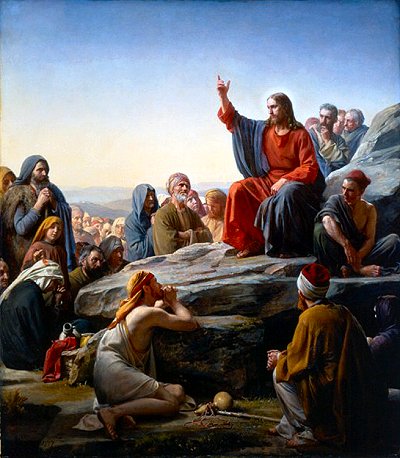
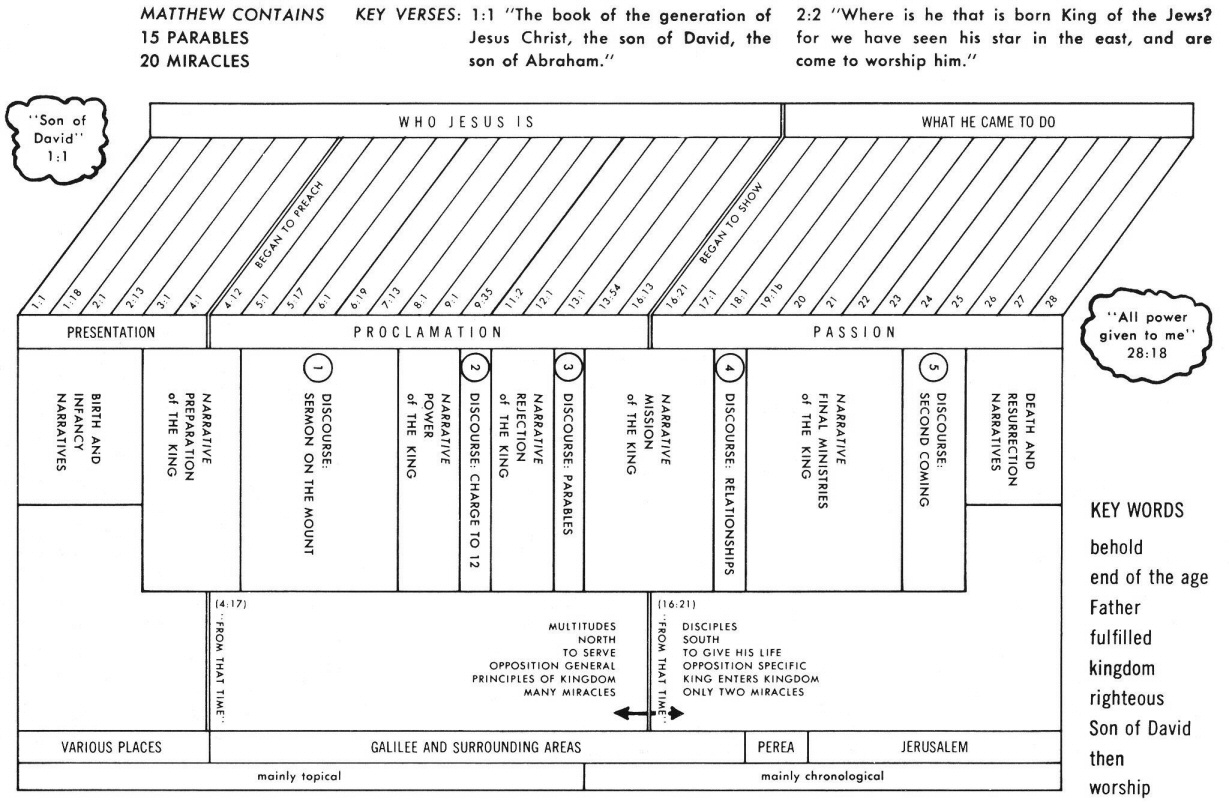
Click chart to enlarge
Charts from Jensen's Survey of the NT - used by permission
Another Chart from Charles Swindoll
THE LIFE OF JESUS AS COVERED
BY MATTHEW (shaded area)
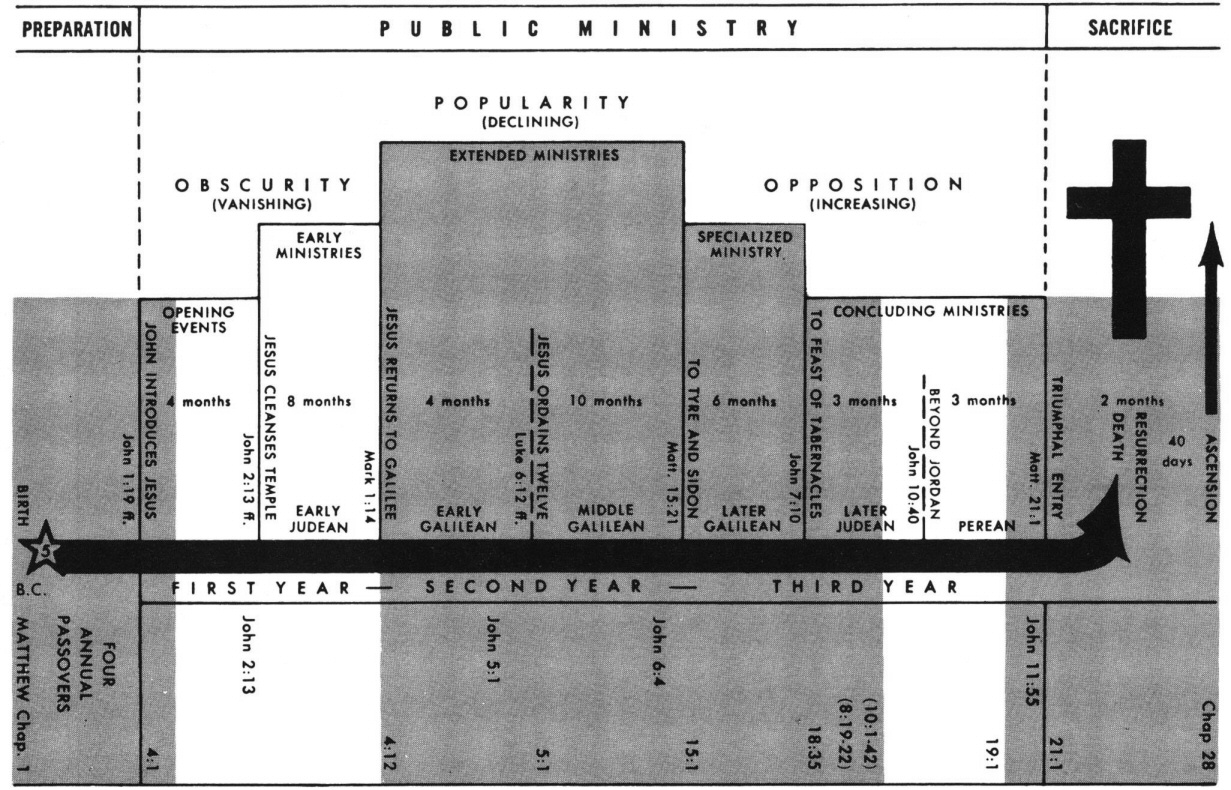
Click chart to enlarge
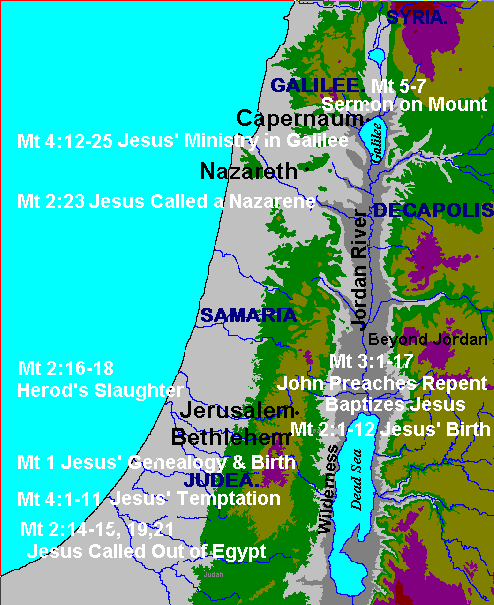
Jesus Birth and Early Years
Leading up to the Sermon on the Mount
Matthew 1-7

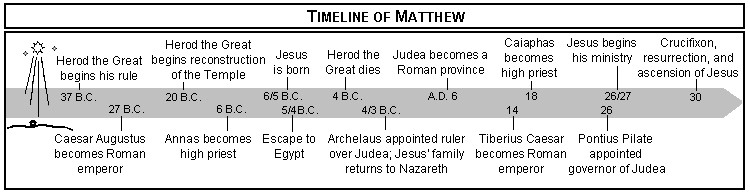
Source: Ryrie Study Bible
Matthew 5:9 Blessed are the peacemakers, for they shall be called sons of God. (NASB: Lockman)
Greek: makarioi oi eirenopoioi, hoti autoi huioi theou klethesontai. (3PFPI)
Amplified: Blessed (enjoying enviable happiness, spiritually prosperous—with life-joy and satisfaction in God’s favor and salvation, regardless of their outward conditions) are the makers and maintainers of peace, for they shall be called the sons of God! (Amplified Bible - Lockman)
KJV: Blessed are the peacemakers: for they shall be called the children of God.
NLT: God blesses those who work for peace, for they will be called the children of God. (NLT - Tyndale House)
Philips: "Happy are those who make peace, for they will be sons of God! (New Testament in Modern English)
Wuest: Spiritually prosperous are those who make peace, because they themselves shall be called sons of God.
Young's Literal: 'Happy the peacemakers -- because they shall be called Sons of God.
BLESSED ARE THE PEACEMAKERS: makarioi oi eirenopoioi:
-
1 Chronicles 12:17; Ps 34:12; 120:6; 122:6, 7, 8; Acts 7:26; Romans 12:18; 14:1, 2, 3, 4, 5, 6, 7; Romans 14:17, 18, 19; 1 Corinthians 6:6; 2 Corinthians 5:20; 13:11; Galatians 5:22; Ephesians 4:1; Php 2:1, 2, 3; Php 4:2; Colossians 3:13; 2 Timothy 2:22-24; Hebrews 12:14; James 1:19,20; 3:16, 17, 18
| THE SERMON ON THE MOUNT An Outline |
|
| Chapter | Subject |
| Mt 5:3-9 | Character |
| Mt 5:10-12 | Conflict |
| Mt 5:13-7:27 | Conduct |
Introduction - As Jesus continues His description of the character of true kingdom citizens, He now turns from the inward work of grace to its outward expression in relationships. “Blessed are the peacemakers” is not a call to passive peace-loving, but to active peace-pursuing—a trait that reflects the very heart of God Himself. In a world fractured by conflict, hostility, and self-interest, Jesus announces that true sons of God are known not by stirring up strife, but by stepping into it with gospel-shaped reconciliation. This beatitude reminds us that peacemaking is not optional fruit for the elite few, but the expected lifestyle of all who belong to the Prince of Peace.
Will and Ariel Durant, in The Lessons of History, begin the chapter on "History and War" noting that: "War is one of the constants of history, and has not diminished with civilization and democracy. In the last 3,421 years of recorded history only 268 have seen no war."
Clearly mankind is in need of a peacemaker. As we discuss below, the real need for peace is first between God and man. Man has been at perpetual war with God since Genesis 3, with no years in which there has not been war. This record therefore is even worse than the record between men!
Blessed (makarios) means spiritually prosperous, independent of one's circumstances. So Jesus is saying blessed, happy, satisfied, fulfilled, spiritually prosperous are the ones who work for and do the things that make for peace. Notice Jesus advocates an active and not passive involvement in the process ("makers" but not "shakers"). The way of the Lord's peacemaker is not a weak-kneed approach, but is the way of Spirit given courage (interwoven with the spirit of meekness or power under control, Matthew 5:5 [note]), which is counter to the world's usual methods (frequently strife, discord, bickering, wars, rumors of wars, etc) of bringing about change.
Charles Simeon reminds us that...
RELIGION is altogether a practical thing: it has its foundation indeed in principles; but it has a superstructure of dispositions and actions, which are necessary both to its completion and utility. Nothing can be a stronger proof of this than the discourse before us: for, however we may suppose it designed to rectify men’s notions respecting the nature of the Messiah’s kingdom, and to explain the law in opposition to the false glosses of the Scribes and Pharisees, its direct tendency is to raise the standard of morality both in the hearts and lives of men. The beatitudes which we have already considered, refer principally to the exercises of the heart: that which we propose to notice at this time, relates to the conduct: and, as our blessed Lord has counted it worthy of such a conspicuous place in his discourse, we may be well assured that it deserves from us the most attentive consideration. Let us then, as on former occasions, consider,
I. The character here spoken of—
The term which we translate “peace-makers,” may be understood, like those which have preceded it, as marking only a pacific temper and conduct. But in that view it will correspond very nearly with “the meek,” whose character has been already considered. We therefore take the word agreeably to the sense in which it is translated; and observe, that the peacemakers are they who are studious,
1. To preserve peace where it is—...
2. To restore it where it is not—...
Let me, in conclusion, urge you to seek this blessed character—
Think how happy (blessed) you will be in the possession of it. “The fruit of righteousness is sown in peace of them that make peace.” (Jas 3:18) It is not possible to engage much in such labours of love, without having our own souls refreshed and comforted with the heavenly employment. The sacred oil which you pour on the heads of others, will regale you with its odors; and the dews of divine grace, which, through your instrumentality, descend on others, shall enrich and fertilize your own souls. (Ps. 133:1, 2, 3+)
Consider further, how serviceable you will be in your day and generation. As one litigious or contentious person may be the means of producing incalculable evils to the Church and to society; (for a little fire is sufficient to destroy a whole town; Jas 3:5) so one pious, discreet, and active peace-maker may extinguish flames, which might have spread desolation and misery all around. See an instance of this in Abigail, who, by her seasonable interposition, restrained the wrath of David, and saved the lives of Nabal and all his family (1Sa 25:18, 19, 20, 21, 22, 23, 24, 25, 26, 27, 28, 29, 30, 31). Thus may you confer blessings on all around you, and heap blessings also on your own heads (1Sa 25:32, 33).
Lastly, consider what a recompense awaits you in the eternal world (2Co 5:10, 1Co 3:10,11, 12, 13, 14) There shall this promise be fulfilled to you in its utmost extent.
Cultivate then this amiable disposition, that you may be “sons of God, without rebuke, and shine as lights in a benighted world.” (Php 2:14, 15+) (Read the entire sermon - Matthew 5:9)
See Commentary notes on Philippians 4:1-5 for multiple illustrations on conflict resolution, church unity, etc.
Peacemakers (1518) (eirenopoios from eirenopoiéo = make peace from eirene [word study] = peace + poieo = make) those who make peace not war. Eirene signifies a harmonious relationship and is not merely the absence of war or uneasy truce. Eirene signifies parties holding differences of opinion who are willing to turn toward each other and embrace one another in spite of their differences.
Spurgeon comments that these are"Those who always end a quarrel if they can, those who lay themselves out to prevent discord."
Eirene is derived from the verb eiro which means to bind or join together that which is broken or divided. The idea is to set at one again. So we can expand the definition of "peacemaker" as those who facilitate the binding together those who were divided, thus setting them at one. Jesus is referring to those who actively intervene to bind together those that are divided. By making peace, kingdom citizens manifest themselves as sons of God.
The related Hebrew word is shalom (see study of shalom)
See discussion of the related Name of God, Jehovah Shalom - 1: The LORD our Peace and Jehovah Shalom - 2
Marvin Vincent feels that "peacemakers" "Should be held to its literal meaning, peace-makers; not as Wycliffe, peaceable men. The founders and promoters of peace are meant; who not only keep the peace, but seek to bring men into harmony with each other. Tyndale renders, the maintainers of peace. (Vincent, M. R. Word Studies in the New Testament Vol. 1, Page 3-38) (Bolding added)
In classical Greek a “peacemaker” was an ambassador sent to entreat for peace (cp Paul's description in 2 Cor 5:19-20+) and was sometimes used to describe a strong ruler who establishes peace by force. This forceful pacification is distinguished from that extolled by the Rabbis who considered pacification as an act of love, humility and self-denial. Philo used eirenopoios of God as a peacemaker.
English dictionaries define peacemakers as those who establish or make peace especially by reconciling parties marked by a state or condition marked by a lack of agreement or harmony. Synonyms include appeaser, arbitrator, conciliator, mediator, pacifier, pacificator, peacemonger.
Illustration of "peace" - Jim Walton was translating the NT for the Muinane people of La Sabana in the jungles of Colombia. But he was having trouble with the word peace. During this time, Fernando, the village chief, was promised a 20-minute plane ride to a location that would have taken him 3 days to travel by walking. The plane was delayed in arriving at La Sabana, so Fernando departed on foot. When the plane finally came, a runner took off to bring Fernando back. But by the time he had returned, the plane had left. Fernando was livid because of the mix-up. He went to Jim and launched into an angry tirade. Fortunately, Walton had taped the chief's diatribe. When he later translated it, he discovered that the chief kept repeating the phrase, "I don't have one heart." Jim asked other villagers what having "one heart" meant, and he found that it was like saying, "There is nothing between you and the other person." That, Walton realized, was just what he needed to translate the word peace. To have peace with God means that there is nothing--no sin, no guilt, no condemnation--that separates us. And that peace with God is possible only through Christ (Ro 5:1+). Do you have "one heart" with God? If so you are qualified and sent out as His peacemaker.
Braid Scots translates peacemakers in Mt 5:9 as "makers up o' strife." Stated another way, peacemakers are not to be power brokers but people lovers.
Isaac from Syria exhorts all of us -- "If you are not a peacemaker, at least do not be a troublemaker."
It is hard enough to keep the peace. It is still more difficult to bring peace where it is not. (See study on Seven "thieves" that can steal your peace)
Spurgeon says the peacemaker "sometimes putteth himself between the two, when they are very angry, and taketh the blows from both sides, for he knows that so Jesus did, who took the blows from his Father and from us also, that so by suffering in our stead, peace might be made between God and man.”
A T Robertson rightly reminds us that “The perfect peacemaker is the Son of God (Ep 2:14+)” (McNeile). Thus we shall be like our Elder Brother." (Word Pictures in the New Testament)
It is interesting to read how some of the older commentaries like John Calvin handle this passage. Calvin for example writes...
By peacemakers he means those who not only seek peace and avoid quarrels, as far as lies in their power, but who also labor to settle differences among others, who advise all men to live at peace, and take away every occasion of hatred and strife.
While there is certainly an element of truth in Calvin's interpretation, he completely fails to mention the role of peacemakers between God and men.
Warren Wiersbe nicely summarizes this beatitude noting that...Christians should bring peace, between people and God and between those who are at odds with each other. We share the Gospel of peace. (Wiersbe, W. W. Wiersbe's Expository Outlines on the New Testament. Wheaton, Ill.: Victor Books)
Expositor's Bible Commentary adds that...
Jesus does not limit the peacemaking to only one kind, and neither will his disciples. In the light of the gospel, Jesus himself is the supreme peacemaker, making peace between God and man, and man and man. Our peacemaking will include the promulgation of that gospel. It must also extend to seeking all kinds of reconciliation. Instead of delighting in division, bitterness, strife, or some petty "divide-and-conquer" mentality, disciples of Jesus delight to make peace wherever possible. Making peace is not appeasement: the true model is God's costly peacemaking (Ep 2:15, 16, 17-see notes Ep 2:15; 16; 17; Col 1:20+). (Gaebelein, F, Editor: Expositor's Bible Commentary 6-Volume New Testament. Zondervan Publishing)
Don't misinterpret what Jesus stated. He is not speaking about people with a peaceful disposition or those who love peace at any cost. He did not say "Blessed are the pacifists".
Barclay alludes to that possible misinterpretation writing that
"The blessing is on the Peace-makers, not necessarily on the peace-lovers. It very often happens that if a man loves peace in the wrong way, he succeeds in making trouble and not peace. We may, for instance, allow a threatening and dangerous situation to develop, and our defense is that for peace’s sake we do not want to take any action. There is many a person who thinks that he is loving peace, when in fact he is piling up trouble for the future, because he refuses to face the situation and to take the action which the situation demands. The peace which the Bible calls blessed does not come from the evasion of issues; it comes from facing them, dealing with them, and conquering them. What this beatitude demands is not the passive acceptance of things because we are afraid of the trouble of doing anything about them, but the active facing of things, and the making of peace, even when the way to peace is through struggle. (Matthew 5 Commentary - Daily Study Bible online) (Bolding added)
Barclay goes on to add his paraphrase of this passage....
"Blessed are the peace-makers, for they shall be doing a God-like work." The man who makes peace is engaged on the very work which the God of peace is doing (Ro 15:33 [note]; 2Co 13:11; 1Th 5:23 [note]; He 13:20 [note]). (ibid)
Isaiah 9:6 prophesied of the birth of the "Prince of Peace" and the angels announced His birth in an oft misquoted verse...
"Glory to God in the highest, and on earth peace among men with whom He is pleased." (Lk 2:14) not "on earth peace good will to men".
The coming millennial kingdom is characterized by peace, as described in Is 9:6,7; Isaiah 66:12, 13; Micah 4:3.
Elsewhere Luke underscores that although Jesus, the Prince of Peace, did come to bring peace, it was of a different kind than what most in the world were seeking...
(Jesus declared) "Do you suppose that I came to grant peace on earth? I tell you, no, but rather division; for from now on five members in one household will be divided, three against two, and two against three. They will be divided, father against son, and son against father; mother against daughter, and daughter against mother; mother-in-law against daughter-in-law, and daughter-in-law against mother-in-law." (Luke 12:51, 52, 53)
In John Jesus explains His peace declaring...
"Peace I leave with you; My peace I give to you; not as the world gives, do I give to you. Let not your heart be troubled, nor let it be fearful." (Jn 14:27)
Jesus is not physically present now to give the world the kind of peace it desperately needs...but His "peacemakers" are present! In order to be His peacemaker, one must first be at peace with God. So the question is...How does one become a "peacemaker"?
As noted they must first be reconciled with God. In the Garden of Eden there was perfect peace until sin entered the world. With Adam's sin came enmity (Ge 3:15) with God. Those once at perfect peace were now enemies. All men are descended from Adam and "just as through one man (Adam) sin entered into the world, and death through sin...so death spread to all men, because all sinned" (Ro 5:12+). And so all mankind has inherited Adam's propensity to sin and are by nature "helpless...sinners" (Ro 5:6-see notes Ro 5:6 5:8) and "enemies" of God (Ro 5:10+, cf Ro 8:7+ "hostile toward God") in desperate need of Jesus the Redeemer Who "Himself is our Peace" (Ep 2:14+). In a word, sinful mankind needed reconciliation. And it was God Who sought to reconcile man to Himself. When man moved away from God because of his sin, God in His love moved toward man to bring him back to Himself.
Guzik then explains that "reconciled" peacemakers are not "those who live in peace, but those who actually bring about peace, overcoming evil with good. One way we accomplish this is through spreading the gospel, because God has entrusted to us the ministry of reconciliation (2 Corinthians 5:18+). In evangelism we make peace between man and the God whom they have rejected and offended." Peacemakers have their feet shod with the Gospel of peace (Eph 6:15+).
In Colossians Paul explains that...
it was the Father's good pleasure for all the fulness to dwell in Him, and through Him to reconcile all things to Himself (note Who initiated the reconciliation), having made peace (means He binds together those who have been separated by enmity from God) through the blood of His Cross (this is the only way a man can come to peace with God); through Him, I say, whether things on earth or things in heaven. And although you were formerly alienated (estranged - it always implies loss of affection or interest) and hostile (hateful) in mind (this was mankind's condition when God initiated reconciliation!), engaged in evil (evil in active opposition to good) deeds, yet He has now reconciled you in His fleshly body through death, in order to present you before Him holy and blameless (without blemish, spot or fault) and beyond reproach (legally unaccused = an entirely legal term which implies not merely acquittal, but the absence of even a charge or accusation against a believer!)" (Col 1:19, 20, 21, 22-see notes Col 1:19; 20; 21; 22)
John Stott reminds us that "“It is the devil who is a troublemaker; it is God who loves reconciliation and who now through his children, as formerly through his only begotten Son, is bent on making peace.”
In Romans Paul explains that...
while we were enemies, we were reconciled to God through the death of His Son, much more, having been reconciled, we shall be saved by His life. And not only this, but we also exult in God through our Lord Jesus Christ, through whom we have now received the reconciliation. (Ro 5:10, 11+)
Paul had earlier explained the benefit of this reconciliation writing that...
having been justified (declared righteous) by faith (by believing in the substitutionary Sacrifice of the Prince of Peace, Isaiah 9:6), we have peace with (literally "facing", in the very presence of) God through (pictures a conduit or channel - all God's gifts come through Christ our Mediator) our Lord Jesus Christ, through Whom also we have obtained our introduction by faith into this grace in which we stand; and we exult in hope of the glory of God... (Ro 5:1,2+)
Christ then is our model for as the "Prince of peace" (Is 9:6), He is the great Peacemaker, as Paul explained to the church at Corinth writing that...
the love of Christ controls us (primarily His love for us is the controlling influence, cf 1John 4:9), having concluded this, that one died for all, therefore all died; and He died for all (substitutionary death available to all who will come), that they who live should no longer live for themselves, but for Him who died and rose again on their behalf. (cf 1Cor 6:20, 1Th 5:10+) Therefore from now on we recognize no man according to the flesh (no longer evaluating people on the basis of external, human, worldly standards - such as race, appearance, human credentials, etc); even though we have known Christ according to the flesh (as merely another man), yet now we know Him thus no longer. Therefore if any man is in Christ, he is a new creature; the old things passed away (past completed action = once for all when we were justified or declared righteous by faith = aorist tense); behold, new (brand new, never seen before) things have come (and will remain = perfect tense). Now all these things are from God, Who reconciled (changed the relation two parties at enmity into one of peace) us to Himself through Christ (our Peacemaker), and gave us the ministry of reconciliation, (means to restore to harmony that which was disrupted by enmity) namely, that God was in Christ reconciling the world to Himself, not counting their trespasses against them, and He has committed to us the word of reconciliation. (New Creatures in Christ called to be peacemakers) Therefore, we are ambassadors for Christ, as though God were entreating through us; we beg you on behalf of Christ, be reconciled to God. He made Him who knew no sin to be sin on our behalf, that we might become the righteousness of God in Him. (2Co 5:14-21-notes)
The only men and women who can be peacemakers are those who themselves have experienced peace with God. Now those who were once alienated and hostile to God are restored to harmony with Him and are given the sacred privilege to be His peacemakers in the hostile, alienated world, entreating God's enemies with His word of reconciliation as His ambassadors for Christ.
As Dwight Pentecost wrote...
When Christ said, “Blessed are the peacemakers,” He was not providing a special reward for patient diplomats. He was speaking of those who are themselves at peace with God, who bring a message of peace to men, that they might be brought into harmony with the God from Whom they have been alienated (Ro 5:6, 7, 8- see notes Ro 5:6; 8; 10). Blessed are those who announce to sinful men the fact that a Saviour has come...A man will never come to a knowledge of salvation without one to proclaim salvation to him. Man will never go from alienation from God to peace with God (Ed note: this pictures reconciliation) without a peacemaker. Recognizing the lostness of those in His day, religious as they were, the Lord said, “Blessed are the peacemakers: for they shall be called the children of God.” Blessed are those who go as the Son of man went to seek and to save that which was lost, to lead them out of the wilderness into the safety of the fold...Paul recognized he had been appointed by the God of peace to be a peacemaker. As he traveled the length and breadth of the Roman Empire, he saw himself as God’s peacemaker, who had come to tell men that Christ had established a way of peace by the blood of His cross, and that through the cross they might come to peace with God. (Pentecost, J. D. Design for living: Lessons in Holiness from the Sermon on the Mount. Kregel Publications) (Bolding added)
And Paul explains that as God's peacemaker you have new "footwear"...
having shod YOUR FEET WITH THE PREPARATION OF THE GOSPEL OF PEACE. (note on Ephesians 6:15)
Long ago Isaiah spoke of peacemakers declaring...
How lovely on the mountains are the feet of him who brings good news, Who announces peace and brings good news of happiness, Who announces salvation... (Is 52:7, quoted in Ro 10:15 see notes)
Peacemakers as the ambassadors for Christ and citizens of the Kingdom of Heaven, are to
"Go therefore and make disciples of all the nations, baptizing them in the name of the Father and the Son and the Holy Spirit, teaching them to observe all that I commanded you; and lo, I am with you always, even to the end of the age." (Mt 28:19, 20)
In addition, it is clear from Scripture that Kingdom citizens are also to be peacemakers between men shown in passages such as the following...
-
(Believers are to be) "diligent to preserve the unity (between believers) of the Spirit in the bond of peace." (Ep 4:3+) (Here we see that peace is the bond or the 'cord' so to speak that ties us all together. By nature and by instinct, we would never act as one body. But God's peace can accomplish that and we as peacemakers are to be diligent to pursue that end).
-
(Writing to believers Paul said) "And let the peace of Christ rule in your hearts, to which indeed you were called in one body; and be thankful." (Col 3:15+) (Here peacemakers are to allow peace to function like a referee who blows the whistle on any action that is out of line since God has called believers to peace)
-
Pursue (continually = present imperative) peace with all men, and the sanctification without which no one will see the Lord. (He 12:14+)
-
"(Jesus) by abolishing in His flesh the enmity (between Jew and Gentile), which is the Law of commandments contained in ordinances (which the Jews "possessed"), that in Himself He might make the two into one new man, thus establishing peace" (Here the peace is between Jew and Gentile believers) (Ep 2:15+)
-
(Believers are commanded - present imperative - to continually) "Live in peace with one another." (1Th 5:13+) (To live in such a way means that believers must all be peacemakers)
-
Later in the Sermon on the Mount, Jesus presented an illustration of Matthew 5:9 "in action" declaring "But I say to you that everyone who is angry with his brother shall be guilty before the court; and whoever shall say to his brother, 'Raca,' shall be guilty before the supreme court; and whoever shall say, 'You fool,' shall be guilty enough to go into the fiery hell. If therefore you are presenting your offering at the altar, and there remember that your brother has something against you leave your offering there before the altar, and go your way; first be reconciled to your brother, and then come and present your offering. (see notes Matthew 5:22, 5:23; 5:24)
-
As those who have received such great mercies from God (Ro 12:1+), citizens of the Kingdom of heaven are instructed...If possible, so far as it depends on you, be at peace with all men (Ro 12:18+)
- Paul again reminds the saints at Rome of the call on their lives noting that...the kingdom of God is not eating and drinking, but righteousness and peace and joy in the Holy Spirit (the only way we can be peacemakers is filled with the Spirit). For he who in this way serves Christ is acceptable to God and approved by men. So then let us pursue the things which make for peace and the building up of one another. (Ro 14:17, 18, 19+) (cf related references Ro 12:18 Ps 34:14, 133:1, Mt 5:9 Mk 9:50 2Co 13:11 Eph 4:3, 4, 5, 6, 7 Php 2:1, 2, 3, 4 Col 3:12, 13, 14, 15 Heb 12:14 Jas 3:13, 14, 15, 16, 17, 18 1Pe 3:11)
How is peacemaking a present and continual possibility for believers once we have been regenerated and are new creations in Christ? Paul explains that..."the fruit of the Spirit is love, joy, peace, patience, kindness, goodness, faithfulness (see note Galatians 5:22)
In his letter to Timothy Paul adds that believers are to...
flee (continually = present imperative) from youthful lusts and pursue (continually = present imperative) righteousness, faith, love and peace, with those who call on the Lord from a pure heart. (see + on 2 Timothy 2:22)
Believers can be "peacemakers" by praying as David writes in Psalm 122...
Pray for the peace of Jerusalem:
May they prosper who love you.
May peace be within your walls,
And prosperity within your palaces."
For the sake of my brothers and my friends,
I will now say, "May peace be within you. (Psalms 122:6-8) (See Spurgeon's notes; )
Solomon records that...There is deceit in the hearts of those who plot evil, but joy for those who promote peace. (Proverbs 12:20NIV)
David exhorts us to...Depart from evil, and do good;Seek peace, and pursue it. (Psalm 34:14 - Spurgeon's note)
James in his description of worldly versus godly wisdom notes that...
wisdom (which manifests bitter jealousy and selfish ambition) is not that which comes down from above, but is earthly, natural, demonic. For where jealousy and selfish ambition exist, there is disorder (instability, state of confusion, disturbance, disarray, or tumult, even rebellion or anarchy, all far from peace) and every evil thing. But the wisdom from above is first pure (hagnos = idea of free of contamination or defilement as used by Greeks to describe a cleansing ceremony whereby worshipers were made pure enough to approach their false gods), then peaceable, (godly wisdom is peace loving and thus does not perpetrate conflict but peace) gentle, reasonable, full of mercy and good fruits, unwavering, without hypocrisy. And the seed (i.e., godly wisdom) whose fruit is righteousness is sown in peace by those who make peace. (James 3:16-18)
What is James' point? How can we raise the "fruit" called righteousness? James is saying it cannot be in an atmosphere of jealousy and selfish ambition. If we want to harvest righteousness, we need to sow seeds of godly wisdom under peaceful conditions by those who are disposed to peace ("peacemakers"). Such sowing of godly wisdom will produce a harvest of righteousness in the life of the sower and in the lives of those with whom he comes in contact. Stated another way, righteousness grows best (and only) in a climate of peace.
Keep in mind the cultural and historical context of the meaning of peace, for as the TDNT explains...
For the Greeks eirene primarily denotes a state, not a relationship or attitude. It is the opposite of pólemos (“war”). It is linked with treaties of peace or the conclusion of peace. It is also the opposite of disturbance. In a negative sense, it may denote a peaceful attitude, i.e., the absence of hostile feelings. In the age of Augustus it carries echoes of redemption, but also implies in everyday reality the legal security of the pax Romana...(in the Rabbinic writings). Shalom (the Hebrew term for peace) is a common term in rabbinic works. It occurs in greetings in the general sense of well-being. The rabbis also use it for God’s gift to his people. Peace is the portion of the righteous and the sum of messianic blessings, although with a stress on concord in Israel. Peace is also the opposite of individual or national strife. Along these lines peacemaking holds a high place in rabbinic estimation. Envy and strife are opposed to God’s will, threaten the continuation of the world, and impede the coming of the Messiah. Conflict exists between God and the human race, or even God and Israel when Israel is guilty of idolatry; there is thus a reciprocal relationship with God in which we, too, must act for the establishment of peace. (Kittel, G., Friedrich, G., & Bromiley, G. W. Theological Dictionary of the New Testament. Abridged: Page 207. Grand Rapids, Mich.: Eerdmans)
The "big Kittel" feels that eirenopoios...
This is to be understood in terms of the Rabbinical (make peace) which denotes the establishment of peace and concord between men. It is thus a mistake to refer with Dausch to those who promote human happiness and well-being. Nor is it a matter of helping others to peace with God, as Brouwer suggests. The reference is to those who disinterestedly come between two contending parties and try to make peace. These God calls His sons because they are like Him. (Theological Dictionary of the New Testament. Vol 2, Page 419. Grand Rapids, Mich.: Eerdmans)
The International Standard Bible Encyclopedia (ISBE) comments that
The word (peacemakers) in Matthew 5:9 would, perhaps, be better rendered “peace-workers,” implying not merely making peace between those who are at variance, but working peace as that which is the will of the God of peace for men. (Orr, J. The International Standard Bible Encyclopedia: 1915 edition)
The modern revision of the ISBE adds that a peacemaker is ...
One who seeks to end strife and establish harmony, particularly between oneself and one’s neighbors. The noun is rare in classical Greek, but it is sometimes used of rulers who have established peace in the empire.... The background for eirēnopoiós in Mt. 5:9, however, is to be found in Hebrew rather than classical Greek tradition. Although eirēnopoiós does not appear in the LXX, the verb eirenopoiéo does, in Pr. 10:10, LXX (cf. also Isa. 27:5, Aq, Symm, Th; the LXX has poiéō eirnēn).
Rabbinic literature refers frequently to the virtue of “making peace” in the sense of ending strife. There is a famous saying of Hillel:
“Be of the sons of Aaron, loving peace and pursuing peace, loving mankind and bringing them nigh to the Law"
Closely related to the teaching of Mt. 5:9 is that of Ja 3:18, which uses Gk hoi poioúsin eirnēn for those who promote unity and reconciliation within the Christian community. The Beatitude makes clear that those who strive for an end discord and the establishment of harmony (Hebrew = shalom) within the human community are doing the will of God and are therefore worthy to be called God’s children. (Bromiley, G. W. The International Standard Bible Encyclopedia Revised Vol. 3, Page 733. Wm. B. Eerdmans)
The Wycliffe Bible Encyclopedia describes "peacemakers" as...
Those who through personal work and preaching bring about or effectuate peace between God and the sinner, God is now propitious to the sinner because Christ has “made peace through the blood of his cross” (see note Colossians 1:20), but the Christian still needs to plead with the sinner to be “reconciled to God” (2 Cor 5:20). That it is making peace between man and God and not the reverse, between God and man, is proved by the fact God has already made His peace through Christ at the cross. That it is not peace between nation and nation, but between man and God, is proved by the fact the peacemakers are called the children of God, those who are His by the new birth. Theirs is the ministry of the Great Commission in Mt 28:19–20. (C. F. Pfeiffer, H. F. Vos & J. Rea, Ed The Wycliffe Bible encyclopedia. 1975. Chicago: Moody Press)
FOR THEY SHALL BE CALLED SONS OF GOD: hoti autoi huioi theou klethesontai. (3PFPI):
- Mt 5:45,48; Psalms 82:6,7; Luke 6:35; 20:36; Ephesians 5:1,2; Philippians 2:15,16; 1Peter 1:14, 15, 16
Phillips paraphrases it "for they will be known as sons of God!"
THE REWARD FOR BEING
A RECONCILER
For - Always pause and ponder this instructive term of explanation.
Are you a peacemaker? Do you have peace with God? Do you seek to keep the unity of the Spirit in the bond of peace? Are you sharing the gospel of peace with others? If so, you will be called a son of God.
They shall be called - The passive voice indicates the call is external and clearly presupposes God as the One initiating the action of calling them sons. The idea in this passage of "to be called" is synonymous with "to become". To become a son of God is tantamount to entering God's family or being saved. Kaleo then in this verse somewhat parallels the uses in the epistles (Paul, Peter) where many times the call is a call to salvation ("effectual call" - see discussion below).
Called (2564) (kaleo from root kal-, whence English “call” and “clamour”) literally means to speak to another in order to attract their attention or to them bring nearer, either physically or in a personal relationship. Kaleo is a major verb in the NT and its specific meaning depends on the the context in which it is used.
The basic meanings of kaleo include
(1) To call by name
(a) As when one addresses someone. There is some overlap in this meaning with the meaning #3. Kaleo can mean to call aloud, to utter in a loud voice (eg Mk 1:20) - Mt 22:43, 45, 23:9, 25:14, Mt 4:21 [cp #4a], Mk 3:31; Lk 19:13
Note: Three different Greek words in the NT may properly be translated "cry out"—kaleo, boao [word study], krazo. Kaleo signifies crying out for a purpose, involving intelligence particularly. Krazo suggests a harsh cry, perhaps inarticulate. But boao refers to crying out as a manifestation of feeling, and so relates primarily to the sensibilities.
(b) As when one calls a person or thing (Mt 21:13) by a name or title - either to give a name or to provide identification by the name it (or he/she) is called (eg Acts 7:58, 14:12, etc) (Septuagint examples - Ge 1:5, 8, 10) - Mt 1:21, 23, 25, Mt 2:23, Mt 22:43, 45, 23:7, 8, 9, 10, 27:8 Lk 1:13, 31, 32, 35, 36, 59, 60, 61, 62, Lk 1:76, 2:4, 2:21, 23, Lk 6:15, 6:46, 7:11, 8:2, 9:10, 10:39, Lk 15:19, 21, 19:2, 19:29, 20:44, 21:37, 22:3, 22:25, 23:33, Jn 1:42, Acts 1:12, 19, 1:23, 3:11, 9:11, 10:1, 13:1, 14:12, Acts 15:37, Acts 27:8, 27:14, 16, 28:1, Ro 9:26+ 1Co 15:9, He 2:11+, He 3:13+, Jas 2:23, 1Pe 3:6+, 1Jn 3:1+, Rev 1:9+, Rev 11:8+, Rev 12:9+, Rev 16:16+
And I saw heaven opened; and behold, a white horse, and He who sat upon it is called Faithful and True; and in righteousness He judges and wages war. (Rev 19:11+)
And He is clothed with a robe dipped in blood; and His name is called The Word of God. (Rev 19:13+)
(2) To issue an invitation or request one's presence at a gathering - Mt 22:3, 4, 8, 9, Lk 7:39, 14:7, 8, 9, 10, 12, 13, 16, 17, 14:24 Jn 2:2, Rev 19:9+, 1Co 10:27
And he said to me, "Write, 'Blessed are those who are invited to the marriage supper of the Lamb.'" And he said to me, "These are true words of God." (Rev 19:9+)
(3) To summon -
(a) Call together - Mt 20:8, Mt 25:14, Lk 19:13, Mt 22:3a
(b) Summon someone - Mk 3:31, Mt 2:7, 15, Acts 4:18, He 11:8+
(c) Summon before court (frequent use in Classic Greek) - Acts 4:18, 24:2
(4) To call in the sense of to choose so that one might receive some special benefit or experience. This refers to God's call of sinners ("Divine call" of God to participation in salvation). Of the Divine call to partake of the blessings of redemption. Kaleo in this usage is figurative for it is not a literal call (like "Come over here and be saved").
(a) Call to discipleship - Mt 4:21, Mk 1:20; He 5:4+ (called to priesthood)
(b) Call to Salvation - Mt 9:13+, Mk 2:17+, Lk 5:32+ Jn 10:3KJV (not in NAS), Ro 1:6, 7+; Ro 8:28+, Ro 8:30+; Ro 9:24+; 1Co 1:9, 24+; 1Co 7:15, 17, 18, 20, 21, 22, 24+, Gal 1:6, 15+; Gal 5:8, 13+, Ep 4:1+, Ep 4:4+; Col 3:15+, 1Th 2:12+, 1Th 4:7+, 1Th 5:24+, 2Th 2:14+ 1Ti 6:12, 2Ti 1:9+; He 9:15+, 1Pe 1:15+; 1Pe 2:9+, 1Pe 2:21+; 1Pe 3:9+, 1Pe 5:10+ 2Pe 1:3+; Jude 1:1+
Related Resource:
See the interesting Greek words related to kaleo...
(1) Calling = klesis
(2) Called = kletos
(3) Chosen = eklektos from ek = out + kaleo = literally “called-out ones” and often used in the NT as a synonym for believers (Col 3:12+; 2Ti 2:10+; Titus 1:1+).
(4) Church = ekklesia from ek = out or out from + kaleo = the idea is to call out from. Wuest adds that "In classical Greek ekklesia referred to an assembly of the citizens summoned by the town crier. It is used in Acts 19:32-41 in its purely classical meaning. The town clerk dismissed the citizens who had been gathered together by the craftsmen of Ephesus. In its every other occurrence, it is translated “church,” the church being looked upon as a called-out body of people, called out of the world of unsaved humanity to become the people of God. The word refers either to the Mystical Body of Christ made up of saved individuals only (Ephesians), or to the local churches, as for instance Ro 16:5; Gal 1:2. The word “assembly” is a good one-word translation of ekklesia. The genius of the word points to the fact that in the mind of God, the Church of Jesus Christ is a called-out group of people, separated out from the world to be a people that should maintain their separation from the world out of which they have been called."
In the Septuagint it is used to designate the gathering of Israel, summoned for any definite purpose, or a gathering regarded as representative of the whole nation. In Acts 7:38 it is used of Israel;
(5) Parakaleo from para = beside + kaleo means “to call to one’s side, call for, summon,” the context indicating the purpose of the summons. It meant also “to address, speak to, (call to, call on),” which may be done in the way of exhortation, entreaty, comfort, instruction. Hence, there results a variety of senses in which it is used. Then it came to mean “to beg, entreat, beseech.” Finally, it comes to mean “to encourage, strengthen, to comfort.” It combines the ideas of exhorting, comforting, and encouraging in Rom. 12:8; I Cor. 14:31; I Thes. 3:2.
Compare parakletos (root verb = kaleo) the name of the Holy Spirit, our Paraclete. Thus Paraclete means "one who is called alongside" which speaks to us the ideas of comfort, exhortation, and even admonishment, all roles of the Holy Spirit.
(6) Proskaleo from pros = towards, facing, to + kaleo means literally to call towards and so to call to oneself, to bid to come. Mark 6:7 says that Jesus "summoned (proskaleo) the twelve". In other words He called the 12 to Himself. MacArthur adds that "It is an intense term that means to call someone to oneself in order to confront him face to face. It is used of God’s calling the Gentiles to Himself through the gospel (Acts 2:39) and of His calling His chosen men and entrusting them with proclaiming the gospel (Acts 13:2; 16:10). When Jesus summoned His twelve disciples, He was making more than a casual request. The writer’s choice of verbs seems to imply that this summoning was connected to an official commissioning to the Lord’s service." Has He not called you and me into His service, to be used for His good purposes? (cp Ep 2:10)
Jesus Calls Us
Jesus calls us! O'er the tumult
Of our life's wild, restless sea.
Day by day His sweet voice soundeth,
Saying, Christian, follow Me.
--Cecil F. Alexander
Westminster Shorter Catechism states
Effectual calling is the work of God's Spirit, whereby, convincing us of our sin and misery, enlightening our minds in the knowledge of Christ, and renewing our wills, He doth persuade and enable us to embrace Jesus Christ, freely offered to us in the Gospel.
ISBE on Calling...
CALLING - kol'-ing (klesis, from kaleo, "I call"): Is a New Testament expression. The word is used chiefly by Paul, though the idea and term are found also elsewhere. It has a definite, technical sense, the invitation given to men by God to accept salvation in His kingdom through Jesus Christ. This invitation is given outwardly by the preaching of the gospel, inwardly by the work of the Holy Spirit. With reference to Israel, it is on the part of God irrevocable, not repented of. Having in His eternal counsel called this people, He entrusted them with great gifts, and because He did thus enrich them, He also, in the course of time, summoned them to fulfill the task of initiating the world into the way of salvation, and of preparing salvation for the world. Therefore, He will not desert His people, for He Will not revoke that call (Ro 11:29). This calling is high or upward, in Christ, that is, made in heaven by God on account of Christ and calling man to heaven (Php 3:14). Similarly it is a heavenly calling (Heb 3:1); also a holy calling, holy in aim, means, and end (2 Tim 1:9). Christians are urged to walk worthy of this calling (Ep 4:1) (the American Standard Revised Version and the Revised Version (British and American), but the King James Version has "vocation"). In it there is hope; it is the inspirer of hope, and furnishes for hope its supreme object (Ep 4:4). Men are exhorted so to live that God will count them worthy of their calling (2Th 1:11). They are also urged to make their calling and election sure (2Pet 1:10). There is a somewhat peculiar use of the word in 1Cor 1:26, 7:20, namely, that condition of life in which men were when God called them, not many of them wise after the flesh, not many mighty, not many noble, some circumcised, some uncircumcised, some bond, some free, some male, some female, some married, some unmarried.
The NET Bible Note is interesting...
The term kaleō, used here (2Pe 1:3+) in its participial form, in soteriological contexts when God is the subject, always carries the nuance of effectual calling. That is, the one who is called is not just invited to be saved - he is also and always saved (cf. Ro 8:30+). Calling takes place at the moment of conversion, while election takes place in eternity past (cf. Ep 1:4+).
Merrill Unger on call to salvation...
“To call” signifies to invite to the blessings of the gospel, to offer salvation through Christ. This calling is, we believe, general, extending to all mankind. There is likewise a calling by the Spirit that is not resisted and clearly described as an efficacious calling. The efficacious calling of God is tantamount to His sovereign choice. There are now two elect companies in the world—Israel and the church. Both alike appear in Scripture as called by God. Israel’s calling is national, whereas the calling of those who compose the church is individual. It is wholly within the bounds of the efficacious calling that believers are termed the called ones. They are thus distinguished from the general mass who though subject to a general call are not efficaciously called. The efficacious call is the work of God in behalf of each elect person under grace. They are referred to as “those who are called according to His purpose” (Ro 8:28). The apostle goes on to declare that those whom God foreknew, He predestined; those whom He predestined, He called; those whom He called, He justified; and those whom He justified, He glorified (Ro 8:29, 30). Calling, then, is that choice on the part of God of an individual through an efficacious working in his mind and heart by the Holy Spirit so that the will of the one who is called operates by its own determination in the exercise of saving faith. In this way two great necessities are provided; namely, only those are called whom God has predestined to be justified and glorified and those who are thus called choose from their own hearts and minds to accept Christ as Savior. (Unger, M. F., Harrison, R. K., Vos, H. F., Barber, C. J., & Unger, M. F. (1988). The new Unger's Bible dictionary (Rev. and updated ed.). Chicago: Moody Press)
Wayne Detzler adds that in addition to "the call to conversion, ...the Scriptures also contain a call to service. Even secular literature refers to this aspect of a calling or vocation. Oliver Wendell Holmes, a chief justice of the Supreme Court, explained a calling: "Every calling is great when greatly pursued." (Wayne A Detzler. New Testament Words in Today's Language)
Jesus Is Tenderly Calling You Home
Calling today, Calling today;
Why from the sunshine of love wilt thou main
Farther and farther away?
--Fanny Crosby
Below are a few of the many uses of kaleo that relate to God's call of sinners to salvation...
Romans 8:28 - And we know that God causes all things to work together for good to those who love God, to those who are called according to His purpose.
Comment: Some say that called in this verse is not only indicative of our destination (conformity to the image of Christ). Since our destination is to be conformed to Christ and to serve Him, called here refers to both vocation and destination.
Romans 8:30+ and these whom He predestined, He also called; and these whom He called, He also justified; and these whom He justified, He also glorified.
Frederick Godet says that this call "embraces the outward invitation by preaching, and the inward drawing by the Spirit of grace"
Galatians 1:6 I am amazed that you are so quickly deserting Him who called (Aorist tense = "called you once and for all" = an "effectual" call to salvation) you by the grace of Christ (no one "deserved" to be called), for a different gospel
Wuest comments: (Kaleo's) distinctive use in the New Testament is to call a person for a definite purpose. Hence, it is synonymous with to select or choose. It refers to the act of calling someone so that he may hear, come, and do that which is incumbent upon him. It thus is a word that becomes a technical term for special relationships. In secular Greek it was used of a summons in the law courts. It denotes in the NT a call from God or in God’s Name, a call to participate in the revelation of grace. Paul’s use of the word in general suggests that he thought of those only as called who obeyed the divine summons. Of a rejected call he never speaks. The word grace is in the locative of sphere. God called the Galatians in the sphere of grace. That is, when He effectually summoned them to a participation in the salvation procured by His Son on the Cross, it was on a basis, not of works, but of a salvation unmerited by them and freely bestowed, offered out of the pure generosity and love of the heart of God, with no strings tied to it, offered as a free gift to be accepted by the outstretched hand of faith. This put the Galatians in a position in relationship to God in which they were the objects of His everlasting favor. In speaking of the change of position on the part of the Galatians, it would be more natural for Paul to refer to the state in which God’s call they are or should be than to emphasize the basis or instrument of God’s call. The Galatians were abandoning the position of grace, the relation toward God which made them the objects of the grace of Christ and participants in its benefits, to put themselves under law which could only award them their sad desserts.
Related Resource:
- See study on meaning and significance of locative of sphere
Vincent: Calling, in the writings of the apostles, is habitually represented as God’s work. See Rom. 8:30; 9:11; 1 Cor. 1:9; Gal. 1:15; 1 Th. 2:12; 1 Pet. 1:15; 2:9; 2 Pet. 1:3.
1Peter 2:9+ But you are a chosen race, a royal priesthood, a holy nation, a people for God’s own possession, so that you may proclaim the excellencies of Him who has called you out of darkness into His marvelous light
MacArthur comments: Almost always in the epistles (of Peter and Paul) when kaleo (called) or the related words klesis and kletos appear they indicate God’s effectual call to salvation.... (MacArthur, J.. 1 Peter. Chicago: Moody Publishers)
Hebrews 9:15+ For this reason He is the mediator of a new covenant, so that, since a death has taken place for the redemption of the transgressions that were committed under the first covenant, those who have been called may receive the promise of the eternal inheritance.
Romans 4:17+ (as it is written, “A father of many nations have I made you”) in the presence of Him whom he believed, even God, who gives life to the dead and calls into being that which does not exist.
MacArthur comments: Paul here obviously refers to God’s power as expressed through creation, in which “what is seen was not made out of things which are visible” (He 11:3+). He is the one true God who calls people, places, and events into existence solely by His divine and sovereign determination.
Thou didst seek us when we sought thee not; didst seek us indeed that we might seek thee. - Augustine
As Christians we ought always to remember that the Lord called us to himself not because of our virtues, but in spite of our vices. - John Blanchard
Jude 1:1-+ Jude, a bond-servant of Jesus Christ, and brother of James, to those who are the called, beloved in God the Father, and kept for Jesus Christ:
John MacArthur comments: Called translates the adjectival pronoun kletos, which is related to the familiar verb kaleō, “to call.” It is the main word in the sentence, with two perfect passive participles (describing believers) in apposition to it. Even as the English translation suggests, the word conveys the idea of being personally chosen or selected. God has called believers to Himself; He has set them apart and chosen them as His children. Jude here is not speaking about God’s general invitation to sinners (Isa. 45:22; 55:6; Ezek. 33:11; Mt. 11:28; 22:14; 23:37; Lk 14:16-24; Jn 7:37; Rev 22:17)—a call which often goes unheeded and rejected (cf. Mt. 12:14; Lk 4:16, 17, 18, 19, 28, 29, 30; Acts 4:13, 14, 15, 16, 17, 18; 5:17, 18, 26, 27, 28, 33-40; 7:54, 55, 56, 57, 58; 2Co 2:15, 16). Rather, he is speaking of God’s special, internal call through which He awakens the human will and imparts spiritual life—enabling once-dead sinners to embrace the gospel by faith (cf. Jn 5:21; Ac 16:14; Ep 2:5). It is what Christ referred to when He said, “No one can come to Me unless the Father who sent Me draws him” (Jn 6:44; cf. Jn 6:65). Paul also referred to the effectual call of believers when he wrote Timothy (2Ti 1:8, 9; cf. Ro 1:6,7; 8:30; 1Co 1:1, 2, 9, 24; 1Ti 6:12; 1Pe 3:9; Rev. 17:14)
In His sovereign wisdom, God chose believers based solely on His gracious purpose in Christ from before time began. His call was not rooted in anything He saw in them—not even their foreseen faith (see the discussion of divine foreknowledge in John MacArthur, 1 Peter, MacArthur New Testament Commentary [Chicago: Moody, 2004], 19, 20, 21). Rather, His call was motivated by His own glory and good pleasure, that His mercy might be eternally put on display (Ro 9:23, 24). Believers, then, are those who are divinely elected to salvation. They did not earn God’s choice; nor can they lose it or have it taken away (cf. Jn 6:37, 38, 39, 40; 10:27, 28, 29, 30; Ro 8:28, 29, 30, 38, 39). Thus, they can rest in the security of God’s gracious call, even in the most dangerous conflict with false teaching. (MacArthur, John: 2 Peter And Jude. Moody)
Revelation 17:14 "These will wage war against the Lamb, and the Lamb will overcome them, because He is Lord of lords and King of kings, and those who are with Him are the called and chosen and faithful (See interesting note - scroll down page)."
Comments: Some say that only angels (Mt 16:27, 25:31, 2Th 1:6, 7, 8) believers will not return with Christ in His triumphant, final battle over the Antichrist, but this verse leaves no doubt that believers will return with the King of kings as He slays the enemy with "the breath of His mouth" (implying just one word from the Word is all that is needed to defeat the final evil world ruler!) (2Th 2:8)
William Barclay gives us some excellent background on kaleo noting that in Classical Greek there were 4 main uses all of which help one understand the NT uses...
(1) (Kaleo) is the regular verb for 'calling' a person or a place by a name. So in Mt 1.21, 23, 25, Jesus is 'called' by the name 'Jesus'. In Mt 5.9+ the peacemakers are 'called' the sons of God. In Mt 23.7 the scribes love to be 'called' Rabbi. This is the commonest of all the uses of (kaleo).
(2) (Kaleo) is the regular verb for 'summoning' or 'calling' a person. It may be that the person is 'summoned' to an office and an honour. Paul is 'called' to be an apostle (kletos) (Ro 1.1+; 1Co 1.1). It may be that the person is 'summoned' to be given a task. In Mt. 25.14 the servants are 'called' to take over the estate when the master is away (cp. Lk 19.13). It may be that the person is summoned to be given a reward for his work and to give an account of it (Mt 20.8). Kaleo is regularly used for summoning a person to an office, a task, a responsibility, a reward. and an account.
(3) (Kaleo) is the regular verb for 'inviting a person to a meal or a banquet or into a house as a guest'. So much so is this the case that the past participle passive ho keklemenos and the adjective ho kletos can both by them-selves mean 'the guest' (for this use in the Septuagint cp. 1Ki 1.41). So kaleo is the word used for 'inviting' the guests to the wedding feast (Mt 22.3). It is used of Simon the Pharisee 'inviting' Jesus to a meal in his house (Lk 7.39). It is the word that Luke uses of the humble and the conceited guests who are 'bidden' to a feast (Lk 14.8). It is the word that is used of those who are 'called' to the marriage supper of the Lamb (Re 19.9+). Kaleo is the regular word which is used for a hospitable invitation.
(4) (Kaleo) is the regular word for 'summoning into the law-courts'. It is the word that is used for 'citing' a witness or a defendant to appear before a judge. In the NT it is so used of Peter and John being brought before the Sanhedrin (Acts 4.18); and of Paul being summoned before Felix to face his Jewish prosecutors (Acts 24.2). It is the word which is used when a man is summoned to stand his trial and to give account.
Even if we were to stop here and go no further we would have a flood of light on what the call of the Christian means. We could say four things at least.
(1) The Christian is a man who hears the summons of God. Now the very essence of a summons is that it is either a challenge or an appeal. A man can either accept it or reject it; he can heed it or disregard it; he can listen to it or be deaf to it. The very word lays upon us the tremendous responsibility of answering—or not answering—the voice of God.
(2) The Christian life is a summons to duty. Always the Christian is summoned to a task. God is always offering the Christian man a task to do. In Cicero's Republic (1.20, 33) Laelius is asked : 'What then do you think we ought to teach the people we have to educate?' And the answer is : 'We ought to teach those arts which will make us of use to the state.' The call of God is a call to the Christian to be of use in this world.
(3) The call of God is a call to privilege. (Kaleo) and klesis are intimately associated with the invitation to a feast, a banquet, the welcome to a table and a home. The call of God to the Christian is the call to come and to enjoy his fellowship, his hospitality, the joy and the fullness of being a guest of God.
(4) The call of God is a call to judgment. Equally (kaleo) and klesis are intimately associated with being cited to appear before a judge and a court. The Christian life is not going nowhere; it is going to the judgment seat of God. And if a man disregards the call of God, if he is deaf to the summons to duty, if he is heedless to the invitation of God, there comes the final call, the call which will call him to account. (Borrow New Testament Words)
Richards adds that...
There is a significant shift in root meaning between the Hebrew (see note below) and Greek terms (for call). The OT word (for call) emphasizes the utterance or the message. The NT emphasizes the intent: to call is to speak to a person with the purpose of bringing him or her nearer. The nearness may be physical (Jesus "called the crowd to him," Mk 8:34) or relational ("those who are called to belong to Jesus Christ," Ro 1:6+).
Despite the shift in emphasis in the root, "call" is used in the NT with all the commonplace meanings of our language and with the special meanings--naming, calling to a task, and calling on God--noted in the OT. What is especially significant for us is that the NT lifts the concept of calling out of both commonplace and OT contexts. In the Epistles, God's call is transformed into a technical theological term. (Borrow Expository Dictionary)
Note: The Hebrew word for "call" is usually qara' (H7121) (used over 700x) which conveys the basic meaning to call out loudly or to get someone's attention so that contact can be initiated (see one of the most notable uses in Ge 3:9). The idea is enunciation of a specific vocable or message, usually addressed to a specific recipient intended to elicit a specific response.
Kaleo - 148x in 140v - NAS = call(13), called(99), calling(2), calls(7), give(1), invite(2), invited(15), invited guests(1), invites(1), name given(1), named(2), so-called(1), summoned(2).Mt 1:21, 23, 25; 2:7, 15, 23; 4:21; 5:9, 19; 9:13; 20:8; 21:13; 22:3, 4, 8, 9, 43, 45; 23:7, 8, 9, 10; 25:14; 27:8; Mark 1:20; 2:17; 3:31; 11:17; Luke 1:13, 31, 32, 35, 36, 59, 60, 61, 62, 76; 2:4, 21, 23; 5:32; 6:15, 46; 7:11, 39; 8:2; 9:10; 10:39; 14:7, 8, 9, 10, 12, 13, 16, 17, 24; 15:19, 21; 19:2, 13, 29; 20:44; 21:37; 22:3, 25; 23:33; Jn 1:42; 2:2; Acts 1:12, 19, 23; 3:11; 4:18; 7:58; 8:10; 9:11; 10:1; 13:1; 14:12; 15:22, 37; 24:2; 27:8, 14, 16; 28:1; Ro 4:17; Ro 8:30; Ro 9:7, Ro 9:12, Ro 9:24, 25, 26; 1Co 1:9; 7:15, 17, 18, 20, 21, 22, 24; 10:27; 15:9; Gal 1:6, 15; 5:8, 13; Eph 4:1, Eph 4:4; Col 3:15; 1Th 2:12; 1Th 4:7; 1Th 5:24; 2Th 2:14; 1Ti 6:12; 2Ti 1:9; Heb 2:11; Heb 3:13; Heb 5:4; Heb 9:15; Heb 11:8, Heb 11:18; Jas 2:23; 1Pe 1:15; 2:9, 1Pe 2:21; 1Pe 3:6, 1Pe 3:9; 1Pe 5:10; 2Pe 1:3; 1Jn 3:1; Rev 1:9; Rev 11:8; Rev 12:9; Rev 12:16:16; Rev 19:9, Rev 19:11, Rev 19:13
Kaleo - About 375 uses in the non-apocryphal Septuagint (LXX) -Ge 1:5, 8, 10; 2:19, 20, 23; 3:9, 20; 11:9; 12:18; 16:11, 13, 14, 15; 17:5, 15, 19; 19:22, 37, 38; 20:8,9; 21:3, 12, 17; 22:11, 14f; 24:57, 58; 25:26, 30; 26:9, 20, 33; 27:1, 36, 42; 28:19; 29:32, 33, 34; 30:6, 8, 13, 18, 20, 21, 24; 31:4, 47, 48, 54; 32:2, 28, 30; 33:17; 35:7, 8, 10, 15, 18; 38:3, 4, 5, 29, 30; 39:14; 41:8, 14, 45, 51, 52; 46:33; 47:29; 48:6; 49:1; 50:11; Ex 1:18; 2:7f, 20; 3:4; 8:8, 25; 9:27; 10:16, 24; 12:16, 21, 31; 19:3, 7, 20; 24:16; 33:7, 19; 34:5, 6, 15, 31; 36:2; Lev 9:1; 10:4; 13:45; 23:2, 4, 21, 37; Nu 11:3, 34; 12:5; 16:12; 22:5, 20, 37; 23:11; 24:10; 25:2; Deut 5:1; 25:8, 10; 29:2; 31:7, 14; 32:3; Josh 5:3, 9; 19:47; 24:9; Jdg 1:17, 26; 4:6, 13; 6:32; 8:1; 10:4; 12:1; 13:24; 14:15; 15:17, 19; 16:18f, 25; 18:12, 29; 21:13; Ruth 1:20, 21; 4:14, 17; 1 Sam 1:20; 3:4ff, 8ff; 4:21; 6:2; 7:12; 9:9, 22, 26; 16:3, 5, 8; 19:7; 22:11; 26:14; 28:15; 29:6; 2 Sam 1:7, 15; 2:16, 26; 5:9, 20; 6:8; 9:2, 9; 11:13; 12:24f, 28; 13:17, 23; 14:33; 15:12; 17:5; 18:18; 21:2; 1 Kgs 1:9f, 19, 25f, 28, 32; 2:36, 42; 9:13; 12:20; 18:3; 20:7; 21:12; 22:9, 13; 2 Kgs 1:9; 3:10, 13; 4:12, 15, 22, 36; 6:11; 8:1; 9:1; 10:19; 12:7; 14:7; 18:4; 1 Chr 4:9; 6:65; 7:16, 23; 11:7; 13:11; 14:11; 15:11; 22:6; 23:14; 2 Chr 3:17; 10:3; 18:8, 12; 20:26; 24:6; Ezra 2:61; 4:18; 8:21; Neh 5:12; 7:63; Esth 2:14; 3:12; 4:11; 5:10, 12; 6:5; 8:9; 9:26; Job 9:16; 13:22; 14:15; 19:16; 38:34; 42:14, 17; Ps 50:1; 105:16; 147:4; Prov 1:24; 16:21; 21:24; 27:16; Eccl 6:10; Song 3:1; 5:6; Isa 1:26; 4:1, 3; 7:14; 8:3f; 9:6; 13:19; 19:18; 21:8, 11; 22:12, 20; 35:8; 40:26; 41:2, 4, 9, 25; 42:6; 43:1, 22; 44:7; 45:3f; 46:11; 47:1, 5; 48:1, 8, 12f, 15; 49:1, 6; 50:2; 51:2; 54:5f; 56:7; 58:5, 12f; 60:14, 18; 61:2f, 6; 62:2, 4, 12; 65:1, 12, 15; 66:4; Jer 3:4, 17, 19; 6:30; 7:13; 9:17; 11:16; 19:6; 20:3; 23:6; 25:29; 30:17; 34:8, 15, 17; 36:4; 37:17; 38:14; 42:8; 46:17, 19; 49:29; Lam 1:15, 19, 21; 2:22; 4:15; Ezek 9:3; 36:29; 38:21; 39:11; Dan 3:26; 4:8, 30, 34; 5:1, 7, 9; 6:20; 8:16; Hos 1:4, 6, 9f; 2:16; 11:12; Amos 5:16; 7:4; Zech 8:3; 11:7.
Below are a few notable uses of kaleo in the Septuagint (LXX)...
Genesis 1:5 God called the light day, and the darkness He called night. And there was evening and there was morning, one day.
Genesis 1:10 God called the dry land earth, and the gathering of the waters He called seas; and God saw that it was good.
Genesis 2:19 Out of the ground the Lord God formed every beast of the field and every bird of the sky, and brought them to the man to see what he would call them; and whatever the man called a living creature, that was its name.
Genesis 2:23 The man said, “This is now bone of my bones, and flesh of my flesh; She shall be called Woman, because she was taken out of Man.”
Genesis 3:9 Then the Lord God called to the man, and said to him, “Where are you?”
Comment: Observe the context! Man has sinned. Man is hiding from God! Sin separates (then and now)! Spotless blood redeems and unites (cp 1Pe 1:18, 19+, Ro 5:1+). This verse literally obliterates the specious thought that man seeks after God! It is quite the opposite. Man continually rejects and reviles and runs from God. And yet God as the "hound of heaven" continually seeks after sinful men and women. Oh, the unfathomable wonder of His amazing grace and everlasting lovingkindnesses (Lam 3:22)!
Genesis 11:9 Therefore its name was called Babel, because there the LORD confused the language of the whole earth; and from there the LORD scattered them abroad over the face of the whole earth.
Genesis 17:5 "No longer shall your name be called Abram, But your name shall be Abraham; For I will make you the father of a multitude of nations. ..Ge 17:15 Then God said to Abraham, "As for Sarai your wife, you shall not call her name Sarai, but Sarah shall be her name. (See Name Change Associated with Covenant)
Genesis 17:19 But God said, "No, but Sarah your wife will bear you a son, and you shall call his name Isaac; and I will establish My covenant with him for an everlasting covenant for his descendants after him.
Genesis 21:3 Abraham called the name of his son who was born to him, whom Sarah bore to him, Isaac.
Genesis 21:12 But God said to Abraham, "Do not be distressed because of the lad and your maid; whatever Sarah tells you, listen to her, for through Isaac your descendants shall be named. (called)
Genesis 22:11 But the Angel of the LORD (word study) called to him from heaven and said, "Abraham, Abraham!" And he said, "Here I am."
Genesis 22:14 Abraham called the name of that place Jehovah Jireh: The LORD Will Provide, as it is said to this day, "In the mount of the LORD it will be provided."
Exodus 2:20 He said to his daughters, "Where is he then? Why is it that you have left the man behind? Invite (Hebrew = qara'; Lxx = kaleo) him to have something to eat."
Psalm 50:1+ A Psalm of Asaph. The Mighty One, God, the LORD, has spoken, And summoned (Lxx = kaleo) the earth from the rising of the sun to its setting.
Psalm 105:16+ And He called for a famine upon the land; He broke the whole staff of bread.
Psalm 147:4KJV+ He telleth the number of the stars; He calleth them all by their names.
Isaiah 1:26+ "Then I will restore your judges as at the first, and your counselors as at the beginning; After that (Ro 11:25, 26, 27+) you will be called the city of righteousness, a faithful city (referring to Jerusalem in the Millennium)."
Isaiah 4:3 It will come about that he who is left (This verb is used to indicate surviving after elimination process ~ the remnant - cp Zech 12:10, 13:7, 8, 9) in Zion (Ro 11:25, 26, 27+) and remains in Jerusalem will be called holy-- everyone who is recorded for life (Believing Jewish Remnant) in Jerusalem.
Isaiah 7:14 "Therefore the Lord Himself will give you a sign: Behold, a virgin will be with child and bear a son, and she will call His name Immanuel.
Isaiah 9:6 For a child will be born to us, a son will be given to us; And the government will rest on His shoulders; And His name will be called Wonderful Counselor, Mighty God, Eternal Father, Prince of Peace.
TDNT note on the LXX "The richest source is to be found in Isa 40. (cf. Isa 41:9; 42:6; 46:11; 48:12; 51:2; cf. also naming in Isa 43:1; 45:3)."
Lift up your eyes on high and see who has created these stars, the One who leads forth their host by number, He calls them all by name; Because of the greatness of His might and the strength of His power, not one of them is missing. (Isaiah 40:26)
Thus says the Lord, ‘I will return to Zion and will dwell in the midst of Jerusalem. Then Jerusalem will be called the City of Truth, and the mountain of the Lord of hosts will be called the Holy Mountain.’ (Zechariah 8:3)
The called are those who have been summoned by God...called...
- by grace (Kaleo - Gal 1:6)
- through the "gospel" that we "may gain the glory of our Lord Jesus Christ" (Kaleo - 2Th 2:14)
- to salvation (Kaleo - Ro 8:30+)
- saints by calling (Kletos - 1Co 1:2)
- brought "into fellowship with His Son, Jesus Christ our Lord" (Kaleo - 1Co 1:9)
- both Jews and Greeks (Kletos - 1Co 1:24)
- not from among Jews only, but also from among Gentiles (Kaleo - Ro 9:24+)
- according to His purpose (Kletos - Ro 8:28+)
- to walk worthy (Kaleo - Ep 4:1+)
- (to proclaim His excellencies) out of darkness into His marvelous light (Kaleo - 1Pe 2:9+)
- for this purpose (to suffer...follow in His steps) - (Kaleo - 1Pe 2:21+)
- heavenly calling (klesis) (Heb 3:1+)
- (a holy calling) having been called (kaleo) "with a holy" calling (klesis) (2Ti 1:9+)
- to be holy yourselves in all your behavior - (Kaleo - 1Pe 1:15+)
- to inherit a blessing (following Christ's example) - (Kaleo -1Pe 3:9+)
- to His eternal glory in Christ (Kaleo - 1Pe 5:10+)
- and return in triumph "with Him" at the end of this age (Kletos - Re 17:14+).
These magnificent Biblical truths on "calling" should cause all the "called of Jesus Christ" to cry out "Glory!", and not to argue with Him, but to adore Him all the more. May our Father grant each of us the inner strengthening by His Spirit that we might be enabled to supernaturally "walk in a manner worthy of the calling with which (we) have been called" (Eph 4:1+) in Christ! Amen
Who are the CALLED? As this term is used by Paul (and Jude and John) "the called" are those who have heard the good news and responded to it by exercising saving faith. In this understanding "the called" are virtually synonymous with "the elect" (Matthew's use discussed below is an exception).
CALLED
SONS OF GOD
Sons (5207) ( huios) means descendants. The contrast is illegitimate sons. Note that Jesus is not referring to "male offspring" only but is using the term more generically to mean "children" or "offspring".
The reward of peacemakers is that they are recognized as true children of God. They share His passion for peace and reconciliation, the breaking down of walls between people.
John Trapp - “Now therefore, although it be, for the most part, a thankless office (with men) to interpose, and to seek to take up strife, to piece those again that are gone aside and asunder … yet do it for God’s sake, and that ye may (as ye shall be after awhile) be called and counted, not meddler and busybodies, but sons of God.”
The Hebrew idea of the term "son" was one who reflects the character of another. For example, the OT word belial literally meant worthless or useless and was usually employed as a term descriptive of a person, e.g., a son of Belial. Here the positive aspect is emphasized with the term "sons of God", sons who reflect the character of their Heavenly Father.
Sinclair Ferguson has an intriguing insight on the meaning of "sons of God" explaining that...
The blessing implies that in the kingdom of God we are restored to what we were meant to be – children of God (cf. Lk 3:38 "Adam the son of God"). We see him as children who love and trust their Father, and who know that he will supply all their needs. Jesus develops this point at great length in the middle section of his challenging sermon. Being aware of this particular blessing will set us free, he says, from both hypocrisy and paralysing anxiety about temporal concerns. Best of all, since sons inherit their father's riches as well as their father's characteristics, this beatitude summarises all the beatitudes. It tells us that God speaks to us in these words: "My son...you are always with me and everything I have is yours." (Lk 15:31) Blessed, indeed, is the man or woman who has heard God say that! (Sermon on the Mount :Banner of Truth) (Bolding added)
The UBS Handbook makes an interesting clarification writing that
The phrase sons of God (or, children of God) causes a problem in cultures where readers would not understand this phrase to be figurative and, further, would not accept the idea of God having physical offspring. Translators in these cases sometimes use similes, as in “God will say they are like children to him,” “God will consider them as if they were his children,” or “God will have a relationship with (or, will care for) them like a father with his children.” (Newman, B. M., & Stine, P. C. A Handbook on the Gospel of Matthew)
Jesus' exhortation which He gave to correct the teaching they had heard that they were to hate your enemy in Mt 5:44, 45 [note]; 45 [note] offers an excellent commentary on the character and conduct of true sons of God:
But I say to you, love your enemies, and pray for those who persecute you (such a righteous conduct won't make you a son of God but it does prove you are a son of God for they are not a natural reactions of our fallen nature!) in order that you may be sons of your Father Who is in heaven; for He causes His sun to rise on the evil and the good, and sends rain on the righteous and the unrighteous.
As background notice that the NT uses another Greek word, teknon (word study), which can be translated "sons" but more often is translated "children". Although distinction between the teknon and huios is not always clear-cut, in general teknon refers more specifically to a child produced where that child as viewed in relation to the parents or family. Thus believers who are in God's family, are called the "children of God". As the redeemed, we become the "children of God" (Ro 8:16+), a term which does not indicate childlikeness, but the fact that we are members of God's family and thus heirs (Ro 8:17+, cf Mt 5:5+). Teknon draws our attention to individuals not simply as children but as members of particular families, as those who must be understood within the context of their family and its character. This is seen in our common saying "Like father, like son". Note also that there are only two basic families to which one can be a teknon, either God's family or Satan's family!
Now back to our discussion of huios - the point is that teknon is a more general designation for offspring and contemplates the individual as one who is parented, one who has been born to another. Nevertheless, because these words often overlap and are used without discrimination, their semantic differences cannot always be pressed. And so huios is used to describe believers as "sons of God" (Ro 8:14, 19-see notes Ro 8:14, 19; Gal 3:26; 4:6, 7, He 12:7+). Teknon is used to describe believers as "children of God" (Jn 1:12, Ro 8:16, 17, 21, 9:8- notes Ro 8:16; 8:17, 8:21 9:8 Ep 5:1+ 1Jn 3:1, 2, 10; 5:2) (For more on "sons of God" see article in ISBE click)
In contrast to the term in the OT (where it can refer to angelic beings), in the New Testament, “sons of God” always refers to human beings, not mankind in general, but those men and women who do God's will (Mt 5:9, Ro 8:14, 19-see notes Mt 5:9; Ro 8:14, 19). Similar expressions with the same meaning are to be found in Mt 5:45 (note); Jn 1:12, Ro 9:26 [note] Ho 1:10), and (2Cor 6:18)
The Expositor's Bible Commentary adds that...
In the OT, Israel has the title sons (Deut 14:1; Hos 1:10; cf. Apocryphal Books Pss Sol 17:30; Wisdom 2:13-18). Now it belongs to the heirs of the kingdom who, meek and poor in spirit, loving righteousness yet merciful, are especially equipped for peacemaking and so reflect something of their heavenly Father's character. "There is no more godlike work to be done in this world than peacemaking" (Broadus). This beatitude must have been shocking to Zealots when Jesus preached it, when political passions were inflamed (Morison). (Gaebelein, F, Editor: Expositor's Bible Commentary)
William Evans in the ISBE has an excellent discussion on sons of God...
Men are not by nature the sons of God, at least not in the sense in which believers in Christ are so called. By nature those outside of Jesus Christ are "children of wrath" (see Ep 2:3+), "of disobedience" (Ep 2:2+), controlled not by the Spirit of God (Ro 8:14+), but by the spirit of disobedience (Ep 2:2+; Ep 2:3+; Ep 2:3+). Men become sons of God in the regenerative and adoptive sense by the acceptance of Jesus Christ as Lord and Saviour (Jn 1:12; Gal 3:26). The universal brotherhood which the New Testament teaches is that brotherhood which is based on faith in the Lord Jesus Christ as the divine and only Saviour of the world. And the same is true of the universal Fatherhood of God. It is true that all men are "His offspring" (Acts 17:28+) in the sense that they are God's created children; but that the New Testament makes a very clear and striking distinction between sonship by virtue of creation and sonship by faith in the Lord Jesus Christ, there can be no reasonable doubt.
Sonship is the present possession of the believer in Christ (1Jn 3:2+). It will be completed at the second coming of our Lord (Ro 8:23+), at which time the believer will throw off his incognito, by reason of which the world may not have recognized his sonship (1Jn 3:2+), and be fully and gloriously revealed as the son of God (2Co 5:10+). It doth not yet appear, it hath not yet appeared, what we shall be; the revelation of the sons of God is reserved for a coming day of manifestation.
The blessings of sonship are too numerous to mention, save in the briefest way. His sons are objects of God's peculiar love (John 17:23), and His Fatherly care (Lk 12:27, 28, 29, 30, 31, 32, 33). They have the family name (Ep 3:14+; 1Jn 3:1+); the family likeness (Ro 8:29+); family love (John 13:35; 1Jn 3:14); a filial spirit (Ro 8:15+; Gal 4:6); a family service (Jn 14:23; 15:8). They receive fatherly chastisement (Heb 12:5;6+; He 12:7; 12:8; 12:9; 12:10+; He 12:11+); fatherly comfort (2Co 1:4), and an inheritance (Ro 8:17+ ;1Pe 1:3;1:4+; 1Pe 1:5+).
Among the evidences of sonship are: being led by the Spirit (Ro 8:14+; Gal 5:18+); having a childlike confidence in God (Gal 4:5); having liberty of access (Ep 3:12+); having love for the brethren (1Jn 2:9, 10, 11; 5:1), and obedience (1Jn 5:1, 2, 3). (Orr, J, et al: International Standard Bible Encyclopedia) (Bolding added)
The Pulpit Commentary explains peacemaker as follows..
He endeavours to compose the strife. 1. By an example of peaceableness. (1) The disposition of the Christian is peace-loving. He is considerate. He is long-suffering. He is forgiving. (2) His conversation is peaceable. He is conciliatory and yielding. He will sacrifice himself—anything but truth and righteousness. (3) Peace-doing is included in the idea of peacemaking. A doer of peace is one whose actions are good and useful. The Hebrew greeting, “Peace be unto thee,” expressed the desire to promote welfare in general. 2. By mediatory exertions. (1) While others, as incendiaries, blow up the fires of discord and contention, the peacemaker finds the greatest pleasure in allaying animosities, quenching the flames of malignity, and promoting unity and concord among men. (2) The work of the peacemaker requires courage. For he has to take blows from both sides. 3. By seeking the salvation of souls. In this the root of the mischief is reached. (1) Thereby the strife with Heaven is ended. It is the reconciliation of the sinner to God. (2) Thereby the civil war in the soul is ended. It is the reconciliation of the conscience and the will. It is the reconciliation of the reason and the passions. (3) Thereby the conflict between man and his fellow is ended. It is the reconciliation of human interests.
He reaps a blessed reward. I. He is recognized as the child of God. (1) For he partakes of the nature of his Father. The God of the Bible is “the God of peace.” Contrast with Mars. All the greater forces of nature are peaceful. There is rattle in the thunderstorm; but the force of that storm is not comparable to the silent power of the light, which covers the earth with verdure. How noiselessly do the worlds perform their stupendous revolutions! The earth rotates on its axis without friction at the rate of a thousand miles an hour. Her wings make no noise by which she is carried through space at the rate of a thousand miles a minute. (2) He partakes the nature of the Son. “The Prince of Peace.” How silently, “without observation,” does the kingdom of Christ come to the soul! In his millennial kingdom “his rest shall be glorious.” (3) He partakes of the nature of the Spirit. “The Spirit of peace.” Bringing peace, he is the Comforter. 2. He inherits his Father’s love. (1) This idea is included in the blessedness of the peacemaker. The Father will love the child that bears his image. The Son of his love is the express Image of his substance. (2) Love implies solicitude. What resources are behind that solicitude! For guidance. For support. (H. D. M. Spence-Jones, Ed: The Pulpit Commentary: St. Matthew Vol. I. 2004 Page 211)
C H Spurgeon devoted the March 17 evening devotional to this beatitude writing...
This is the seventh of the beatitudes: and seven was the number of perfection among the Hebrews. It may be that the Saviour placed the peacemaker the seventh upon the list because he most nearly approaches the perfect man in Christ Jesus. He who would have perfect blessedness, so far as it can be enjoyed on earth, must attain to this seventh benediction, and become a peacemaker. There is a significance also in the position of the text. The verse which precedes it speaks of the blessedness of "the pure in heart: for they shall see God." It is well to understand that we are to be "first pure, then peaceable."
Our peaceableness is never to be a compact with sin, or toleration of evil. We must set our faces like flints against everything which is contrary to God and his holiness: purity being in our souls a settled matter, we can go on to peaceableness. Not less does the verse that follows seem to have been put there on purpose. However peaceable we may be in this world, yet we shall be misrepresented and misunderstood: and no marvel, for even the Prince of Peace, by his very peacefulness, brought fire upon the earth. He himself, though he loved mankind, and did no ill, was "despised and rejected of men, a man of sorrows and acquainted with grief." Lest, therefore, the peaceable in heart should be surprised when they meet with enemies, it is added in the following verse, "Blessed are they which are persecuted for righteousness' sake: for theirs is the kingdom of heaven. " Thus, the peacemakers are not only pronounced to be blessed, but they are compassed about with blessings. Lord, give us grace to climb to this seventh beatitude! Purify our minds that we may be "first pure, then peaceable," and fortify our souls, that our peaceableness may not lead us into cowardice and despair, when for thy sake we are persecuted.
- Peacemakers don’t avoid conflict—they redeem it.
- Peace-loving is passive; peacemaking is active.
- Peacemakers carry God’s family resemblance.
- To make peace is to mirror the heart of God.
- Peacemakers don’t fuel fires—they fight them with grace.
- True children of God build bridges, not barriers.
- Peacemaking is love on mission.
- Peacemakers enter broken spaces with healing intentions.
- Where a peacemakers goes, God’s character shows.
- Peacemakers silence strife with Christlike sacrifice.
- Peacemaking is the family business of the King.
- Peacemakers turn hostility into holy opportunity.
- Sons of God don’t stir the pot—they calm the storm.
- Peacemakers don’t take sides—they take up the cross.
Peacemakers - Abigail (1 Samuel 25:14-35) was a remarkable woman! She was a true peacemaker whose courage spared the future king of Israel from committing a terrible sin. Here's her story:
David had been forced to live in the countryside to escape King Saul's jealous wrath. A group of about 600 men and their families had gathered around him. For several months they camped near Carmel where the flocks of Nabal (Abigail's husband) were grazing. David's men had helped Nabal's shepherds protect the sheep from robbers. Now the shearing time had come, and David sent messengers to request some compensation from Nabal, who was a wealthy man. But he refused and treated David's men with disdain.
In anger David rashly decided to kill Nabal and all the men in his household. When Abigail heard what had happened, she quickly gathered a large supply of food, intercepted David and his fighting men, and humbly apologized for her husband's surly behavior. David immediately realized that she had prevented him from carrying out a vengeful decision, and he praised God (1 Samuel 25:32).
Are we as quick to resolve a conflict? Jesus said, "Blessed are the peacemakers, for they shall be called sons of God" (Matthew 5:9).—Herbert Vander Lugt (Our Daily Bread, Copyright RBC Ministries, Grand Rapids, MI. Reprinted by permission. All rights reserved)
How blest are those who persevere
To bring a conflict to an end;
And if the peace of Christ takes hold,
An enemy becomes a friend.
—D. De Haan
You can be a peacemaker
if you have God's peace in your heart.
You can bring peace only if you’re living in God’s peace.
Peace must rule in you before it can flow through you.
Peacemaking is the overflow of a heart at peace with God.
Peacemakers - Eric Liddell, the Scottish runner whose life was portrayed in the movie Chariots Of Fire, served as a missionary in China for 20 years—the last 2 in a Japanese internment camp during the Second World War. He was known as a peacemaker among individuals and groups whenever anger flared in the stressful environment of the camp. Liddell's life left a deep impression on everyone.
When a Japanese guard asked why Liddell was not at roll call one day, a man told him that Eric had died unexpectedly a few hours earlier. The guard paused, then replied, "Liddell was a Christian, wasn't he?"
Liddell spoke no Japanese; the guard spoke no English. Their only direct contact was at the required roll calls, twice a day. How did the guard know that Liddell was a Christian? He must have seen Christ in Eric as he resolved conflicts in the camp.
"Blessed are the peacemakers," said Jesus, "for they shall be called sons of God" (Mt. 5:9). Peacemakers themselves are filled with God's peace, the very quality with which they help others. More than solving arguments, peacemakers are living evidence of God's reconciling love in Christ.
At home, at work, or in school, we can show Jesus Christ to others by the way we handle conflict. —D C McCasland
May Christ be seen in me, O Lord,
Hear Thou my earnest plea;
O take me, fill me, use me, Lord,
Till Christ be seen in me. —DeHoff
©1941, Percy B. Crawford
The best peacemakers are those who have peace with God.
Those most skilled at making peace are those already at peace with God.
This beatitude reveals both the beauty of God’s children and the brokenness of the world they inhabit. The qualities Jesus describes—poverty of spirit, mourning over sin, meekness, hunger for righteousness, mercy, purity, and peacemaking—stand in sharp contrast to a proud, self-indulgent, vengeful, restless world devoid of God’s peace. Because humanity has lost the Fatherhood of God, it has lost true brotherhood, resulting in conflict, greed, and strife. God therefore calls His redeemed children to join Him in His great mission of peace—reflecting His heart, sacrificing self, carrying His peace within, and actively working to reconcile others. Peacemaking flows from purity of heart, imitates the work of Christ, often requires costly self-denial, and seeks both relational harmony and reconciliation with God. And those enabled by the Spirit to live this way will be recognized as true sons and daughters of God, bearing His likeness in a world starving for peace.
F. B. Meyer in his book Blessed Are Ye writes...
SWORDS INTO PRUNING-HOOKS
Blessed are the peacemakers:
for they shall be called the sons of God."--Matt. 5:9.
THE utterance of this beatitude indicates the state of the world, as indeed all the beatitudes do. From these photographs of the characteristics of the children of God we may learn the characteristics of the world out of which they have come. We know that we are of God, because we have learnt something of this poverty of spirit, this Divine sorrow, this meekness, this hunger, this mercy, this purity; but we know, also, that the whole world around us is as the direct antipodes of these holy qualities. We are learning to be poor in spirit, but the world is proud; we mourn, with bitter tears, over our own sin and the sins of the world, but the world sins without tears. We know what it is in some small measure to bear insult patiently, but the world proudly resents insult. We are conscious of a Divine hunger and thirst after the eternal righteousness, without which the unrest of our heart will never be content, whilst the men around us are satisfied if their senses and appetites are satisfied. We know something of what it is to have the love of God pouring through us in merciful kindness toward the evil that would work us injury, whilst the world knows no mercy, but men take their brothers by the throat, saying, " Pay me what thou owest." We know a little of that yearning for the snow-clad peaks of purity, whilst we recognize that the world lies in the power of the Evil One, and we have only just escaped the corruption which is in the world through lust.
The strong emphasis which our Saviour lays on peacemaking shows the world around to be full of peace breaking, and so devoid of God's halcyon rest. Is it not because men have lost the Fatherhood that they have lost the Brotherhood? The tender love of the father to the child, and the father's love recognized by the child, is the great bond and tie of the home-circle, widened to include the universe. But since men have lost the consciousness of the love of God, and have lost, in consequence, the responsive love which should go forth to Him from their heart, they are consumed by the greed, lust, jealousy, hatred, and suspicion which are at the root of the peacelessness of the world. Therefore God calls us, His little children, to His side, in Jesus Christ, and He says,
Children, I have a great work on hand in the world; all the universe beside is in peace except your little planet and its surrounding atmosphere, in which the devil and his angels have their seat; but I can never rest until My peace has overcome the strife and war and discord of the human family and of the devil realm that prompts it: come, therefore, and I will send you forth, and your feet shall be beautiful upon the mountains as you publish peace. My sons and daughters, help Me to bring peace again to man; be peacemakers, and so inherit the blessedness of God.
Now we will notice, first, the qualifications which are necessary to the peacemaker; secondly, the method in which he shall do his work; thirdly, the abundant recognition which it will secure.
I. THE QUALIFICATIONS OF THE PEACEMAKER
This beatitude follows the one in which our Saviour shows the bliss of the pure heart: " Blessed are the pure in heart, for they shall see God."
The order of these beatitudes is extremely instructive, and one leads to the other like the steps of a great staircase ever upward to the climax. Obviously purity of heart must precede peacemaking; and for this reason--that it is only the pure of heart who can see God, and it is only in so far as we see God going forth to make peace that we can follow His example. As it was true of Christ, so it is true of us, all true living must be the reflection of what we see the Father doing (John 5:19). This is a very profound thought, and it certainly underlay the entire ministry of our blessed Saviour, so that everything He did was the reflection of the movements of His Father's nature. When He wrought in the creation of the universe He was working out the creative thought of His Father; and when He stepped out from His Throne and the angel's anthem told of "peace on earth, and goodwill toward men," it was only that He might achieve upon our sin-stricken world the deep yearning of the Father's heart for the pacification of its children. When, finally, our Lord Jesus Christ died upon the Cross it was not the act and deed of His loving heart, apart from the Father, but just the repetition and reflection, in terms that man could read and understand, of yearnings and pity in the Father's heart, of which they were the translation. And so all through this wonderful era in which Jesus Christ is still working amongst men to achieve the Divine purposes.
Amongst the many arguments, then, by which we may endeavor to stir ourselves and induce others to become peacemakers, probably the loftiest is the one which leads the Christian constantly to inquire, " What is my Father doing; what is my Father caring for; in which direction are the energies of the Eternal Nature now proceeding', for if I can only discover these, the truest policy for myself, for my blessedness, and the blessedness of others is that I should concur with and advance, so far as I can, those mighty movements." Therefore the purity of heart in which a man sees God seems necessary, as the prerequisite for the peacemaking which is occupying our thoughts. And if, day by day, before we started forth on our daily pilgrimage, we were only pure enough in heart to stand before the presence of the King and to ascertain in which direction He was most strenuously occupied; to learn from Him what great design He had in hand; then, as sons of the Father, and as brothers of Christ, we should become interested in that in which He was interested, and enthusiastic over that upon which He had set His heart. We should go forth day by day, saying, " Whither are Thy steps leading, O Prince of Peace? We, Thy young brothers and sisters, would fain place our footprints where Thine have left their impress. There are homes that Thou art entering to allay fear, unrest and disquietude, we will follow; where there are hearts that are tossed like the restless sea, over which Thou art about to speak Thy 'peace be still,' we will breathe it also; and where healing, rest-giving ministries have to be performed to men, then we will be there, too, to further Thee in Thy work."
There is not much hope of any of us, with our limited resources and powers, accomplishing much of this great work of peacemaking in the world if we look only to ourselves. But our power is immensely multiplied when we have learnt to see God; to live in communion with Christ; to open our being to the blessed Holy Spirit, the Dove of Peace, that we may co-operate with God, and, watching Him, may do in earth what He is doing in heaven. " Blessed are the pure in heart: for they shall see God." " Blessed are the peacemakers: for they shall be called sons of God." See how the two are associated.
Secondly, we must be prepared for sacrifices. God made peace by blood. It is a very wonderful conception of redemption, which is presented to us in the New Testament. As Shakespeare says, " God who might have vantage took, found out the remedy." It is so wonderful to think that when all our world and race were at war with God--He, so far as He could, and at infinite cost, put out of the way the cause of hostility. But He could only do it at the cost of blood. I confess that I have no plumb-line to fathom all that is meant by making peace through the blood of the Cross. We know that the blood is the life; and that, when on Calvary, the blood of God's Lamb was shed, it was as though the life of the Son of God were poured out. He was the substitute and sacrifice for sin, though probably there was something deeper even than this in the draining out the energy of the flesh, that being utterly exhausted, helpless as to His natural life, He might be lifted up to become the Second Adam, and to give life to men. These are deep conceptions. There is an objective side in which the death of Christ deals with God's broken law, and a subjective side in which the death of Christ somehow deals with our flesh life; but all we need to emphasize now is the fact that when God made peace it was based on righteousness, and the demands of righteousness were met at the cost of infinite suffering, of which the emblem is shed blood. Melchizedek was first the king of righteousness before he could be the priest of peace. If righteousness means meeting the claims of a broken law, which had been violated, and which man could not meet, then the cost of laying the deep foundation of righteousness on which the temple of peace was to be reared, could only be at infinite cost, the cost of blood; and if we are to make peace with men it will have to be at heavy cost to ourselves. If there is strife between ourselves and others, as we were once at war with God, it may be needful for us, at a great cost of tears and anguish, to remove from between them and us the obstacles to peace. It will cost us something to make and maintain peace. We shall have to sacrifice our pride, reputation, the maintenance of our fancied rights, to say nothing of ease and self-indulgence, if we shall repair the wrong of the evil-doer, and readjust broken relationships. The ambassadors of peace throughout the world have had to expend their very life blood in their endeavor to make peace, consistently with the demands of righteousness. For the most part they have met those demands, that on this basis they might build the temple.
Thirdly, we should ever carry within us the peace of God. God is the centre of peace, " the God of peace," from whose nature the undulations of ever-widening circlets of peace are spreading through the world. We were once at enmity, but we have been graciously attracted back to Him, and as His children have become filled with His peace. " Let the peace of God rule in your heart." We shall never be able to make peace in the world until we have learnt the secret of peace ourselves. Let Jesus Christ utter His word " Peace be unto you." Let Him show you His hands and His side. Let Him breathe upon you the spirit of peace, and say, ".Receive the Holy Ghost." Let that peace stand sentinel at your heart's gate. Be careful to watch against the intrusion of anxiety, care, and worry, and whenever these things come, treat them as Nehemiah did the Tyrian fishwomen, whom he kept outside the gates of Jerusalem because it was the Sabbath. Do not let the cries of the world's fever and tumult break the Sabbath-keeping of your heart. Live in peace. Rather suffer wrong than allow peace to be broken on your account. Follow peace with all men. Carry always in your heart the serene calm and on your face the placid look. Let there be no jarring irritated note in your voice. Let all your movements be consistent with the rhythm of God's perfect peace. Go through the world with soft tread, carrying everywhere the atmosphere of God's home. And then at night, having done all, by your act, your look, your word, your behavior, to instil peace into this troubled world, return back to your Father's bosom, as a little child who has been at school all day amid rough companions, but joyfully returns to his home at night. So go back to the God of peace and steep your weary soul in His infinite restfulness, and tell Him all your anxiety for yourself and others. Lean your head back upon His bosom and rest there, and the God of peace will give you peace, and enable you to go forth again on the morrow upon a similar mission. So we shall shed the peace of heaven over the sorrows and troubles of earth.
II. THE METHOD IN WHICH HE SHALL DO HIS WORK.
There are three or four avenues in which we are to perform this blessed office.
First, with regard to our own adversaries--to those who are hostile to us and seeking to harm us. Never lose your peace with such, but see if there is anything you can do, consistently with the claims of honor and justice, even though at heavy cost to yourself, to remove the cause of trouble. Take out of the way, so far as you can, the obstacles to peace. It is better to suffer wrong than to allow some thorn of misunderstanding and ill-will to rankle between yourself and another. St. Paul was very clear against believer going to law with believer; he insisted that it was far better to suffer wrong. .And as to our relations with others, it is probably better, after due remonstrance, to suffer than to avenge ourselves. The only thing which really justifies us breaking the outward reign of peace by physical force or by appeal to law is when some evil-doer is carrying out a policy of tyranny, oppression, and high-handed wrong against the defenceless and helpless. In other cases, when there is a cause of misunderstanding, seek out thine adversary, tell him his fault between thee and him alone, try to put away the cause of stumbling and offence, and if worse becomes worst, suffer.
Secondly, we have to go forth incessantly pouring oil upon the troubled waters. Not stirring up strife, not suggesting suspicion, but allaying discord, and putting loving and charitable constructions upon things which irritate and annoy. Very often the peacemaker, by a suggestion he makes, by the new light he casts upon a word or action, will allay the irritable feeling which was leading to a breach of peace. We may often mediate between two parties at strife, when our heart is perfectly pure and our eye single and our judgment well balanced.
Thirdly, we must endeavor to spread counsels of peace. Judged by human standards of computation, the progress of peace among men is terribly slow.
It is more than eighteen hundred years now since the angels sang their carol, and yet peace seems still to have fled the world. See the nations of Europe armed to their teeth. Take the daily paper any morning, and glance down the telegrams. Recall the incessant struggle in Parliament and the Law Courts, on the Stock Exchange, in the money markets, and in business. Look into the churches which profess the name of Jesus, and consider the discord and jealousy everywhere. There is plenty of work for the sons of peace to do everywhere, and often their hearts fail and are discouraged. Judged by our standards the dawn is so long in breaking. Men's swords flash so defiantly and suddenly in the air, while counsels of peace are slow as the flower of the cactus-plant. But the morning will break. Meanwhile, every new convert to the great cause of international arbitration, every quarrel that is composed, every passion that is calmed, every sword which is transformed to a pruning-hook, is another step in the great cause which we espoused, when we first ranged ourselves on the side of Christ.
Fourthly, we must urge men to be reconciled to God. It is only when the heart is right with God that it is right universally. To be wrong with Him, is to be at war with all beside. The ill works out. Diseased blood means boils, and blains, and sores. The unrestful heart is the source of disturbance everywhere. Our one message to man is: God is at peace with you, be at peace with Him. He is reconciled, be ye reconciled. Sonship will involve brotherhood.
No such effort is ever lost, no such word ever falls to the ground, no endeavor to make peace leaves the peacemaker poorer. You either have the satisfaction of seeing your work accomplished, or the peace of God comes back like the dove to Noah's ark--" your peace shall return to you."
III. OUR REWARD.
"You shall be called sons of God." The emphasis is on the word called. We are sons to start with--we could not enter into the Father's plans if we were not; but we shall be called sons of God. As it is said of Christ, that He was proved to be the Son of God with power by His resurrection--He had been the Son of God before, but He was declared to be so on that day. So, as we go about amongst men, carrying peace in our hearts and shedding it abroad, they will say, "That man is a child of God." Men do not believe in one man's talk, or in the other man's profession, but they do believe in a quiet holy endeavor to make and keep peace. It is easy to recognize this Godlike virtue of peace, because the world has so little of it. It shines like a star amid a stormy sky full of cloud-wrack. Christ, speaking of His peace, said, " Not as the world giveth, give I unto you."
There is no peace outside Christ, and directly peace really soaks into the Christian man's heart, and flashes through his life, and shines through his every movement, it is the most convincing proof that Christian people have got something the world cannot bestow or even imitate. They are called sons of God.
There is a time coming, and it cannot be far away, when all God's sons and daughters will be gathered to the Father's home and tread the courts of His palace. Let us try to imagine that the present " little while " has vanished, and our Lord has come, with all His saints, to His bridal feast. See the regiments of His followers, as they pass--First the poor in spirit, followed by the bands of the meek, of them that mourn, of those that hunger and thirst after righteousness. Here are the merciful, and here the pure in heart, and here the peacemakers. And as this last regiment passes by, mark how the bright throngs of spectators cry, '" These are the sons of God, they are likest God, they show His name written in their foreheads."
There is nothing apparently in all the universe so Godlike as this endeavor to make peace, not by glozing over the surface, but by dealing with those causes which underlie the quarrel and strife of the world.
O God of peace, grant me Thy peace unspeakable, that I may abound in peace, through the power of the Holy Ghost. F. B. Meyer. Blessed Are Ye.