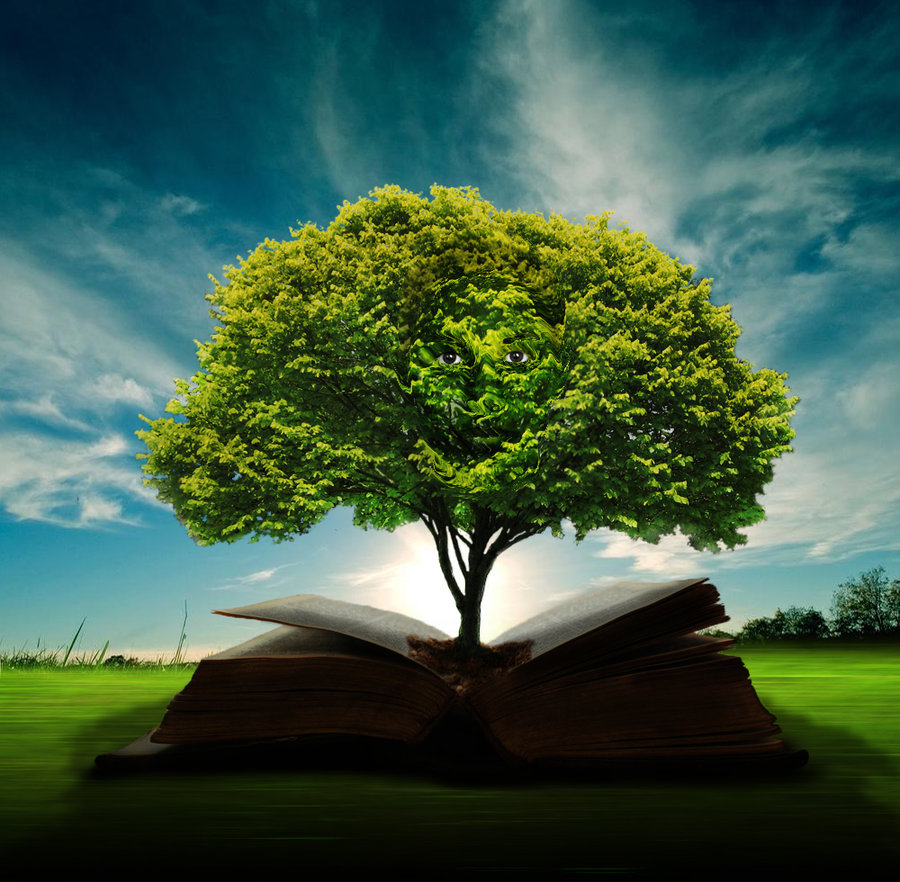
LIKE A TREE FIRMLY PLANTED...
IN GOD'S HOLY WORD
Psalm 1:3 He will be like a tree firmly planted by streams of water, Which yields its fruit in its season And its leaf does not wither; And in whatever * he does, he prospers. (NASB: Lockman)
English Translation of the Greek (Septuagint): And he shall be as a tree planted by the brooks of waters, which shall yield its fruit in its season, and its leaf shall not fall off; and whatsoever he shall do shall be prospered.
Amplified: And he shall be like a tree firmly planted [and tended] by the streams of water, ready to bring forth its fruit in its season; its leaf also shall not fade or wither; and everything he does shall prosper [and come to maturity]. (Amplified Bible - Lockman)
KJV: And he shall be like a tree planted by the rivers of water, that bringeth forth his fruit in his season; his leaf also shall not wither; and whatsoever he doeth shall prosper.
NET: He is like a tree planted by flowing streams; it yields its fruit at the proper time, and its leaves never fall off. He succeeds in everything he attempts. (NET Bible)
NJB: Such a one is like a tree planted near streams; it bears fruit in season and its leaves never wither, and every project succeeds. (NJB)
Young's Literal: And he hath been as a tree, Planted by rivulets of water, That giveth its fruit in its season, And its leaf doth not wither, And all that he doth he causeth to prosper.
HE WILL BE LIKE A TREE FIRMLY PLANTED BY STREAMS OF WATER:
- Job 14:9; Isaiah 44:4; Jer 17:7, 8; Ezekiel 17:8; 19:10; 47:12; Rev 22:2
PLANTED BY STREAMS
OF WATER
He will be - As Joseph Alexander observes "the present and the future insensibly run into each other, so as to to suggest the idea of continuous or permanent condition." (Psalm 1 Commentary) In other words, blessed not only in this life but the life to come! Is this not a desire of your heart dear child of the Living God? Indeed, it is the blessed man or woman who gives irrefutable testimony to the invisible God, their supernatural lives virtually "shouting" that there is a God in heaven Who desires to save, but Who in His justice will be forced to judge all who fail to receive the free gift of eternal life through faith in His Son, Christ Jesus.
Play this beautiful song...then, enabled by the Holy Spirit, put the blessed truth of Psalm 1 into practice...you will never regret it beloved!
- Planted By the Waters
Note: In this song the words "Blessed is the man who trusts in the LORD..." are from the parallel passage in Jeremiah 17:7-8 "Blessed is the man who trusts in the LORD and whose trust is the LORD. For he will be like a tree planted by the water, That extends its roots by a stream And will not fear when the heat comes; but its leaves will be green, and it will not be anxious in a year of drought nor cease to yield fruit." (HALLELUJAH!)
F B Meyer - The rewards of the blessed man - He shall be under Divine culture, planted (Ps 92:13); within reach of perennial supplies, planted by rivers (John 7:37, 38,39); prepared against any demand or emergency - fruit in season; unfading beauty and freshness, a spiritual evergreen; and prosperity even in this world, because his life is ordered by discretion and obedience to Divine principles. Joseph realized this picture (Ge 39:3, 4)
Like a tree - "A lively emblem of vitality and fruitfulness." (J. Alexander) The psalmist introduces a simile, a term of comparison, which functions much like a window which God's Spirit opens in order to give us added insight into the meaning of a particular passage of Scripture. Remember that these "windows" are not to be abused by a fanciful, even "sanctified" imagination, but must always be interpreted in light of the context. The danger of figures of speech is for us to "run wild" with speculative interpretations, forgetting that all figures of speech are meant to convey literal truth.
A W Pink - This figure is found in numerous passages, for there are many resemblances between a tree and a saint. He is not a "reed" moved about by every wind which blows, nor a creeper, trailing along the ground. A tree is upright, and grows heavenward. This tree is "planted"—many are not—but grow wild. A "planted" tree is under the care and cultivation of its owner. Thus, this metaphor assures us that those who delight in God's Law are owned by God, cared for and pruned by Him! (The Blessed Man)
Guy King - A tree must have water, and it is fascinating to see how some kinds - the alder, for instance - If planted away from it, will instinctively push out their roots in the direction of the water, however far off, seeming, with their tendrils, to be feeling for it, till they find it. (TO MY SON An Expositional Study of II Timothy by Guy King)
David Caldwell expounds on "The tree similitude"…A beautiful illustration of the perpetual verdure and fruitfulness of the piety deriving its origin and sustenance from the Word of God. It is compared to a tree whose roots are refreshed by never-failing streams of living water, and whose every part is instinct with the life flowing from its roots. It is the same with the piety nourished by the Word of God. As the sap of the tree imparts life not only to its roots, and trunk, and larger branches, but also to the remotest twig and leaf, and to the very down upon the leaf, so the truly godly man’s piety pervades his whole life, imparting its spirit and character and beauty to everything he does he is not a religious man in one or two departments of life, but he is a religious man everywhere. His religion is a mental habit--a habit of thought, of feeling, of purpose, of action, of which he never for a moment divests himself. He aims that not so much as a leaf on his tree of righteous living shall show signs of decay. The same spirit that actuates him in the largest, actuates him also in the least transaction of his life. His religion is not a thing that is put on (cp James 1:27-note),--it is the man himself--the man in the man. Consequently the storm that bows mock trees of righteousness to the earth, leaves him still standing; the drought that dries up their streams of life, leaves his life still full, fresh, and flowing. Vigor, verdure, and fruitfulness are his evermore. His source of strength can never fail. It is the river of life flowing from the throne of God and of the Lamb, reaching his soul through the law of the LORD, wherein is his delight and unceasing meditation. (Biblical Illustrator - - scroll down page)
Frank S. Rowland - A tree sermon to children
Six characteristics of trees.
1. Contentment. I never heard of a tree complaining. They are perfectly contented with their lot. Did you ever hear of a maple wishing it were an oak? They have not so much to make them contented as we have. The Christ-Spirit in us will make us happy and contented.
2. Health. How many of you have seen an unhealthy tree? The perfect boy or girl is the one who, like the tree, is healthy. We should attend to these bodies of ours. We should be careful to eat and drink those things which will give us sound bodies. We need to keep our minds, bodies, and souls healthy.
3. Roots. A great part of a tree is underground. Two reasons for this--to hold the tree in its place, and to nourish the tree. A perfect man, a perfect woman, boy, or girl is one who is well-rooted. Among the roots which hold us stable and keep us from falling are--
(1) Good habits formed early in life;
(2) good companions;
(3) good books.
4. Importance. Trees are used in building, furniture, ships, and as medicine. Their fruit is important. The perfect man is important to society, to home, to national life. What should we do without the ideal man and woman?
5. Symmetry. The word means “perfectly balanced in all its parts.” Some trees have perfect proportions. There are men who have only attended to physical development; others only to intellectual development. The symmetrical man is one who has attended to the development of the mind, body, and spirit.
6. Trial. A mighty oak is perfect, because it has been tried. Tempests have swept over it, but still it stands. The perfect man, woman, boy, or girl is the one who, when tempted and tried, comes off the victor. Tried, weighed, and not found wanting, Tried and found to be sound. (Biblical Illustrator - scroll down page)
All God's children should…
be called oaks of righteousness, the planting of the Lord, (Why?) that He may be glorified. (Isaiah 61:3).
Of Time And Trees -People who don’t want to wait 4 decades for a globe Norway maple to grow in their front yard can buy a 30-foot specimen from a New York nursery for $42,000. A 50-foot European beech is a “bargain” for only $20,000. In spite of the prices, the country’s leading nurseries report soaring sales of mature trees.
As one customer put it: “I can’t wait for a banana to ripen. I only buy them bright yellow. There’s no patience for watching a tree grow.”
We humans are always in a hurry, looking for shortcuts to skirt the process and grasp the product. And sometimes we expect instant maturity in our Christian walk and growth in faith. What a contrast to the enormous leisure of God in His dealings with us!
The psalmist affirmed God’s promise that the person who delights in His Word will “be like a tree planted by the rivers of water, that brings forth its fruit in its season” (Ps. 1:2-3). A growing Christian, whether a new believer or a seasoned saint, is like a healthy tree—planted, nourished, and fruitful.
If our roots are in God’s Word and our hearts are drawing sustenance from Him, we will flourish. And growth toward maturity brings joy to the God of patience.
Our fruitfulness and growth in Christ
Won't happen instantly,
But meditating on God's Word
Will bring maturity.
—Sper
It takes a moment to be saved.
It takes a lifetime to grow in godliness.
Spiritual Trees - Godly men and women are compared in Scripture to sturdy, healthy trees, planted by the rivers of water, laden with fruit, and full of leaves (Ps. 1:3; 104:16). In order for us to be fruitful trees, we must:
1. Stand straight for God. Lives that reveal Christlike character are lovely to behold, for they are not gnarled by sin or rotted by hypocrisy.
2. Be strong. Those who are well-rooted in God’s Word will be unmovable in times of trial and temptation.
3. Keep growing. As healthy trees add a new ring of growth each year, we too should constantly grow in grace (2 Pet. 3:18).
4. Bring blessing to others. Some trees provide food, others give shade, and others are made into lumber. So too, Christians should provide spiritual food and comfort to their neighbors, as well as use their time and talents to build people up in the Lord.
5. Be ready to be transplanted when God so wills. Christians are not here to stay; they are waiting to be transplanted in the garden of heaven where their fruit will never wither and their leaf will never fade.
How good a tree are you? Is there any fruit, any beauty, any growth worth talking about? Or are you wilted and unproductive? Get growing! —Henry G. Bosch (ODB Editor 1956-1981)
The just are nourished like a tree
Set by the riverside;
Their leaf is green, their fruit is sure,
And thus their works abide.
—Anon.
When growth stops, decay begins.
Planted (08362) (shathal/satal) is a verb which means to plant or to transplant. The idea is to plant and cultivate a seed or seedling in the ground so it may grow. Almost all the uses are figurative, speaking of the godly man or of Israel
The Septuagint (Lxx) uses phuteuo which means literally to plant (Mt 21:33) or figuratively to introduce the Gospel others (1Cor 3:6).
The picture in Psalm 1 is of the godly man being transplanted, which is a fitting image of the New Testament truth of the born-again person. We were dead in our trespasses and sins in IN ADAM and when we were born again by the sanctifying work of the Spirit we were transferred from ("transplanted" if you will from) the kingdom of darkness to the kingdom of light and placed IN CHRIST, rooted and grounded in Him.
Shathal - 11v - Ps 1:3; Ps 92:13; Jer 17:8; Ezek 17:8, 10, 22, 23; 19:10, 13; Hos 9:13 Usage: plant(2), planted(8).
Psalms 92:13 Planted in the house of the LORD, They will flourish in the courts of our God.
Joni Eareckson Tada - The branches of growing trees not only reach higher, but their roots grow deeper. It’s impossible for a strong tree to have high branches without having deep roots. It would become top-heavy and topple over in the wind… The same is true with Christians. It’s impossible for us to grow in the Lord without entwining our roots around His Word and deepening our life in His commands.” (Diamonds in the Dust)
Joseph Alexander - He is not, however, like a tree growing wild, but like a tree planted, in the most favorable situation, on or over, i.e., overhanging, streams of water. The original words properly denote canals or channels, as customary means of artificial irrigation. hence the single tree is said to overhang more than one, because surrounded by them. The image presented is that of a highly cultivated spot, and implies security and care, such as could not be enjoyed in the most luxuriant wilderness or forest. (Psalm 1 Commentary)
Planted speaks of stability in the storms of life. Ray Pritchard elaborates on this picture asking…
How do you know when a tree has good roots? Answer: When the storms come. All the trees look pretty much alike when the sun is shining or a gentle rain is falling, but let a mighty storm with fierce rain and howling winds pass through. Then the true difference is apparent. The trees with few roots are blown over, but the trees with deep roots are still standing when the storm has passed. So it is for the child of God. You won’t know how good your root system is until the storms of life crash against you. Only then will you discover the strength of your spiritual foundation. The only way to be ready for the storm is to spend time now delighting in God’s Word day by day, meditating on its truth, and building a foundation deep and strong for whatever may come your way.
Parallel Isaiah 61:3b and note how or by whom he is planted and why?
So they will be called oaks of righteousness,
The planting of the LORD, that He may be glorified.
The older I get the more I like God's picture of believers as "trees" Psalm 92 testifying that…
PSALM 92:12-14
The righteous man will flourish like the palm tree,
He will grow like a cedar in Lebanon.
Planted in the house of the LORD,
They will flourish in the courts of our God.
They will still yield fruit in old age;
They shall be full of sap and very green.
Streams of water - The Septuagint translates the phrase by streams of water with the Greek phrase "para tas diexodous ton hudaton".
The Greek lexicon BDAG explains that the specific phrase tas diexodous ton hudaton means…
the point where a stream of water flowing underground suddenly breaks through and flows out freely, a spring
The point is that this is not a stagnant pool but a flowing stream, making the image even more vivid in a land where flowing spring fed streams were sparse. How blessed is this man!
Adam Clarke…
By the rivers of water - פלגי מים palgey mayim, the streams or divisions of the waters. Alluding to the custom of irrigation in the eastern countries, where streams are conducted from a canal or river to different parts of the ground, and turned off or on at pleasure; the person having no more to do than by his foot to turn a sod from the side of one stream, to cause it to share its waters with the other parts to which he wishes to direct his course.
Albert Barnes agrees, adding that streams …
does not here quite express the sense of the original. The Hebrew word פלג peleg, from פלג pâlag, to cleave, to split, to divide), properly means divisions; and then, channels, canals, trenches, branching-cuts, brooks. The allusion is to the Oriental method of irrigating their lands by making artificial rivulets to convey the water from a larger stream, or from a lake. In this way, the water was distributed in all directions. The whole land of Egypt was anciently sluiced (channeled) in this manner, and it was in this way that its extraordinary fertility was secured. An illustration of the passage may be derived from the account by Maundrell of the method of watering the gardens and orchards in the vicinity of Damascus. “The gardens are thick set with fruit trees of all kinds, kept fresh and verdant by the waters of the Barady … This river, as soon as it issues out of the cleft of the mountain before mentioned, into the plain, is immediately divided into three streams, of which the middlemost and largest runs directly to Damascus, and is distributed to all the cisterns and fountains of the city. The other two, which I take to be the work of art, are drawn round, the one to the right, and the other to the left, on the borders of the gardens, into which they are let out, as they pass, by little rivulets, and so dispersed over all the vast wood, insomuch that there is not a garden but has a fine, quick stream running through it.” Trav., p. 122… The image is that of a tree abundantly watered, and that was flourishing.
Steven Cole explains that…
The psalmist describes the person who delights in God’s Word as a tree planted by streams of water. This is a tree that has been deliberately cultivated, surrounded by these canals or streams so that its roots have a continual supply of water. It is solid and able to withstand drought or storms. It is fruitful and has continual evidence of life and vitality--its leaves do not wither. He sums it up by applying it: “In whatever he does, he prospers.” There’s a truly happy person: the person God blesses with His prosperity, no matter what circumstances of life he finds himself in.
God is not promising financial prosperity here, but rather, soul-prosperity. The so-called “health and wealth” teaching being promoted by some TV preachers, which claims that God promises financial prosperity, is false. God’s servants may be poor in this world’s goods and afflicted by many trials. But they are rich toward God (Luke 12:21), which is true prosperity. (Ibid)
Wiersbe writes…
A tree is a blessing. It holds soil, provides shade and produces fruit. The godly are like trees, with root systems that go deep into the spiritual resources of God's grace (v. 3). But sadly, many professing Christians are not like trees but are like artificial plants or cut flowers with no roots. They may be beautiful for a while, but soon they die.
A tree needs light, water and roots to live. We all have resources upon which we draw life. The question we need to ask ourselves is, Where are our roots? The person God can bless is planted by the rivers of water. We must be careful not to be like Christians who are dry and withered and depend upon their own resources. They are like tumbleweeds, blown about by any wind of doctrine.
To have the blessings of verse 3, we need to meet the conditions of verses 1 and 2. That is, we must first be separated from the world and saturated with the Word to be situated by the waters.
God desires to bless us, but we need to meet certain conditions to receive His blessings. We bear fruit only when we have roots, and we must draw upon spiritual resources to bring forth fruit in due season. To bear the fruit of the Spirit, we must allow the Spirit to work in us and through us.
In contrast to the believer, the ungodly are not like trees but are like chaff. They have no roots, produce no fruit and are blown about. The ungodly reject the Word of God and will perish without hope Ps 1:6). As Christians we must not reject the ungodly but try to reach them. God blesses us so that we might be a blessing to others. His Spirit helps us bear fruit that can help win the lost.
Are you like a tree or like chaff?
We need God's resources to bear fruit. But where we place our roots is paramount. Only as we grow them deeply into the spiritual resources of God's grace will we produce fruit. Make the Bible your spiritual resource. Delight in it and feed your soul with its truth. God can use you to help win the lost.
In Jeremiah 17 we have a passage that closely parallels Psalm 1…
5 Thus says the LORD, "Cursed is the man who trusts in mankind And makes flesh his strength, And whose heart turns away from the LORD.
6 "For (term of explanation = should always beg at least one question "What is being explained?") he will be like a bush in the desert and will not see when prosperity comes, But will live in stony wastes in the wilderness, a land of salt without inhabitant.
7 "Blessed is the man who trusts in the LORD and whose trust (or hope) is the LORD.
8 "For (term of explanation = should always beg at least one question "What is being explained?") he will be like a tree planted by the water, that extends its roots by a stream and will not fear when the heat comes; but its leaves will be green, And it will not be anxious in a year of drought Nor cease to yield fruit.
Wiersbe - The most important thing about a tree is the root system. If the roots do not go down deep, the tree will not grow in a healthy manner. If we are rooted in the things of the Lord, then our words will be the fruit of our fellowship with Him. We will be like that “blessed man” in Psalm 1 and produce fruit in due season. One reason our Lord was able to say the right words at the right times was because He communed with His Father and heard from heaven each day. Listen to His testimony (Mark 1:35). (Wiersbe, W: Bible Exposition Commentary - Old Testament. Victor)
Deep Roots
He shall be like a tree planted by the rivers of water, that brings forth its fruit in its season. —Psalm 1:3
Today's Scripture:Psalm 1:1-6
In my orchard are two pear trees. Last summer was extremely dry, yet one of the trees was unaffected and remained green and yielded luscious pears. The other tree did not do so well. Its leaves turned yellow, the fruit shriveled, and the leaves and the fruit both dropped to the ground. The tree seemed to be dead.
Then came the rains, and the ground was soaked with moisture. The tree that seemed to be dead sprang to life again. Soon it was covered with leaves, and (believe it or not) in the latter part of August it burst into full bloom. Little pears came into view, but then came the frost and no fruit matured.
One tree thrived and produced delicious fruit in season. What made the difference? Its roots had grown deep, where they found plenty of water. The other had shallow roots and depended on the uncertain rains. The one was like the tree David described, “planted by the rivers of water” (Ps. 1:3). The other, with belated bloom, bore no fruit.
Which kind of a tree are you? Do your roots go deep into the underground streams of the Word of God, or is your devotional life shallow and only occasional? Dig deep, friend, deep into the Book, and your life will produce abundant spiritual fruit. By M.R. DeHaan
The just are nourished like a tree
Set by the riverside;
Their leaf is green, their fruit is sure,
And thus their works abide.
—Anon.
Deep Roots
Read: Psalm 1:1-6
He shall be like a tree planted by the rivers of water. —Psalm 1:3
Some friends of mine planted two trees of the same kind and age. The first was set in level ground in the middle of the yard, where its roots went deep into the ground to soak up water. The second was planted at the bottom of a steep bank. When it rained, the water rushed past it to the street.
Both trees appeared to thrive. Then a strong windstorm came. The tree in the middle of the lawn stood firm, while the other one toppled over. Why? The root systems were different. The tree in the lawn had deep roots, while the other one had shallow roots. At the base of the bank, the water always passed swiftly over the top of the soil, so those roots stayed shallow. That tree, therefore, could not withstand the force of the wind.
We need to let our roots grow deep, anchoring us firmly in the Word of God. We must not settle for the rushing surface waters of emotion and experience. They have their place in the Christian life, but we need to take the time to learn the deeper, strengthening truths of the Bible and the deeper realities of the Spirit (1 Cor. 2:9-13). Then, when the pressures of life increase or the strong winds of temptation blow, we won’t be toppled. Our deep roots will enable us to withstand adversity. By David C. Egner
Standing on the promises that cannot fail,
When the howling storms of doubt and fear assail,
By the living Word of God I shall prevail,
Standing on the promises of God.
—Carter
When you're rooted in truth, you can withstand the winds of trial.
Bearing Good Fruit
That person is like a tree planted by streams of water, which yields its fruit in season. Psalm 1:3
Today's Scripture & Insight:Psalm 1:1–3
The view from my airplane window was striking: a narrow ribbon of ripening wheat fields and orchards wending between two barren mountains. Running through the valley was a river—life-giving water, without which there would be no fruit.
Just as a bountiful harvest depends on a source of clean water, the quality of the “fruit” in my life—my words, actions, and attitude—depends on my spiritual nourishment. The psalmist describes this in Psalm 1: The person “whose delight is in the law of the Lord . . . is like a tree planted by streams of water, which yields its fruit in season” (vv. 1–3). And Paul writes in Galatians 5 that those who walk in step with the Spirit are marked by “love, joy, peace, forbearance, kindness, goodness, faithfulness, gentleness, and self-control” (vv. 22–23).
Sometimes my perspective on my circumstances turns sour, or my actions and words become persistently unkind. There is no good fruit, and I realize I haven’t spent time being quiet before the words of my God. But when the rhythm of my days is rooted in reliance on Him, I bear good fruit. Patience and gentleness characterize my interactions with others; it’s easier to choose gratitude over complaint.
The God who has revealed Himself to us is our source of strength, wisdom, joy, understanding, and peace (Ps. 119:28, 98, 111, 144, 165). As we steep our souls in the words that point us to Him, the work of God’s Spirit will be evident in our lives. By Peter Chin
Like A Tree
He shall be like a tree planted by the rivers of water. —Psalm 1:3
Today's Scripture: Ephesians 4:11-16
In the quietness of my final years I plan to watch a tree grow—a birch tree I planted as a tiny sapling over 30 years ago. It stands now in mature splendor, just outside our picture window—beautiful in every season of the year.
So it is with our spiritual endeavors: We may have planted, watered, and fussed over our “saplings” (those we’ve mentored) for a time, but only God can make a “tree.”
Occasionally I hear from those I ministered to years ago, and discover to my delight that they have grown to maturity and have been greatly used of God—with no help from me. It’s a gentle reminder that I plant and water for a while, and help others “grow up in all things into Him who is the head—Christ” (Eph. 4:15). But only God “gives the increase” (1 Cor. 3:6-7).
German theologian Helmut Thielicke writes, “The man who doesn’t know how to let go, who is a stranger to quiet, confident joy in Him who carries out His purposes without us (or also through us or in spite of us), in Him who makes the trees grow . . . that man will become nothing but a miserable creature in his old age.”
So, at my age, I may yet tend a sapling or two, but mostly I will let go and watch them grow. By David H. Roper
A Prayer: Lord, I want to be used by You in others’ lives. Teach me from Your Word so that I can help others follow You. And enable me to let go and trust You to work in them. Amen.
WHO YIELDS ITS FRUIT IN SEASON AND WHOSE LEAF DOES NOT WHITHER AND IN ALL HE DOES HE PROSPERS:
- Ps 92:14; Mt 21:34,41
- Is 27:11; Mt 13:6; 21:19; Jn 15:6, Jude 1:12
- Ps 128:2; 129:8; Ge 39:3,23; Joshua 1:7,8; 1Chr 22:11; 2Ch 31:21; 32:23; Is 3:10
Since I am in the "autumn" of my life, the words of Psalm 92 regarding fruitfulness are a continual source of motivation and encouragement to me as they should be to all God's "aging" saints…
The righteous man (or woman) will flourish like the palm tree, He will grow like a cedar in Lebanon. Planted in the house of the LORD, they will flourish in the courts of our God. They will still yield fruit in old age. They shall be full of sap and very green, to declare that the LORD is upright. He is my rock, and there is no unrighteousness in Him. (Psalm 92:12-15-note)
Spurgeon has a wonderful exposition on this psalm writing: The righteous shall flourish like a palm tree, whose growth may not be so rapid, but whose endurance for centuries is in fine contrast with the transitory verdure of the meadow. When we see a noble palm standing erect, sending all its strength upward in one bold column, and growing amid the dearth and drought of the desert, we have a fine picture of the godly man (Ed: and woman), who in his (her) uprightness aims alone at the glory of God; and, independent of outward circumstances, is made by divine grace to live and thrive where all things else perish. The text tells us not only what the righteous is, but what he shall be; come what may, the good man (woman) shall flourish, and flourish after the noblest manner. He (she) shall grow like a cedar in Lebanon. This is another noble and long lived tree. "As the days of a tree are the days of my people", saith the Lord. On the summit of the mountain, unsheltered from the blast, the cedar waves its mighty branches in perpetual verdure, and so the truly godly man (woman) under all adversities retains the joy of his (her) soul, and continues to make progress in the divine life. Grass (see Ps 92:7-note), which makes hay for oxen, is a good enough emblem of the unregenerate; but cedars, which build the temple of the Lord, are none too excellent to set forth the heirs of heaven.
Those that be planted in the house of the Lord shall flourish in the courts of our God. In the courtyards of Oriental houses trees were planted, and being thoroughly screened, they would be likely to bring forth their fruit to perfection in trying seasons; even so, those who by grace are brought into communion with the Lord, shall be likened to trees planted in the Lord's house, and shall find it good to their souls. No heart has so much joy as that which abides in the Lord Jesus.
Fellowship with the Stem
begets fertility in the branches.
If a man (woman) abide in Christ He brings forth much fruit. Those professors who are rooted to the world do not flourish; those who send forth their roots into the marshes of frivolous pleasure cannot be in a vigorous condition; but those who dwell in habitual fellowship with God shall become men (women) of full growth, rich in grace, happy in experience, mighty in influence, honored and honorable. Much depends upon the soil in which a tree is planted; everything, in our case, depends upon our abiding in the Lord Jesus (Jn 8:31, 32, Jn 15:7, 1Jn 2:14, 2Jn 1:1,2), and deriving all our supplies from Him (Jn 15:5). If we ever really grow in the courts of the Lord's house we must be planted there, for no tree grows in God's garden self sown; once planted of the Lord, we shall never be rooted up, but in His courts we shall take root downward, and bring forth fruit upward to His glory for ever.
They shall still bring forth fruit in old age. Nature decays but grace thrives (cp 2Cor 4:16-note). Fruit, as far as nature is concerned, belongs to days of vigor; but in the garden of grace, when plants are weak in themselves, they become strong in the Lord, and abound in fruit acceptable with God. Happy they who can sing this Sabbath Psalm (Ps 92:1), enjoying the rest which breathes through every verse of it; no fear as to the future can distress them, for their evil days, when the strong man fails, are the subject of a gracious promise, and therefore they await them with quiet expectancy. Aged believers possess a ripe experience, and by their mellow tempers and sweet testimonies they feed many. Even if bedridden, they bear the fruit of patience; if poor and obscure, their lowly and contented spirit becomes the admiration of those who know how to appreciate modest worth. Grace does not leave the saint when the keepers of the house do tremble; the promise is still sure though the eyes can no longer read it; the bread of heaven is fed upon when the grinders (teeth) fail; and the voice of the Spirit in the soul is still melodious (Eph 5:19-note) when the daughters of music are brought low. Blessed be the Lord for this! Because even to hoar (to those whose hair is gray, white with age) hairs He is the I AM, who made His people, He therefore bears and carries them (cp Ps 68:19-note).
They shall be fat and flourishing. They do not drag out a wretched, starveling (lean) existence, but are like trees full of sap, which bear luxuriant foliage. God does not pinch His poor servants, and diminish their consolations when their infirmities grow upon them; rather does He see to it that they shall renew their strength (Isa 40:31-note), for their mouths shall be satisfied with His own good things. Such an one as Paul the aged would not ask our pity, but invite our sympathetic gratitude; however feeble his outward man may be, his inner man is so renewed day by day that we may well envy his perennial peace. (cp 2Cor 4:16-note)
This mercy to the aged proves the faithfulness of their God, and leads them to show that the Lord is upright, by their cheerful testimony to His ceaseless goodness. We do not serve a Master Who will run back from His promise. Whoever else may defraud us, He never will. Every aged Christian is a letter of commendation to the immutable fidelity of Jehovah.
He is my rock, and there is no unrighteousness in Him. Here is the psalmist's own seal and sign manual; still was he building upon his God, and still was the Lord a firm foundation for his trust. For shelter, for defense, for indwelling, for foundation, God is our Rock; hitherto He has been to us all that He said He would be, and we may be doubly sure that He will abide the same even unto the end. He has tried us, but He has never allowed us to be tempted above what we are able to bear: He has delayed our reward, but He has never been unrighteous to forget our work of faith and labour of love (1Th 1:3-note). He is a Friend without fault, a Helper without fail (Heb 13:5-6-note). Whatever He may do with us, He is always in the right; His dispensations have no flaw in them, no, not the most minute. He is true and righteous altogether, and so we weave the end of the psalm with its beginning, and make a coronet (crown) of it, for the head of our Beloved.
It is a good thing to sing praises unto the Lord, for "He is my rock, and there is no unrighteousness in Him."
Yields its fruit in season - The blessed man who abides in the Word (cp John 15:5 with John 1:1, Col 3:16-note cp Jn 8:31, 32), the "Seed" (Mt 13:23, Lk 8:15, cp 1Pe 1:23-note), can expect to bear fruit. The more we converse with the word of God the better prepared we are for every good work (2Ti 3:16, 17-note). Note the recurring biblical principle: First the root, then fruit. First hearing and doing of the Word (James 1:22-note, James 1:25-note) and then the bearing of fruit. The sad truth is that many Christians are more concerned about the "leaves" and neglect the root, the most important part! Unless we spend time daily in the Word, intentionally setting aside time to allow the Spirit to feed us (1Cor 2:10-16, 1Jn 2:20, 27), we will wither spiritually and bear little if any fruit. We may have spiritual life, but we will not experience it abundantly (Jn 10:10b, cp Mk 4:8, 20, 2Pe 1:8-note, 2Pe 1:10, 11-note). Note that the promise is not just for "reading" the Word, but for meditating on the Word, taking time to "chew before you swallow" so to speak, so that you might digest the spiritual truth that you have read. While I applaud "through the Bible in a year" reading programs, the danger, if you will, is that one can become so focused on keeping up with the reading schedule that they do not take the time to meditate on what they are reading. One verse meditated upon is far better than one chapter hastily read.
THOUGHT: If you are reading too fast, one of best ways to slow down and facilitate meditation on the Scripture is to read the Bible inductively taking time to carefully observe the text, establishing the context, taking time to note the terms of contrast, terms of conclusion, terms of explanation, expressions of time, terms of comparison such as similes and metaphors, and interrogating each of these "finds" with the 5W/H'S. The discipline of reading inductively takes an some time to learn, but the benefits of your investment will be last forever and ever!
Season (eth) is the appointed time, the proper time, the right time and is translated in the Lxx with kairos which describes a specific period of time that lasts for a season. In other words, kairos refers to a fixed and definite time, the time when things are brought to crisis, the decisive epoch waited for or a strategic point in time -- the "opportune time." Kairos is occasionally translated opportunity in the NAS. (See related word eukaira translated "good opportunity" in Mt 26:16, Lk 22:6) The English word opportunity has a fascinating origin. Hundreds of years ago when living by the sea was critically important to everyday business and industry, the word opportunity was first coined. Time-tables for everything from commerce to transportation depended on the rise and fall of tides. The specific time when the water was deep enough to sail out to sea was known as ob portu, the time when time and tide converged. As believers, our lives are filled with God given opportunities, those moments for example when an urgent need converges with your ability to help meet that need. If you have the eyes to recognize that opportunity (eg, you have been "marinating" your mind with God's Word and you spiritual senses are on "high alert"), you can seize the moment and redeem the time, the opportunity, (Eph 5:16-note) for the glory of God, joining Him where He is at work. As we learn to recognize and choose to join God when He presents us with an ob portu moment, we begin to enter into the fullness of the blessed, blessed ("blessed" in Ps 1:1 is plural!) life the psalmist is describing!
See Related Study - Redeem the Time
Shakespeare alluded to the idea of ob portu when he wrote the classic lines…
There is a tide in the affairs of men,
Which, taken at the flood, leads on to fortune;
Omitted, all the voyage of their life
Is bound in shallows and in miseries.
(Julius Caesar, 4.3.217)
Pritchard - To speak of “fruit in its season” means that the tree produces fruit that expresses its true inner character. How do you spot an orange tree? By the oranges it produces. And how do you spot an apple tree? Look for the apples. Whatever is on the inside must eventually be seen on the outside. Applied to the spiritual life, this means that when our roots are deep in the Word, we will be given whatever we need, whenever we need it. If we need love, from the Word of God will come the strength to produce the fruit of love. If we need a forgiving spirit, from the Word of God will come the strength to forgive. If we need courage, we will produce the fruit of courage. If we need patience and perseverance, the Word of God will produce it in us. This sort of supernatural life is available to every believer, but it will only be fully realized over time as we continue to walk with the Lord and to delight in his Word. (see also study of the fruit of the Spirit - see notes Galatians 5:16; 17; 18; 19; 20; 21; 22; 23; 24; 25; 26 -- see notes Galatians 5:16; 17; 18; 19; 20; 21; 22; 23; 24; 25; 26)
David Dickson (1834) - The man that makes the word of God his delight, shall be made fruitful in every good work, as opportunity is offered to him
A W Pink writes that the psalmist's description of a fruitful Christian…
is an essential character of a gracious man, for there are no fruitless branches in the true Vine (Jn 15:5). "In season," for all fruits do not appear in the same month, neither are all the graces of the Spirit produced simultaneously.
- Times of trial—call for faith.
- Times of suffering—call for patience.
- Times of disappointment—call for meekness.
- Times of danger—call for courage.
- Times of blessings—call for thanksgiving.
- Times of prosperity—call for joy.
John Piper explains that if you separate from sin and saturate your mind with Scripture …
You will be a fruitful person. O for more fruitful people! You know them. They are refreshing and nourishing to be around. You go away from them fed. You go away strengthened. You go away with your taste for spiritual things awakened. Their mouth is a fountain of life. Their words are healing and convicting and encouraging and deepening and enlightening. Being around them is like a meal. This is the effect of delighting in the Word of God and meditating on it day and night. You will yield fruit in season. (Psalm 1 Meditate on the Word of the Lord Day and Night)
ALL THE LORD'S TREES
SHOULD BE "EVERGREENS!"
Leaf does not whither - The life of a Scripture saturated follower of Christ is a vibrant, living testimony, for his good (God) works give clear evidence of the reality of the profession of his lips. As MacDonald says the meditating man's "spiritual life is not subject to cyclical changes but is characterized by continuous inner renewal."
Jesus commanded all of us as His disciples as lights of the world, not to hide our light under a basket but to be fruit bearers who are like a city set on a hill…
Let your light shine (aorist imperative = Do this now even with a sense of urgency) before men (Not under a basket) in such a way that they may see your good works (being careful not to draw attention to yourself), and glorify (doxazo = give a proper opinion of) your Father Who is in heaven (In short our invisible Spirit enabled, supernatural works give clear, irrefutable testimony of the invisible God we worship and serve! For the power to do good works see Acts 1:8-note). (Mt 5:16-note)
Paul issues a parallel charge to Christ's "light bearers" commanding us to…
Do (present imperative = Make this the habit of your life all the days of your life) all (Greek = no exceptions!) things without grumbling (goggusmos) or disputing (dialogismos) (Be careful! This is not possible naturally but only supernaturally! In other words, although it is "impossible", it is "Him-possible"! Study and "surrender" to Phil 2:13NLT-note and then obey the command in Phil 2:12b-note!); that (expresses purpose of obeying the preceding command) you may prove yourselves to be blameless and innocent, children of God above reproach in the midst of a crooked and perverse generation, among whom you appear as lights in the world, (Phil 2:14, 15-note)
Pink comments "Where there is no fruit to God's glory—our profession is a mockery."
Regarding the phrase one whose leaf does not whither John Piper says…
The point here is that the hot winds are blowing and the rain is not falling and all the other trees that are not planted by streams are withering and dying, but in spite of all the heat and drought, your leaf remains green, because delighting in the Word of God and meditating on it day and night is like being planted by a stream. The happiness of this person is durable. It is deep. It does not depend on which way the wind is blowing or whether the rain is falling. It gets its life from an absolutely changeless source: God in his Word.
David Dickson (1834) on "his leaf also shall not wither"…
This man shall be enabled to bear out a holy profession of his faith in, and obedience to God, in adversity, as well as in prosperity
Pritchard - The phrase pictures a leafy tree that seems like an evergreen because its leaves are in season all year round. People like this are constantly refreshed by the Word of God, constantly renewed, constantly drawing on new strength for new situations. They are never boring, never dull, never living off yesterday’s blessings, but living each day in the strength of the Lord whose mercies are new every morning.
Habakkuk describes such a person…
Though the fig tree do not blossom, nor fruit be on the vines, the produce of the olive fail and the fields yield no food, the flock be cut off from the fold and there be no herd in the stalls, yet I will exult in the LORD, I will rejoice in the God of my salvation. (Habakkuk 3:17-18-see commentary)
F B Meyer…
…his leaf also shall not wither -
"If a man abide not in Me," said our Lord, "he is cast forth as a branch, and is withered."
The same thought is here. Thrust down your rootlets to the oozy river bed, and there is no doubt about your continuing earnest, patient, God-filled. The sun of temptation may strike you with sword-like beams, but you will have a source of supply which they cannot exhaust. The secret of an unwithering beauty is in the Word of God, delighted in and meditated upon day and night. And what is the Word of God, but the life of God. translated into human speech?
Wean yourself from all beside, and learn to feed on God. Withdraw your rootlets from men and things, and let them travel to the river of God, which is full of water. Close other doors, and open those that. lead out on to the terrace, whence you may behold the far-spread landscape of what He is, and says, and is willing to be to us all.
Note that word meditate (Meditate). The root must lie in contact with the stream, and the soul must steep itself in the Word of God. We must give the truth time to enter and pervade our souls. We must have retreats, shut away from the rush of life, up and down the glades of which we may tread. These retreats are oftener found within the soul than without. Just as in the temple of old, there was Solomon's porch, where Jesus walked, so in the temple within there are closes and cloisters, where we may commune with our heart, and be still.
Prospers (06743)(tsalach/salah - see word study) means to accomplish satisfactorily what is intended = generally expresses idea of a successful venture, as contrasted with failure. The source of true success is God's Spirit Who enables supernatural spiritual prosperity. Don't twist this promise to apply only to material prosperity, for that is far less valuable than spiritual prosperity. God may choose to prosper us materially, but not at the expense of our spiritual prosperity!
The Septuagint translates tsalach with the verb kateuodoo which means to "have free course or passage, prosper." (BDAG)
William MacDonald astutely (and I think accurately) observes that…
This kind of man shall prosper in everything he undertakes. The reason, of course, is that he is living in fellowship with the Lord, and all his service is therefore guided by the Holy Spirit. The only way to be efficient and successful in the Christian life is to be led by the Spirit of God. Self-directed activity is an enormous waste of time, money, and effort! (Ed: Note striking contrast - Spirit led versus Self directed - Beloved, which describes your works/ministry?)
Piper says the phrase "he prospers" describes "a life whose "labor is not in vain" (1Corinthians 15:58-note), but succeeds in God's good purposes into eternity."
Pink adds that…
This (prosperity) necessarily follows, though it is not always apparent to the eye of sense. Not even a cup of water given in the name of Christ, shall fail to receive its reward—if not here, certainly in the hereafter (Mt 10:42, Mark 9:41).
David Dickson (1834) - Whatsoever duty or service to God this man goes about, shall not want the assistance of God, nor success, nor acceptance at His hands - whatsoever he doeth shall prosper.
Albert Barnes - This ("all he does he prospers") is a literal statement of what had just been put in a figurative or poetic form ("be like a tree… "). It contains a general truth, or contains an affirmation as to the natural and proper effect of religion (Ed: relationship with God through faith in Christ), or of a life of piety, and is similar to that which occurs in 1Ti 4:8-note -- “Godliness is profitable unto all things, having promise of the life that now is, and of that which is to come.”
THE WORD OF GOD
AND PROSPERITY
Pritchard adds that…
They prosper in the sense that no matter what happens, they find strength for the day and hope in the midst of the hardest difficulties. They bring forth godly fruit in good times and bad times. Why? Because they are planted deep in the good soil and their roots reach out to the water of the Word of God. Finding constant nourishment therein, they can face whatever life throws at them.
The thought here is similar to Romans 8:37 (note) where in the midst of struggles, sorrow, persecution, famine, distress, nakedness and the sword, those who know Jesus are “more than conquerors” through His divine power. And that triumphant deliverance comes to us in large part through the Word of God.
In this world we may face disappointment, sorrow, rejection, failure, sickness, abandonment, and discouragement. We may hear things about our children we prayed to God never to hear, our dearest friends may desert us, our spouse may leave us, and we may face an unremitting series of earthly tragedies. Illness, physical weakness, and death itself may visit our door time and again.
Even then, we prosper, we thrive, we survive, we are not destroyed. Sometimes when I ask friends going through hard times how they are doing, the answer comes back, “I’m surviving.” Years ago I foolishly thought that was a wimpy response. Now I see that it is a powerful statement of faith. Sometimes surviving is the same as thriving. Some days to survive is to prosper. That, too, is a kind of prosperity for the people of God. (Psalm 1: Trees Planted by the Water) (Bolding added)
Alan Carr - THE PROSPERITY OF THE SUCCESSFUL BELIEVER
Ill. The promises of this verse are conditional. When we live separated lives and feed our souls on God’s Word, then we can expect these things to happen for us.)
A. His Position – By the River! Always close to the life giving resources. (Ill. This was meaningful to Israel with her mostly arid conditions.) The tree planted by the river is never dry and wilted, but is green, lush and lovely. (Ill. The believer who lives close to God will never be dry and wilted either. He will be vibrant, lively and productive.) (Ill. Many never know the joy of drawing off Christ daily! As a result, they are spiritually wilted and dead looking.) The droughts of life and the dry seasons never seem to affect the believer who is planted near the river. He is connected to an unfailing source of life and strength.
B. His Prominence – Ill. A tree. The life of the successful believerstands heads above all those around him. It is easily seen when a man draws from the Lord. (Ill. Men will know when you have been with Jesus – Acts. 4:13)
C. His Permanence – Planted – Unlike some plants, which live for a season and die out, this tree, has sunk its root deep and has a hidden source of life. (Ill. The value of private prayer and Bible Study.) (Ill. Planted – literally "transplanted." A tree cannot transplant itself, neither can a man transplant himself into the Kingdom of God. It is wholly a work of God’s grace. And, He always plants us in good soil, near the water supply. However, after we are planted, it is our responsibility to draw from the resources, which God has provided.)
D. His Productivity – "Brings forth fruit" – The successful believer is a blessing to all those around him, because his fruit is plentiful. (Ill. John 7:38) (Ill. Old apple tree in the cow pasture. Man, cows, birds and insects all benefited from the fruit off this old tree.) (Ill. You may never know just who is feeding off your life!)
E. His Predictability – "In his season" This tree isn’t a freak. Just as there are seasons of fruit bearing, so there are times of rest and growth. As believers, we aren’t to worry over the fruit. That is the Father’s business! When everything else is as it should be, then the fruit will come in its season – John 15:1-5.
F. His Perpetuity – "leaf shall not fade" – The successful believer is like an evergreen. He is always surrounded by the green of life. (Ill. The trees in the wintertime. The hardwoods and leafy trees are look dead, but the evergreens stand out as islands of life in a sea of deadness. They are unaffected by winter or weather, but they are always the same.) (Ill. our lives should be lives of consistency! We are called on to be a stable, faithful and dependable people – 1 Cor. 15:58) The successful believer is consistent. The curve balls of life are unable to knock him off course. (Ill. Thank the Lord for consistent people!) (Ill. Life lived by this river in unchanging.)
G. His Prosperity – "Whatsoever he doeth, it shall prosper" – In other words, God will bless the successful believer. His personal life, his family life, his business life, his church life, his spiritual life will all be blessed of the Lord. That isn’t to say that there won’t be stormy seas, but the successful believer will be able to sail them with Jesus until they are calm once again!
Conclusion: Do you possess the characteristics of the successful believer? If so, the Bible, in verse 1, says you are "Blessed." This means "Oh how very, very happy." I hope you have seen yourself among the happy ones and are encouraged about you walk with Jesus tonight. You see it is possible to be successful for Christ and know it with out being self-righteous!
However, if you saw yourself lacking in some of these areas, then Jesus stands ready, willing and able to make those things right once again. Let’s take whatever steps are necessary to make our lives be the successes they can and should be. (Sermons and Outlines)
Slow Down And Live
His delight is in the law of the Lord, and in His law he meditates day and night. —
Psalm 1:2
Many of our New Year’s resolutions may actually accelerate our pace of life instead of helping us to slow down. In a quest for greater productivity and efficiency, we overschedule our days, then rush through meals, drive impatiently, and wonder why the joy of living eludes us.
Carol Odell, who writes a business advice column, says that slowing down can positively affect our lives at work and at home. She believes that rushing can cloud our judgment and cause us to overlook important things and valuable people. Carol encourages everyone to slow down, and even suggests the radical idea of welcoming red traffic lights and using the waiting time to meditate.
In Psalm 1, there is no hint of a frenzied pace. It describes a person who enjoys the blessing of God. Instead of thinking and acting like those who rarely consider spiritual matters, “His delight is in the law of the Lord, and in His law he meditates day and night” (v.2). The result is a fruitful life and a well-nourished soul (v.3).
Isaiah wrote, “You will keep him in perfect peace, whose mind is stayed on You, because he trusts in You” (Isa. 26:3). Just for today, try thinking about that verse whenever you have to wait. Isn’t it time for all of us to slow down and live? By David C. McCasland
If you’re working hard to make a living,
Never taking time to smell the roses,
Now’s the time to heed the Bible’s wisdom:
Find true joy before your life’s day closes.
—Hess
What Is Reality?
His delight is in the law of the Lord, and in His law he meditates day and night. —Psalm 1:2
Today's Scripture: Psalm 1:1-6
The cartoon depicted a frustrated father changing a flat tire in the rain. His two children were peering out the car window. In response to their complaining, he said, “Don’t you understand? This is life. This is what’s happening. We can’t switch to another channel!”
Television and reality—does the former distort the latter? After 10 years of research, media analyst Kenneth Curtis measured TV’s impact on society. He concluded that the omnipresent, flickering screen constantly tries to tell us what behavior and attitudes are desirable. He described the effect of TV as a subtle process that has become a significant force in defining reality.
If this is true, we had better be careful about what we watch. The networks are not committed to portraying Christian values. Many things that are presented as acceptable are in fact dangerous. Furthermore, watching TV makes us passive observers rather than active participants in solving life’s problems. The violence, sex, and materialism on TV can make us insensitive to our calling as Christians to be salt and light in a sinful world.
Only as we meditate on God’s Word (Psalm 1:2) can we have the right perspective. To avoid a distorted view of life, we must allow God’s truth to define reality. By Mart DeHaan
Our thoughts are shaped by what we see,
And thoughts affect our soul;
So if we'd profit from TV,
We must be in control.
—DJD
Who Is Most Important?
His delight is in the law of the Lord . . . . He shall be like a tree planted by the rivers of water. —Psalm 1:2-3
Today's Scripture: Psalm 1:1-6
During an operation, an experienced surgeon asked a young intern, “Who is the most important person in this operating room?”
The intern searched for an appropriate answer. He didn’t believe that his mentor was asking for personal compliments, so trying to sound gracious he replied, “I suppose that it would be these nurses who assist you in such an efficient manner.”
The surgeon shook his head and said, “No, the most important individual in this room is the patient.”
It’s possible to overlook the obvious in studying the Bible too. It’s easy to forget how important you are in the process. Whether or not you find profit depends on your attitude.
What is the right attitude to bring to Bible study? First, approach the Bible with a sense of your own need, not simply to teach it to someone else. Second, approach the Bible with humility. Don’t try to make the Bible say what you would like it to say, but study to discover what God has said.
German theologian Johann Bengel (1687-1752) said, “Be like a maker of a well who brings no water to his source but allows the water he finds there to flow freely without stoppage, diversion, or defilement.” Those who do that will grow like trees “planted by the rivers” (Psalm 1:3). By Haddon W. Robinson
Afraid to see what's in God's Book?
It's meant for you, don't fail to look.
The words and thoughts contained therein
Will bring God's peace and cleanse from sin.
—Beals
Fiber Man
Read: Psalm 1
In His law he meditates day and night. He shall be like a tree planted by the rivers of water. —Psalm 1:2-3
Dr. Denis Burkitt achieved fame for discovering the cause and cure of a disease named after him— Burkitt’s lymphoma. He also received widespread acclaim for demonstrating the benefits of a fiber-rich diet, which earned him the amusing nickname “Fiber Man.”
What many people don’t know, however, is that Dr. Burkitt was not merely a great medical pioneer; he was a dedicated servant of God who daily spent much time in prayer and meditation on God’s Word. He observed, “I am convinced that a downgrading in priority of . . . prayer and biblical meditation is a major cause of weakness in many Christian communities. . . . Bible study demands pondering deeply on a short passage, like a cow chewing her cud. It is better to read a little and ponder a lot than to read a lot and ponder a little.”
Dr. Burkitt didn’t leave just a great legacy of healing; he left an example of personal holiness and closeness with the Lord. The secret was his lifelong habit of setting aside a specific time for prayer and reflection on God’s Word.
Few of us will ever enjoy accomplishments like his, but by following the prescription of Psalm 1 we can attain the same spiritual health that he did.
In the stillness of the morning,
Before a busy day of care,
How sweet to be alone with God
Through His holy Word and prayer! —Anderson
God speaks to those who take the time to listen.
By Haddon W. Robinson
- Have you discovered the secret of blessed? Do you really desire to be blessed? Do you understand that although blessed is a supernatural condition, you as a believer still have a responsibility -- there are certain negative behaviors that will impede the flow of God's blessing (Ps 1:1, 1Pe 2:1).
- Who are you getting your primary counsel from? If you are not delighting in the God's Word, is it because you are "stuck" in verse 1?
- How is your spiritual state? One way to judge your spiritual state by asking… What is the Word of God to me? What place has does the Word have in my life?’
- A W Pink asks "How far, dear reader, do you and I resemble this "blessed man"? Let us again press the order of these three verses. Just so far as we fall into the sins of verse 1—will our delight in God's Law be dulled. And just so far as we are not in subjection to His will—shall we be fruitless. But a complete separation from the world, and wholehearted occupation with the Lord—will issue in fruit to His praise!" And all God's children cry "Amen! Let it be so Lord!"