|
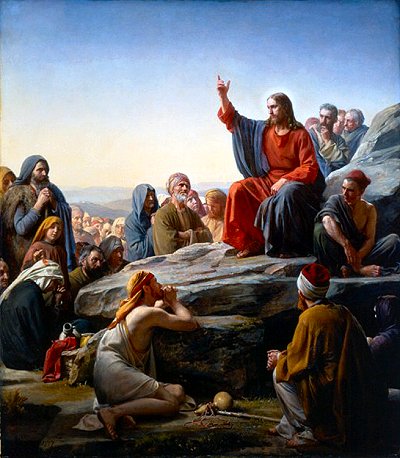
Sermon on the Mount |
|
|
Those Who Hunger & Thirst for Righteousness |
|
| Hunger & Thirst for Righteousness |
Be |
|
What did both John and Jesus call for in order to enter the Kingdom of Heaven? (Mt 3:2, 4:17) Repent - What specifically did they need to have a change in mind in regard to? What is the main theme of the SOM? Righteousness (+R) All God is, commands, demands, approves and provides in Christ Why? What had been their primary example of +R? Because they had seen only the external +R the Pharisees taught and exhibited - outward show for praise of men not God What did the King teach about +R needed to enter His Kingdom? (Mt 5:20) It must surpass the +R of the Scribes and Pharisees What then is the purpose of the beatitudes? How to be saved? Not… how to be saved But… How the saved live Characteristics of believer Ideal lifestyle of citizens of the Kingdom of Heaven who still live on planet earth The secret of a happy life Happiness that endures… Forever! What is the progression in the beatitudes? Remember each beatitude is like a clue in a "treasure map", each containing a crucial component of the secret of that leads to a truly happy life now and forever! (1) Recognize spiritual poverty (Mt 5:3) (keep on recognizing even after saved - abide in Vine, Jo 15:5, or can do absolutely nothing in our own strength. Reward: Continually possess the Kingdom of Heaven. (2) We mourn over our sins (Mt 5:4) (continual need - in these mortal bodies we continue to commit sins against God) Reward: As we confess our sins He comforts us with forgiveness and cleansing from all unrighteousness (3) Our spiritual bankruptcy and mourning should instill in us a gentle, meek spirit (Mt 5:5) one that accepts all that occurs in our life as from or filtered through the sovereign hand of God. Meekness is power under control, like our Lord (Mt 11:29) and Moses ( Nu 12:3). Who is blessed (spiritually prosperous independent of the circumstances) in Mt 5:6? Those who hunger and thirst for +R Remember that Jesus is describing the character of those who belong to His kingdom - a peculiar appetite and thirst for +R will mark them as different from the world! What is the tense of the verbs "hunger" and "thirst"? Why did Jesus select those terms? Both = present tense These are the most basic human needs. Without them we would die. What is Jesus implying? Does the natural man hunger and thirst for +R? In our fallen state there is none +R and none seek to live according to His +R standards (Ro 3:10-11). This is the state of the natural man (Ro 5:12). And so Jesus' implies that if you have absolutely no hunger and thirst for +R you need to examine the state of your soul. Spiritually dead people have no appetite for spiritual things. Dear reader, have you ever by faith accepted Christ's perfect righteousness (Read Ro 1:16-17, Acts 4:12, 16:30-31, Ro 10:9-10, Eph 2:8-9) Spiritually speaking… You are what you eat! What is the context? Clue: How available was food and especially water in ancient Palestine? Jesus is not describing genteel urgings but desperate hungering and thirsting - those who keep on acknowledging their spiritual poverty, keep on seeking to live out God's +R as a starving man longs for food or a man perishing from thirst longs for water. Are you hungry? Are you thirsty? What are you hungering and thirsting for? Remember there is the world's way (it is passing away) and the King's way (endures forever). What +R is Jesus referring to? What happens we are saved (2Cor 5:21)? How are we then to live? What does Jesus emphasize in Mt 5:21-48? When we are saved we receive the +R of Christ at that moment and forever (2Cor 5:21) Christ becomes now and forever our source of righteous living (cf 1Cor 1:30) And so based on our position in Christ, the King calls His subjects to practice +R as our lifestyle from the heart (see Mt 5:21-48 where Jesus contrasted external with internal +R) What is the King's promised reward, the blessed state of those who hunger and thirst for +R? They shall be satisfied Note: "filled" = passive voice = filling comes about from outside source. The verb "filled" was originally used meaning to fatten animals. The root word describes green grass standing in a field or meadow. It's the place where sheep can graze. The ideas are to satisfy with food, to be fed full, and completely satisfied. When? Now and in the future (cf Isa 25:6, Lu 13:29-30, 14:15, 22:28-30, Mt 8:11-12, Rev 19:9) How does this contrast with the world's way? The world seeks for material possessions which can never fully satisfy. (cf Heb 11:24-25 "passing pleasures of sin") Ex: Elvis Presley had a 1960 Cadillac with 40 coats of paint that included crushed diamonds and hardware in 18K gold. His possessions ended up possessing him and he died a tragic death, the perfect picture of a man who in the world's eyes had everything but who was not filled spiritually. What is the key to hungering and thirsting for +R (Jo 7:37-39, cf Isa 55:1-2)? (Note the verbs "come" and "drink" are both in the = present tense calling for this coming and drinking to be our lifestyle) Come to Jesus Come and drink the first time = salvation. Then… Spirit within causes us to be thirst for +R… We must then choose to come and drink We must do this continually We must continually recognize our state of spiritual poverty (Mt 5:3) acknowledging that in our own strength even as believers, we cannot initiate spiritual hunger and thirst (cf Jo 15:5, Ro 7:18) but must manifest a continual dependence on our Counselor, the Holy Spirit (Gal 5:16-17, 24), Who will lead us into all truth. He will lead us into this righteous lifestyle but we must still make the moment by moment decision that work out that lifestyle in real life situations (see Philippians 2:12-13) This beatitude corresponds to the doctrine of sanctification (present tense salvation - see diagram on Three Tenses of Salvation) Believers who recognize their spiritually poverty in that they can't live righteously (sanctification) apart from the Spirit will continually come to Him Application Do you crave God's +R? What stimulates your craving? Madison Avenue has played on this physical craving with the slogan "Bet you can't eat just one" (Potato Chip) The tragedy of our time is that so many people are wasting their lives (and beloved the church is not immune to this "disease") chasing after three things that can never satisfy--Money, sex and power. We want money - we sacrifice our families to get it. We want sex - we sacrifice our morals to get it. We want power - we sacrifice our friends to get it. And when we finally attain these goals (if we are not destroyed first) we find that none of them truly satisfy our deepest need, the need within our soul for Jesus. We end up like the richest man in the world who was asked what it would take to make him happy, to which he quipped "One dollar more!" Funny, but true. Only Jesus satisfies! What does (Jer 9:23-24) state is worth boasting in? Let's look at some men God used mightily and how this beatitude relates to their lives… David Psalms 27:4-6 What is David's "one thing"? To dwell in the house of Jehovah David hungered and thirsted for closeness to Jehovah Psalms 63:1 Had he already experienced God? What is the paradox (where is he)? David is in a dry land where there was no water David is thirsty but not for water It was his soul which was thirsty David had tasted of God because he calls him Seeking corresponds to hungering and thirsting One taste of God was not enough He wanted more of God (cf manna in the wilderness - it was a reflection of God's gracious provision to Israel in the wilderness but it was only enough for each day. They were to come back daily, Sabbath excepted, and partake of His manna. A perfect picture of our need to continually come to Him) How do we see this continual hungering and thirsting portrayed by David in Psalm 143:5-6? How would this be especially applicable to one who has drifted from the longings they once had for their first love? Psalms 143:5-6 5 I remember the days of old; I meditate on all Thy doings; I muse on the work of Thy hands. David remembered what it was like Again David pictures his soul longing as one who is in the desert and who is desperate, even potentially dying of physical thirst. For this person, the only thing that can quench the thirst is water. For David, a man after God's own heart, the only thing that can quench his innermost being's thirst was the living water of God. Don't you long to have the same experience David had? Walk by the Spirit in obedience, an internal righteousness from the heart, not self-righteousness like the Pharisees. Theirs is the righteousness that exceeds that of the scribes and Pharisees. Moses Moses had seen the glory of God on Mt Sinai as he entered into the midst of the cloud of glory Despite having seen this incredible manifestation of God, far from satiating Moses, it created in him a greater hunger after more of His righteousness. He desired to know God's ways so that he would know Him Moses did not want to go forward unless the Lord was leading. Paul: Philippians 3:7-14 Note: This was written after the Holy Spirit had come to permanently indwell all believers. Paul valued knowing Christ Jesus above all else and counted everything else as loss in comparison. He understood that righteousness can come only through faith in Christ and spoke of being conformed to His death. Believers die to self, and God's Spirit controls—His righteousness in and through them. Paul makes it clear that he had not yet attained the goal for which Christ had laid hold of him. He had not come to the place in his Christian life where his growth in spiritual maturity had been completed. And so he pressed on hungering and thirsting passionately for righteousness. And so to should we beloved! What things do you need to avoid There are few things more important A healthy spiritual appetite is one of the great secrets of progress in Christian maturity. We are what we eat. John Stott wisely counsels that… "If we are conscious of slow growth, is the reason that we have a jaded appetite? It is not enough to mourn over past sin; we must also hunger for future righteousness" (Stott, J: The Message of the Sermon on the Mount) In case you are not yet convicted, here are a few more questions… On a scale from 1 to 10 how hungry am I for spiritual things? What is my attitude toward personal righteousness? What do I hunger for in life? To what extent do I hunger for God's Word? How is my appetite for the truth of the Bible? How am I growing in my love for holiness? Do I long to be with mature Spirit-filled Christians? Would I rather be with carnal, immature people? How hungry am I for the works of the flesh? Do I sincerely pray "Lord, keep me from the temptation which so easily besets me?" Have you found yourself leaving your "first love"? (Rev 2:4). The antidote is a Spirit initiated and empowered intense hungering and thirsting for righteousness. (Rev 2:5 plus Mt 5:6) Lord God, let it not be said of us as it was of Israel… "They did not thirst when He led them" |
Beginning with Mt 5:7, the Beatitudes take on a people-to-people aspect. Thus those who are poor in spirit (Mt 5:3) respond to others by being merciful. (See also notes on Greek word eleos for mercy, notes on God's Attribute of Mercy) Wouldn't it be wonderful to know that everything was right between not only you and God, but also you and others? Enabled by the Spirit, put this beatitude into practice and you can realize that potential beloved. How can one You can falsely conclude that being merciful to others will merit (or earn) mercy being repaid to you by God. Thus they engage in diligent social action (which is commendable) with the idea of accruing merit that will be used as bargaining chips before God to receive mercy at judgment. Mt 5:3 reminds us that we are spiritual paupers desperately in need of God's grace and mercy. We mourn over our sin. We bend our wills in meekness to His perfect will. We hunger for His righteousness not our own. Thus a careful interpretation of the progression and relationship of this beatitude to the preceding (the context) leads one to conclude that beggars have no means by which to earn mercy. Note: Again we see how critical it is to arrive at correct interpretation, (through careful observation which allows one to establish the correct context) lest we wander off the trail and onto the dangerous path of futile and inappropriate application. What then is the correct interpretation of Mt 5:7? Believers show mercy for they have been shown mercy and now have God's Spirit within enabling them to do what heretofore was impossible (now it is "Him-possible"!) This will be discussed more below. Remember that the "Be attitudes" represent Jesus' description of what the ideal citizen of His kingdom looks like. A natural man (unregenerate, unredeemed by the blood of Jesus) cannot carry out these "Be attitudes". They are possible only to those who are saved (cf 2Cor 5:17)! What is the reward of the merciful? Why are they blessed? Note "they" and they alone will receive mercy ("they" is emphatic in Greek as with all the beatitudes. This emphasizes the "exclusivity" of the "club of the blessed") What is the definition of mercy? Mercy is the outward manifestation of pity Mercy is Mercy… and Thus mercy involves… Mercy looks not at what a man deserves or is worthy (remember how God saw us before Christ!) but what he needs Merciful ~ (Click more discussion of definition of mercy) Mercy is not shown in words but in action (1 Jo 3:17-18) What about non-believers showing mercy? What is the Source of mercy? (2 Cor 1:3) God God of all comfort Ultimately, the fountainhead of all mercy is God Mercy is one of God's attributes How does mercy relate to those dead in their transgressions in (Eph 2:4-7)? (because of His great love) when we were dead in our transgressions (undeserving) Made us alive with Christ Note God's mercy involves… It is only as we come to know Christ as Savior that we can "tap into" God's inexhaustible supply of mercy. Believers are no longer restricted by their meager natural resources and can now show His supernatural mercy to others through acts of kindness and goodwill. How does Jesus expand the meaning of being merciful… What is His point in the parable in Mt 18:21-35? What was the occasion? Peter asked Jesus if forgiveness "times 7" was enough Jesus said the Kingdom of Heaven could be compared to the teaching in this parable Synopsis: Slave unable to pay the king an "impossible" debt sought release and forgiveness which was granted out of compassion. The forgiven slave was unwilling to forgive a lesser debt, throwing the debtor into prison. The lord was informed, was angry and handed him to the torturers - asking should he not have had mercy even as he had received mercy? Jesus' Point: Note: As new creations in Christ, whose heart of stone has been replaced with a heart that beats for God, believers are benefactors of the rich mercy of the "King" (Eph 2:4) and as such should be motivated to show mercy, including mercy in the form of forgiveness (cf Col 3:12-13 discussed below, Eph 4:32, 5:1, Mt 6:12, 14-15, Ro 12:20-21) James Montgomery Boice explains that there are three main points to this parable… "First, there is a judgment coming. Jesus did not pass over that teaching. He spoke of forgiveness, but He also spoke clearly of what happened to the wretched man in His story. He was cast into prison until he should pay back all he owed. That judgment hangs over everyone who has not experienced God's forgiveness through Christ. Second, there is forgiveness. God does forgive. God sent Jesus to be the basis for that forgiveness. Third, the only sure proof of a person's having received God's forgiveness through true faith in Jesus is a transformed heart and a changed life. How do we get that down into the practical areas of our lives, so that we actually begin to treat others as we have been treated? It is by standing before the thrice holy God and thus seeing ourselves as the vile sinners we are—vile and yet forgiven through the death of God's own beloved Son. That awareness should humble us so that we have simply no other option but to be forgiving to others from our heart. (Boice, J M: The Parables of Jesus) (Bolding Added) How does Jesus' teaching in (Lu 6:35-36) further underscore the obligation kingdom citizens (believers) have to be merciful? God gives mercy to… Ungrateful and evil "like Father, like sons" Be merciful as your Father is merciful How are kingdom citizens described in Col 3:12-13? How should this motivate us? How are we now to behave? Chosen, holy, beloved! Liberated and motivated by the Truth… that… Each of these grand truths should inspire us to walk worthy of our high calling Consequently… (1) When we see the need to forgive - "the debt someone owes us" (2) We should recognize we have the Spirit of Christ in us Who enables us to meet that need and "forgive that debt" and (3) We should follow through and forgive the one who has a "debt" against us, recognizing that their debt is far less than the debt the Father has forgiven for us! What is the rather stern warning in James 2:13? No mercy = merciless judgment Mercy triumphs over judgment (NLT paraphrase "But if you have been merciful, then God's mercy toward you will win out over his judgment against you") The question is what judgment? Some favor this is a reference to the judgment of believers when their works will be burned up. A majority favor this as the Great White Throne judgment where those who never showed mercy, show by their lack of mercy they were not children of the Father of mercies. And thus they receive no mercy. Dear kingdom citizen, Is there anyone that your Father in heaven is calling you to forgive even as you have been forgiven? Will you be merciful Is there future mercy yet to be received? See 2Ti 1:15-18 In verse 18 Paul makes a statement that is like a wish or even a prayer for Onesiphorus that "the Lord grant to him to find mercy from the Lord on that day" "That day" in context has to be the "day" of the Judgment Seat of Christ (see study of bema or Judgment seat of Christ) where we give account for the deeds in the body and we will receive reward or loss (2Cor 5:10, Ro 14:10, 1Cor 3:10-15) "If we refuse to forgive and have absolutely no desire to forgive, we need to examine carefully whether we are Christians because forgiveness demonstrates whether we have ever been forgiven" (Hughes, R. K. Sermon on the Mount: The Message of the Kingdom. Crossway Books) How do believers show mercy? 1. Forgive Are you bearing a grudge, maintaining bitterness, seeking revenge, or holding someone in emotional hostage? The call of Christ is to forgive. You must release them from your own sentence of condemnation or indebtedness toward you. Note that this does not mean that your emotions and hurt is immediately gone? Kent Hughes says “The fact that you have forgiven and continue to forgive is a sign of grace, despite the ambivalences and imperfections of your forgiveness” 2. Have Compassion 3. Giving Mercy does not mean to throw your resources to the wind, but to use them wisely in meeting the needs of those in distress. 4. Speaking The Psalmist declares, “Let the redeemed of the Lord say so, whom He has redeemed from the hand of the adversary” (Ps 107:2, cf 1 Pet 2:9-10). Here's the point: Those on the receiving end of mercy (believers) can now show mercy to others by proclaiming Jesus Christ as Redeemer to those still in bondage to sin and under an imminent sentence of eternal death (John 3:18, Heb 12:25, 1Jo 5:10) 5. Praying Is it because others deserve to know Christ and his forgiveness? Is it because others have some good in them that might be bettered through the gospel? Are we to pray because others are longing to come to Christ? No, we pray because none of us deserve to know Christ, none deserve forgiveness, and on top of it all, none are even seeking after God (Rom 3:11). We pray because as the recipients of mercy, we long for others to know the same bounty of divine mercy through Jesus Christ. |
|
The Pure in Heart |
|
|
Remember Yuri Gagarin… Natural man does not accept the things of the Spirit of God; for they are foolishness to him, and he cannot understand them, because they are spiritually appraised. Jesus says clearly that The pure in heart They… Shall see God. We are going to look at what Jesus meant by pure in heart and seeing God… Who are the blessed? Pure in Heart Why are they blessed? They shall see God What is the definition of pure? Greek = katharos (2513) .Free from corrupt desire, sin and guilt Describes pure motive in one's heart… Single mindedness "This one thing I do" is the idea What did we see in James 4:8 that parallels this truth? Purify your hearts Cleansing the hands symbolizes external behavior; Fanny Crosby the great hymn writer who was blind from birth wrote… "It seemed intended by the blessed providence of God that I should be blind all my life, and I thank him for the dispensation. If perfect earthly sight were offered me tomorrow I would not accept it. I might not have sung hymns to the praise of God if I had been distracted by the beautiful and interesting things about me." A saint who was pure in heart - How else could a blind saint have written such words as… Perfect submission, all is at rest I in my Savior am happy and blest, Watching and waiting, looking above, Filled with His goodness, lost in His love. (play) The cultural, historical, religious context really helps one understand why and what Jesus was declaring in this beatitude, so let's take a moment and look at that context… What if you were told that there were 158 uses of katharos in the OT (the LXX) and that a majority of these uses were in the book of Leviticus (33x) describing ceremonially "clean" versus unclean? Why might Jesus have spoken of purity of heart to his audience? What had they been taught by the legalistic Pharisees? (cf Mt 23:25-28) The Pharisees specialized in purity of the external! Jesus turns the tables on his audience and calls for an internal cleanness or purity! Now let's look at seeing God… 20/20 Spiritual Vision What does "see" mean as it pertains to seeing God? We can't physically see God now With our human physical eyes So clearly Jesus is speaking figuratively Of Spiritual Vision Since God is Spirit (Jo 4:24), no man has ever seen God in His essence, His Spirit-being Remember however that Jesus declared… "from now on you know Him and have seen Him" "he who has seen Me has seen the Father" How then can we see God? Paul declares… "See" means to gaze at with wide-open eyes, Note: Greek for "understanding" (noieo) denotes clear perception, full understanding, and careful consideration. We gain insight into His invisible attributes. What does seeing equate with in this passage? Seeing ~ Understanding Paul is referring to God in nature How else can we His Word What did you learn about the verb tense ("shall see"? Middle Voice (reflexive = themselves) Note: "They" is emphatic as in the other beatitudes which means they (the pure in heart) and they alone. In other words it could be paraphrased: As believers know and follow God more, Let's look at two Psalms Psalm 15 Walks with integrity Does not slander Does no evil to neighbor Does not reproach a friend Despises a reprobate Honors those who fear the Lord Does not take a bribe against the innocent Psalm 24:1-6 He who has clean hands (right deeds) (cf mercy) Pure heart (right motives or focus) Not lifted soul to falsehood (vain idols) Not sworn deceitfully (swear in order to deceive) |
Poor in spirit can bring us into salvation so that we become possessors of the Kingdom of Heaven. This beatitude ("be attitude") is to be be our continual state (i.e., reflecting continual dependence on Christ). Naturally, our spiritual destitution gives us an awareness of the magnitude of our failure to please God by our continually independent spirit, which leads us to mourn our sin, for which God provides the blessing of His comfort in the form of forgiveness. Then, having come to Him poor in spirit and having laid aside that independent, prideful spirit, realizing how it grieves the Father's heart (cf Ezek 6:9), we submit our will in meekness to our Lord Jesus, accepting that whatever pleases Him pleases us. For this He gives us the very earth we once foolishly tried to gain in our own strength. Now, born of His Spirit, we hunger and thirst for His righteousness, ever more craving and finding Jesus to be the deepest satisfaction of our innermost being. We find that Jesus Alone satisfies. And as we feast on "the Bread of Life" and the "Living Water" found only in Christ, His Spirit transforms us from glory to glory (2Cor 3:18), and so it is only natural that as we become more and more like Him… Mercy that He gives to us cannot help but flow from our lives to those in need around us, believers and unbelievers alike. And as this river of mercy flows by the Spirit's power from our innermost being, more and more we experience His great mercies as fresh and new every morning (Lam 3:22-23). Enveloped by His abundant mercies, which remind us that we no longer have hearts of stone but of flesh (Ezekiel 36:26-27; 11:19-20, cf Deut 30:6, Jeremiah 31:34, 32:39-40, 2Cor 3:2-3, 5:17, Gal 6:15), there comes the knowledge that my heart must be pure if I would see Him more and more. My hunger and thirst for righteousness has revealed this to me. The greater the purity of my heart, the more intimately I will know Him, for there will be less and less to dim my spiritual vision. Be Thou my Vision, O Lord of my heart; |
Matthew 5:6
Hunger and thirst for righteousness
You are what you eat! So this beatitude is a test of our spiritual walk.
What is your spiritual "diet'? Jesus has set the table and given us the "appetite stimulant" in the form of His indwelling Holy Spirit. The main course is Christ's righteousness lived out in everyday life. The requirement is a continual poverty of spirit, a sense of our own inability to live this supernatural life (cf Mt 5:3) and a "desperate passion" like a deer thirsting for the water brooks (Ps 42:1-2, cf Isa 55:1-2).
How is your spiritual appetite? Appetite is defined as any of the instinctive desires necessary to keep up organic life. It is an inherent craving, passion, hunger, desire, yearning. The soul has an appetite (cf Ps 42:1-2, 107:9). The counterfeit method of "satisfying" our soul hunger and thirst is to do it the world's way, like the bumper sticker that reads "He who dies with the most toys wins!" Wrong! As Augustine said (paraphrased) our souls were made for God and nothing but God filling them will bring earthly and eternal satisfaction.
The one who gets a taste of God's righteousness, paradoxically will continue to hunger and thirst for that righteousness. We read a parallel thought in this secular quote "The appetite grows by eating" (François Rabelais Gargantua) That's the counterfeit but the authentic is Jesus' beatitude in Mt 5:6, which presents the same spiritual dynamic - he who "tastes" will desire more!
The origin of "appetite" is interesting - it is from the Latin from appetere which means to strive after, to desire ardently. What are you striving for? What is it that you ardently, even urgently desire? Is it self righteousness like the Pharisees? Is it the transient, temporally satisfying, treasures of this world? (cf 1Jo 2:17, Hebrews 11:24-25)? Is it the spiritual water (John 4:10,13-14) and bread (John 6:26-27, 32-33, 35-40) that alone quenches and at the same time creates a hunger and thirst for more?
Appetite describes one’s desire or longing for something so that it stays on the mind, and consumes the thoughts until satisfied. We can have healthy appetites that enhance our lives. Or we can have destructive appetites that drive us away from God's righteousness, and can destroy every relationship. As Pastor Phil Newton states…
"You can be sure of this: those who hunger and thirst for righteousness are Christians; and those who don’t, are not Christians. Your appetite reveals your heart."
The beatitude in Mt 5:6 rules out half hearted religion because hungering and thirsting is the only description Jesus gives of those who are truly citizens of His Kingdom. Do you remember what it was like when you first believed in Jesus? How was your appetite for Him? You could not get enough could you? He was your every thought, your every desire. But perhaps as time passed, sins crept in and lessened your longing for His presence. Has this happened in your life beloved citizen of the Kingdom? (cf Rev 2:4-5) Then go to the living waters of His Word and beg Him to create in your heart an earnest desire to seek Him, a soul that is desperately thirsting and yearning for Him as if you are in a dry and weary land where there is no water. (Read and pray Psalm 63:1, cf Ps 139:23-24, 51:10) Remember though, if you possess absolutely no desire to hunger and thirst for Christ and His righteous Life being lived out practically in and through you, then please consider performing an honest check up of the state of your soul. This is not a judgmental but a merciful, kind appeal. And frankly, ultimately, only you really know whether you possess this inner longing for righteous living.
There are few things more important then our spiritual appetite - you are what you eat beloved (cf Job 23:12, Deut 8:3)
James 1:21 helps us understand how we can cultivate our spiritual appetites for righteousness (and for holy things) - putting aside all wickedness and all that remains of filthiness and in humility (meekness) receiving the Word implanted which is able to save our souls.
Robert Murray M’Cheyne (The impact of Robert Murray McCheyne) knew this desperate hungering for righteousness, crying out
“Oh God, make me as holy as a pardoned sinner can be!”
There is nothing that will more affect your total worldview and behavior than an unflagging passion and desire to be holy like Jesus Christ. Do you desire to be like Christ? Does this burn in your heart? Does it affect the day to day decisions you make, the relationships you enter, the way you use your resources, the way you use your time, the things you do for recreation, the way you approach your education and vocation? This passion works itself out in right (righteous) living, the only life that will give genuine satisfaction, but paradoxically the very life that will leave you panting and thirsting for more of Jesus, in Whom all the treasures of wisdom and knowledge are found (Col 2:3), in Whom is your very life (Col 3:4), in whom you find everything necessary for life and godliness. (2 Peter 1:3-4+) (Play the midi All in All, pray the lyrics from the depths of your soul. Or play one of my favorite choruses Do You Not Know?/All in All - click song in the list and it will play)
John Stott speaks of the necessity for believers to continually hunger and continually thirst, writing that…
"Even the promise of Jesus that whoever drinks of the waters He gives 'will never thirst' is fulfilled only if we keep drinking. Beware of those who claim to have attained, and who look to past experiences rather than to future development! Like all the qualities included in the beatitudes, hunger and thirst are perpetual characteristics of the disciples of Jesus, as perpetual as poverty of spirit, meekness and mourning. Not till we reach heaven will we 'hunger no more, neither thirst any more,' for only then will Christ our Shepherd lead us 'to springs of living water'" (Stott, J: The Message of the Sermon on the Mount)
Pastor Ray Pritchard gives a superb analysis of what Jesus means by righteousness by examining the Jesus other uses of the same word in this sermon…
In Matthew 5:10 Jesus said, “Blessed are those who are persecuted because of righteousness.” That’s the eighth and final beatitude. When you take the fourth and eighth beatitudes together, you get something like this: We are to hunger and thirst after a kind of life that will cause some people to persecute us for our faith. So righteousness is a lifestyle that distinguishes us as true Christians and invites opposition from the world.
The second use comes from Matthew 5:20, “For I tell you that unless your righteousness surpass that of the Pharisees and the teachers of the law, you will certainly not enter the kingdom of heaven.” The Pharisees had concocted a religious system built around attendance at the temple. It involved intricate rules and regulations and meant following precepts and traditions. It was very professional and very routine. It was like wearing cheap perfume that you splash on to make yourself smell good. It’s not really a part of you and it can’t cover the odor underneath. True righteousness starts in the heart and changes a person from the inside out.
Matthew 6:1 gives us the third use of this word: “Be careful not to do your ‘acts of righteousness’ before men, to be seen by them. If you do, you will have no reward from your Father in heaven.” The Pharisees loved to pray in public--loudly! They loved to dress up in their religious garb and throw their offering in the metal container so people could hear the coins rattle. They would sacrifice anything to win the praise of others. Their religion was built around the praise of men. And they still thought God would reward them. But it was cotton-candy religion. It looked good but there wasn’t any substance there. Like Old Mother Hubbard’s cupboard, there was nothing there. By contrast, true disciples seek a righteousness that doesn’t need to be seen by others, but only by God.
Most of us already know the last verse by heart: “But seek first his kingdom and his righteousness, and all these things will be given to you as well” (Matthew 6:33). This touches the priorities of life. What is it that you are seeking in life? Fame? Fortune? Career advancement? A good salary? A secure future? A happy retirement? A marriage partner? The fulfillment of your dreams? As good as those things may be, they aren’t the most important things in life. Put God’s kingdom and God’s righteousness first. When you do, everything else you need will be given to you. Seeking “his righteousness” means letting his Word set the standard for your life. It means seeking to do that which is pleasing to him.
Put these four passages together and what do you have?
We are to hunger and thirst after …
A. A truly Christian lifestyle (Mt 5:10)
B. That changes us from the inside out (Mt 5:20)
C. So that we no longer seek the praise of men (Mt 6:1)
B. But causes us to seek God’s approval above everything else. (Mt 6:33)
If You Want It, You Can Have It
If you want righteousness, you can have it. Let me go out on a limb and make a bold statement. Whatever you want in the spiritual realm, you can have if you want it badly enough. I don’t think we appreciate the importance of that truth. Most of us are about as close to God to now as we want to be. We have about as much joy as we want, about as much peace as we want. For the most part, you are where you are right now because that’s where you want to be. If you were hungry for something better from God, you could have it.
If you want it, you can have a close walk with God.
If you want it, you can have a better marriage.
If you want to, you can do God’s will.
If you want to, you can grow spiritually.
If you want to, you can become a man of God or a woman of God.
If you want to, you can change deeply-ingrained habits.
If you want to, you can break destructive patterns of behavior…
When Jesus says, “You will be filled,” he means “You will be filled with Jesus himself!”
If you are hungry, come and eat of the Bread of Life.
If you are thirsty, come and drink of the Water of Life.
If are weary heavy laden, come and find rest.
If you are guilty, come and be forgiven.
If you are far from God, come back home again.
The French philosopher Pascal said that there is a “God-shaped vacuum” inside every human heart. Since nature abhors a vacuum, if we don’t fill it with God, we will fill it with something else. So many of us have filled our hearts with the junk food of the world. No wonder we are so unhappy. So wonder we jump from one job to another and from relationship to another…
Augustine explained both the problem and the solution: “O God, you have made us for yourself, and our hearts are restless until they find rest in you.” You will never be happy until you put God first in your life. And you can never do that until you surrender your life to Jesus Christ once and for all.
Let me give you some good news. In the kingdom of God, everything begins with a seeking heart! Salvation begins with a hungry heart. If you are tired of the life you’ve been living, you can make a new start.
Whatever you want in the spiritual realm, you can have if you want it badly enough. Jesus said, “Blessed are those who hunger and thirst for righteousness, for they will be filled. ”Are you hungry? Are you thirsty?
If you are, you can be filled. This is the promise of God to hungry hearts and thirsty souls. (Pritchard, R. Sermon on the Mount Mt 5:6)(Bolding added)
Seek (7836) (shachar) to diligently seek; to search for, seek early or earnestly, to strongly desire something, with a focus on a relationship with that object. Figuratively it means to be up early at any task with the implication of earnestness by extension. to search for with painstaking. The idea can be to rise and seek diligently early in the morning.
Warren Wiersbe writing on Psalm 63:1 comments…
King David wrote this psalm when he was in the wilderness of Judah. I never really appreciated what he wrote until my wife and I visited the same spot. What a dry and barren place it is! Look at what David wrote, "O God, You are my God; early will I seek You; my soul thirsts for You; my flesh longs for You in a dry and thirsty land where there is no water" (Psalm 63:1). In other words, David says, "Here I am in this dry, hot, dangerous wilderness, and I really would love to have some water. However, what I really want is God."
When you find yourself in a dry wilderness situation in life, what do you do? Follow the stages in David's experience. First, he seeks God. He wanted to see God's power and glory as he had seen it in the sanctuary. He wanted to see that wilderness turned into a sanctuary. David had been in the tabernacle. He had seen the glory of God, but he wasn't satisfied with that. We are satisfied to hear about God and sing about Him in church. Then we come to the wilderness. We should be like David and say, "I want to see God's glory through this wilderness experience just as though I were worshiping God in the church service."…
Wilderness experiences are good for you, for they teach you an important truth: You draw satisfaction from blessing on the inside, not from circumstances on the outside. When you face a wilderness experience, follow David's response. God will meet your needs.. (Warren Wiersbe. Prayer, Praise & Promises )
Spurgeon has the following comments on Psalm 63:1
This is said to be “A Psalm of David, when he was in the wilderness of Judah.” I suppose, therefore, that it was composed when he fled from Jerusalem because of the cruel treachery of his son Absalom. He must have been heart-broken, and stricken with the greatest possible sorrow as he fled away with his faithful followers into the wilderness of Judah. But even there he praised his God; and he did not sing unto him with old and stale Psalms, but with a new song. How restful and calm he must have been, in his great sorrow, to sit down even in the wilderness of Judah, and make a new hymn of praise unto the Lord! How gloriously he begins!
Exiled, ill at ease, hunted, exposed to danger. Yet he could sing. And some of the sweetest Psalms came out of the bitterest afflictions. God’s songsters are like nightingales that reserve their sweetest music for the night. Whenever you and I come to be in the wilderness may we refresh ourselves with such a Psalm as this.
O God, thou art my God. Or, “O God, thou art my Mighty One.”
Two very solemn words ("O God"); never use them, I pray you, as hasty, thoughtless expressions. God’s name must never be taken in vain; I fear that there are some who do this, and are not rebuked for it. When we say, “O God,” there ought to be something solemn to follow. The second word “God” signifies “my strong One, my mighty One, to Whom I can bring all my weakness and all my care; for Thou art strong enough to take care of me even in the wilderness.”
Everything else has gone, but thou art my God. There are gods of the heathen, but thou, the true and real Jehovah, art my God. Oh, what a blessed thing it is to take a firm grip of God after this fashion, “ O God, thou art my God.”
Read that sentence how you will, it is unspeakably precious. If we say “O God, thou art my God,” it shows the greatness of the possession which we thus have in having this God to be our God for ever and ever. And if we say “O God, thou art my God, it leads us to think of God and not of his gifts as our chief good.
The last psalm left the echo of power ringing in the ear, and it is here remembered. The poet has no doubts about his possession of his God; and why should other believers have any? The straightforward, clear language of this opening sentence would be far more becoming in Christians than the timorous and doubtful expressions so usual.
The psalmist has no doubt about this great fact, he does not hesitate or falter, but he makes the positive assertion, “O God, thou art my El (see Elohim: My Creator), my mighty God, strong to deliver me.” In the sixty-second Psalm, he had finished up with the power of God: “God hath spoken once; twice have I heard this; that power belongeth unto God.” So he begins this new song with the great name El, which expresses the might and power of God: “O God, thou art my El, my mighty God;”
Early will I seek Thee.
Possession breeds desire. Full assurance is no hindrance to diligence, but is the mainspring of it. He is up at cockcrowing to meet his God. Communion with God is so sweet that the chill of the morning is forgotten, and the luxury of the couch is despised. The psalmist consecrates the morning to prayer and devout fellowship. The best people have been early on their knees. The word early has not only the sense of early in the morning, but that of eagerness, immediateness… That is, “at once.” “I will not delay, but immediately will I seek thee. I will not so much seek to get out of the wilderness, or seek for comfort in the wilderness, as seek for everything in thee.”… Anyone who truly longs for God longs for him now. Holy desires are among the most powerful influences that stir our inner nature; hence the next sentence (My soul thirsteth for Thee),
People in the wilderness have hard beds to lie on, and they sleep all the fewer hours. David was up in the morning early, and he began the day with prayer to God: “Early will I seek thee.” “While the dew is on the grass, the dew of the Spirit shall be upon my soul.” He means also, “I will seek thee at once, immediately, now, without delay.” But how could he seek the God who was already his God? “Thou art my God; early will I seek thee.” Brethren, nobody ever seeks another man’s God. Till God is your God, you will not want to seek him; and when you have him, you will seek him yet more and more.
(In another comment Spurgeon writes) “Oh,” says one, “why did he seek God if God was his?” Would you have him seek another man’s God, then? No; it is because he is ours that we seek him and desire his company. If thou knowest God to be thy God thou will not be satisfied unless thou art living near him. “ Early will I seek thee.” I will not wait. I cannot wait. I cannot tarry. I must not tarry. Early will I seek thee.
My soul thirsteth for Thee.
This is a blessed experience. It is a sad thing to be without God in any degree, but it is a blessed thing when we cannot rest without him.
Thirst is an insatiable longing after that which is one of the most essential supports of life; there is no overcoming it by stoical indifference. Thirst will be heard; the whole man must yield to its power; so it is with that divine desire which the grace of God creates in regenerate people; only God himself can satisfy the craving of a soul really aroused by the Holy Spirit.
He had a strong passion for God. There is, sometimes, an unbearable, insatiable pang of the body, which you cannot forget; and David had an insatiable longing of soul, which nothing could make him forget: “My soul thirsteth for thee.”
(In another writing Spurgeon says) Thirst is one of the strongest longings of our nature. Hunger you can appease for a while, but thirst is awful. There is no staying that. When it is once upon a man he must have water or die. “ My soul thirsteth for thee. My flesh longeth for thee in a dry and thirsty land where no water is.” No means of grace; nothing to help me; no believers round about me; left alone thirsting for my God. And yet it is so precious a thing, so sure a mark of grace to thirst for God anywhere that one may be thankful even to be in a dry and thirsty land if one possesses a true thirst after God.
My flesh longeth for Thee.
By the two words soul and flesh he denotes the whole of his being. “The flesh,” in the New Testament sense of it (see flesh), never longs after the Lord, but rather it lusts against the spirit (Gal 5:17); David only refers to that sympathy which is sometimes created in our bodily frame by vehement emotions of the soul. Our corporeal nature usually tugs in the other direction, but the spirit when ardent can compel it to throw in what power it has upon the other side. When the wilderness caused David weariness, discomfort, and thirst, his flesh cried out in unison with the desire of his soul.
Long after the old times over again — for those times of heaven upon earth — those special seasons when the Lord made the veil between us and heaven to be very thin indeed, and allowed us almost to see his face. “
In a dry and thirsty land, where no water is. A weary place and a weary heart make the presence of God the more desirable. How frequently have believers traversed in their experience this dry and thirsty land where spiritual joys are things forgotten! And how truly can they testify that the only true necessity of that country is the near presence of their God! The absence of outward comforts can be borne with serenity when we walk with God; and the most lavish multiplication of them avails not when He withdraws.
And this world is just like that. To most of Christians, the six days of the week take them through the wilderness, and the Sabbath brings them to an oasis in the desert, an Elim (note), a place where there are wells of living water. But oh! what longings they have after God! What did David want when he was in the wilderness (see Psalm 63:2)? (Treasury of David, supplemented with his comments in several other writings)
Spurgeon also has a sermon based on Psalm 63:1-2…
Chrysostom tells us that among the primitive Christians it was decreed and ordained that no day should pass without the public singing of this psalm; and certainly, if we do not follow the ancient custom and actually sing the words every day, it is not because they are unsuitable, or because their spirit has died out among us.
This psalm may be said or sung all the year round.
Have we joyous days? Let us sing of the lovingkindness which is better than love.
Do the clouds return after the rain? Let us sound forth his praise whose right hand upholdeth us.
Is it summer time with our souls? Then may we express the full assurance of our faith by joyfully crying, “O God, thou art my God; early will I seek thee.”
Have we fallen upon the drought of autumn? Do the long hot days parch our spirits? Then may we chant the lay of our longing heart, “My soul thirsteth for thee, my flesh longeth for thee in a dry and thirsty land, where no water is.”
s it winter with our spirit, and does everything tend to chill us? nevertheless let us not be silenced or rendered sluggish by the cold, but let us say, “I will bless thee while I live, I will lift up my hands in thy name.”
Has the spring returned with all its wealth of fresh flowers and opening sweets? Then shall our glad voices sing aloud, “My soul shall be satisfied as with marrow and fatness, and my mouth shall praise thee with joyful lips.”
Is the day ended, and has the darkness of night settled down upon our mind? Then in the language of the psalm we will remember God upon our bed, and meditate upon him in the night watches, and because he has been our help therefore in the shadow of his wings we will rejoice. We may sing this psalm in the days of battle, when those are round about us who seek our soul to destroy it, for “they shall fall by the sword, they shall be a portion for foxes;” and we may chant it with equal appropriateness in the time of victory, when we return from the conflict with banners gleaming in the sunlight of triumph, for “the king shall rejoice in God: every one that sweareth by him shall glory.”
I know of no time and no season in which this psalm would sound unsuitably from a believing tongue.
Let us cultivate its earnestness; let us endeavor to be baptized into its spirit, let us live while we live after the fashion of holy men like David, the psalmist, whose assurance of heart sorrow could not shake, whose fertility of mind the desert could not wither, whose joy of spirit solitude could not destroy.
This psalm, however, especially belongs to any who by their circumstances or by their state of heart feel themselves to dwell in a desert land.
There is a stage of Christian experience in which we are in Egypt, and we are brought up out of it with a high hand and an outstretched arm. This symbolizes conviction, regeneration, and conversion. Then we know the passover and the sprinkling of the blood, the enemies drowned in the sea and the new song put into the mouth. Happy are they who have come thus far on their life journey. Then comes the stage of spiritual history which may be well described as wilderness experience, wherein we have little rest, much temptation, and consequent proving of heart and discovery of inward weakness. Many remain in this condition far longer than there is any need: what might be soon ended is drawn out into forty years by unbelief. Then comes that blessed stage of experience in which faith begets peace and joy; then we have crossed the Jordan and entered into rest in Christ Jesus, “in whom also we have obtained an inheritance.” In the man who is our peace we obtain an earnest of heaven and begin to divide the land of promise; “for he hath raised us up together, and made us sit together in the heavenly places.” Each man claims his lot in covenant provisions, and sits under his own vine and fig-tree, none making him afraid.
Yet even after we have been raised up together with Jesus, and have obtained citizenship in Zion, we may find ourselves in the wilderness. As David, though king in Israel, had to flee across the Jordan to escape from Absalom, so may the most assured and the most sanctified of God’s people be driven for awhile into the dry and thirsty land, where no water is, and there hide himself from the offspring of his own flesh. There are songs for the Lord’s banished ones to sing in a strange land, psalms with which to arouse the silent land, sonnets wherewith to charm the howling wilderness into a fruitful garden, and hymns to make the desert rejoice and blossom as the rose.
I purpose to address myself this morning to any of my brethren who feel themselves to be just now in a dry and thirsty land where no water is. It may be the Lord will give them deliverance by his word this morning; or if not delivered out of temporal trouble, they shall at least be made glad by his Holy Spirit and be led to magnify his name while yet in the land of drought.
Matthew Henry has the following note on Psalm 63:1-2…
David, in these verses, stirs up himself to take hold on God,
I. By a lively active faith: O God! thou art my God. Note, In all our addresses to God we must eye him as God, and our God, and this will be our comfort in a wilderness-state. We must acknowledge that God is, that we speak to one that really exists and is present with us, when we say, O God! which is a serious word; pity it should ever be used as a by-word. And we must own his authority over us and propriety in us, and our relation to him: "Thou art my God, mine by creation and therefore my rightful owner and ruler, mine by covenant and my own consent.’’ We must speak it with the greatest pleasure to ourselves, and thankfulness to God, as those that are resolved to abide by it: O God! thou art my God.
II. By pious and devout affections, pursuant to the choice he had made of God and the covenant he had made with him.
1. He resolves to seek God, and his favour and grace: Thou art my God, and therefore I will seek thee; for should not a people seek unto their God? Isa. 8:19. We must seek him; we must covet his favour as our chief good and consult his glory as our highest end; we must seek acquaintance with him by his word and seek mercy from him by prayer. We must seek him,
(1.) Early, with the utmost care, as those that are afraid of missing him; we must begin our days with him, begin every day with him: Early will I seek thee.
(2.) Earnestly: "My soul thirsteth for thee and my flesh longeth for thee (that is, my whole man is affected with this pursuit) here in a dry and thirsty land.’’ Observe,
[1.] His complaint in the want of God’s favourable presence. He was in a dry and thirsty land; so he reckoned it, not so much because it was a wilderness as because it was at a distance from the ark, from the word and sacraments. This world is a weary land (so the word is); it is so to the worldly that have their portion in it—it will yield them no true satisfaction; it is so to the godly that have their passage through it—it is a valley of Baca; they can promise themselves little from it.
[2.] His importunity for that presence of God: My soul thirsteth, longeth, for thee. His want quickened his desires, which were very intense; he thirsted as the hunted hart for the water-brooks; he would take up with nothing short of it. His desires were almost impatient; he longed, he languished, till he should be restored to the liberty of God’s ordinances. Note, Gracious souls look down upon the world with a holy disdain and look up to God with a holy desire.
2. He longs to enjoy God. What is it that he does so passionately wish for? What is his petition and what is his request? It is this (Ps 63:2), To see thy power and thy glory, so as I have seen thee in the sanctuary. That is,
(1.) "To see it here in this wilderness as I have seen it in the tabernacle, to see it in secret as I have seen it in the solemn assembly.’’ Note, When we are deprived of the benefit of public ordinances we should desire and endeavour to keep up the same communion with God in our retirements that we have had in the great congregation. A closet may be turned into a little sanctuary. Ezekiel had the visions of the Almighty in Babylon, and John in the isle of Patmos. When we are alone we may have the Father with us, and that is enough.
(2.) "To see it again in the sanctuary as I have formerly seen it there.’’ He longs to be brought out of the wilderness, not that he might see his friends again and be restored to the pleasures and gaieties of the court, but that he might have access to the sanctuary, not to see the priests there, and the ceremony of the worship, but to see thy power and glory (that is, thy glorious power, or thy powerful glory, which is put for all God’s attributes and perfections), "that I may increase in my acquaintance with them and have the agreeable impressions of them made upon my heart’’—so to behold the glory of the Lord as to be changed into the same image, 2 Co. 3:18. "That I may see thy power and glory,’’ he does not say, as I have seen them, but "as I have seen thee.’’ We cannot see the essence of God, but we see him in seeing by faith his attributes and perfections. These sights David here pleases himself with the remembrance of. Those were precious minutes which he spent in communion with God; he loved to think them over again; these he lamented the loss of, and longed to be restored to. Note, That which has been the delight and is the desire of gracious souls, in their attendance on solemn ordinances, is to see God and his power and glory in them. (Henry, M. Matthew Henry's Commentary on the Whole Bible)
See commentary
An Episode from the Life of Moses which depicts one who hungers and thirsts for righteousness…
See sermon by John Piper entitled I Will Be Gracious to Whom I Will Be Gracious
Dwight Pentecost has these thoughts on this episode in Moses' life…
This principle (that Spiritual growth, spiritual development, and spiritual health are inseparably united to spiritual appetite) is illustrated in the testimony of several spiritual giants, whose lives are recorded in the Word of God, who share with us the secrets of their hearts. Turn first to the experience of Moses. He had been called to Mt. Sinai, where God gave him the greatest revelation of Himself that any man had received since Adam’s fall. God’s holiness was revealed to Moses so that he might communicate it to the children of Israel. Moses returned from that time on the mount where he beheld the glory of God (cf Ex 24:15-18, 25:1-2, 26:1) , and in obedience to the command of God he erected the tabernacle. When it was completed, Moses went into the tabernacle and into the presence of God. There he voiced a petition that reveals the deep longing of his heart. In Exodus 33:13, Moses prayed, “If I have found grace in thy sight, shew me now thy way, that I may know thee.” Again (Ex 33:18), “I beseech thee, shew me thy glory.”
All that God had revealed to Moses of Himself, instead of satiating him, had created in Moses a deep hunger to know more of the Person who had brought him to a relationship to Himself. He did not voice a prayer of thanksgiving, “I praise thee and thank thee for what thou hast revealed,” but his prayer expressed the longing of his heart, “Shew me now thy way that I may know thee. … shew me thy glory.”
In response to Moses’ request, God set him in a cleft of the rock. Lest Moses should be consumed by the shining of God’s glory, He interposed His hand between His glory and Moses (cf Ex 33:19-23) Under the protection of God’s hand, Moses’ longing was satisfied as God revealed His glory to him. That revelation came in response to the hunger, the longing of Moses’ heart to know more. “Shew me now thy way, that I may know thee. … Shew me thy glory.” (Pentecost, J. D. Design for living : Lessons in holiness from the Sermon on the Mount. Moody Press, 1975) (Bolding added)
See notes on the attribute of God - Mercy
Ephesians 2:4 "rich in mercy"
See discussion by Richard Strauss entitled "Rich In Mercy "
James 2:13 seems like a stern warning and some commentaries interpret this warning by saying James is just speaking of believers who fail to show mercy and will suffer "loss of rewards" at the Judgment Seat of Christ. Here is William MacDonald's comment on this verse…
Verse 13 must be understood in the light of the context. James is speaking to believers. There is no question of eternal punishment here; that penalty was paid once for all at Calvary’s cross. Here it is a question of God’s dealing with us in this world as children. If we do not show mercy to others, we are not walking in fellowship with God and can expect to suffer the consequences of a backslidden condition. Mercy triumphs over judgment may mean that God would rather show mercy to us than discipline us (Mic. 7:18); judgment is His “strange work.” It may mean we can rejoice in the face of judgment if we have shown mercy to others, but if we have not shown mercy to those whom we might justly condemn, we will not be shown mercy. Or it may mean that mercy triumphs over judgment in the sense that it is always greater than judgment. The general idea seems to be that if we show mercy to others, the judgment which might otherwise fall on us will be replaced by mercy. (MacDonald, W., & Farstad, A. Believer's Bible Commentary : Old and New Testaments. Nashville: Thomas Nelson)
On the other hand, the majority of evangelical commentaries (some samples of which are shown in the comments below) feel that James is referring primarily to those who have never shown mercy… they can't because they've never received the mercy of God in forgiveness.
The excellent expository writer D. Edmond Hiebert explains this passage as follows…
It is certain that in the future judgment day there will be no mercy for him who has shown no mercy in dealing with others. He has thereby taken himself out of the merciful judgment at God's hands that our Lord promised to the merciful (Matt. 5:7; 18:23-35; Luke 16:19-31).
"Not been merciful" (literally, "not did mercy") denotes the absence of any conscious, deliberate act of mercy toward another. The practice of mercy is not natural to the unregenerate, self-centered human heart. But in the circle of the redeemed the showing of mercy toward others will manifest itself as the expression of Christian love. "Mercy" is the outward manifestation of pity and compassion in kindly action toward the misery of another. It looks not at what the man deserves but what he needs. Such mercy is not shown in voluble words but in sincere action (1 John 3:17-18).
Such refusal to practice mercy will be like a boomerang in the Day of Judgment. A merciless attitude toward others determines the development of our own character and will condition the judgment we ourselves will receive. In that day God will deal with such a one "without mercy", a negative adjective found only here in the New Testament. Their treatment of the poor man (James 2:3) was not prompted by a spirit of mercy. This statement unveils the serious implications of the practice of partiality, and James speaks frankly to expose its true evil.
"Mercy triumphs over judgment!" states the opposite and favorable side in relation to the coming judgment… The verb "triumphs" stands forward emphatically as the first word in the statement. This compound verb, appearing elsewhere in the New Testament only in James 3:14 and Romans 11:18. It means "to boast against, exult over," and pictures mercy as exulting in its victory over condemnation.
Mercy does not triumph at the expense of justice; the triumph of mercy is based on the atonement wrought at Calvary. Vaughan rightly remarks that the meaning is not
"that by showing mercy to man we procure mercy from God. That would make salvation a matter of human merit and would contradict the whole tenor of Scripture."
The practice of mercy toward others is the evidence that God's grace has produced a transformation in a person. Having himself received God's mercy, he will be able to stand in the judgment that otherwise would overwhelm him. He will be "full of glad confidence," having "no fear of judgment.""
By his conduct the merciless man reveals that he has never vitally apprehended God's mercy himself (Matt. 18:23-25). But "the man who by a merciful character proves his having a vital faith in God's mercy, is through Christ safe" and can face the coming judgment with "a blissful sense of safety."' (Hiebert, D. E. James. Moody)
John MacArthur explains this passage this way…
A person who shows no mercy and compassion for people in need demonstrates that he has never responded to the great mercy of God, and as an unredeemed person will receive only strict, unrelieved judgment in eternal hell (cf. Matt. 5:7). The person whose life is characterized by mercy is ready for the day of judgment, and will escape all the charges that strict justice might bring against him because by showing mercy to others he gives genuine evidence of having received God’s mercy." (MacArthur, J. J. The MacArthur Study Bible. Nashville: Word Pub)
KJV Bible Commentary writes that…
Mercy is so basic to Christian living that it is impossible for a true believer not to have it. Of course, the extent may vary, but he that shows none will find judgment without mercy. (KJV Bible commentary. 1997, c1994. Nashville: Thomas Nelson.)
Matthew Henry advises the reader of James to…
Take notice here, (1.) The doom which will be passed upon impenitent sinners at last will be judgment without mercy; there will be no mixtures or alloys in the cup of wrath and of trembling, the dregs of which they must drink. (2.) Such as show no mercy now shall find no mercy in the great day. But we may note, on the other hand, (3.) That there will be such as shall become instances of the triumph of mercy, in whom mercy rejoices against judgment: all the children of men, in the last day, will be either vessels of wrath or vessels of mercy. It concerns all to consider among which they shall be found; and let us remember that blessed are the merciful, for they shall obtain mercy (Mt 5:7). (Henry, M. Matthew Henry's Commentary on the Whole Bible)
Kurt Richardson explains that
A play on words is evident: judgment without mercy on those who have shown no mercy. James supplied the opposite case from the words of Jesus’ beatitude that promises mercy to the merciful (Matt 5:7). As in the parable of the unmerciful servant who was shown mercy but did not show mercy to his fellow servant (cf. Matt 18:25–35), James’s merciless hearers committed their acts in face of God’s mercy. In Jesus’ parable the act of mercy pertained to lack of money and the forgiving of debt. Receiving mercy obligates the recipient to show mercy. Although Jesus warned against performing acts of righteousness publicly for human praise, he did not mean that those acts were optional.
James’s statement about impending judgment is harsh. James did not warn of punishment for murder or adultery—although unmerciful people can be said to be murderous and adulterous in some sense. The prohibition of showing favoritism (2:1) implies the problem of a hard-heartedness that will finally be rooted out by the judging function of the law of God. The importance of mercy in human relationships is so essential because mercy is a direct indicator of repentance toward God. Although sinners are right to amend their ways, to cease sinning and to make restitution where necessary, nothing is comparable to showing mercy. Because Christians’ sins are so often toward other people, they are dependent on others’ mercy. Believers hope for mercy from others because they have received mercy from God. Amending of life and acts of restitution are far from perfect, permanent, or even adequate. More mercy is required. These acts following sin never recompense the one who has been offended. Mercy needs to be present. Failure to show mercy to those in need calls into question whether there has been any true act of repentance in face of God’s mercy. Instead of liberation, the full force of the law’s condemnation falls against those who break the law… That James had not advocated some kind of legalistic faith must not be overlooked. Consistent faith is the core concern of James’s teaching. Faith in God in no way causes God to be merciful. Rather, faith is made possible because God is merciful. Faith trusts in this merciful God. Only faith must conduct itself consistently with God’s mercy. Trusting faith is merciful faith. In order to be genuine, the believer’s faith must include mercy. (Richardson, K. A. Vol. 36: James The New American Commentary. Nashville: Broadman & Holman Publishers) (Bolding added)
Kent Hughes notes that…
Jesus’ parable (Mt 18:21-35) reveals the spiritual psychology of the soul:
an unmerciful spirit reveals a heart that has not received mercy, but the heart which has been the object of divine mercy will be merciful.
This is why the fifth beatitude proclaims, “Blessed are the merciful, for they will be shown mercy” (Matthew 5:7). If we are not merciful we have much to fear, for the beatitude becomes a curse parallel to James’ words. The unmerciful will not receive mercy. A terrifying thought!
A deeper terror in James’ words is this: favoritism is evidence of an unmerciful spirit. The merciful do not ignore the poor in favor of the privileged, but reach out to them. James is saying that a life characterized by discrimination and favoritism indicates a damned soul! This is frightening moral theology from the brother of Jesus.
Of course, there is an up-side in his final sentence: “Mercy triumphs over judgment!” (James 2:13 b). A heart full of mercy through faith in the mercy of God “triumphs over (literally boasts against) judgment.” A truly merciful Christian heart looks forward to judgment.
The beauty of James’ practical, moral approach to faith is that it cuts through all the religious words and rhetoric. We can fool each other so easily, simply by learning to quote a few Bible verses and slip in some evangelical clichés. We can learn to give a proper Christian testimony and deliver it with apparent conviction, but that does not mean our faith is real.
James is saying that real faith is not indicated only by avoiding the big no-no’s like murder and adultery, but by how we treat people, especially the needy.
Personal peril. We must by all means apply James’ tests to ourselves, but must never apply them to others, for no one can know another’s heart. The personal question James demands we ask ourselves is, how is my heart in this matter of favoritism? Is it in peril of judgment because I am transgressing the royal law? Or does it wait triumphantly? Each of us must answer for himself or herself. (Hughes, R. K. James : Faith that works. Preaching the Word. Wheaton, Ill.: Crossway Books) (Bolding added)
Warren Wiersbe comments that…
If you have true saving faith, you will practice impartiality (James 2:1–13) and see people in terms of character and not clothing. You will not cater to the rich or ignore the poor, but you will love each person for the sake of Jesus Christ. Christian love simply means treating others the way the Lord treats you and doing it in the power of the Spirit. (Wiersbe, W. W. With the Word : The Chapter-by-Chapter Bible Handbook Nashville: Thomas Nelson) (Bolding added)
Marvin Vincent has the following note on "triumphs over" writing that…
The simple verb means to speak loud, to be loud-tongued; hence, to boast. Better, therefore, as Rev., glorieth. Judgment and mercy are personified. While judgment threatens condemnation, mercy interposes and prevails over judgment. “Mercy is clothed with the divine glory, and stands by the throne of God. When we are in danger of being condemned, she rises up and pleads for us, and covers us with her defence, and enfolds us with her wings” (Chrysostom, cited by Gloag). (Vincent, M. R. Word studies in the New Testament Vol. 1, Page 3-743)
Corrie Ten Boom's example of forgiveness (from The Hiding Place) in which she describes an unexpected encounter with one of the Nazi guards who had mistreated her at Ravensbruck concentration camp, where her sister had Betsie died and she herself had been subjected to horrible indignities. Corrie writes…
It was at a church service in Munich that I saw him, the former S.S. man who had stood guard at the shower room door in the processing center at Ravensbruck. He was the first of our actual jailers that I had seen since that time. And suddenly it was all there - the roomful of mocking men, the heaps of clothing, Betsie's pain-blanched face.
He came up to me as the church was emptying, beaming and bowing.
"How grateful I am for your message, Fraulein," he said. "To think that, as you say, He has washed my sins away!"
His hand was thrust out to shake mine. And I, who had preached so often to the people in Bloemendaal the need to forgive, kept my hand at my side.
Even as the angry, vengeful thoughts boiled through me, I saw the sin of them. Jesus Christ had died for this man; was I going to ask for more? Lord Jesus, I prayed, forgive me and help me to forgive him.
I tried to smile, I struggled to raise my hand. I could not. I felt nothing, not the slightest spark of warmth or charity. And so again I breathed a silent prayer. Jesus, I cannot forgive him. Give me Your forgiveness.
As I took his hand the most incredible thing happened. From my shoulder along my arm and through my hand a current seemed to pass from me to him, while into my heart sprang a love for this stranger that almost overwhelmed me.
The consciousness of a pure heart. We must understand that God is far more interested in what we ARE than in what we DO for God. If what we are does not please His holiness, than what we do is virtually worthless. (cf 1Sa 16:7)
To have a pure heart fellowship and be accountable to those who have one… Paul says it this way…
Now flee from youthful lusts, and pursue righteousness, faith, love and peace, with those who call on the Lord from a pure heart. (see notes 2 Timothy 2:22)