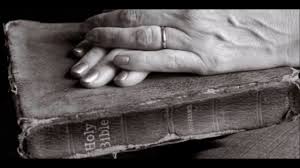
Almost 100 years ago, Andrew Murray motivated by a waning understanding regarding the truth and power inherent in God's covenants wrote that…
One of the words of Scripture, which is almost going out of fashion, is the word 'Covenant'. There was a time when it was the keynote of the theology and the Christian life of strong and holy men. We know how deep in Scotland it entered into the national life and thought. It made mighty men, to whom God, and His promise and power were wonderfully real. It will be found still to bring strength and purpose to those who will take the trouble to bring all their life (Ed comment: and their marriages) under control of the inspiring assurance that they are living in covenant with a God who has sworn faithfully to fulfill in them every promise He has given. (Two Covenants)
Covenant as defined by the Scriptures is a solemn and binding relationship which is meant to last a life time. This discussion will not deal with the signing of a so-called "marriage covenant", but instead will emphasize knowing the Biblical truth about the faithfulness of the covenant keeping God. It is my contention that when we come to know the Biblical truth regarding covenant (e.g., that covenant involves a "walk Into death", that it produces a supernatural oneness between covenant partners, and that it is ultimately withholding nothing from God), this truth will set us free (John 8:36), free to live as we should in our marriages, and not to live as we please.
Let me give you a short personal testimony (for the longer version click A Testimony to God's Grace) of the transforming effect an accurate understanding of the truth about covenant can have on a Christian marriage. The short version is that our marriage of 25 years was in serious trouble in 1995, both of us having been born again about 10 years prior. In the sovereignty of God, a Precept Ministries inductive Bible study on Covenant (click lesson 1) was offered at our local church during the day and during the evening which allowed both my wife and myself to attend. The Spirit of God took the Biblical truth on covenant and radically transformed our marriage, restoring the "years that the locusts had eaten". What transpired was nothing short of a miracle! Although, I cannot promise you a miracle, if your marriage is in need of an infusion of transforming grace, it might just be that this Precept course on Covenant is the truth that God's Spirit could use to revitalize, revive or restore your relationship. This material on Covenant is also summarized in Kay Arthur's book "Our Covenant God: Living in the Security of His Unfailing Love" if you don't feel like you have time or energy to tackle a formal eleven week in depth Bible study on Covenant. I guarantee you will learn something you did not know about covenant and it might even resurrect your marriage as it did for Marty and myself! (And you can even borrow a copy of Our Covenant God : learning to trust Him - see 123 ratings)
Dennis Rainey a well known Christian family life speaker writes that "For the past two years I have had a growing concern that the Christian community has passively watched the "dumbing down" of the marriage covenant. Marriage has become little more than an upgraded social contract between two people—not a holy covenant between a man and a woman and their God for a lifetime. In the Old Testament days a covenant was solemn and binding. When two people entered into a covenant with one another, a goat or lamb would be slain and its carcass would be cut in half. With the two halves separated and lying on the ground, the two people who had formed the covenant would solemnize their promise by walking between the two halves (Ed note: see Covenant: A Walk into Death) saying, "May God do so to me [cut me in half] if I ever break this covenant with you and God!" You get the feeling that a covenant in those days had just a little more substance than today." (from The Covenant of Marriage) (Bolding and links added)
Jack Hayford writes that "The covenant of marriage is the single most important human bond that holds all of God’s work on the planet together. It is no small wonder that the Lord is passionate about the sanctity of marriage and the stability of the home. This covenant of marriage is based on the covenant God has made with us. It is in the power of His promise to her mankind that our personal covenant of marriage can be kept against the forces that would destroy homes and ruin lives." (Hayford, J. W. The Spirit-Filled Family : Holy Wisdom to Build Happy Homes. Nashville: Thomas Nelson) (Bolding added)
Adam Holz writes "I’ve been a follower of Christ for 16 years, and I would like to think that I take the idea of covenant seriously. As I’ve considered the implications of the marriage covenant in a real relationship, however, I’ve become more aware of how committed I am to myself. A deep stream of independence and self-sufficiency flows in my soul, reinforced by three decades of learning to make life work on my own. Our culture’s love affair with individualism has shaped me much more profoundly than I knew. The covenant of marriage demands that I lay down my lifelong commitment to myself for the sake of another. God does not grant me permission to renege on my promise if disappointment or suffering in marriage seem more than I can bear. The marriage covenant is a solemn oath before God to honor, esteem and care for the wife of my youth—‘til death do us part.
Marriage is God's design - One man for one woman as we read in Genesis, the book of beginnings…
Genesis 1:1 the beginning God created the heavens and the earth… Ge 1:26 Then God said, "Let Us make man in Our image, according to Our likeness… Ge 2:18 Then the LORD God said, "It is not good for the man to be alone; I will make him a helper, who is suitable, adapted and complementary for him."
Although the word "covenant" is not actually used, Moses describes what is in its essence the first covenant of marriage writing …
So the LORD God caused a deep sleep to fall upon the man, and he slept. Then He took one of his ribs and closed up the flesh at that place. And the LORD God fashioned into a woman the rib which He had taken from the man and brought her to the man. And the man said, "This is now bone of my bones and flesh of my flesh. She shall be called Woman, because she was taken out of Man." For this cause a man shall leave his father and his mother, and shall cleave to his wife and they shall become one flesh. (Ge 2:21, 22, 23, 24)
"They shall become one flesh"
depicts the very essence of covenant
(See "Oneness of Covenant")
Genesis 2:24 could be paraphrased as follows…
For this cause a man shall leave his father and his mother, and shall stick like glue (Heb = dabaq; Lxx = proskollao) to his wife (forcibly intimating that nothing but death should be allowed to separate them) and they shall (become one flesh as they) enter into a covenant relationship.
Wayne Mack: One plus one equals one may not be an accurate mathematical concept, but it is an accurate description of God's intention for the marriage relationship.
Matthew Henry: The woman was made of a rib out of the side of Adam; not made out of his head to rule over him, nor out of his feet to be trampled upon by him, but out of his side to be equal with him, under his arm to be protected, and near his heart to be beloved.”
Jesus reinforced the idea that marriage is a covenant relationship when the Pharisees tried to trap Him (knowing that the rabbis were divided on this issue) with the question of whether or not it was lawful for a man to divorce his wife for "any cause at all". Jesus answered…
Have you not read (rather than aligning Himself with either rabbinical position, Jesus appealed to the authority of the Scriptures), that He who created them from the beginning MADE THEM MALE AND FEMALE, and said, 'FOR THIS CAUSE A MAN SHALL LEAVE HIS FATHER AND MOTHER, AND SHALL CLEAVE TO HIS WIFE; AND THE TWO SHALL BECOME ONE FLESH' (See discussion of oneness of covenant)? Consequently they are no longer two, but one flesh. What therefore God has joined together (note Who joined them), let no man separate. (Mt 19:4, 5, 6)
In ancient times, covenant was the most solemn and binding agreement into which two parties could enter. It is tragic that this vital truth seems to have been lost in much of our modern culture, including even in the church, with devastating consequences to American families and to America's (moral) foundation. As J C Ryle said (in 1800's) "The marriage relation lies at the very root of the social system of nations. The nearer a nation's laws about marriage approach to the law of Christ, the higher has the moral tone of that nation always proved to be." Woe! It is therefore critical that we understand the truth about covenant as it relates to marriage.
Twila Paris wrote the song Bonded Together which, while primarily speaking of the oneness and insolubility of our holy covenant with God by the blood of Christ, does have application to our covenant of marriage. If you are considering breaking your marriage covenant, may God's Spirit enable you not just to listen but to solemnly ponder the poignant lyrics and may this prompt your conscience and stir your heart to reconsider potential dissolution of your marriage covenant, for the sake of the glory of God our Father in His Son's Name. Amen
Like tightly woven garment, like a metal alloy,
We are put together in the strongest way.
With a common bond to join us that they cannot destroy
We are held together in the longest way.
And we could not be pulled apart
Without it tearing out a heart.
Bonded together,
You are my Father forever.
You will never leave me,
We are bonded together.
There is never space between us for a separation.
We are put together in the tightest way.
And a holy fusion causes this amalgamation.
We are held together in the brightest way.
We could not be pulled apart
Without it tearing out a heart.
Bonded together,
I am your servant forever.
I will never leave you,
We are bonded together.
You cling to me. I cling to you.
You cling to me. I am clinging too.
I am clinging too.
Bonded together,
You are my Father forever.
You will never leave me,
We are bonded together.
I am your servant forever.
I will never leave you,
We are bonded together.
Bonded together.
Bonded together.
Bonded together.
THE COVENANT OF MARRIAGE
VITAL TRUTHS TO REMEMBER
Remember that truths that are seldom pondered, will become truths that are soon forgotten.
1) Two lives become one:
In covenant you become identified with the other individual and there is a supernatural commingling of two lives.
(two becoming one flesh) "is a mystery but it is an illustration of the way Christ & the church are one." (Ep 5:32NLT)
In marriage, your family becomes your spouse's family, your desires your beloved's desires, and yes, even your finances are your covenant partner's finances (including credit card bills!). (See Oneness of Covenant; see also Supplementary Notes on Oneness)
2) There is a sign TO REMEMBER WHICH SERVES AS A WITNESS AND A MEMORIAL (See note)
When God entered covenant with Noah, He gave Noah the rainbow which was to be a testimony that God would remain forever faithful to keep the covenant never again to flood the earth so as to destroy all flesh.
In Genesis 9:16 the LORD God testified that…
When the (rain) bow is in the cloud, then I will look upon it, to remember the everlasting covenant between God and every living creature of all flesh that is on the earth.
When a you enter covenant with your beloved, the sign is usually a ring which serves as a constant reminder (memorial) of the solemn and binding of your marriage covenant.
THE RING:
A COVENANT MEMORIAL
To the present day, an important ceremony at the coronation of a sovereign of Great Britain, is the investiture of the sovereign per annulum, or "by the ring." The ring is placed on the fourth finger of the sovereign's right hand, by the Archbishop of Canterbury; and it is called "The Wedding Ring of England," as it symbolizes the covenant union of the sovereign and his people. A similar practice prevails at the coronation of European sovereigns generally. It also runs back to the days of the early Roman emperors, and of Alexander the Great.' That a ring, or a circlet, worn around a thumb, or a finger, or an arm, in token of an endless covenant between its giver and receiver, has been looked upon, in all ages, as the symbol of an inter-union of the lives thereby brought together, is unmistakable ; whether the covenanting life-blood be drawn for such inter-commingling, directly from the member so encircled, or not. The very covenant itself, or its binding force, has been sometimes thought to depend on the circlet representing it ; as if the life which was pledged passed into the token of its pledging. Thus Lord Bacon says: "It is supposed [to be] a help to the continuance of love, to wear a ring or bracelet of the person beloved " I and he suggests that "a trial should be made by two persons, of the effect of compact and agreement; that a ring should be put on for each other's sake, to try whether, if one should break his promise the other would have any feeling of it in his absence." In other words, that the test should be made, to see whether the inter-union of lives symbolized by the covenant-token be a reality. On this idea it is, that many persons are unwilling to remove the wedding-ring from the finger, while the compact holds.' (Read online - The Blood Covenant)
3) THERE IS A CHANGE OF NAME (See note)
In Genesis 17:5, 15 when God reaffirmed His covenant with Abram, God said
No longer shall your name be called Abram, but your name shall be Abraham; for I will make you the father of a multitude of nations." “As for Sarai your wife, you shall not call her name Sarai, but Sarah shall be her name.
As the wife takes on her husband's name, this change symbolizes the supernatural identity and oneness God intended for the partners who had entered the marriage covenant.
4) THERE IS A MEAL SHARED (See note)
Biblical covenants were often commemorated with a "covenant meal". The most famous "covenant meal" is of course found in the New Covenant where we read that the Lord Jesus on the night
in which He was betrayed took bread and when He had given thanks, He broke it, and said, “This is My body, which is for you; do this in remembrance of Me.” In the same way He took the cup also, after supper, saying, “This cup is the new covenant in My blood; do this, as often as you drink it, in remembrance of Me. (1Co 11:24, 25)
In a short while you will probably celebrate your new covenant relationship by feeding each other wedding cake which is a picture that you are now sharing a common life, that two lives have become one.
Since a shared meal speaks of a shared life and it may have been many years since you fed each other wedding cake, consider asking your local baker to make you a wedding cake and to invite your children and friends over to share wedding cake with you and to bear witness as you feed each other a piece of your "covenant cake." Symbolically reenacting this aspect of your covenant ceremony before others will have a powerful impact not just on you and your spouse but on all those who witness this solemn and binding event. Since God instituted this covenant and it is His will that it remain unbroken, you can be assured that His supernatural hand of blessing will be on your "covenant cake" ceremony. As Jesus said "Let your light shine before men in such a way that they see your good works and glorify (receive a proper opinion of) your Father Who is in heaven (unseen in His essence but depicted to others by the supernatural good works His Spirit enables you to carry out) (Matthew 5:16).
5) THERE IS A FRIEND WHO WILL STICK CLOSER THAN A BROTHER
Related resource: See discussion of the Oneness of Covenant
As you read the following dictionary definitions of the word friend, you might see if any of these definitions apply to you and your covenant partner. Webster says a friend is one attached to another by affection. A friend is one who is regarded with liking, affection, and loyalty. A friend is a person with whom one has a bond of mutual affection. A friend is a person with whom one is on good and, usually, familiar terms. A friend is one who entertains for another sentiments of esteem, respect and affection, which lead him or her to desire the other's company, and to seek to promote their happiness and prosperity.
Friend is a covenant term and is beautifully seen in God's covenant with Abraham. In 2Chronicles 20 there is a marvelous account of God's deliverance of Judah's king, Jehoshaphat. Upon hearing of the enemy's advance against him, King Jehoshaphat cried out to God, appealing to His covenant relationship with Israel and reminding Him of who He is and of His great power:
O LORD, the God of our fathers (an allusion to God's covenant with the patriarchs, Abraham, Isaac and Jacob), art Thou not God in the heavens? And art Thou not ruler over all the kingdoms of the nations? Power and might are in Thy hand so that no one can stand against Thee. Didst Thou not, O our God, drive out the inhabitants of this land before Thy people Israel, and give it to the descendants of Abraham Thy friend ('ahab) forever (the promise of the land would endure because it was an unconditional promise to Israel based on the the Abrahamic Covenant which itself was an unbreakable, everlasting covenant. Yes, Israel has been disobedient, but that does not void God's promise - see Deut 9:4-7 -See discussion of Abrahamic vs Mosaic Covenant)? (2Chr 20:6-7)
James also associates the concept of covenant with friend explaining that when Abraham offered up Isaac his son on the altar, his faith was shown to be working with his works and thus…
The Scripture was fulfilled which says, "AND ABRAHAM BELIEVED GOD (Abrahamic covenant), AND IT WAS RECKONED TO HIM AS RIGHTEOUSNESS (He was reckoned by God to be a saint, a holy one, by grace through faith)," and he was called the friend of God. (Jas 2:22, 23)
Compare God's word in Isaiah:
But you, Israel, My servant, Jacob whom I have chosen, descendant of Abraham My friend (Isa 41:8)
Comment: In Isaiah 41:8, the Hebrew word for friend is ahab (0157) which is the verb meaning to love (first used of Abraham's love for his son Isaac - Ge 22:1-devotional commentary. The Septuagint (Lxx) translates ahab with agapao - see word study). Unlike the English term, the Hebrew word has less to do with emotion and more to do with actions. Literally God is addressing Abraham as "the one loving Me." God loved Abraham, and Abraham responded by loving God (cf. 1John 4:19). The basis for their mutual love was their immutable unconditional covenant. Can you see how this OT picture would have application to a husband and wife who have entered into the covenant of marriage?
In Genesis God entered into an unbreakable covenant with Abram (Abraham) (Read Ge 15:12-18 noting Who initiated the covenant) and later declared of His covenant partner and friend…
Shall I hide (keep secret, conceal, cover) from Abraham what I am about to do, since Abraham will surely become a great and mighty nation, and in him all the nations of the earth will be blessed?" (Genesis 18:17-18)
Comment: In other words, friends share "secrets" and they do so because there is a trust between them. A husband and wife in covenant should be willing to be open, authentic, transparent and "real" with their covenant partner because he or she is their friend! Does this describe your relationship with your spouse?
Abraham was the friend of God by virtue of entering covenant with Him. As friends in the marriage covenant there should be no secrets from the covenant partner. Friends are transparent and honest with one another.
Does friendship describe your marriage? If it does not, it can yet describe your marriage. No situation is too hopeless for the Covenant Keeping God, for nothing is impossible for Him (Luke 1:37, cp Ge 18:14, Jer 32:17, 27). If you can't answer affirmatively, then let me encourage you to humbly, prayerfully allow your Teacher, the Holy Spirit (1Cor 2:11-13), to take these truths about the covenant of marriage (including friendship) and use them to transform you into the image of Jesus (2Cor 3:18-note) and renew your mind (Eph 4:23-note, cp Ro 12:2-note) regarding the value of your spouse as your best friend. After 45 years in the covenant of marriage, I can honestly say that my wife is still my best friend.
Solomon was correct when he said that "a friend loves at all times." (Pr 17:17-Read William Arnot's discussion of "Friendship") Spurgeon writes "A friend loves at all times.” Having once given his heart to his chosen companion he clings to him in all weathers, fair or foul; he loves the other none the less because he becomes poor, or because his fame suffers an eclipse, but his friendship like a lamp shines the brighter, or is made more manifest because of the darkness that surrounds it (Ed: Recall the covenant vows many couples made to each other at the altar of God - "I give you this ring [the circle being a sign of an unbroken covenant], wear it with love and joy. I choose you to be my wife, to have and to hold from this day forward for better or for worse, for richer for poorer, in sickness and in health, to love and to cherish as long as we both shall live."). True friendship is not fed from the barn floor or the wine vat; it is not like the rainbow dependent upon the sunshine, it is fixed as a rock and firm as granite, and smiles superior to wind and tempest. If we have friendship at all, brethren and sisters, let this be the form it takes: let us be willing to be brought to the test of the wise man, and being tried, may we not be found wanting.
God grant us covenant marriages that testify of the truth to a skeptical world that “A friend loveth at all times.” Amen
Of course the supreme example of covenant friendship was our Lord Jesus Christ Who said to His disciples "Greater love has no one than this, that one lay down his life for his friends." (John 15:13) When a husband loves His wife as Jesus loved the church, enabled by the Spirit of God, he will lay down his life for his wife (Eph 5:25-note only possible because of Eph 5:18-note!). Indeed, "a pledge to take a woman for his wife commits a man to sharing his life in its entirety." (W J Chantry) As Robert Hawker says "Well might the spouse in the Song of Songs, in the contemplation of such an unheard of example of love (Jesus' love for His bride - cp Ro 5:8), exclaim…
"He is wholly desirable.
This is my beloved, and
this is my friend!"
(Song 5:16-note)
And again Jesus told His disciples "No longer do I call you slaves, for the slave does not know what his master is doing; but I have called you friends, for all things that I have heard from My Father I have made known to you." (John 15:15) Notice again the "openness" that exists between friends, a willingness to share "secrets" with the other party! As Chantry quipped "How soon marriage counseling sessions would end if husbands and wives were competing in thoughtful self-denial!"
Related Resources:
- Friendship by J. Stalker
- Friendship by F Hastings
- Jonathan the Friend by T Guthrie
6) THERE ARE WITNESSES TO TESTIFY
In the Old Testament, the solemnity of cutting covenant was often witnessed by setting up a Memorial or Sign. For example, when Jacob cut a covenant with his father-in-law Laban, the latter responded…
So now come, let us make a covenant, (cut a covenant) you and I, and let it be a witness (Hebrew = 'ed = someone or something that would be accepted to bear a true testimony and in this context refers to an object which symbolized this solemn event as a memorial) between you and me." Then Jacob took a stone and set it up as a pillar. And Jacob said to his kinsmen, "Gather stones." So they took stones and made a heap, and they ate there by the heap. Now Laban called it Jegar-sahadutha (Aramaic for "witness heap") , but Jacob called it Galeed (Hebrew for "witness heap") And Laban said, "This heap is a witness between you and me this day." Therefore it was named Galeed; and Mizpah (watchtower), for he said, "May the LORD watch between you and me when we are absent one from the other. If you mistreat my daughters, or if you take wives besides my daughters, although no man is with us, see, God is witness between you and me. And Laban said to Jacob, "Behold this heap and behold the pillar which I have set between you and me. "This heap is a witness, and the pillar is a witness, that I will not pass by this heap to you for harm, and you will not pass by this heap and this pillar to me, for harm. "The God of Abraham and the God of Nahor, the God of their father, judge between us (Solemn and Binding)." So Jacob swore by the fear of his father Isaac. Then Jacob offered a sacrifice on the mountain, and called his kinsmen to the meal (covenant meal); and they ate the meal and spent the night on the mountain. (Ge 31:44-54)
Mizpah meant watchtower and was identified by a heap of stones (pillar - Ge 31:51) which served as a Memorial (a preservative of one's memory) and witness at Mizpah (watchtower) that neither party would break their solemn, binding covenant, and God was called as their Witness (Ge 31:49). Similarly when a man and a woman enter into the solemn, binding covenant of marriage and become one flesh (Ge 2:24), there are always witnesses present who serve to testify that the covenant has been cut. And of course, even as with the covenant between Jacob and Laban, God is the ultimate witness.
WEDDING PICTURES:
A WITNESS
I would also propose that even the wedding pictures (which most couples save to look at or to show their children years later) serve as a memorial and pictorial witness of that glorious, wonderful day when a man and a woman who were so in love with each other mysteriously became one flesh. Humans are a forgetful lot, and this seems to be especially true when it comes to marriage vows. It is good to be reminded of the solemn nature of the covenant that we entered into when we said "I do." Life "happens" and couples tend to drift apart, and thus are in need of frequent reminders. When was the last time you looked at your wedding pictures with your spouse or children? Perhaps you kept a copy of the marriage vows you made to your spouse and the words of those vows which you spoke serve as a reminder and witness to that special day. If so, it would be wonderful to periodically read them to each other as a reminder (memorial) of the solemn nature of the covenant into which you entered. If you don't have a copy of your wedding vows, let me suggest you go the link Sample Marriage Vows and read through several of these vows together as a couple, asking God's Spirit to stir up the memories of your blessed wedding day. Unattended fires tend to grow cold and go out, but are kept burning by stoking the embers.
When Dennis Rainey's daughter, Ashley, was married, he wrote that "as Michael and Ashley contemplated their wedding day, we talked about how they could exalt God and about the pledge they would make with God and with one another. Their vows were taken to an artist who then created a large document titled, "Our Holy Covenant on Our Wedding Day." During the ceremony Ashley and Michael signed the document after they had recited their vows. Family members were then asked to come forward and sign their names as witnesses of their covenant. Then the pastor asked for a few members of the audience to sign it as well. By doing so, these people not only became formal witnesses of the covenant, but they also agreed to pray for Ashley and Michael's marriage and hold them accountable to keep their vows to one another. Later at the reception more than 100 people signed their covenant, filling the parchment. As I stood by the covenant I heard people say, "They are really serious about this, aren't they?" I couldn't help but think, "Isn't this what marriage was intended to be in the first place? The most sacred promise we will ever make to another person?" (Ashley and Michael's Covenant) (Bolding added)
Covenant in the Bible clearly represents a serious commitment between two parties. The covenant between Jacob and Laban was so serious that God was called to serve as a witness! In view of the divinely ordained nature of the covenant of marriage, it too is a solemn, binding agreement that is witnessed by the attendees. Sadly, too few married couples or wedding witnesses have a sense of the seriousness of the covenant or of their role as life long witnesses. Sadly, the truth of the covenant of marriage has become a thing of the past in our modern, fast food, fast internet, fast marriage culture. Have you been a best man or chief bridesmaid at a friend or relative's wedding? Have you kept in touch with them as the years have passed? Are you keeping them accountable, asking them about their faithfulness to their covenant and reminding them of the solemn, binding nature of the covenant into which they entered?
7) THERE IS A COVENANT PARTNER TO DEFEND
First, take a moment to ponder (especially in light of your marriage covenant) Webster's definition of the verb to defend = To protect a person from harm or danger. To keep safe from attack. To cover (see Love Bears all things). To shield. To safeguard. To shelter. To support someone in the face of an onslaught of criticism (How often do we criticize our covenant partner rather than lovingly defending them from criticism?). To repel a charge or accusation; to oppose; to protect by opposition or resistance; to support or maintain; to prevent from being injured. To fortify against danger or violence; to set obstacles to the approach of any thing that can annoy.
We see this principle of defense of a covenant partner positively illustrated in the covenant David cut with Saul's son Jonathan. In this exchange we see that covenant is stronger than paternal ties (Jonathan was more committed to his covenant partner David than to his father, King Saul!) and stronger than personal ambition (Jonathan would have been next in line to be king but willingly released that right to his covenant partner David!). This covenant relationship (which some have misinterpreted as a homosexual partnership - see discussion) clearly took priority over all other relationships. See also David Invested with Royal Robes.
First Samuel records that "Jonathan made (cut) a covenant (karath berit/berith/beriyth) with David because he loved him as himself (Self love is natural for fallen men, but to love another with that same quality of love is supernatural!). And Jonathan stripped himself of the robe that was on him and gave it to David, with his armor, including his sword and his bow and his belt. (1Sa 18:3-4) (See discussion of the significance of this action)
Henry Morris rightly concludes that "The practice of bestowing one's garments and weapons upon another is known from archaeological discoveries to have symbolized the transfer of one's position to another. Jonathan evidently knew that God, through Samuel, had chosen David to be the next king over Israel instead of himself (1Sa 16:13), and he gladly accepted this as God's will." (Defenders Study Bible)
This exchange is also a picture of "putting on your covenant partner" or of the two becoming one (Ge 2:24, Ep 5:31). The exchange of armor is a picture of a willingness to take on the other's enemies, one covenant partner saying to the other in essence "I am now bound to defend you from your enemies." (Husbands, compare 1Co 13:7 - see discussion below). Remember that covenant in ancient times was a bond in blood (cp Ge 15:9, 10, 18). Therefore, when two people or parties entered into covenant, they understood that everything they had was now held in common, even each other's enemies (cp "credit card debts", etc!). Whenever one was under attack, it was the duty of the other to come to his aid.
What were David and Jonathan saying? They were saying that "Because you and I are no longer living independent lives, but are in covenant and because covenant is the most solemn, binding agreement that can be made between two parties, I am bound by covenant to defend you from your enemies. Those who attack you become my enemies."
Because of their covenant which was binding unto death, Jonathan committed to defend David at all costs, first Samuel recording his promise to David that…
If it please my father to do you harm, may the LORD do so to Jonathan and more also ("covenant is death to one's self interests"! Note what love is compared to in 1Sa 20:17! Husbands read how we are to love our wife! Eph 5:25-note), if I do not make it known to you and send you away, that you may go in safety. And may the LORD be with you as He has been with my father (As an aside covenant partners pray a blessing upon the other party. Do you pray for your spouse daily?). (1Sa 20:13)
We see this principle of covenant defender later when Jonathan knowing that his father King Saul seeks to kill David, says to David "Go in safety, inasmuch as We have sworn to each other in the Name (Name stands for all of the attributes) of the LORD (Notice Who Jonathan sees as the ultimate witness of their covenant!), saying, 'The Lord will be between me and you, and between my descendants and your descendants forever (see fulfillment in life of Mephibosheth).'' Then he rose and departed, while Jonathan went into the city." (1Sa 20:42)
In the New Testament Luke records Paul's encounter with the resurrected Christ, an incident which clearly demonstrates the covenant commitment of the Lord to defend those who have entered the New Covenant by faith in His fully atoning sacrifice on the Cross - "And it came about that as he journeyed, he was approaching Damascus, and suddenly a light from heaven flashed around him; and he fell to the ground, and heard a voice saying to him, “Saul, Saul, why are you persecuting Me?” And he said, “Who art Thou, Lord?” And He said, “I am Jesus whom you are persecuting" (Acts 9:3-5).
Who had Saul been persecuting? He had been persecuting those in covenant (the New Covenant in His blood - Jer 31:31, Lk 22:20, 1Co 11:25) with the Lord Jesus Christ even "breathing threats and murder against the disciples of the Lord." (Acts 9:1-2)
And so we see that Scripture clearly teaches that those in covenant are responsible to defend their covenant partner. How important is this directive in the covenant of marriage in a culture which has lost the knowledge of this critical truth. In fact, tragically to often marriage partners instead of being covenant defenders become contentious attackers (verbally and sometimes physically)! Beloved, this was not God's original design for marriage covenant. If there are "walls" and/or "wounds" in your marriage, ask God to search your heart and see if there is any hurtful way in it toward your spouse and then by His Spirit to lead you in the everlasting way. (Ps 139:23-24). As someone has well said, marriage is a perpetual test of our character! Are you as convicted as I am?
How does a husband defend his covenant partner? (As a husband I speak primarily to the men, but the principle is applicable to wives.) There are many ways to answer this question but one that might surprise you is to read (meditate on) the profound little book of Ruth, observing especially how Boaz the kinsman redeemer interacts with Ruth the Moabitess. Study the table on The Character of Boaz's Character (along with the Scriptures and the comments), where you will notice first that Boaz was a "God saturated man" (See also Ru 2:4-7, Ru 2:8-11, Ru 2:12-14). As husbands we should pay very close attention to Ruth 2:15-16…
When she rose to glean, Boaz commanded his servants, saying, "Let her glean even among the sheaves, and do not insult her (translated in the Lxx with kataischuno = to put to shame! To humiliate. Husbands have you ever done that to your wife in public?) And also you shall purposely pull out for her some grain from the bundles and leave it that she may glean, and do not rebuke her." (Read the explanatory notes).
Marriages may be made in heaven,
but man is responsible for the maintenance work!
Also pay careful attention to how Boaz treats Ruth in chapter 3 where he "covered" her and defended her honor (Ru 3:1-3, Ru 3:4-7; Ru 3:8-12, Ru 3:13-15, Ru 3:16-18), much as did Joseph centuries later…
Now the birth of Jesus Christ was as follows. When His mother Mary had been betrothed (engagement or betrothal in Jesus' day could only be broken by divorce and so was as binding as the actual covenant of marriage!) to Joseph, before they came together she was found to be with child by the Holy Spirit. And Joseph her husband, being a righteous man, and not wanting to disgrace (Greek verb paradeigmatizo from para = beside, in view, publicly. To expose to public disgrace) her, desired to put her away secretly. 20 But when he had considered this, behold, an angel of the Lord appeared to him in a dream, saying, "Joseph, son of David, do not be afraid to take Mary as your wife; for that which has been conceived in her is of the Holy Spirit. (Mt 1:18-20!)
In 1 Corinthians 13 we read God's convicting definition of love which is often read at marriage ceremonies. Notice that Paul's definition gives us a number of practical ways a husband can defend his covenant partner
Love is patient (has a "long fuse" so to speak. Do you?), love is kind (provides what the other needs), and is not jealous; love does not brag and is not arrogant, does not act unbecomingly; it does not seek its own, is not provoked, does not take into account a wrong suffered, does not rejoice in unrighteousness, but rejoices with the truth; bears all things, believes all things, hopes all things, endures all things. (1 Corinthians 13:4,1Co 13:5-6, 1 Corinthians 13:7,8).
Comment: What is fascinating in this "divine definition" of love is that (1) all 14 descriptions are verbs and (2) all the verbs are in the present tense, which speaks of continuous action. In other words, the feeling or action Paul describes with each verb is a description of one's lifestyle or habitual practice. Of course, I can hear you saying "No marriage partner could love like that continually!" And I totally agree. So how is it humanly possible to habitually display these lofty qualities of love? While it is not "humanly" possible, it is "super-humanly" possible. Indeed, while such excellent love is "impossible," it is "Him-possible!" Each morning we have the "opportunity of a lifetime" to present ourselves to God as living sacrifices (Romans 12:1, cp Ro 6:12-14) and to yield our will to God's will which is good and acceptable (pleasing) and perfect (Romans 12:2b), doing so without reservation or hesitation as we make a conscious choice to rely on His Holy Spirit to fill us and control us (Ephesians 5:18), so that we might walk forth into the new day by the enabling power of the Spirit and not by the "power" of the fallen flesh (Gal 5:16, Gal 5:17). Then, throughout the day the Spirit of Jesus in us continually gives us the desire and the power to work out our salvation (displaying divine love) in fear and trembling. (Php 2:12, Php 2:13NLT). And Who gets the glory when we display good works of divine-like love? God the Father! (Matthew 5:16). And remember the previous discussion is not meant to put you under the law but under grace. Even the best spouses cannot love continually like Paul describes in 1 Corinthians 13:4-8. It follows that this description of Spirit enabled God-like love speaks not of "perfection" but of "direction." How would you describe the "general direction" of your love toward your spouse this past week?
Take time to read and meditate on this passage in light of the truths you've seen about covenant calling one to defend their covenant partner.
Does William Shakespeare's Sonnet 116 on love describe the love you display toward your spouse?
Let me not to the marriage of true minds
Admit impediments. Love is not love
Which alters when it alteration finds,
Or bends with the remover to remove.
O no! it is an ever-fixed mark
That looks on tempests and is never shaken;
It is the star to every wand'ring bark,
Whose worth's unknown, although his height be taken.
Love's not Time's fool, though rosy lips and cheeks
Within his bending sickle's compass come;
Love alters not with his brief hours and weeks,
But bears it out even to the edge of doom.
If this be error and upon me prov'd,
I never writ, nor no man ever lov'd.
You have read and perhaps even heard someone teach on 1Cor 13:7 (notes) but you still may not fully understand what Paul meant by love bears all things.
The Greek verb translated bears is stego which is derived from a root word, steg, which means to cover or conceal. A related derivative word stege which is used to describe a thatched roof or covering for a building. The idea conveyed by the verb stego is first to protect by covering, then to conceal, to cover over or to forebear. At its core stego denotes an activity which blocks entry of something from without or exit from within. In secular Greek stego was used to describe a ship as that which "held back" the salt water or of that which kept the ship tight (and by implication allowed it to stay afloat! Interesting picture in a discussion on marriage!) Figuratively, stego conveys the idea of covering over by maintaining silence.
Can you see how this definition of bears all things relates to a husband's role as covenant defender of his marriage partner? Your understanding of and commitment to your marriage covenant produces a Spirit empowered (Ep 5:18) love which covers over the faults of your covenant partner, (rather than exposing her faults to other in off color humor or even with a desire to embarrass her. cp Pr 12:16 where "dishonor" = insult, disgrace or shame) HUSBANDS! Never, ever do this to your covenant partner! Read the notes attached to Ruth 2:15, 16-notes). To conceal a matter protects one's covenant partner. How are you doing in this area? Remember you can only genuinely carry this action out under the control (filling) of the Holy Spirit and His power. Note also that stego is in the present tense, which indicates that this is to be one's continual or habitual activity! Husbands, just try to carry out this exhortation in your own strength. You might make a day or even a week, but eventually your "natural" strength will collapse. Verses like this and Eph 5:25 calling (present imperative = commanding this attitude and action as a lifestyle) for husbands to continually love their wives with Christ-like, selfless agape love, make it very clear the only way to have the desire and power (Php 2:13NLT) is to walk by faith (2Co 5:7) and in God's Spirit (Gal 5:16).
Life Action Ministries in their handout "Honoring the Covenant of Marriage" states that…
Marriage by definition is:
1. A holy covenant
2. Initiated by God
3. Conditioned on an irrevocable promise
4. Oneness with an imperfect person of the opposite sex
5. For a lifetime
6. To glorify God
- When Marriage Is Hard
- Time to Talk
- Why Is Marriage a “Mystery” in Ephesians 5?
- The Mystery of Marriage: Love and Respect
- Marriage: Becoming One
- In Training to Love
- Love Means Removing Bitterness
- How Can Marriage Succeed?
- “Root, Root, Root for the Home Team!”
- Five Weeds That Kill Marriage
- The Value of Affirmation in Marriage
- Testimonies of Rescued Marriages
- Three Things to Do When You Feel Betrayed
- It's Time to Man Up!
- Weathering the Storm
- Why Won't They Change?
- Two Things You Need to Say Every Day
- I Do
- Change Your Purpose Pronouns
- Broken and Shattered
- Breaking the Crazy Cycle
- Five-Part Marriage Series from Song of Solomon
- The Mystery of Marriage
- The Watsons’ Story
- Let's Talk: Dealing with Differences
- Two Things You Need to Say Every Day
- The Fairy Tale Myth
- Seven Commitments I Made
PROVERBS 2
In Proverbs there is a reference which appear to relate to the covenant of marriage, Solomon writing that …
wisdom will enter your heart, and knowledge will be pleasant to your soul. Discretion will guard you. Understanding will watch over you, to deliver you from the way of evil, from the man who speaks perverse things; from those who leave the paths of uprightness, to walk in the ways of darkness, who delight in doing evil, and rejoice in the perversity of evil, whose paths are crooked, and who are devious in their ways, to deliver you from the strange woman, from the adulteress who flatters with her words that leaves the companion of her youth, and forgets the covenant (beriyth) of her God. (Proverbs 2:10-17)
Although one might interpret forgets the covenant of her God as a reference to the Mosaic covenant with its prohibition against adultery (cf Ex 20:14), the context favors that this statement is a reference to the marriage covenant of the adulteress.
Dr. John MacArthur for example comments that…
In a wide sense this could be the covenant of Sinai (Ex 20:14), but specifically looks to the marriage covenant of Genesis 2:24, with its commitment to fidelity. (MacArthur Study Bible)
God considers marriage to be a covenant relationship. Furthermore marriage is a God-sealed Covenant for in (Mark 10:8, 9) Jesus teaches that God Himself joins the husband and the wife together.
AND THE TWO SHALL BECOME ONE FLESH; consequently they are no longer two, but one flesh. What therefore God has joined together (suzeugnumi yoked together as oxen and so coupled together as a team), let no man separate (put space between, isolate one from the other).
Comment: syzeúgnymi ("closely-yoked") is only used for marriage in the NT - a union in which a husband and wife live better for the Lord together, than either would do alone. And notice the picture of two oxen yoked as a team. How difficult for them to labor if them are not working in harmony with the other party. And such is true of the marriage "yoke" (cp Jesus the Bridegroom yoked to His covenant partner in Mt 11:28-30 where His yoke is easy!)
The verb joined together is in the aorist tense which speaks of a definite completed action (in context in the past) and active voice indicates He (God) actually did this! This is a mystery but it is truth.
As God by creation made two of one, so again by marriage He made one of two! (Ge 2:20-23) --Thomas Adams
MALACHI 2:14
In a parallel passage which also emphasizes the truth that God considers marriage to be a covenant, the prophet Malachi explains to his Jewish audience why Jehovah was paying no attention and taking no pleasure in their offerings, writing…
Yet you say, ‘For what reason?’ Because Jehovah has been a witness (thus God is able to speak of their violation of covenant since He had witnessed their matrimonial pledges of mutual loyalty) between you and the wife of your youth, against whom you have dealt treacherously, though she is your companion (this Hebrew word is derived from the root habar meaning to fasten together, to join together or to unite and in context implies harmony and working together to achieve life’s goals while sharing the hardships, pain and joys; LXX = koinonos = derived from koinos which means that which is in common or shared by all. Koinonos thus describes one who participates with another in an enterprise or matter of joint concern!) and your wife by covenant (beriyth = a serious, solemn, binding oath). (Malachi 2:14-note)
God goes on to add…
I hate divorce," says the LORD, the God of Israel, "and him who covers his garment with wrong," says the LORD of hosts. "So take heed to your spirit, that you do not deal treacherously. (Malachi 2:16)
The same verse in the Amplified translation reads…
Yet you ask, 'Why does He reject it?' Because the Lord was witness [to the covenant made at your marriage] between you and the wife of your youth, against whom you have dealt treacherously (this verb conveys the idea of unfaithfulness in relationships like marriage, as in Jeremiah 3:20) and to whom you were faithless. Yet she is your companion and the wife of your covenant [made by your marriage vows]. (Bolding added)
So why did God reject Israel's "worship" as "worthless"? In this context it was because they had not been faithful to their marriage covenant! Is God serious about the covenant of marriage! The tragedy is that today so many view marriage as a contract, (a business arrangement for the supply of goods or services at a fixed price: Merriam-Webster) not as a covenant founded on Biblical principles. If the contract does not work out, the parties involved mutually agree to terminate the agreement and go their separate ways, and a divorce ensues. Time Magazine had an article in 1993 stating that it was easier in the United States to walk away from a marriage than from a commitment to purchase a used car! This is a tragic statement! Most contracts cannot be unilaterally abrogated, but marriages in open minded America can be terminated by practically anyone at any time, and without cause. It was Vance Havner who said that "The cause of broken marriages is selfishness in one form or another." Paul Frost adds that "A successful marriage demands a divorce: a divorce from your won self love!"
John MacArthur comments that this verse in Malachi "accentuated the iniquity (of violating their marriage vows) by mentioning the legally binding nature of the marriage contract, a covenant made before God as Witness." (MacArthur Study Bible)
Ray Pritchard has an interesting note - "Malachi 2 describes a terrible condition in ancient Israel. The men of Israel were divorcing their wives and marrying pagan women. It was a double sin because they were not only breaking their vows, but they were also bringing pagan influence into the land. God hated it. In fact, in Mal 2:16 God actually says, “I hate divorce.” As a result of this compromise the land was under God’s judgment. In Mal 2:14 God explains why he no longer accepted their offerings. “It is because the Lord is acting as the witness between you and the wife of your youth, because you have broken faith with her, though she is your partner, the wife of your marriage covenant.” Did you get that last phrase–"your marriage covenant?” Marriage is a covenant, not a contract. There’s a big difference. In a contract, two people make an agreement contingent on the performance of the other person, e.g., “I will pay you $100 if you will fix my carburetor.” That’s a contract. Both parties have a part to do. If you don’t do your part, I won’t do my part and the contract is broken. But a covenant is not like that. A covenant is a sacred promise. It does not rest on what you do. It rests solely on my own faithfulness. A covenant means, “I will do this no matter what you do.” When a couple stands and makes a public commitment to each other, that’s not a contract. It’s a covenant, a sacred and holy promise witnessed by God himself. Perhaps you’ve heard Josh McDowell talk about the three kinds of love. There’s “I love you if,” “I love you because” and “I love you in spite of.” The first two are conditional–"I love you if you lose weight.” “I love you because you are so smart.” They are examples of contract love. The third one is an example of covenant love. “I love you in spite of your weaknesses. I love you in spite of your faults. I love you in spite of the fact that you don’t always love me.” That’s the only kind of love that will last for a lifetime. Conditional love won’t make it because what if she doesn’t lose weight? What if one day he can’t think straight? What then? Will you still love her then? Will you still stand by his side? God’s love is covenant love. It doesn’t depend on us. Likewise, the covenant love that holds a marriage together is love that doesn’t depend on the other person. (Forever and Ever, Amen! - Keep Believing Ministries)
Thomas Constable adds that "the marriage relationship is a covenant relationship, and those who break their vows should not expect God to bless them. God Himself acted as a witness when the couple made their covenant of marriage in their youth." (Expository Notes on the Bible)
John Calvin - Marriage is a covenant consecrated by God.
Sinclair Ferguson - Marriage, and the process of coming to it, is not heaven! It is the bonding together of two needy sinners in order to make a partnership which is substantially greater than either of them alone."
J A Motyer: Marriage is not a concession to our sinfulness; marriage is a provision for our holiness.
Cecil Myers: Successful marriage is always a triangle: a man, a woman and God.
R C Sproul adds that…
Marriages are our closest human relationships and should emulate most nearly our fellowship with God. The rise and fall of marriage in a society acts as a barometer by which to measure the godliness of that culture…
First, marriage is a covenant. This is the keystone of the analogy Paul makes in Ephesians 5 between earthly marriage and the relationship between Christ and the church. The bond between Jesus and His bride forms the New Covenant, the spiritual reality of which human marriages are a type. Malachi 2:14 (note) explicitly makes the connection between marriage and covenant. But what does that mean? We should consider several aspects of a covenant.
First, a covenant establishes a bond between two parties, in this case the husband and wife. At the heart of this bond is a promise, the promise of faithfulness.
Second, a covenant establishes obligations. A primary obligation in marriage is fidelity. The husband is obligated to lead his wife in love, and she is obligated to submit to him in the fear of the Lord.
Third, a covenant is public. It is contracted before witnesses. There is a great difference between the whispered pledges of a boy in the back seat of a car and the solemn vows of a young man before God and witnesses in the ceremony of holy matrimony. This public character of the covenant means that marriage is a social institution that society has an interest in preserving. As an institution, marriage is regulated by the Word of God. That the marriage covenant is not simply a private affair becomes clear when we consider divorce. Divorce wrecks the lives of children. Divorce destroys peace of mind and damages the effectiveness of employees. Divorce upsets friends and family. For Christians, an ungodly divorce forces the elders of the church to exercise discipline. Marriage is the closest possible relationship between two depraved human beings. Thus, marriage is potentially a wonder of grace or the scene of intense pain."
Sproul adds that
people are no longer familiar with the nature of covenants. (Ed note: A sad "Amen" to that!) Covenants establish relationships publicly and create accountability. If two people are simply living together, either partner may abandon the other without accountability. The covenant involves a promise to obey God and to be faithful—and also involves a curse: May God judge me if I break this pledge. People avoid the covenant of marriage because they want to have irresponsible relationships, but such relationships are hazardous to human life. God has created us so that we blossom as human beings when we conform to God’s covenantal structures. When we live irresponsibly, we destroy ourselves and others… Living by covenants is God’s method to anchor our lives and provide security against the prevailing cultural disintegration. (Sproul, R C: Vol. 4: Before the Face of God: Book Four: Grand Rapids: Baker Book House; Ligonier Ministries) (Bolding and color added)
Jack Hayford has an interesting comment on Malachi 2:14 writing that…
God Backs Up the Covenant of Marriage (Mal 2:13,14,16). When two people marry, God stands as a witness to the marriage, sealing it with the strongest possible word: covenant.
“Covenant” speaks of faithfulness and enduring commitment. It (the covenant of marriage) stands like a divine sentinel over marriage, for blessing or for judgment. Divorce is here (Mal 2:13,14,16) described as violence. To initiate divorce does violence to God’s intention for marriage and to the mate to whom one has been joined. Yet, where husband and wife live according to their marriage vows, all the power of a covenant-keeping God stands behind them and their marriage. What a confidence, to know that God backs up our marriage. His power and authority stand against every enemy that would violently threaten it from without or within." (Hayford, J. W., Hayford's Bible handbook. Nashville: Thomas Nelson Publishers) (Bolding added)
Victor Vadney has an excellent summary of the Scriptural evidence that God regards marriage as covenant - God chose to use the language of marriage to describe His own covenant relationship with Israel. When both Israel and Judah turned away from Him, the word God brought through the prophets was that He was the husband of the descendents of Jacob (Isaiah 54:5; Jeremiah 3:14, 20; 31:31-32; Ezekiel 16:8, 15-16, 32; Hosea 2:16). God’s disappointments, pain, anguish and anger at the spiritual adultery of His people is spelled out graphically in Hosea’s relationship with Gomer, the prostitute, who became his unfaithful wife. The pain of Hosea in Gomer bearing illegitimate children even while she was his wife was symbolic of the anguish God had for His unfaithful and idolatrous people Israel for whom He was the rightful husband (Hosea 2:7-9). Through the prophets God also chose the language of divorce to communicate that since His people, Israel, broke covenant with Him, He would also annul the blessings of His covenant for them (Isaiah 50:1; Jeremiah 3:8). Yet, God took Judah back when they returned from 70 years of Babylonian captivity (Hosea 2:16, 19-20). When Christ came, He also used the language of marriage to symbolize His relationship with the church. His bride was not the children of Israel, but the church (2Corinthians 11:2; Ephesians 5:22-33). The symbolic fulfillment of that relationship will be in heaven (Revelation 19:6-9; 21:2).Therefore, there is abundant evidence from Scripture that marriage is a covenant between a husband and wife in which God also shares His Spirit in that union. God is therefore an ever-present and irremovable part of the marriage covenant. God also is a witness to the marriage covenant and will bring judgment on those who break it. (God's Covenants and Restorations)
"As goes the spiritual life, so goes the marriage...."
-- Dr Phil Newton
Dr Phil Newton in his sermon The Covenant of Marriage in Malachi 2:10-16 -
The downward spiral caused by the abusive and negligent practices of Judah's spiritual leaders left the nation insensitive to sin. When the Word of God is not rightly proclaimed and holiness of life takes a backseat in emphasis, then the moral slide gets steeper and costlier. The effects are always devastating. The breaking of marriage and the increase of unfaithfulness to the marriage covenant is an alarming symptom of declining spiritual lives. Without trying to be overly simplistic, I would insist that as goes the spiritual life, so goes the marriage. That statement certainly does not exclude working on the little, practical details of marriage. For at the root of any neglect in the marriage relationship is inevitably sin, e.g., selfishness, inconsistency, laziness, self-centeredness, et al. When God's people slide in the fervor of their devotion and spiritual leaders neglect to shepherd God's flock in the rich truths of His Word, then the stage is set for eroding relationships.....
The lower one's view of God and the more exaggerated one's view of self, the more relationships suffer. Both church disunity and marital disharmony can be traced to this point. That seems to be precisely where Malachi's audience found themselves. They presumed upon the Lord, and increasingly elevated their desires and ways above the Lord. Yes, they still maintained the external respectability or active religious lives. But the attitudes of their hearts had changed, and with it their unity in relationships. That's why Malachi exhorts, "Take heed to your spirit." Each of us has great propensity for sin, even against those we dearly love. Unless we guard ourselves - zealously guard ourselves - we can fall prey to the same sins the prophet reproved 2500 years ago. We must value faithfulness in relationships even as does our Lord. The theme of covenant pervades this text. Covenant loyalty and faithfulness touches every relationship....I whispered to my nephew secretly at his wedding, "Remember your marriage vows, ... 'I _____ take thee _____ to be my wedded wife/husband, to have and to hold, from this day forward, for better, for worse, for richer, for poorer, in sickness and in health, to love and to cherish, till death do us part, according to God's holy ordinance: and thereto I pledge thee my faith..."
.....It is not the legal documents that matter most but God as witness. What has God witnessed? "She is your companion" - term of intimacy, friendship, sharing the good and bad, a steadfast relationship - not a maid, cook, housekeeper or concubine, but "companion." "Your wife by covenant" implies a binding that only death separates. Paul Harvey reported on a lady marrying herself - an absurdity that contradicts the whole concept of marriage.
(1) Commit to developing deeper companionship - time, openness, intimacy, service (sin will interrupt companionship)
(2) Commit to single-minded devotion - e.g. Uncle Walton as I complimented him on devotion to my aunt responded, "I never had eyes for anyone else." Don't turn your eyes or imaginations to another!
(3) Commit to working through the adjustments and problems of marriage. Problems will arise, adjustments will need to be made - be committed to this.
ISAIAH 54
In Isaiah God addresses faithless Israel, figuratively portraying her as His wife with whom He had a covenant relationship. Note the language indicating God's commitment to His "marriage vows". Jehovah declares…
"For your husband (Hebrew = baal = marry, have dominion, or to rule over) is your Maker, Whose name is the LORD of hosts; and your Redeemer is the Holy One of Israel, Who is called the God of all the earth. For the LORD has called you (Israel), like a wife forsaken and grieved in spirit, even like a wife of one's youth when she is rejected," Says your God. "For a brief moment I forsook you, but with great compassion I will gather you (the final fulfillment of this promise will be at the outset of the Millennial reign of Christ). In an outburst of anger I hid My face from you for a moment; but with everlasting lovingkindness (Hebrew word "hesed" which is loyal, steadfast love of covenant) I will have compassion on you," says the LORD your Redeemer. "For this is like the days of Noah to Me (referring to the unconditional promise to not again destroy the earth with water. This promise has been kept and is a testimony to God's faithfulness to keep covenant), when I swore that the waters of Noah should not flood the earth again, so I have sworn that I will not be angry with you, nor will I rebuke you (so just as God has kept His promise in covenant with Noah, so too He will keep His promises to His "wife" Israel). For the mountains may be removed and the hills may shake, but My lovingkindness (hesed - loyal love) will not be removed from you, and My covenant of peace (referring to the New Covenant described in Jeremiah 31:31-37. See the New Covenant in the OT) will not be shaken," says the LORD who has compassion on you." (Isaiah 54:5-10)
Related Resource:
Isaiah tells us that the Lord will regather Israel the way a man would take back his wife.
Commenting on this passage, J Vernon McGee writes that
"If you feel that God is going to break His covenant which He made with Abraham, Isaiah would have you know that you are wrong. God will not break His covenant; He will never break it." (Thru the Bible Commentary: Thomas Nelson) (Bolding added)
In Jeremiah we again see God referring to His covenant relationship with Judah in terms of marriage…
"Behold, days are coming," declares the LORD, "when I will make a New Covenant with the house of Israel and with the house of Judah, not like the covenant which I made with their fathers in the day I took them by the hand to bring them out of the land of Egypt (the Mosaic or Old Covenant), My covenant which they broke, although I was a husband to them," declares the LORD." (Jeremiah 31:31, 32) (See the New Covenant in the OT)
EZEKIEL 16
In Ezekiel 16 (see notes) we again see the picture of the covenant of marriage (read the entire chapter - Ezekiel 16 - to see the depths to which Israel sunk in breaking the Mosaic covenant they had agreed to obey, cf Ex 19:8), where God reminds Jerusalem (representative of the nation of Israel) of their betrothal, declaring
"I passed by you and saw you, and behold, you were at the time for love (refers to the marriageable state); so I spread My skirt (Hebrew = kanap = common noun for a wing, the skirt or corner of a garment and conveys idea of to cover) over you and covered your nakedness. I also swore to you and entered into a covenant (referring to Mosaic or Old Covenant - see notes) with you so that you became Mine." declares the Lord GOD." (Ezek 16;8-mpyr)
This verse describes God's betrothal to Jerusalem and their covenant of marriage. The spreading of one's garment over the other party was a symbol of a betrothal. Notice who the nation of Israel belonged to after entering into this covenant! We see the same picture in the book of Ruth, during the night time encounter between Boaz and Ruth in the harvest field. Boaz is awakened by Ruth's presence at his feet and says…
"Who are you?" And she answered, "I am Ruth your maid. So spread your covering (Hebrew = kanap = same word as in Ezekiel 16:8) over your maid, for you are a close relative (ga'al = a kinsman redeemer)." (Ru 3:9)
Most commentators agree that the spreading a skirt over someone was a customary way of committing to marry and to provide for someone in that culture. A similar custom is still practiced in some parts of the Middle East today.
In summary, from these Biblical examples, it becomes readily apparent that God considers marriage to be a covenant relationship. It behooves every saint therefore to understand the significance of covenant. Most believers could name most of the major covenants and add a variable number of "facts" concerning each covenant (e.g., conditional/unconditional, everlasting, etc) but most church leaders and members fail to grasp the depth and profundity of the term "covenant" unless they have performed a serious study.
Andrew Murray adds that men made covenants, because they understood there were advantages such…
As an end of enmity or uncertainty, as a statement of services and benefits to be rendered, as a security for their certain performance, as a bond of amity and goodwill, as a ground for perfect confidence and friendship (Ed suggestion: reread each of the advantages and apply them to the covenant bond between a man and a woman!)… So valuable was covenant, that they would cut them in blood!
"Covenant was above all to give man a hold upon God as the Covenant-keeping God, to link him to God Himself in expectation and hope, to bring him to make God Himself Alone the portion and the strength of His soul" (Ed note: What would occur in a marriage under stress and strain, when the husband and wife began to grasp this grand truth? Remember "you shall know the truth and the truth will set you free" not the freedom to do as you please but the power to do as you ought!)
Murray concludes stating "I feel confident that if I can lead any to listen to what God has to say to them of His Covenant, and to deal with Him as a Covenant God, it will bring them strength and joy." (Two Covenants)
In sum, marriage is a covenant between one man, one woman, for one life, under God. And this template for marriage can still be successful, even in a culture which has denigrated and redefined Biblical marriage. After all Adam live 930 years and as far as we can discern had only one wife (Ge 5:5). The same can be said for Noah who was married in a godless culture and lived to 950 years! (Ge 9:29).
Resources Related to Marriage:
- Marriage Without Regrets (course) - excellent inductive Bible study course from Precept Ministries (see sample of lesson 1)
- A Marriage Without Regrets by Arthur, Kay - Read these reviews 111 ratings (borrow this book for one hour) No matter where you are or where you've been, you can have...
- Building a marriage that really works by Arthur, Kay, 65 ratings This is a 40 minute Bible study (6 weeks). Try this if you are not willing to do a more in depth study as this will give you plenty of Biblical truth about your marriage covenant!
- A marriage without regrets : study guide by Arthur, Kay 31 ratings (borrow this book for one hour)
- Covenant course - excellent in depth inductive Bible study course from Precept Ministries (see sample of lesson 1)
- Covenant: God's Enduring Promises- Workbook from Kay Arthur (sample session)
- John Piper - Marriage, Christ & Covenant- One Flesh for the Glory of God - Desiring God
- Desiringgod.org - all resources on marriage
- Israel the Wife of Jehovah
Barna has reported that divorce rates among Christians are in the same range or even higher than non-Christians. Dave Kinnamon, a spokesman for the Barna group, explained that "Born-again Christians don't seem to be very different when it comes to their attitudes about marriage." "Attitudes" are influenced by sound (healthy) doctrine. Could it be that many in the church have failed to fully comprehend the solemn and binding nature of covenant? To reiterate, it was God's Word of Truth concerning covenant which His Spirit used to convict my heart and then bring about a truly miraculous healing in our marital relationship. What would happen if every church in America regularly (at least annually or even semi-annually) taught an in depth, serious course on Covenant (like the Covenant course available from Precept Ministries)? Only God knows, but my educated guess is that there would be more than a few marriages in which the Spirit would use the truth of covenant to renew minds and revive hearts and marriages to the glory of our heavenly Father. After all it is our Father's glory and Name which is at state… because
The covenant of marriage was God's idea "from the beginning!"
Kay Arthur has the following story she subtitles "Marriage Without Regrets" (borrow this book for one hour)
Marriage is designed by God. God, in His design for marriage, knew that man would sin so God made a provision for that: You and I are to live according to the Word of God in the power of the Holy Spirit, obeying. Then you will have, maybe not the perfect or ideal marriage, but it will be a marriage without regrets.....Do you know the story of Dr. Robertson McQuilken? He was the president of what is now called the Columbia Seminary, but it was Columbia Bible College when Kay knew Robert and his wife Muriel. She was a petite little woman. Kay often thought of Muriel cigars (“Why don’t you pick me up and smoke me sometime?”) because Muriel was feisty. She loved to run or speed walk. She loved art and was full of a zest for life. She and Robertson were so different.
She began to have problems in her 50’s when they discovered that she had Alzheimer’s. Robertson managed to continue his presidency of Columbia Bible College by having someone stay with Muriel. Whenever he got home, Muriel had all of his attention. (Earlier they had been missionaries in Japan—they were an awesome couple.) One night he was bathing Muriel because she was unable. He took off her socks and shoes and saw that her feet were all bloody. Muriel was a speedwalker and ten times that day she had gone looking for Robertson. She walked to the seminary and back because she couldn’t find him. They would bring her home. He then realized he couldn’t continue working at the seminary and have his precious wife’s feet bloodied as she frantically went out looking for him since no human being made up for the presence of Robertson. She knew his face and this was the man that she loved. As she grew worse and lost her language so that her “no” was “yes” and her “yes” was “no”, the one thing she said over and over again to Robertson was, “I love you.” She said it as a child with pure delight. So Robertson decided to resign the seminary. He told the people at chapel then he wrote a letter. The letter is in the book A Promise Kept: The Story of an Unforgettable Love. (highly recommended - it can also be borrowed online - See A promise kept). Make it a wedding present for everyone you have to give a gift to. He wrote:
Twenty-two years is a long time, but then again it can be shorter than one anticipates. How do you say goodbye to friends you do not wish to leave? The decision to come to Columbia was the most difficult I have had to make. The decision to leave 22 years later, though painful, was one of the easiest. It was almost as if God had engineered the circumstances so that I had no alternatives. Let me explain.
My dear wife, Muriel, has been failing in mental health for about twelve years. So far I’ve been able to carry both her ever-growing needs and my leadership responsibility at Columbia. But recently it has become apparent that Muriel is contented most of the time she is with me and almost none of the time that I am away from her. It is not just discontent; she’s filled with fear, even terror, that she has lost me and always goes in search of me when I leave home, so it is clear to me that she needs me now full time. Perhaps it would help you understand if I shared with you what I shared in chapel at the time of the announcement of my resignation.
The decision was made, in a way, 42 years ago when I promised to care for Muriel in sickness and in health until death do us part. (From Kay: Stewardship: yes. Permanence: yes. Identification: yes.) So as I told the students and the faculty, as a man of my word, integrity has something to do with it but so does fairness. She has cared for me fully and sacrificially all these years. If I cared for her the next 40 years, I would not be out of debt. Duty, however, can be grim and stoic, but there’s more: I love Muriel. She’s a delight to me. Her childlike dependence and confidence in me, her warm love, occasional flashes of wit that I used to relish so, her happy spirit and tough resilience in the face of her continual distressing frustration… I don’t have to care for her, I get to. It is a high honor to care for so wonderful a person.
When you read the book you’ll understand. It was a high honor but it was a very wearing task because of all the things he had to do as he literally cared for her as a baby and cleaned her up and took care of her totally and completely. When Robertson stands before God, do you think he’ll have any regrets? No, because he’s been what God would have him be to his wife. He has modeled the love of Christ to the church—to us. Don’t you think that we, for this short brief span of years, can love God enough to model to the world His love to us by loving our mates the way God would have us love them? By submitting to our husbands as God would have us submit to them? By walking in obedience to God as God would have us do, remembering that marriage is a covenant and salvation is a covenant. God keeps His commitment to us in the covenant of salvation; shouldn’t we keep our covenant to our mate in our marriage and show the world we’re different because of the way that we live and let it show in our marriage
Related Resources:
Adrian Rogers - pithy, proverb-like messages on marriage from one of America's great pastors - these are extremely practical!
- How to Handle Conflict in Marriage
- The Key to a Magnificent Marriage
- Communication in Marriage
- Marriage: Duel or Duet?
- Maximum Marriage with Minimum Misery
- How to Prepare Kids for Marriage
- How to Put Meaning in Your Marriage
- The Music of Marriage (Song of Solomon)
- Seven Words that Can Build A Marriage
- Embrace the Differences in Marriage
- Six Secrets of Lasting Love
- Tuning Up Tired Marriages
- Wedding Bells in Eden
- Marital Conflict Resolution
- God Wants Your Family to Succeed
- Secrets to a Lasting Love
- Seven Secrets of Lasting Love
- Father: The Leader of the Band
- The Poison of Pornography
Kay Arthur Videos On Marriage - The numbered list is from the series "A Marriage Without Regrets"
- Introduction TRANSCRIPT
- Differences of Men and Women TRANSCRIPT
- Purpose of Marriage TRANSCRIPT
- The Master Key - Hal and Lisa Selby TRANSCRIPT
- Lies that Women Believe TRANSCRIPT
- More Lies that Women Believe TRANSCRIPT
- Essential Factors for a Firm Marital Foundation TRANSCRIPT
- The Fruit of Disobedience TRANSCRIPT
- Why Happiness Eludes the Modern Woman TRANSCRIPT
- How to Be an Excellent Wife TRANSCRIPT
- Older Women/Younger Women/Widows TRANSCRIPT
- What God Says About a Model Man TRANSCRIPT
- How to Be the Man You Want to Be TRANSCRIPT
- Contrast a Model Man and an Evil Man TRANSCRIPT
- Four Different Kinds of Love TRANSCRIPT
- Unconditional Love TRANSCRIPT
- How Is Love Expressed? TRANSCRIPT
- Essentials for Communication TRANSCRIPT
- Ministry of Communication TRANSCRIPT
- Art of Communication TRANSCRIPT
- Dorie - Unloved and Unwanted TRANSCRIPT
- Importance of Our Words TRANSCRIPT
- Healing After Sexual Abuse TRANSCRIPT
- Nevers in Communication TRANSCRIPT
- What God Says About Sex in Marriage TRANSCRIPT
- How to Have Good Sex in Marriage TRANSCRIPT
- What God Says About Sex Outside of Marriage TRANSCRIPT
- Consequences of Immorality TRANSCRIPT
- How Do You Handle Temptation TRANSCRIPT
- What Do You Do After You’ve Yielded to Temptation? TRANSCRIPT
- Temptation - Consider the Cost TRANSCRIPT
- The Do’s and Don’ts When You Are Tempted TRANSCRIPT
- When You Commit Adultery TRANSCRIPT
- How to Approach God After You Have Sinned TRANSCRIPT
- Wash Me, Cleanse Me O God TRANSCRIPT
- What Does God Require for Forgiveness? TRANSCRIPT
- When You Have Sinned Against God… TRANSCRIPT
- Untangling the Mess When Your Mate has Committed Adultery TRANSCRIPT
- My Mate Has Committed Adultery, How Can I Forgive? TRANSCRIPT
- Practical Steps for Reconciliation TRANSCRIPT